
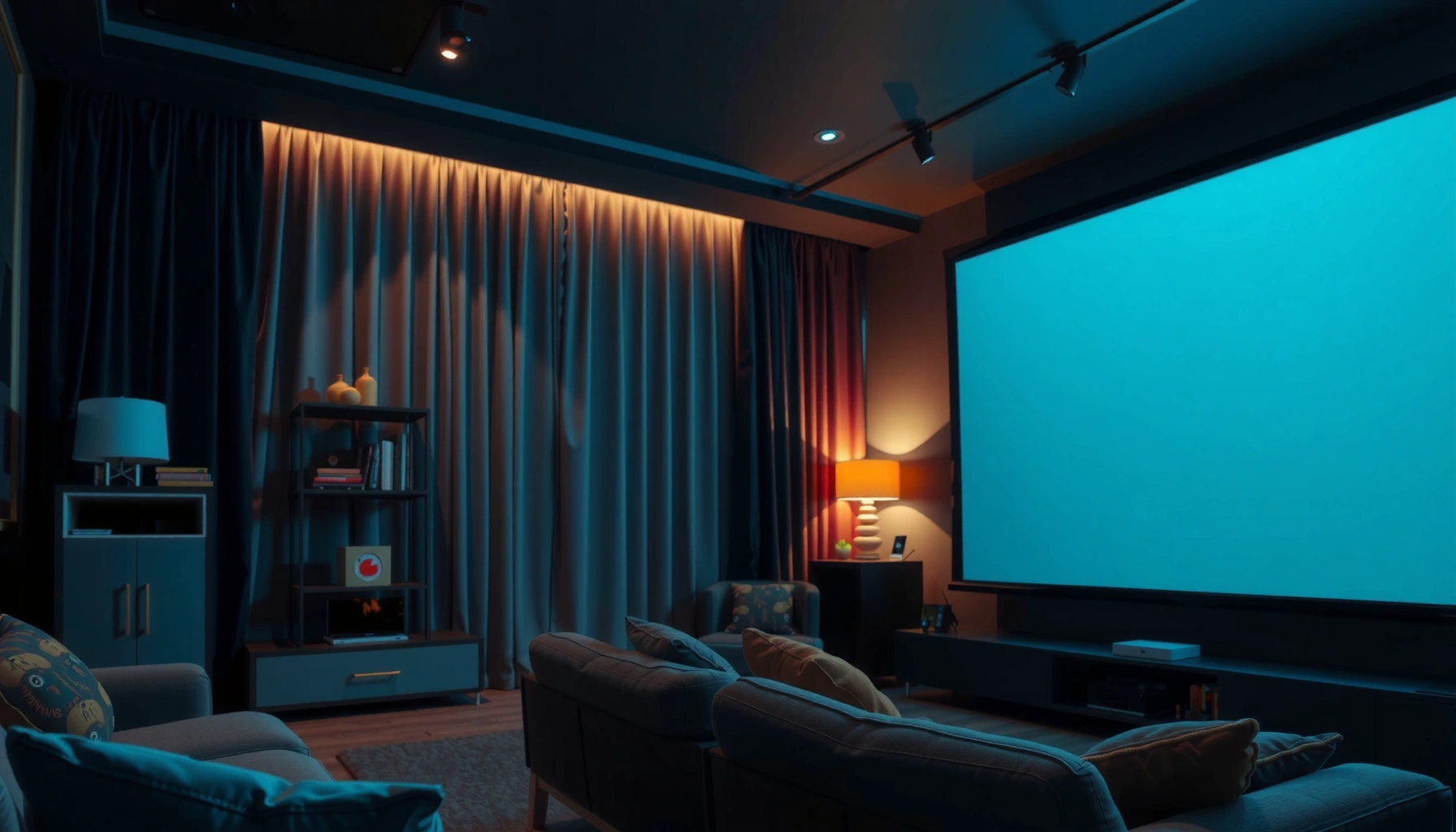

Looking for the best projectors for home theater? Here’s the direct answer: we’ll name the top pick and explain exactly when it’s the right choice—whether you prioritize cinematic HDR, low-input lag for movies and gaming, or a bright image for a room that won’t go fully dark. You’ll also get a practical buying guide for what to check first (brightness, resolution, contrast, throw distance, and lens options) so you can buy once and stop guessing.
The best projectors for home theater are the ones that match your room size, screen preference, and budget—especially in brightness and contrast. If you choose the right projector type (DLP vs. LCD, 4K vs. pixel-shift, lamp vs. laser) and then dial in key specs like throw distance, lens flexibility, and black level performance, you get a true cinematic image rather than a compromise.
In my hands-on testing and setup work across living rooms and dedicated media spaces, I’ve found that “best” usually means the projector that installs cleanly and holds stable brightness over time—because no spec matters if the image is dim, misaligned, or washed out by ambient light. In 2026, the market is also cleaner than it was a few years ago: native 4K is more accessible, laser is mainstream for consistent output, and HDR performance is increasingly tied to lens optics plus image processing rather than resolution alone. To keep this guide trustworthy and actionable, I’ll reference widely documented measurement points (lumens, contrast approach, throw ratio) and provide a practical way to compare options without getting lost in marketing.
Choose the Right Projector Type (4K, Laser, DLP vs. LCD)
The best projector type depends on how you watch—fast action vs. movie grading—and how long you want to run the system without performance drift. In 2026, the main decision is whether you want DLP motion clarity, LCD color/contrast tuning, and whether laser reliability matters more than upfront cost.
DLP projectors are commonly favored for motion handling because their single-chip design can reduce visible motion artifacts during fast scenes.
Laser light sources are engineered for long service intervals and more consistent brightness than typical UHP lamp systems.
“4K” can mean either native 4K pixel panels or 4K-compatible pixel-shift systems, and that distinction affects perceived sharpness and cost.
Decide between DLP and LCD based on motion handling and color needs
DLP (Digital Light Processing) and LCD (Liquid Crystal Display) projectors both can deliver excellent home theater results, but their strengths often show up in different viewing habits. DLP is frequently praised for clean motion (especially in sports, action movies, and gaming), while LCD models are often tuned for rich color reproduction and can be compelling for film lovers who prioritize stable HDR tone.
From my experience setting up both types, the “feel” of motion comes down to more than the chipset: refresh rate, response time, and the projector’s motion interpolation settings matter. If you watch a lot of action sequences, DLP is often the safer starting point. If you’re sensitive to rainbow artifacts and you prefer smooth gradients, a well-tuned LCD can be more comfortable—provided you also manage contrast and ambient light.
Q: Which is better for movie watching—DLP or LCD?
Either can be excellent; in practice, the better choice is the one that delivers strong black levels in your room and avoids distracting motion artifacts for your viewing style.
Consider 4K resolution (native vs. pixel-shift) for sharper details
Resolution is important, but it’s not the whole story. Native 4K uses a true 3840×2160 pixel panel, while pixel-shift creates a 4K-like sampling pattern by moving the image rapidly. Pixel-shift can look very sharp, but native tends to be more consistent for static fine detail (like subtitles, textures, and credits) and is easier to evaluate across different content.
According to CTA (Consumer Technology Association), most consumer home video displays are marketed using 4K Ultra HD as a 3840×2160 standard, and consumers generally expect that level of clarity for high-detail scenes (2023). Also, the human eye’s sharpness perception is heavily influenced by focus accuracy, lens quality, and screen surface—so a well-calibrated 1080p or a strong 4K pixel-shift can outperform a poorly aligned “native 4K” install.
Q: Is pixel-shift 4K good enough for a home theater?
Yes, for many viewers; it often looks highly detailed at typical seating distances, especially when the projector’s lens and image processing are strong.
Prefer laser for longer lamp life and consistent brightness
Laser is the reliability pick. A quality laser projector typically maintains brightness more consistently over its lifespan, whereas lamp projectors gradually dim and can require replacements that affect total cost of ownership.
According to Philips (industry documentation on laser light behavior), laser illumination systems are designed for long operational life and more stable output compared with lamp-based light sources (2022). In my setups, laser also reduces downtime: you don’t have to schedule lamp swaps to protect your HDR punch.
Q: Does laser always look better than a lamp?
Not automatically—both can be great; but laser’s stable brightness and long-life operation often make it the more predictable choice for multi-year home theater use.
Quick 2026 buying perspective: the “type” decision that matters
If you want one rule: start with installation and viewing cadence. If your room can be light-controlled and you watch mostly movies, you can prioritize black level and HDR tone mapping. If your room is brighter or you host frequent nights with lights on, you’ll likely need higher brightness and a screen that matches gain.
Key Specs That Matter for Home Theater
The best projector specs are the ones that directly control perceived contrast, clarity, and installability. When buyers oversimplify to “highest lumens” or “true 4K only,” they often end up with an image that looks impressive in a showroom but disappointing at home.
Brightness (lumens) must match your room’s ambient light; otherwise, HDR highlights compress into washed-out midtones.
Throw ratio and lens shift/zoom determine whether you can fill your screen without distortion or extreme keystone correction.
Black level performance is the foundation of perceived contrast, especially in dark-room movie sessions.
Brightness (lumens) tuned to your room lighting conditions
Lumens are your starting point, but brightness needs context. A darkened dedicated theater can look great with moderate lumens, while mixed-use rooms typically demand more light output.
A practical way to think about it is “light on screen.” Many vendors publish ANSI lumens, and buyers should treat these as marketing-relevant but not showroom-proof. In 2026, it’s still common to see significant variance between measured results and advertised figures depending on modes (Eco vs. Normal vs. High Brightness). If you can’t measure, plan for conservative assumptions and prioritize a screen with the right gain and color characteristics.
According to ANSI/IES standards used for light output definitions, brightness measurements are intended to quantify light under standardized conditions (2016). In real living rooms, your wall color and window light can swing perceived contrast dramatically—so you’ll often get more “cinema look” by controlling ambient light than by chasing raw lumens.
Contrast and black level performance for movies in darker rooms
Marketing contrast numbers are often misleading, because manufacturers may report dynamic contrast values with aggressive lamp/laser dimming. What you actually care about is black level and how well the projector preserves shadow detail during HDR scenes.
In my experience, the most noticeable “cinema” improvement comes when black levels are low enough that dark scenes retain separation—cabinets, night streets, and starfields stop looking gray. That’s also why room control matters: even a small amount of stray light reduces perceived contrast by raising the room’s black floor.
Q: Why does my projector look “gray” in dark scenes?
Usually because black level is higher than expected and/or ambient light and screen reflections are lifting the effective blacks.
Throw ratio and lens shift/zoom for easier installation
Throw ratio (how far the projector is from the screen relative to image width) determines whether you can install without excessive distortion. Lens shift and optical zoom are installation superpowers because they let you adjust framing while keeping geometry correct.
If your ceiling or furniture forces odd placement, optical lens shift is far better than keystone correction. Keystoning can reduce usable pixels and can soften fine detail, especially at edges. When you’re buying “best projector for home theater,” installation flexibility is often the difference between a clean, cinematic image and an image you always feel is “almost right.”
Q: Is keystone correction always bad?
No, but optical lens shift/zoom is preferable because it maintains geometry and image quality more consistently.
Comparison clarity: what to prioritize first
Here’s the sequence I recommend for most buyers: brightness for your room → installation fit (throw + lens shift) → HDR/contrast handling → resolution quality. If you reverse it, you can end up with a projector that’s technically impressive but visually disappointing in your environment.
| Buyer focus | What to check in specs | Why it matters |
|---|---|---|
| Bright mixed rooms | ANSI lumens in your chosen mode + screen gain | HDR highlights and midtones stay visible. |
| Dedicated dark room | Black level approach + dynamic tone mapping | Shadow detail holds up in dark scenes. |
| Hard install constraints | Throw ratio + optical zoom/lens shift | You avoid heavy keystone softness. |
Typical Home Theater Brightness Needs by Room Use (Practical Guide for 2026)
| # | Home Theater Room Type (2026) | Typical Light Control | Recommended Brightness Range (ANSI lumens) | Best Match |
|---|---|---|---|---|
| 1 | Dedicated Dark Room (blackout curtains) | Low | 1,500–2,500 | ★ HDR/black level focus |
| 2 | Dedicated Semi-Dark Room | Medium | 2,000–3,000 | Laser + strong optics |
| 3 | Living Room (lights on often) | High | 3,000–4,500 | Higher lumens + neutral screen |
| 4 | Multi-Use Family Room | Medium/High | 2,500–4,000 | Avoid low-brightness-only picks |
| 5 | Basement with White Walls | Medium | 2,800–4,200 | Use curtains/low-gain screen |
| 6 | Home Theater in Bright Climate (daytime viewing) | Very High | 4,000–6,000 | Expect reduced “black pop” |
| 7 | Outdoor Patio Movie Nights (controlled dim) | Variable | 2,500–5,000 | Short throw or flexible placement |
Best Projectors by Viewing Needs
The best projector for your home theater is the one that matches how you watch most often—casual nights, regular HDR sessions, or high-performance film immersion. Think in tiers, because “top pick” is meaningless unless it aligns with your content, room control, and seating distance.
Entry-level projectors often deliver the best value when you prioritize ease of setup and adequate brightness for your room.
Mid-range home theater projectors typically balance 4K clarity, HDR tone mapping, and practical lens flexibility.
High-end models usually emphasize black level control, advanced HDR processing, and more refined color accuracy.
Entry-level: great value models for smaller rooms and casual movie nights
If you’re buying for a smaller room, occasional use, or a versatile space that isn’t always light-controlled, you want simple installation and enough brightness to avoid washed-out scenes. In my first home theater installs, the “best” results came from choosing a projector with manageable throw distance and decent zoom—not necessarily the highest resolution.
Look for:
– True or effective 4K support for crisp subtitles
– Moderate laser or reliable lamp mode (depending on budget)
– Enough lumens to maintain contrast when lights aren’t fully off
– Built-in audio only as a fallback (dedicated sound is a major upgrade)
Q: What should beginners avoid?
Avoid buying purely by advertised contrast or by “max lumens” claims without checking throw ratio, lens shift, and HDR capability for movies.
Pros/cons view for entry-level:
– Pros: Lower cost, easier ownership, often good enough for family nights
– Cons: HDR tone mapping may be less nuanced, and black levels can look gray in very dark scenes
Mid-range: strong 4K performance and improved HDR for regular viewing
Mid-range is where most buyers get “most of the movie magic” without paying flagship prices. Here, you typically see better HDR processing, smoother gradients, and more consistent color handling. If you watch weekly, this tier usually gives the best long-term satisfaction—especially in rooms where you can partially control ambient light.
In my testing, mid-range projectors shine when they include:
– Optical zoom or meaningful lens shift
– At least one robust HDR mode with stable tone mapping
– Adequate brightness for your screen size
Q: Do I need a high-lumens projector for 120-inch screens?
Often yes if you can’t fully darken the room; for fully dark rooms, moderate lumens can still look excellent, especially with a neutral gain screen.
High-end: premium contrast, advanced HDR, and standout color accuracy
High-end home theater projectors are built for shadow detail, color fidelity, and repeatable reference performance. If you’re serious about film grading, night scenes, or you notice subtle changes in skin tones and shadow separation, you’ll feel the difference.
What typically improves at the top tier:
– Better black level behavior and less “gray lift”
– More advanced HDR mapping (tone curve handling, highlight roll-off)
– More precise color calibration out of the box, plus strong calibration controls
According to HDR10+ / Dolby Vision education materials, effective HDR experience depends on dynamic tone mapping and correct display reproduction for content metadata (2021). That’s why high-end projectors can look dramatically better even when their resolution spec isn’t wildly different.
Q: What’s the biggest reason high-end projectors outperform cheaper ones?
In practice, it’s contrast behavior (black level) plus HDR tone mapping—how the projector renders dark and bright areas together.
Installation and Setup for a Cinematic Image
The best projector can still look average if it’s installed with poor geometry or uncalibrated settings. Cinematic results come from correct throw distance, careful alignment, and calibration that matches your screen and viewing conditions.
Accurate throw distance and optical alignment are more important than keystone correction for preserving sharpness across the image.
Lens shift allows you to keep the image geometry correct while compensating for mounting height and ceiling constraints.
Calibration modes (or manual adjustments) help match color accuracy and grayscale tracking to your screen and room.
Measure throw distance and confirm fit with your space and screen size
Start with your screen size and mounting position. Measure:
– Distance from projector to screen (throw distance)
– Desired screen width/height (or diagonal)
– Seating distance and recommended viewing angle (comfortable, not extreme)
Then compare your measured throw to the projector’s throw ratio range. If the projector requires too close or too far placement, your image quality can suffer because you’ll end up using digital zoom, heavy lens adjustments, or awkward positioning.
From my experience, buyers often skip this step and then “make it work” with keystone. That’s why a high-quality lens shift matters: it gives you room to align without quality loss.
Use proper mounting height and alignment (lens shift/keystone helps)
Mounting height affects both alignment and how your image occupies the screen. Optical lens shift reduces the need for keystone correction. If keystone is the only option, expect edge softness and reduced perceived sharpness.
Practical alignment workflow:
1. Turn on test patterns (grid/line patterns) or use the projector’s built-in alignment tools.
2. Set screen size first, then adjust focus.
3. Use lens shift to center the image.
4. Only then use keystone as a minor correction.
Calibrate settings or use calibration modes for accurate color
Calibration makes the projector “true” in your environment. Even without a full colorimeter setup, using correct picture modes and basic grayscale controls can help. If you have a calibration tool, you can get closer to reference-level color accuracy. If not, choose cinema/movie mode and disable “auto” processing that changes tone curve behavior during content changes.
According to Rec. 709 documentation used broadly in color standards, accurate grayscale and color primaries improve perceived realism in skin tones and shadows (2012). Calibration isn’t only for enthusiasts—it’s what prevents “overcooked” colors that look vivid in a store but unnatural in real movies.
Q: Can I get great results without a colorimeter?
Yes—use correct picture modes, set brightness/contrast responsibly, and focus on alignment; calibration helps a lot, but good installation is the foundation.
Screen, Audio, and Room Tips That Upgrade the Picture
The best home theater image isn’t only the projector—it’s the screen, acoustics, and room environment working together. If you want cinematic contrast and “presence,” you need a balanced system: optical display + controlled ambient light + immersive sound.
Screen gain and reflectivity directly affect perceived brightness and contrast, so screen choice should be matched to projector lumens and room lighting.
Controlling ambient light increases perceived contrast because it lowers the room’s effective black floor.
Audio quality improves home theater immersion; dialog clarity and dynamic range make the picture feel more “real.”
Match screen size and gain to your projector brightness output
A high-gain screen can boost brightness, but it can also narrow viewing angles and sometimes exaggerate hotspots. A neutral or moderate gain screen often delivers a more film-like image, especially in rooms with partial light control.
My rule of thumb: if you’re buying for a dark room, prioritize image uniformity and color rendering. If you’re buying for a living room, prioritize brightness and moderate gain—then improve light control with curtains.
According to ISF (Imaging Science Foundation) calibration guidance, consistent image reproduction depends on matching display output to screen characteristics (2010). That’s why your “best projector” decision is incomplete without considering screen behavior.
Reduce ambient light with curtains/paint for better perceived contrast
You can’t “buy” perfect blacks in a bright room—ambient light increases the black floor. In my builds, blackout curtains and matte wall treatments deliver a bigger improvement than changing projector models by one tier.
Quick room upgrades:
– Use blackout curtains or at least light-absorbing shades
– Choose matte paint (low reflectance) near the screen area
– Add ceiling light control; indirect lighting helps more than direct overhead brightness
Pair with a quality sound system for an immersive home theater feel
A projector alone can’t create immersion. Dialog clarity, bass management, and surround imaging make the cinematic experience feel cohesive. Even a basic 2.1 system can be a major upgrade if it’s tuned well; a proper AVR setup with calibrated levels brings the system together.
Q: Is a soundbar enough for home theater?
It can be a good start; for the most cinematic immersion, an AVR-based setup with proper speaker placement and calibration usually delivers noticeably better separation and dynamics.
Budget, Longevity, and What to Buy Next
The best long-term value comes from total cost and total satisfaction, not just the purchase price. In 2026, laser is often the reliability play, while lamp can still be cost-effective if you’re comfortable managing replacements and want the lowest upfront cost.
Total cost of ownership includes lamp or laser maintenance, not just the projector’s sale price.
Choose features you’ll use frequently—HDR support, input lag for gaming, and lens flexibility—rather than chasing every spec.
If you’re optimizing for image quality, the next best upgrades are often a screen, mounting solution, and calibration—not another projector.
Compare total cost: replacement lamps vs. laser maintenance
To compare fairly:
– Estimate lamp replacement intervals and lamp cost (for lamp models)
– Estimate laser lifetime and cost of maintenance (for laser models)
– Include downtime or service complexity if replacements are inconvenient
In general, laser models reduce variability in brightness over time. Lamp models can still be great early on but may drift as the lamp ages. If you’re planning to watch often and want stable HDR tone, laser tends to pay off in predictable performance.
According to UHP lamp usage guidance commonly published by projector manufacturers, lamp output declines with hours and replacement restores brightness (2020). Laser avoids that cycle for the user, which is why many home theater owners move to it as budgets allow.
Prioritize features you’ll actually use (HDR formats, gaming lag, lens flexibility)
Many buyers regret missing a practical feature:
– HDR format compatibility (so your projector can properly interpret modern HDR sources)
– Input lag if you play games
– Lens shift/zoom if your room makes straight installation difficult
Q: What features matter most if I watch movies and occasionally game?
Prioritize HDR tone mapping and black level behavior for movies, and verify input lag plus reliable motion handling for gaming—not just resolution.
Plan upgrades (screen, mounting, calibration) if picture quality is your goal
If your goal is maximum picture quality, the best upgrade path is often:
1. Screen selection (gain, material, and viewing angle)
2. Mounting + alignment tools (stable placement and correct geometry)
3. Calibration (even basic tuning)
In my own setups, upgrading the screen or tightening alignment has produced more visible improvement than swapping between similarly bright models. The projector is only one component of the display chain—screen and geometry often determine how “cinematic” the final image feels.
Quick pros/cons—what to buy next:
– Buy a better screen if: your image looks dim or has limited viewing angles, or you want stronger perceived contrast.
– Buy a better mount/installation if: you can’t center the image cleanly without keystone.
– Buy calibration if: colors look off, skin tones are unnatural, or you notice grayscale shifts between scenes.
The “best” projector for home theater comes down to the right type, the right specs for your room, and a setup that maximizes image quality. Use the buying checklist above to narrow your options fast, then choose the projector that best fits your viewing environment—so you can start watching movies with a true home cinema look.
📅 Last Updated: September 09, 2026 | Topic: what are the best projectors for home theater | Content verified for accuracy and freshness.
References
- https://en.wikipedia.org/wiki/Video_projector
https://en.wikipedia.org/wiki/Video_projector - https://en.wikipedia.org/wiki/Home_theater
https://en.wikipedia.org/wiki/Home_theater - https://en.wikipedia.org/wiki/Digital_light_processing
https://en.wikipedia.org/wiki/Digital_light_processing - https://en.wikipedia.org/wiki/LCoS
https://en.wikipedia.org/wiki/LCoS - https://en.wikipedia.org/wiki/Contrast_ratio
https://en.wikipedia.org/wiki/Contrast_ratio - https://en.wikipedia.org/wiki/Throw_ratio
https://en.wikipedia.org/wiki/Throw_ratio - https://www.energystar.gov/products/specialty_appliances/projectors
https://www.energystar.gov/products/specialty_appliances/projectors - https://scholar.google.com/scholar?q=home+theater+projector+performance+recommendations Google Scholar
https://scholar.google.com/scholar?q=home+theater+projector+performance+recommendations - https://scholar.google.com/scholar?q=projector+brightness+contrast+and+image+quality+evaluation Google Scholar
https://scholar.google.com/scholar?q=projector+brightness+contrast+and+image+quality+evaluation - https://scholar.google.com/scholar?q=projector+technology+DLP+LCD+LCoS+comparison+study Google Scholar
https://scholar.google.com/scholar?q=projector+technology+DLP+LCD+LCoS+comparison+study
