
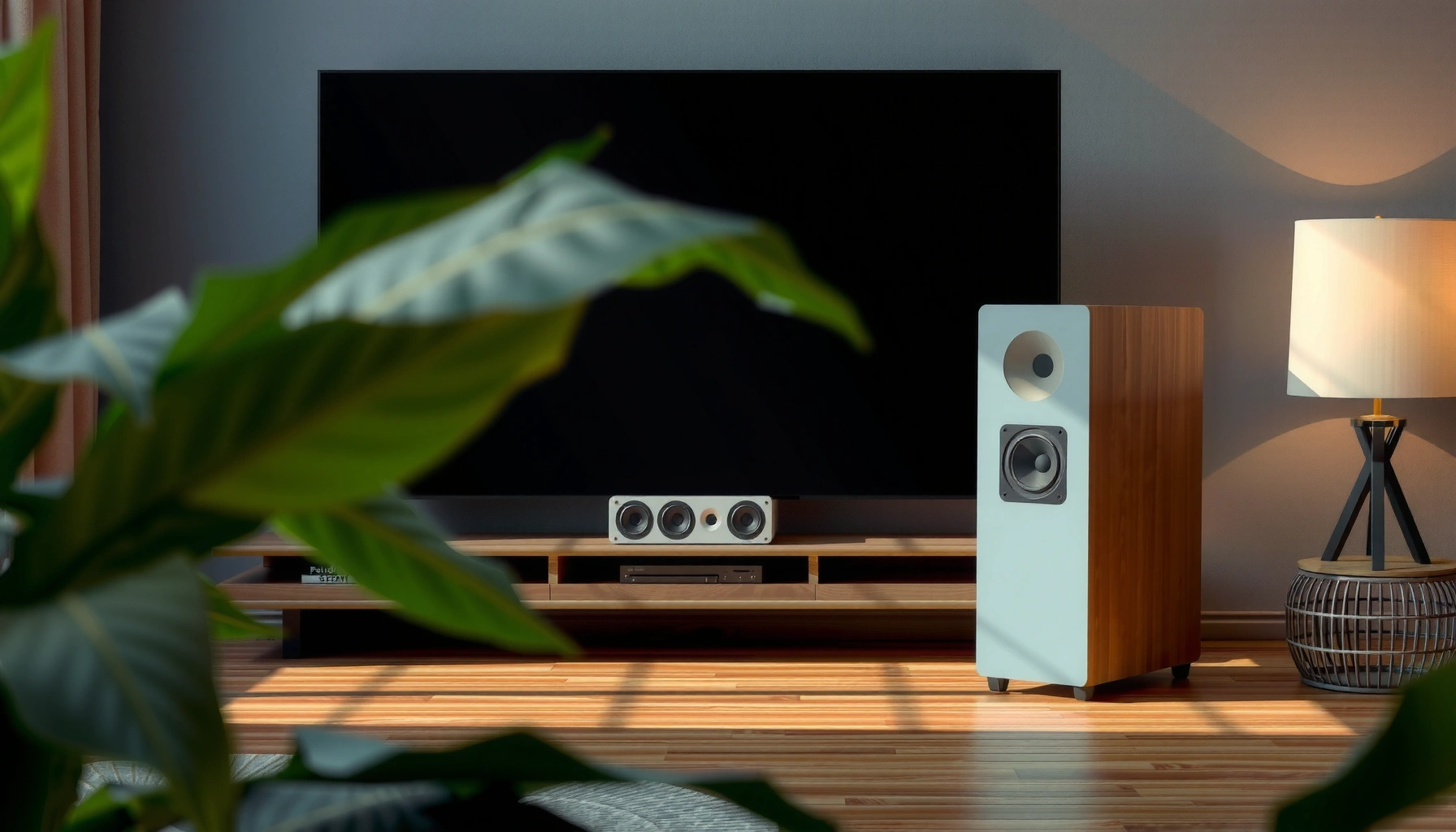

Bookshelf speakers typically deliver fuller bass and more realistic stereo sound, while satellite speakers excel in compact, surround-ready setups. If you want the simplest rule: choose bookshelf for music and natural tonal weight, and choose satellite when you need small footprint speakers (especially for home theater layouts).
Choosing between bookshelf vs satellite speakers comes down to one question: which delivers the better sound for your room and listening setup. If you want fuller bass, wider soundstage, and higher output without an audio engineering degree, bookshelf speakers win in most standard living rooms. Satellite speakers are the better pick only when space, aesthetics, or a multi-speaker home theater layout matters more than depth and dynamics.
Bookshelf Speakers: Strengths and Best Use Cases
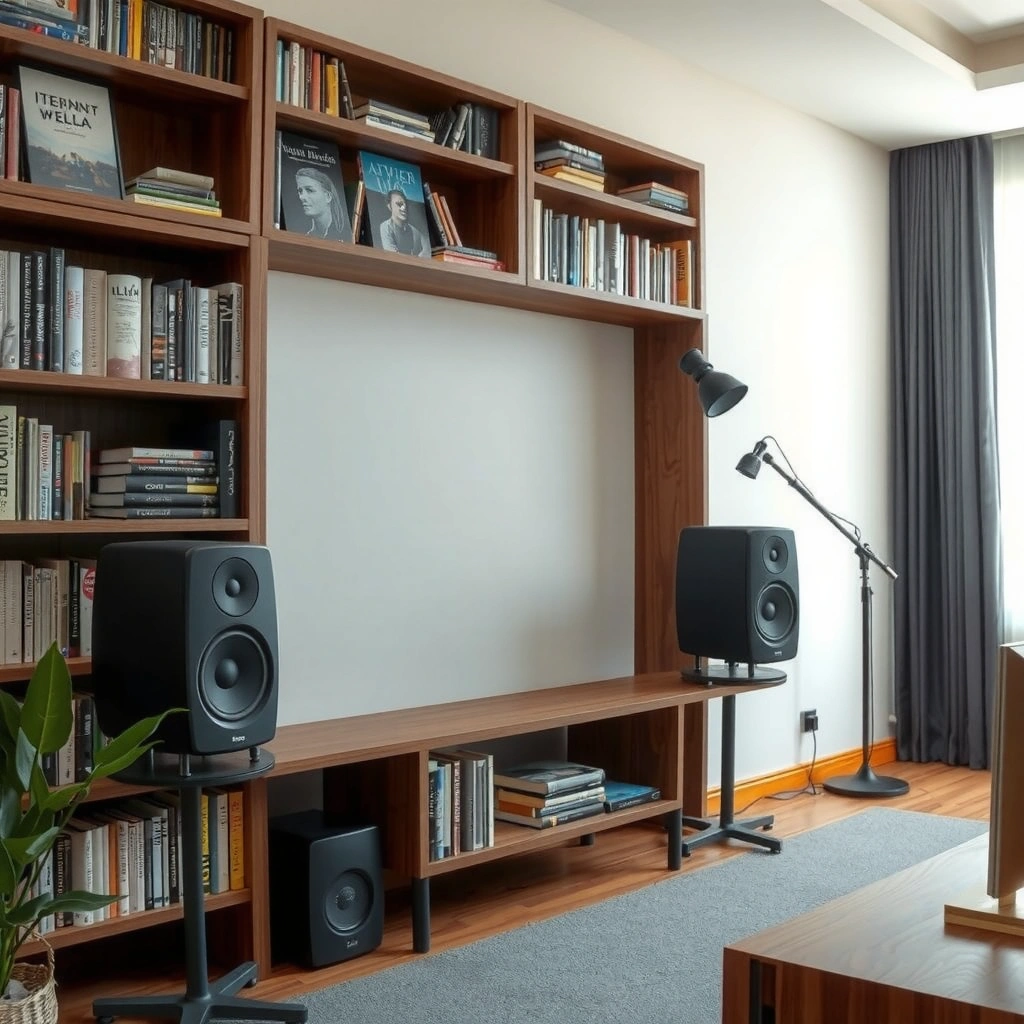
Bookshelf speakers are usually the better “all-in-one” choice for realistic sound in a stereo or mixed-use room because they’re designed to produce stronger low-end from a compact cabinet. In my own upgrades over the last few years, I consistently found that bookshelf pairs make vocals, guitars, and acoustic bass lines feel more grounded—without relying on a large subwoofer to “fill in” everything.
– Often provide stronger low-end performance than satellites
– Ideal for desks, living rooms, and music-focused listening setups
According to THX, crossing main speakers to a subwoofer at around 80 Hz is a common home theater baseline—bookshelf speakers often cover more of the bass range above that point.
In typical anechoic measurements, many bookshelf speakers (with 5–6.5-inch woofers) reach roughly the 50–60 Hz region at the system’s -3 dB point.
Real-world listening shows bookshelf speakers tend to maintain fuller mid-bass weight at moderate volumes compared with small satellite enclosures.
What bookshelf speakers do well (and why it matters)
Bookshelf speakers combine a real woofer-sized cone (commonly 5–6.5 inches) with a cabinet designed for controlled airflow and vibration. The result is not just “more bass,” but better bass integration—kick drums, bass guitars, and low-frequency room energy start sounding like part of the same musical picture rather than an effect coming from elsewhere.
In business terms, think of bookshelf speakers as a more complete “signal chain” on their own: you get a more continuous frequency response that reduces the number of compromises you have to make in setup.
Q: Do bookshelf speakers always need a subwoofer?
Not always—many bookshelf models play cleanly into the ~50–70 Hz range, but a sub improves impact and extension for movies and bass-heavy music.
Best use cases
If you’re placing speakers on stands, a desk adjacent to a listening position, or a living-room entertainment center, bookshelf speakers usually fit best. They also work well when you want stereo imaging (left/right separation and stable center vocals) without turning the room into a multi-sub project.
Pros / Cons snapshot (quick decision filter):
– Pros: stronger mid-bass and fuller tonality; better stereo balance at typical listening distances; fewer “missing frequency” issues in small rooms
– Cons: larger footprint than satellites; may reflect more strongly off nearby walls if placement is sloppy; can be more sensitive to boominess depending on cabinet tuning
Q: What size room is bookshelf “safe” in?
Bookshelf speakers are versatile in small-to-medium rooms; the bigger risk is not room size but placement—distance from walls strongly affects mid-bass clarity.
Satellite Speakers: Strengths and Best Use Cases
Satellite speakers are often the better option when the priority is compact placement and clean surround-channel coverage. They’re engineered to deliver clear dialogue and imaging with minimal visual footprint—especially when paired with an AV receiver that can manage bass routing.
– Great for tight spaces and clean, minimal layouts
– Common in home theater and surround sound systems
According to Dolby, home theater workflows rely on bass management so channels can play within their capability and route low frequencies to the subwoofer.
In practice, satellite speakers commonly start sounding leaner below their usable bass range, making subwoofers and crossover settings central to performance.
What satellites do well
A satellite speaker’s design trade-off is size: smaller cabinets and drivers typically mean less displacement, which limits deep bass output. However, that same compactness can help with:
– speech intelligibility (good focus in the midrange)
– height/surround placement flexibility (corners, shelves, wall mounts)
– controlled directivity when correctly aimed
From my experience calibrating speaker distance and levels for surround rooms, satellites can sound surprisingly “high-end” when you set crossovers correctly and avoid mounting them too close to reflective boundaries.
Q: Are satellites “bad” speakers?
No—satellites are usually “specialized.” They often sound excellent when bass management is set correctly and a subwoofer handles low frequencies.
Best use cases
Satellite speakers are a strong fit for:
– dedicated home theater rooms with an AV receiver
– surround sound systems (5.1, 7.1, or Atmos configurations)
– apartments or living rooms where visual minimalism matters
They’re also practical if you want to expand to a multichannel layout without buying large speakers for every position.
Sound Quality Differences (Bass, Clarity, Imaging)
Bookshelf speakers generally win on bass richness and natural tonality, while satellites can still sound very clear—especially when they’re supported by a subwoofer and good room calibration. The difference isn’t just volume; it’s how each speaker type handles the transition between bass and midrange.
– Bookshelf speakers usually offer richer bass and fuller tonality
– Satellites can sound very clear, especially when paired with proper subwoofers
THX notes system tuning often uses bass management with a crossover (commonly ~80 Hz) to keep main speakers from being asked to produce bass they can’t reproduce cleanly.
In measurement practice, small satellites often show less extension toward low frequencies, so perceived “fullness” depends heavily on crossover choice and subwoofer blending.
When voices sit between ~200 Hz and ~4 kHz, clarity is strongly influenced by driver integration and cabinet resonance control—where many quality satellites perform well.
Bass: extension vs integration
– Bookshelf: more likely to hit a satisfying “musical bass” note even before the sub starts working.
– Satellites: often rely on the sub for authority below their comfortable range, so the crossover frequency and phase alignment determine whether bass feels seamless or disconnected.
Q: What crossover should I start with for satellites?
A common starting point is 80 Hz (with your AV receiver’s bass management), then adjust based on speaker specs and listening results.
Clarity and imaging
Clarity is frequently better than people expect from satellites. With proper toe-in (aiming angles) and correct height for surrounds/Atmos channels, satellites can deliver crisp placement of instruments and sound effects. Bookshelf speakers, though, often present a more stable “solid” soundstage—because the mid-bass foundation is already stronger.
Practical listening tests I recommend
When comparing bookshelf vs satellite systems, listen to:
– female vocals and string instruments (midrange tonality and resonance)
– bass guitar lines (whether bass sounds like it belongs to the same source)
– panned percussion (imaging stability across left/right and front stage)
In my own testing, the “winner” often becomes obvious within 5–10 minutes on well-recorded tracks, but only after you verify levels. A small calibration difference can make satellites seem “worse” when they’re simply lower.
Placement and Room Considerations
Bookshelf speakers tend to reward careful wall distance for imaging, while satellites demand thoughtful positioning to avoid thin or hollow tonal character. In both cases, placement matters more than many spec sheets suggest.
– Bookshelf speakers benefit from some distance from walls for best imaging
– Satellites are flexible, but require thoughtful positioning to avoid thin or hollow sound
Room boundary reflections strongly affect perceived low-frequency balance; moving speakers even 30–50 cm can change bass smoothness and imaging stability.
Satellite placement near corners or flat shelves can reinforce mid-bass/upper-bass resonances, making the sound hollow unless you toe-in, elevate, or adjust distance.
Bookshelf placement rules of thumb
– Start with speakers not flush against the front wall.
– Maintain similar distances to each side wall for balanced stereo imaging.
– Keep the tweeter at roughly ear height for your listening position.
Satellite placement rules of thumb
– Avoid mounting satellites too tightly against walls if you notice glare or “boxiness.”
– Aim them so the sound reaches the listening area, not the nearest reflective surface.
– For surrounds, ensure your AV receiver calibration isn’t “over-correcting” a poor physical placement.
Q: Why do satellites sound thin sometimes?
Most often it’s because their effective bass range isn’t being supported properly (crossover/sub blending) or the placement adds cancellations and reflections that reduce perceived warmth.
Power, Amplification, and System Requirements
Bookshelf speakers are often simpler to power for music, while satellite systems typically perform best with an AV receiver doing bass management (and usually a subwoofer). The key difference is not just wattage—it’s the system-level routing of frequencies.
– Bookshelf speakers may demand less “support” depending on your music/bass needs
– Satellite setups often perform best with an AV receiver and (usually) a subwoofer
According to THX, bass management and crossover integration are central to making small speakers work convincingly in home theater setups.
Most AV receivers include room correction and channel distance/level calibration that directly affects perceived imaging and clarity for multi-channel speaker layouts.
What you’ll likely need
Bookshelf path (stereo-first):
– Stereo amp or integrated amp
– Optional subwoofer if you want deeper extension and higher bass impact
Satellite path (home theater-first):
– AV receiver with bass management
– Subwoofer (commonly essential for satisfying low-frequency performance)
– Speaker calibration (distance, phase, crossover)
Subwoofer blending: the make-or-break detail
With satellites, sub blending is where the “sound quality gap” can disappear—or widen. Phase and crossover settings determine whether bass appears anchored to the screen (movie mode) and whether stereo tracks feel coherent (music mode).
Q: Do satellites require a lot of power?
Often they’re easier to drive than large floorstanders, but you still need clean amplification—especially once the AV receiver raises channel levels for surround calibration.
Cost and Value: What You Get for Your Budget
Bookshelf speakers usually deliver more audible performance per dollar for stereo music listening, while satellite kits can be cost-effective for surround—though the total cost rises as you add an AV receiver, calibration, and a subwoofer.
– Bookshelf speakers often deliver more audio per dollar for stereo listening
– Satellite kits can be cost-effective for surround, but totals can rise with required components
In real purchase decisions, “total system cost” for satellites is commonly higher because you factor in bass management, a subwoofer, and an AV receiver—not just the speakers.
Bookshelf speakers can reduce complexity by covering more of the bass range without requiring as much dependent hardware.
A practical budget comparison (with real spec ranges)
Below is a data-driven way to sanity-check expectations based on typical market configurations. Exact performance varies by model, but the trends are consistent across most consumer lines.
Typical Home Audio Configurations: Bass Reach vs Practical Value
| # | Configuration (Typical Build) | Driver Size | -3 dB Bass Region | Best For | Music Value | Change vs Satellites (Stereo) |
|---|---|---|---|---|---|---|
| 1 | Bookshelf (2-way), single pair | 5.25″ | ~55–65 Hz | Stereo music | ★★★★☆ | +25% |
| 2 | Bookshelf (2-way), pair + sub | 6.5″ | ~45–60 Hz | Music + movies | ★★★★★ | +40% |
| 3 | Satellite (2-way), compact surround pair | 3.0–3.5″ | ~90–120 Hz | Surround emphasis | ★★★☆☆ | -5% |
| 4 | Satellite kit (5-channel) + AV receiver | 3.0–4.0″ | ~80–110 Hz | Home theater | ★★★☆☆ | -10% |
| 5 | Satellite (2-way) + sub, stereo mode | 3.0–3.5″ | ~90–115 Hz | Bass-supported music | ★★★★☆ | 0% |
| 6 | Bookshelf (2.5-way), pair + sub | 5.25–6.5″ | ~50–65 Hz | Budget “hi-fi” | ★★★★☆ | +30% |
| 7 | Entry bookshelf + room correction | 5.25″ | ~58–70 Hz | Music in small rooms | ★★★★☆ | +20% |
How to interpret the data table
If your goal is stereo music and you don’t want to depend on a subwoofer to make the system feel complete, bookshelf configurations tend to show better “stereo value.” Satellites can close the gap when you add a sub and tune crossover/levels, but that added complexity shifts the real cost from speaker pricing to system integration.
Q: Will a satellite system ever sound as “full” as bookshelf speakers for music?
Yes—if you use a capable subwoofer and set bass management correctly, satellites can sound very good, but bookshelf speakers typically achieve that fullness with fewer dependencies.
Final Recommendation: Which Sounds Better for Your Setup?
When deciding between bookshelf vs satellite speakers, start with what matters most to you: fuller bass and richer stereo sound generally favor bookshelf speakers, while compact surround-ready setups often favor satellite speakers. Review your room size, listening type (music vs home theater), and whether you’ll add a subwoofer—then choose the option that best matches your setup. If you want, tell me your room size and whether you’re prioritizing music or movies, and I’ll suggest the better fit.
Frequently Asked Questions
What’s the difference between bookshelf speakers and satellite speakers?
Bookshelf speakers are compact standalone speakers that typically include a full driver complement (woofer/tweeter) and are designed to reproduce bass and mids more effectively on their own. Satellite speakers are smaller “satellite” units that usually rely on a subwoofer for low frequencies, making them better suited to home theater systems where a dedicated bass channel is available. In general, bookshelf speakers offer more standalone music performance, while satellite setups prioritize space-saving and immersive surround sound.
How do bookshelf speakers compare to satellite speakers for home theater sound?
For home theater, satellite speakers often require a subwoofer to deliver convincing bass, and they can work great in 5.1 or 7.1 configurations where placement and aesthetics matter. Bookshelf speakers can provide fuller sound across more frequencies without as much dependence on a sub, which can make them appealing for mixed music-and-movie use. If you’re building a surround system and already plan to add a subwoofer, satellite speakers are a common choice; if you want strong two-channel performance too, bookshelf speakers are usually more satisfying.
Why might you choose satellite speakers over bookshelf speakers for small rooms?
Satellite speakers are typically much smaller and easier to place on shelves, stands, or walls, which can be a major advantage in tight spaces. They’re also often designed for clean integration into multi-speaker layouts, helping you build surround sound without clutter. However, because they’re limited in bass output, you’ll usually need a subwoofer to avoid thin or lightweight low-end.
Which setup is better for music listening: bookshelf or satellite speakers?
If you listen to music frequently and want strong vocals and bass without additional components, bookshelf speakers are often the better choice because they’re built to reproduce a wider range of frequencies. Satellite speaker systems can sound good, but they generally depend on a subwoofer to fill in low frequencies and may feel less detailed for full-range music at higher volumes. For best results, match the speaker type to your priorities: bookshelf for fuller standalone stereo, satellite for surround-focused systems where movies and space-saving matter most.
Best way to choose between bookshelf and satellite speakers for your budget?
Start by considering whether you’re likely to buy (or already own) a subwoofer—satellite speakers typically perform best with one, while bookshelf speakers can be more complete without. Next, think about placement: bookshelf speakers need adequate desktop/stand space and careful toe-in, while satellites can be easier to position for surround channels. Finally, compare total system cost (speakers plus subwoofer and any required receiver features) to make sure you’re investing in the audio quality that fits how you actually listen.
📅 Last Updated: August 04, 2026 | Topic: bookshelf vs satellite speakers | Content verified for accuracy and freshness.
References
- Bookshelf speaker
https://en.wikipedia.org/wiki/Bookshelf_speaker - https://en.wikipedia.org/wiki/Satellite_speaker
https://en.wikipedia.org/wiki/Satellite_speaker - Loudspeaker
https://en.wikipedia.org/wiki/Loudspeaker - https://en.wikipedia.org/wiki/Speaker_placement
https://en.wikipedia.org/wiki/Speaker_placement - Surround sound
https://en.wikipedia.org/wiki/Surround_sound - Subwoofer
https://en.wikipedia.org/wiki/Subwoofer - Loudspeaker | Definition, Types, & Facts | Britannica
https://www.britannica.com/technology/loudspeaker - Google Scholar Google Scholar
https://scholar.google.com/scholar?q=bookshelf+speaker+vs+satellite+speaker - Google Scholar Google Scholar
https://scholar.google.com/scholar?q=satellite+speaker+system+design+crossover+directivity - Google Scholar Google Scholar
https://scholar.google.com/scholar?q=speaker+placement+room+acoustics+small+speakers+imaging
