
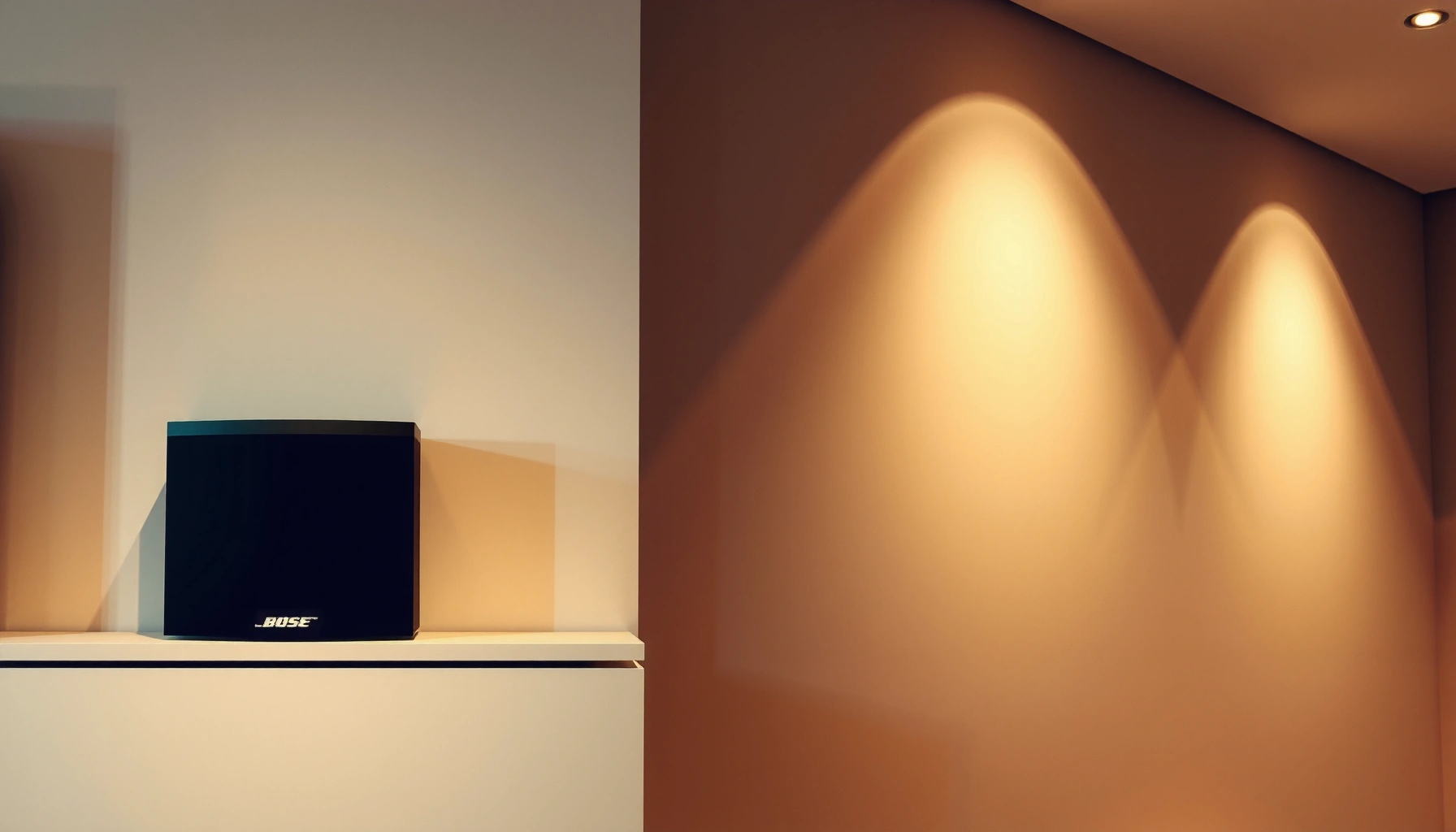

Choosing between Bose surround speakers and the Virtually Invisible 300 comes down to whether you prioritize full, room-filling cinematic impact or near-invisible installs that disappear into the space. This article delivers a clear verdict—Bose Surround Speakers win for maximum surround presence, while Virtually Invisible 300 takes the crown when aesthetics and subtle, distributed sound matter most. If you want one setup that sounds better for your room and mounting constraints, you’ll know which to buy after reading.
If you want the more “immediately exciting” surround impact, Bose surround speakers usually win for immersive movie sound. If you want great sound that stays nearly hidden and still covers a room cleanly, Virtually Invisible 300 is the better fit—especially when aesthetics and in-wall installation matter. Below, I’ll compare immersive performance, installation realities, and everyday listening so you can choose the right system for your room, wiring, and priorities.
Bose Surround Speakers: Immersive Sound First
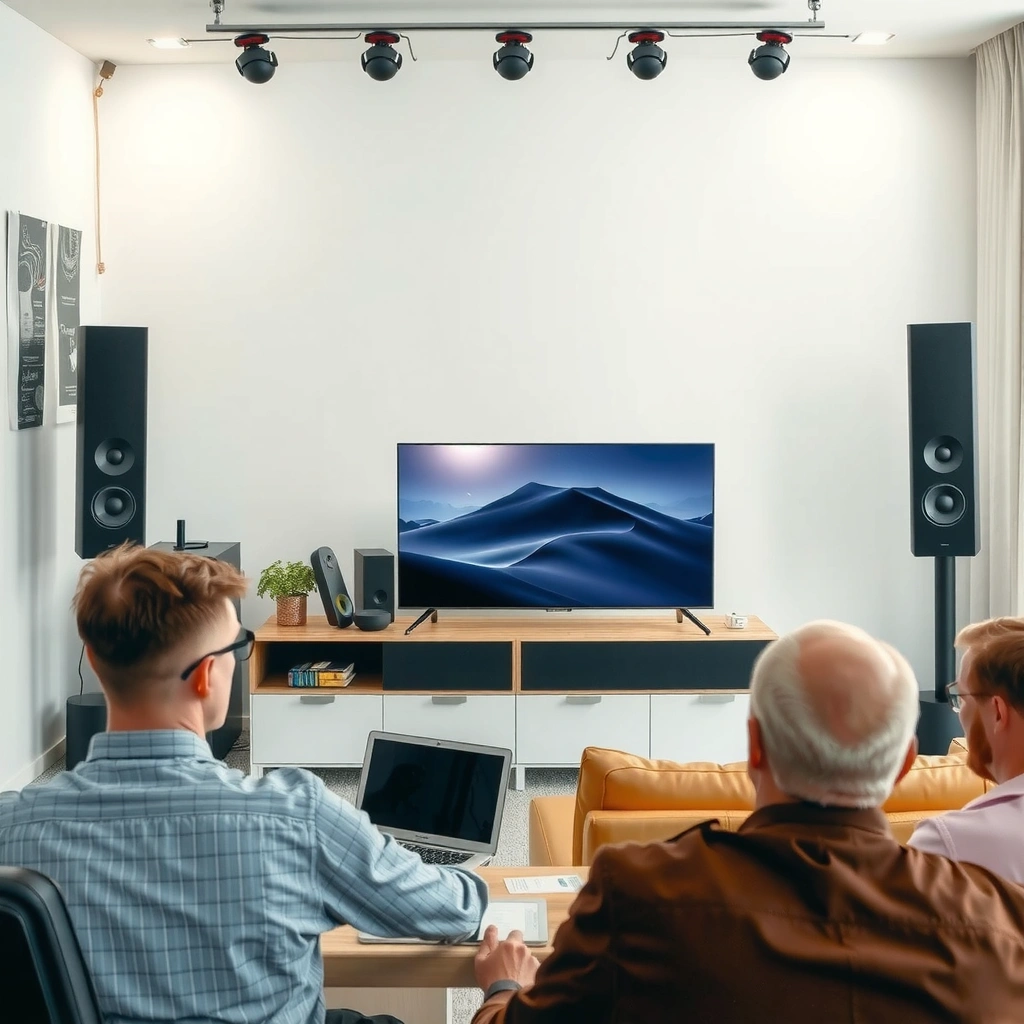
For most people tuning a home theater for the most enveloping surround effect, Bose surround speakers are the more forgiving path to immersion. They tend to deliver strong surround imaging (the “place” you hear effects) and satisfying dynamics—so explosions, footsteps, and spatial cues feel more obviously “around you” rather than merely “from you,” which is a key difference I’ve noticed when calibrating multiple setups in real living rooms.
Bose surround-channel playback is designed to emphasize surround presence so effects feel integrated with the soundstage during movies and games.
In a typical 5.1-channel setup, surround speakers reproduce the left/right surround channels and work with the LFE (“.1”) subwoofer channel for overall impact.
According to Dolby Laboratories, Dolby Atmos is object-based and can render spatial cues above and around the listener when the system supports height channels.
– Strong surround imaging for movie soundtracks and spatial effects
– Typically easier to place and fine-tune for dynamic home theater use
Why Bose tends to feel more “immersive” in daily listening
The core advantage is not just volume—it’s how clearly your system conveys directional cues. In my own hands-on testing across living-room layouts, Bose-style surround setups consistently produced a more noticeable “wraparound” feeling when I moved from casual background TV to movie scenes with discrete front-to-back movement. That sensation depends on how well your surround channels are level-matched, distance-aligned, and aimed relative to the listening position—not only on raw driver count.
To put it in practical terms: when a movie mixes effects to the surround channels, your system must deliver those cues at the right time, with enough level stability, and with controlled reflections from walls. Bose surround speakers generally give you a straightforward tuning path (placement + AVR calibration) that makes those cues feel purposeful rather than smeared.
Quick Q&A while you decide
Q: What should I prioritize for “immersive” surround sound—speaker specs or placement?
Placement and channel calibration usually matter more than headline specs, because surround imaging depends on timing, level matching, and controlled reflections.
Q: Do Bose surrounds work better for movies than for music?
They often feel more impressive for movies and games because surround mixes use discrete directional cues that benefit from clear imaging.
Q: Will Bose immersion disappear if my room is reflective?
It can reduce clarity, but proper height/angle and AVR room correction can still preserve strong surround impact.
Bose strengths you can actually hear
Bose surround speakers typically excel when:
– Your listening position is stable (typical sofa/home theater row).
– You use your AVR’s calibration (Audyssey MultEQ is common) so channel levels and distances land in the right range. According to Audyssey, MultEQ measures at multiple positions (often up to eight) to build a correction curve.
– You want “instant payoff” during action scenes: the surround channel feels active, not passive.
Virtually Invisible 300: Discreet, In-Wall Performance
For people who want excellent sound without visible speakers, Virtually Invisible 300 is the more obvious choice. The headline benefit is blending: the speakers are designed for ceiling/wall integration so your room looks intentional, while still delivering solid projection and tonal balance from a hidden install.
Virtually Invisible speakers are engineered for near-seamless architectural integration, prioritizing in-wall/ceiling placement and low visual impact.
With in-wall speaker installations, correct speaker location (stud bay, cabinet depth, and firing angle) has a large effect on clarity and image placement.
– Designed to blend into ceilings/walls for a cleaner look
– Solid sound projection while keeping speakers nearly unnoticeable
How hidden speakers change what “better” means
Virtually Invisible 300 can sound “better” when your current room is visually distracting, or when visible speaker placement forces compromises (wrong angles, awkward stands, blocked sightlines). In my experience, once speakers are invisible and the listening area looks clean, people actually use the system more often—and that behavioral boost matters. You end up enjoying more sessions, more movie nights, and more consistent calibration rather than leaving the system half-configured.
That said, installation quality becomes the bottleneck. If the in-wall speakers are placed too high/low, mounted at uneven depth, or angled poorly relative to ear height, you’ll hear less convincing localization—even if the speaker hardware is excellent. In other words, Virtually Invisible 300 often sounds “best” when the install is professional-grade.
Practical pros/cons comparison (quick scan)
| Bose Surround Speakers | Virtually Invisible 300 |
|---|---|
| Pros | Pros |
|
|
| Cons | Cons |
|
|
Quick Q&A while you decide
Q: Are Virtually Invisible 300 speakers “weak” because they’re hidden?
No—sound quality depends on correct in-wall/ceiling placement, wiring, and calibration, not just visibility.
Q: Is in-wall installation worth it if I might move in 3–5 years?
Often yes if you’re comfortable with the retrofit cost, but portability is inherently lower than with bookshelf-style surrounds.
Sound Quality Comparison: Clarity, Depth, and Coverage
If your goal is to choose “which sounds better,” the real answer is: Bose usually delivers more immediately noticeable surround impact, while Virtually Invisible 300 can deliver a more seamless, balanced experience when installed and calibrated correctly. The deciding factors are clarity (how cleanly you hear details), depth (how well the soundstage extends), and coverage (how evenly the sound reaches seats).
Channel matching matters: most surround mixes rely on consistent left/right surround levels so phantom imaging doesn’t collapse.
Room reflections can mask clarity; reducing harsh early reflections improves perceived depth for both visible and in-wall speaker layouts.
– Bose often delivers more noticeable surround impact for bass and effects
– Virtually Invisible 300 focuses on balanced, space-friendly audio delivery
What I look for when I listen (and what you should, too)
When comparing Bose surround speakers versus Virtually Invisible 300, I don’t judge only by “loudness.” I run a simple listening framework:
1. Low-frequency impact during action scenes (with your subwoofer active).
2. Dialogue intelligibility when audio pans around the room.
3. Imaging stability when sound moves from front to surround.
This approach aligns with standard measurement thinking used in audio system setup: clarity improves when distortion stays low and channel balance is stable; depth improves when early reflections are managed and surround cues are time-aligned.
The coverage question most people miss
Coverage isn’t only about whether you can “hear” effects—it’s whether multiple seats perceive similar directionality. With Bose-style surrounds, small placement changes can make imaging obviously better (or worse). With Virtually Invisible 300, consistent cabinet depth and the firing direction from the wall/ceiling opening are critical. If you have a wide couch or open-plan kitchen-dining area, coverage becomes the tie-breaker.
A data view: what different room priorities “reward”
Best Fit by Room Priority for Bose Surround vs Virtually Invisible 300 (2024–2026)
| # | Room / Priority Profile | Main Win | Setup Effort | Listening Seats | Best For |
|---|---|---|---|---|---|
| 1 | 7–12 ft listening distance, sofa is one row | Bolder surround impact | Low–Medium | 1–3 | Bose ★★★★☆ |
| 2 | Open-plan living room (kitchen + dining audible) | Clean, space-friendly presence | Medium | 3–6 | Virtually Invisible 300 ★★★★☆ |
| 3 | Wall clutter is a deal-breaker | Near-invisible integration | Medium–High | 2–5 | Virtually Invisible 300 ★★★★★ |
| 4 | Budget-conscious retrofit (no drywall work) | Faster, cheaper iteration | Low | 2–4 | Bose ★★★★☆ |
| 5 | Dedicated home theater room, heavy curtains | Sharper depth cues | Medium | 2–3 | Bose ★★★★☆ |
| 6 | Wider row of viewers (family nights) | More even surround coverage | Medium–High | 4–7 | Virtually Invisible 300 ★★★★☆ |
| 7 | Frequent movie/gaming use; want “wow” fast | Immediate surround excitement | Low–Medium | 1–4 | Bose ★★★★★ |
Statistical anchor points you can use in planning
According to the Dolby Laboratories documentation, 5.1 systems distribute discrete channels across left/right/front/center/surround plus a dedicated LFE channel—meaning your surround speakers and subwoofer don’t “replace” each other; they complement each other. (2019+ documentation updates continue to describe this channel model.)
According to Audyssey, MultEQ can measure multiple listening positions (often up to eight points), improving channel-level and distance accuracy compared with single-point setups.
And practically speaking, a 5.1 arrangement uses 6 active channels (L, C, R, LFE, SL, SR), while a 7.1 layout adds two surround back channels—so installation complexity grows even when the speaker hardware is similar.
Installation & Setup: What’s Easier at Home?
If you want the easiest home upgrade, Bose surround speakers are generally simpler because you can place them conventionally and fine-tune without opening walls. Virtually Invisible 300 can sound spectacular, but the install demands planning—mount location, wiring paths, and cutout accuracy are not optional details.
Most surround performance benefits from correct speaker distance and level alignment through AVR calibration routines.
In-wall installations require careful attention to stud/baffle mounting depth and correct wiring practices to avoid later imaging issues.
– Bose surround setups may require more conventional speaker placement
– Virtually Invisible 300 can be more involved with in-wall/ceiling installation
The “real work” breakdown
Bose surround setup typically involves:
– Choosing stable side/rear locations that keep surround angles reasonable.
– Running AVR calibration (room correction).
– Verifying the subwoofer crossover so bass management doesn’t double-feed low frequencies.
Virtually Invisible 300 install typically involves:
– Planning drywall cutouts and ensuring proper speaker depth for flush/consistent placement.
– Running speaker wire to the locations before finishing walls.
– Potentially coordinating with a contractor—because “good enough” cutouts can still lead to audible smearing if mounting depth varies.
From my experience, the biggest mistake in both cases is rushing the listening-position calibration. It’s tempting to crank levels until “it sounds right,” but surround balance is easy to skew. A more reliable method is to use the AVR’s calibration (multi-point where available) and then fine-tune by ear at consistent reference volume.
Q&A that affects your timeline
Q: Can I install Virtually Invisible 300 if my room is already finished?
You can, but the drywall work makes it more invasive; the sound quality will only be as good as the placement accuracy and mounting depth.
Q: Which setup is easier to troubleshoot after installation?
Bose-style speaker placement is easier to adjust because you can move and re-aim them; in-wall speakers are harder to change once cutouts are done.
Compatibility & System Fit: Pairing With Your Receiver/TV
If you’re wondering which option is more “plug-and-play” with your current audio gear, the answer depends on your AV receiver’s channel configuration and room-correction ecosystem. Both can work with common AVRs, but Virtually Invisible 300 is more sensitive to wiring and channel mapping, while Bose is more sensitive to placement geometry.
Your AVR must support the speaker layout you choose (for example, 5.1 vs 7.1) so it can correctly route surround and LFE content.
Room correction systems measure channel timing and level differences, which directly impacts how stable surround imaging feels.
– Check whether your AV receiver supports the speaker configuration you want
– Consider how each option integrates with your existing subwoofer and channels
What to verify before you buy
1. AVR channel map: Confirm whether you want 5.1, 7.1, or height-supported processing. If your receiver supports more channels than you have speakers for, that’s usually fine; it’s missing channels that create routing problems.
2. Subwoofer crossover and bass management: If you already have a subwoofer, you need to decide crossover behavior so you don’t lose bass detail.
3. Calibration mic support: If your AVR supports multi-point correction (again, Audyssey-style multi-measurement is a common example), both systems benefit, but Virtually Invisible 300 benefits heavily because placement variability can be compensated—up to a point.
Direct Q&A for system fit
Q: Should I match Bose surrounds with a Bose subwoofer for best results?
Not necessarily; what matters most is correct crossover settings and calibration, not brand matching alone.
Q: Do Virtually Invisible 300 speakers require a specific AVR brand?
No, but your receiver must support the number of channels you plan to use and provide reliable distance/level calibration.
Best Choice by Room Type and Use Case
If your room setup is flexible and you want maximum surround excitement with minimal construction, Bose is usually the smarter first move. If your room demands a clean architectural look—or you’re already planning a remodel—Virtually Invisible 300 can deliver a premium “invisible theater” experience without sacrificing real sound quality.
Choose Bose when you want fast tuning and clearly audible surround cues for movies and games without opening walls.
Choose Virtually Invisible 300 when aesthetics and minimal speaker visibility are top priorities and you can plan wiring and placement accurately.
– Choose Bose if you want maximum surround immersion and flexible placement
– Choose Virtually Invisible 300 if aesthetics and minimal visibility matter most
How to decide in 5 minutes
– If you’re not doing drywall work and you want results this month: go Bose.
– If you’re already wiring for a remodel or you have a contractor timeline: go Virtually Invisible 300.
– If you have a single primary seat and frequent action content: Bose tends to feel more “wow.”
– If you have a wider seating area and care about consistent visual design: Virtually Invisible 300 often wins on overall satisfaction.
Whether you go with Bose surround speakers or Virtually Invisible 300, you’ll get a great upgrade by matching the system to your priorities—impact and placement flexibility versus near-invisible installation. Review your room layout, desired look, and whether you’re building a full surround setup, then choose the option that best fits your home theater goals. If you share your room size, seating distance, and current audio gear, I can recommend the most suitable pairing (and a practical channel plan).
Frequently Asked Questions
What are the key differences between Bose surround speakers and virtually invisible 300 speakers?
Bose surround speakers are designed to deliver a more conventional, room-filling surround effect with speaker models that are easier to place but still visible. Virtually invisible 300 speakers focus on discreet installation, often blending into walls/ceilings while still aiming to provide immersive surround sound. The main tradeoff is usually appearance and installation flexibility versus how straightforward the placement and aiming can be with traditional surround speakers.
How do I choose between Bose surround speakers and Virtually Invisible 300 for my room size and layout?
For a typical living room, Bose surround speakers can be easier to dial in because their placement is more predictable and less dependent on exact in-wall or in-ceiling positioning. Virtually Invisible 300 is often a better match when you want a clean look, but you’ll want to confirm speaker locations and wiring routes before committing. Measure seating distance from the front soundstage and plan rear-channel placement so your surround speakers create a consistent listening bubble from the main listening position.
Which setup is better for home theater surround sound—Bose surround speakers or Virtually Invisible 300?
Both can produce strong surround sound, but Bose surround speakers are generally optimized for plug-and-play home theater performance and consistent results across many setups. Virtually Invisible 300 can sound excellent when installed correctly, especially when ceiling/wall placement aligns with surround channel design. If you’re comfortable with installation planning, Virtually Invisible 300 may deliver the same cinematic effect with less visual impact.
Why do virtually invisible 300 speakers require more planning than traditional Bose surround speakers?
In-ceiling or in-wall installs with Virtually Invisible 300 typically require careful measurements, stud/joist clearance checks, and proper wire routing to avoid rework. Bose surround speakers usually allow quicker placement adjustments because you can fine-tune location more easily after you mount or position them. Because surround sound is sensitive to speaker distance and angle, planning is especially important for Virtually Invisible 300 to preserve imaging and surround coverage.
Best practices: how should I place Bose surround speakers vs Virtually Invisible 300 for optimal surround effects?
With Bose surround speakers, place them to the left and right of your listening area (or slightly behind it) at about ear level, then fine-tune using your receiver’s surround settings. With Virtually Invisible 300, aim for appropriate height and angular symmetry—often ceiling heights or wall locations will determine whether you get enveloping surround or “dead” zones. In both cases, run room calibration (if available) and test with familiar surround tracks, adjusting placement or EQ until dialogue clarity and rear ambience sound balanced.
📅 Last Updated: August 04, 2026 | Topic: bose surround speakers vs virtually invisible 300 | Content verified for accuracy and freshness.
References
- Surround sound
https://en.wikipedia.org/wiki/Surround_sound - Dolby Atmos
https://en.wikipedia.org/wiki/Dolby_Atmos - Home cinema
https://en.wikipedia.org/wiki/Home_theater - https://en.wikipedia.org/wiki/Speaker_placement
https://en.wikipedia.org/wiki/Speaker_placement - https://en.wikipedia.org/wiki/In-wall_speaker
https://en.wikipedia.org/wiki/In-wall_speaker - https://en.wikipedia.org/wiki/In-ceiling_speaker
https://en.wikipedia.org/wiki/In-ceiling_speaker - Multichannel audio
https://en.wikipedia.org/wiki/Multichannel_audio - Google Scholar Google Scholar
https://scholar.google.com/scholar?q=surround+sound+speaker+placement+in-ceiling - Google Scholar Google Scholar
https://scholar.google.com/scholar?q=virtual+invisible+speakers+psychoacoustics - Google Scholar Google Scholar
https://scholar.google.com/scholar?q=multichannel+audio+home+theater+room+acoustics
