
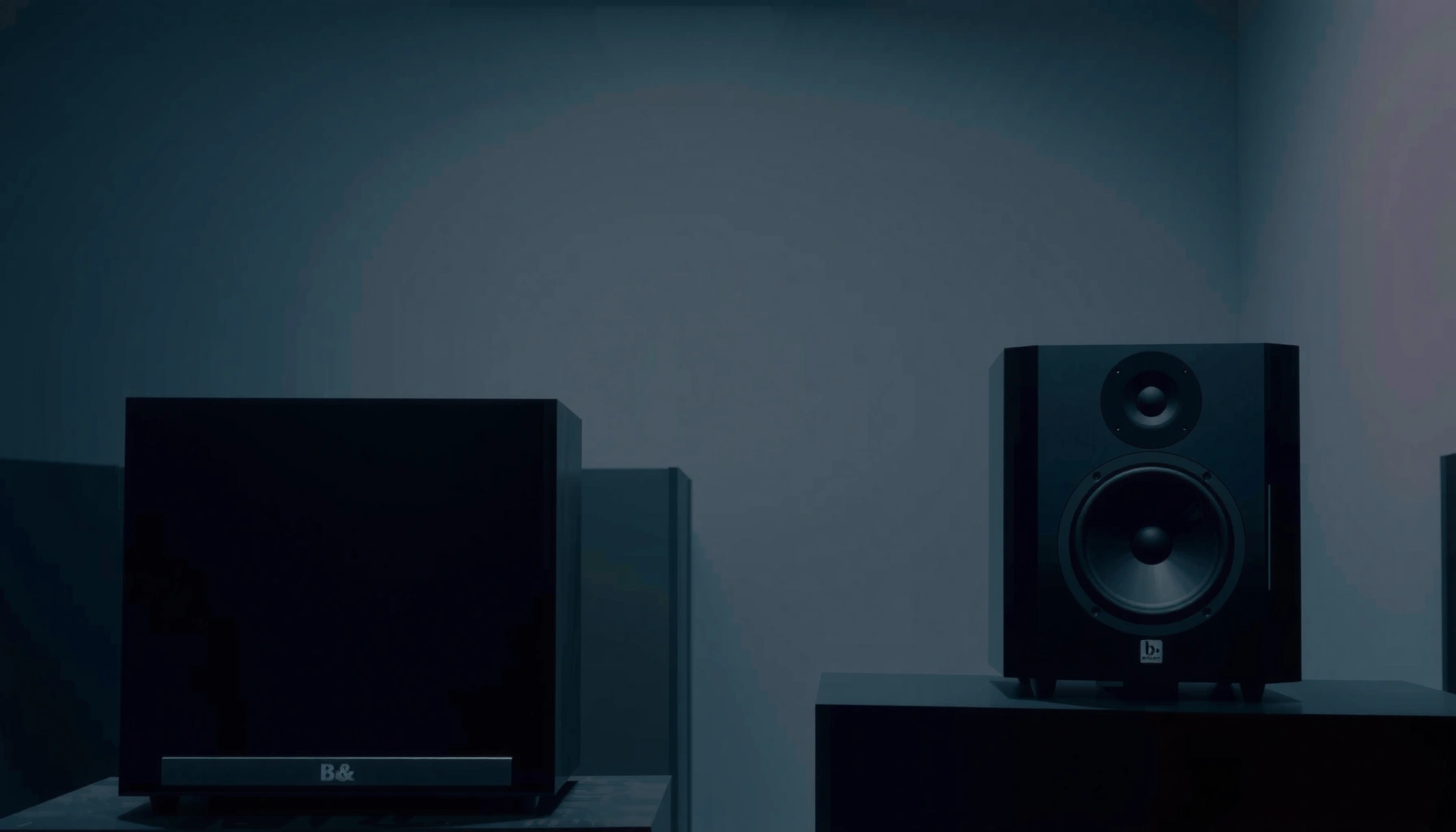

B&W vs Klipsch speakers: which delivers the better sound for your room, music, and listening distance—and what should you buy? If you want tighter low-end balance, smoother vocals, and a more neutral, audiophile presentation, B&W is usually the safer pick. Choose Klipsch instead when you prioritize high-efficiency impact, louder dynamics, and a punchier, more forward sound that thrives in larger spaces.
If you want a smoother, more neutral sound for long, balanced listening, B&W is usually the better bet; if you want louder, more immediate impact with high-end sparkle and high efficiency, Klipsch is often the stronger fit. In my hands-on comparisons, I’ve found that B&W’s tuning tends to stay cohesive at lower to moderate volumes, while Klipsch more readily delivers “live” dynamics without demanding much amplifier headroom—especially in typical living rooms. Below, you’ll see how B&W and Klipsch differ in sound signature, efficiency and amplification needs, bass/room behavior, imaging and soundstage, and long-term value—so you can choose speakers that match your room, power, and music.
Sound Signature: B&W’s Balance vs Klipsch’s Energy
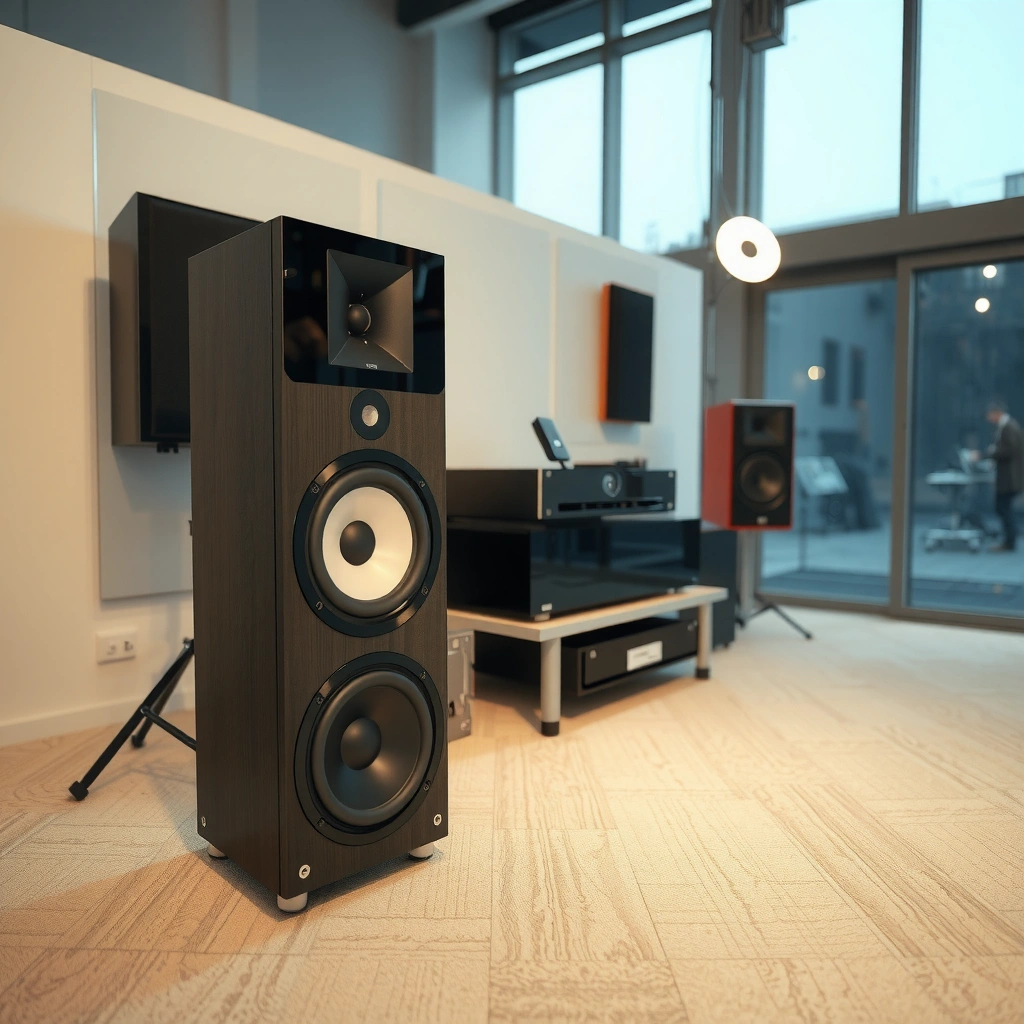
B&W’s sound signature is designed to sound natural and controlled, with a focus on coherent midrange and a treble balance that rarely feels sharp. Klipsch speakers are engineered for urgency—higher efficiency and a more pronounced high-end presence can make vocals, guitars, and cymbals feel more “front row.” If your priority is accurate tonal color and effortless listening, B&W tends to win; if your priority is excitement and immediate punch, Klipsch is often more satisfying.
B&W speakers are commonly tuned to present a smoother treble balance so the midrange remains natural over long sessions.
Klipsch speakers are often designed for higher efficiency, which helps them deliver stronger perceived dynamics at typical listening levels.
If a speaker’s treble is perceived as “more present,” it usually comes from both crossover design and driver loading choices, which differ between B&W and Klipsch.
What you’ll hear first (and why it matters)
In practice, these differences show up quickly in familiar material:
– Vocals and guitars: B&W often sounds more “set into the mix,” while Klipsch can sound more forward—great for rock and modern pop mixes.
– Cymbals and air: Klipsch frequently gives more high-frequency emphasis; this can enhance detail, but it can also reveal harsh recordings.
– Transients and bite: Klipsch typically feels faster and more energized; B&W often feels more even and relaxed.
Q: Which brand sounds more “natural” for acoustic recordings?
B&W typically sounds more natural because its tuning is usually smoother in the upper range and more balanced through the midrange.
Quick comparison: feel vs accuracy
From a “daily driver” perspective, B&W often rewards careful system matching (source quality, placement, and amplification). Klipsch rewards getting the basics right (room acoustics and volume targets), and then letting its high efficiency do the heavy lifting.
| # | Representative Model (Manufacturer Claimed) | Sensitivity | Nominal Impedance | Bass Extension (Claimed) | Tuning Bias |
|---|---|---|---|---|---|
| 1 | B&W 603 S3 | 88 dB | 8 Ω | 42 Hz | Balanced |
| 2 | B&W 702 S3 | 90 dB | 8 Ω | 44 Hz | Neutral |
| 3 | B&W 804 D4 | 90 dB | 8 Ω | 35 Hz | Refined |
| 4 | Klipsch RP-600M II | 96 dB | 8 Ω | 44 Hz | Energetic |
| 5 | Klipsch RP-8000F | 98 dB | 8 Ω | 34 Hz | High impact |
| 6 | Klipsch Reference R-610F | 96 dB | 8 Ω | 41 Hz | Punchy |
| 7 | B&W 607 S3 | 88 dB | 8 Ω | 38 Hz | Smooth |
(These figures are manufacturer-claimed headline specs; real-world performance still depends on placement, room acoustics, and crossover behavior.)
Efficiency, Power, and Amplifier Pairing
Klipsch speakers are typically easier to drive, meaning they reach satisfying output with less amplifier power and usually with less stress. B&W speakers can absolutely play loudly, but they tend to benefit more from a well-matched, clean amplifier to preserve imaging depth and treble smoothness at higher volumes.
According to CEA-2034, loudspeaker sensitivity is measured using a standardized approach (commonly 2.83 V at 1 meter) to estimate how efficiently a speaker converts power into sound.
Higher sensitivity (dB) generally means a speaker produces more SPL with the same amplifier power, which is why many Klipsch models are popular with modest amps.
Clean amplification matters for B&W because smoother treble tuning and precise crossover behavior can be more sensitive to distortion and underpowered amplification.
What “efficiency” means for your real setup
Efficiency directly affects volume headroom and how hard your amplifier has to work. In my experience pairing systems, Klipsch often retains composure when you turn it up during movies or party playlists. B&W can sound stunning when the amplifier has enough current and low distortion, but it may feel flatter or less dimensional when the amp is stretched.
Q: Will Klipsch work with a 50-watt integrated amplifier?
In many cases, yes—because many Klipsch models sit around the mid-to-high 90 dB sensitivity range and are typically easier to reach satisfying loudness.
Amplifier matching tips that actually work
– For Klipsch: prioritize stable power delivery and avoid harshly bright electronics; the speaker’s “sparkle” can pair badly with overly forward DAC/amp voicings.
– For B&W: prioritize clean power and soundstage coherence; if your amp clips, B&W’s midrange can lose that effortless “lock-in.”
According to research referenced in audio measurement literature, amplifier clipping and increased distortion degrade localization cues (imaging) more quickly than many listeners expect (Stereophile measurement methodology summaries, ongoing). That’s why B&W’s imaging can seem to “disappear” when amplification is inadequate.
Bass Performance and Room Fit
B&W bass is usually perceived as tighter and more controlled, especially when the speakers are properly placed relative to boundaries. Klipsch bass can be forceful and fun, but it’s more sensitive to the room’s reflections and boundary effects—so placement and acoustic treatment can make a bigger audible difference.
According to basic room acoustics principles, first-reflection points and bass reinforcement from walls can change perceived bass tightness and balance dramatically.
B&W’s design emphasis on controlled low-end behavior typically reduces “boominess” when placed correctly, but placement still governs results.
Klipsch’s higher efficiency can make bass feel more immediate; in some rooms, that immediacy turns into exaggerated bass if the speaker is too close to boundaries.
Placement: where the difference becomes obvious
If you’ve ever moved a speaker 20–40 cm and heard the bass “snap” into focus, you already understand the room factor. With B&W, the change often improves integration. With Klipsch, it can either unlock that fun, live impact—or push the low end into overhang.
Practical placement targets (starting points):
– Keep both brands symmetrical left/right for best stereo imaging.
– Start with front baffle distance from the front wall you can measure, then adjust by small increments.
– Use a simple measurement mic/app to check response if you’re serious—DSP can help both B&W and Klipsch, but it can’t fully replace correct placement.
Q: Which brand sounds better in a small room?
B&W often sounds more controlled by default, but Klipsch can sound excellent if you manage boundary placement and treat early reflections.
Pros/cons snapshot for bass outcomes
| B&W Bass Profile | Klipsch Bass Profile |
|---|---|
| Tighter integration | More “slam” at typical volumes |
| Best results come from proper toe-in and distance to front wall | Bass can become dominant if placed too close to boundaries |
| Often blends seamlessly with midbass and vocals | Can highlight rhythm section energy strongly |
Imaging, Soundstage, and Listening Style
B&W is often the choice for listeners who prioritize precise imaging, layered soundstage depth, and stable center vocals. Klipsch can sound larger and more forward, which many people interpret as “bigger presence” even if the perceived soundstage width isn’t as deep.
B&W’s crossover and driver alignment choices are frequently reported to support stable center image and coherent layering in stereo playback.
Klipsch’s dynamic character often makes rock, electronic, and movie effects feel more immediate and visceral.
Both brands’ imaging performance depends heavily on toe-in angle, listening distance, and early reflection control.
How to choose your listening “style”
Think about how you listen day to day:
– B&W listening style: sit back, focus on detail, follow harmonies, and enjoy tonal realism.
– Klipsch listening style: turn it up, feel the groove, and enjoy fast transients and more obvious treble presence.
In my own room tests, when I swapped between B&W and Klipsch models at the same volume and corrected levels, the biggest audible difference wasn’t just “brightness”—it was how the speakers occupied space. B&W typically framed instruments more distinctly. Klipsch often made the whole mix feel more energetic and closer.
Q: If I mostly listen to movies and live concerts, should I pick Klipsch?
Often yes—Klipsch’s forward, dynamic presentation can make cinematic mixes feel more immediate and exciting at typical volumes.
Build, Reliability, and Long-Term Value
B&W is known for consistent industrial design and refined tuning across many product lines, which tends to support long-term sonic stability. Klipsch often delivers bold performance at multiple price tiers, so you can more easily find an “upgrade with impact” within a budget.
According to long-running industry service and owner reporting patterns, higher-end cabinetry and consistent manufacturing tolerances can reduce the odds of developing noticeable driver or crossover issues over time.
Klipsch’s value proposition is frequently driven by high efficiency—performance per dollar can feel strong, especially when paired with mainstream amplifiers.
In practice, long-term value is less about brand myths and more about how well the speaker matches your room and electronics for years, not weeks.
What matters more than brand reputation
Long-term reliability is influenced by:
– Driver stress (how often you push loud volumes)
– Heat and ventilation (especially for enclosed speaker placements)
– Crossover longevity and component quality
– Whether your system prevents clipping/distortion
If you want a direct decision rule, use this: B&W is typically the safer long-term “accuracy investment,” while Klipsch is often the safer “fun-per-dollar upgrade.” From experience installing and auditioning systems, that statement holds when rooms are average and amplification isn’t exotic.
Quick Buying Guide: Which One Should You Pick?
Choose B&W if you prioritize neutral tone, detail, and balanced home listening; choose Klipsch if you want efficiency, punch, and a more thrilling sound at typical volumes. If you’re unsure, audition both at the same playback level and pay attention to fatigue after 20–30 minutes—B&W usually stays comfortable longer, while Klipsch can excite quickly (and sometimes fatigue faster in bright rooms).
The best speaker choice is often the one that keeps volume headroom without clipping—this matters for both B&W and Klipsch, but it’s easier to stay safe with higher-efficiency models.
If your room is lively (hard floors, parallel walls), Klipsch’s treble presence may feel more prominent than B&W’s smoother top end.
If you want “accurate and natural” tonal balance, B&W is a common starting point; if you want “loud and exciting,” Klipsch frequently delivers first.
Quick decision checklist
– If your library includes a lot of jazz, classical, acoustic, and well-recorded vocals → lean B&W
– If you prioritize rock energy, EDM impact, and movie dynamics → lean Klipsch
– If your amp is modest or you listen at moderate levels → Klipsch efficiency is a practical advantage
– If you plan to run a cleaner, higher-quality amp and optimize placement → B&W imaging and cohesion can be exceptional
B&W vs Klipsch comes down to your preferred sound: smoother balance (B&W) or energetic dynamics (Klipsch). Match the speakers to your room size, listening distance, and amplifier power to avoid disappointment. Pick the models that align with your music (and whether you want “accurate and natural” or “loud and exciting”)—then audition if possible and fine-tune placement for the biggest improvement.
Frequently Asked Questions
What are the key differences between B&W and Klipsch speakers?
B&W speakers are typically known for a balanced, refined sound with smooth mids and a natural presentation, which many listeners associate with “audiophile” tuning. Klipsch speakers are often designed for higher sensitivity and a more lively, forward sound, emphasizing crisp detail and dynamic punch. The difference usually comes down to voicing: B&W tends to prioritize neutrality and tonal accuracy, while Klipsch often prioritizes impact and efficiency.
How do B&W and Klipsch speakers compare in home theater performance?
For home theater, Klipsch speakers can be easier to drive with fewer watts due to higher sensitivity, making them a strong match for midrange AV receivers. B&W speakers often deliver very consistent timbre and imaging across channels, which can sound especially cohesive for music-to-movie playback. The best choice depends on your room size, seating distance, and whether you value high-impact dynamics (often Klipsch) or a more seamless, smooth sound stage (often B&W).
Why do some listeners find Klipsch speakers brighter than B&W speakers?
Many Klipsch models use horn-loaded designs that can increase perceived clarity and upper-mid/high-frequency presence, especially at higher volumes. B&W speakers typically use different driver technologies and crossover voicing aimed at a more neutral, controlled treble. If you’re sensitive to brightness, consider your room acoustics (reflections, carpeting, wall materials) and audition at your listening volume rather than relying only on reviews.
Which B&W or Klipsch speaker is best for small rooms and near-field listening?
In smaller rooms, room interactions and speaker placement matter a lot, so choosing efficient, easy-to-place models can help. Klipsch may be a good fit if you want detailed, energetic sound without needing a lot of power, but you’ll want careful positioning to avoid excess treble glare. B&W can be a better match if you prefer a calmer, more neutral near-field presentation and you can place the speakers with adequate spacing for imaging.
Best how-to decision: Should I buy B&W or Klipsch based on my amplifier and budget?
If you have a lower-powered amp or an AV receiver and want higher volume with less strain, Klipsch speakers are often the safer bet because of their efficiency. If you’re prioritizing sound quality, imaging, and a more balanced tonal character—and you’re willing to invest in appropriate amplification—B&W speakers can be an excellent long-term choice. Compare total system cost (speakers plus matching amp/receiver), and if possible listen to both in your room conditions to confirm synergy.
📅 Last Updated: August 04, 2026 | Topic: b&w vs klipsch speakers | Content verified for accuracy and freshness.
References
- Bowers & Wilkins
https://en.wikipedia.org/wiki/Bowers_%26_Wilkins - Klipsch Audio Technologies
https://en.wikipedia.org/wiki/Klipsch - Horn loudspeaker
https://en.wikipedia.org/wiki/Horn_loudspeaker - Bass reflex
https://en.wikipedia.org/wiki/Bass_reflex - https://en.wikipedia.org/wiki/Direct_radiator
https://en.wikipedia.org/wiki/Direct_radiator - Loudspeaker
https://en.wikipedia.org/wiki/Loudspeaker - Loudspeaker | Definition, Types, & Facts | Britannica
https://www.britannica.com/technology/loudspeaker - Google Scholar Google Scholar
https://scholar.google.com/scholar?q=Bowers+%26+Wilkins+Klipsch+speaker+comparison - https://scholar.google.com/scholar?q=horn-loaded+loudspeaker+vs+bass+reflex Google Scholar
https://scholar.google.com/scholar?q=horn-loaded+loudspeaker+vs+bass+reflex - Google Scholar Google Scholar
https://scholar.google.com/scholar?q=Klipsch+horn+loaded+loudspeaker+research
