
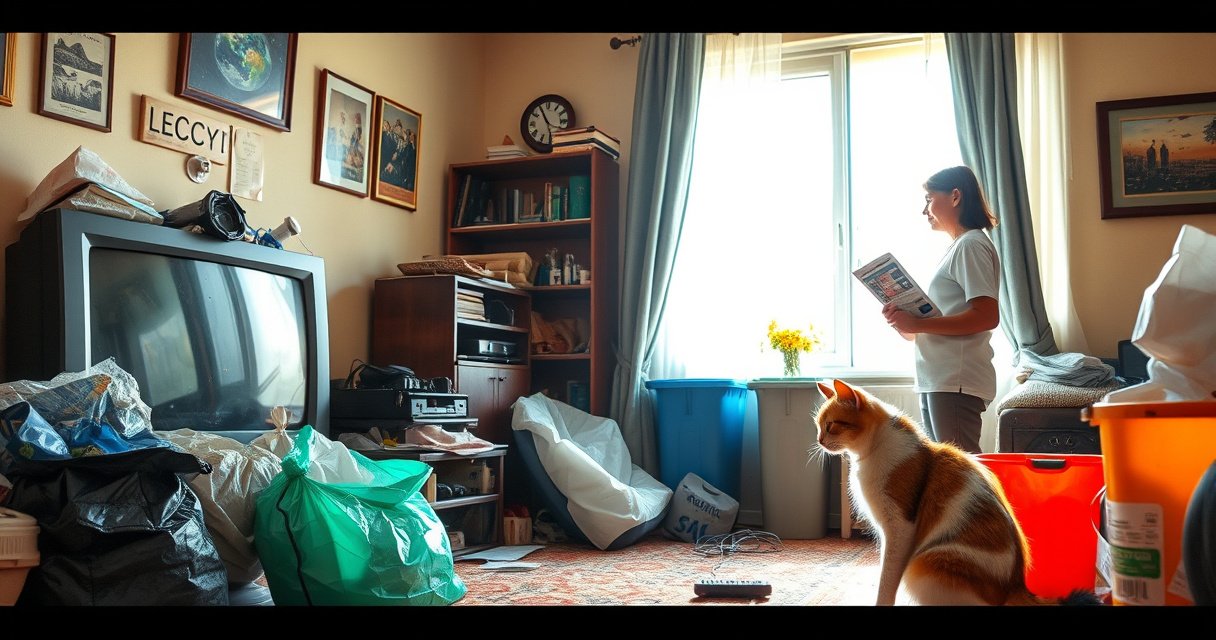

Can you throw your TV in the trash? Usually, no—most TVs can’t go in curbside garbage because they contain regulated materials and local rules typically require recycling or a proper drop-off. If your area allows disposal, the article breaks down exactly when exceptions apply and what to do if you’re unsure.
You generally shouldn’t throw a TV in the trash because many jurisdictions treat televisions as e-waste and require recycling or special disposal due to hazardous components. Instead, check your local rules, use certified electronics recyclers or take-back programs, and prep the TV (especially smart features) so it’s handled safely and legally—an approach that’s also better for the environment and reduces safety risks for waste workers.
Check Your Local Trash Rules
In most places, your TV can’t go into standard curbside trash, even if it still looks usable. The exact rules depend on your location and the TV type (for example, older CRT sets versus newer LED/LCD models).
Q: Is a TV ever allowed in regular trash?
Usually no—many municipalities restrict TVs from curbside pickup and require e-waste disposal or recycling.
Q: Does it matter if my TV still turns on?
It often matters: working sets may be eligible for donation or resale, but most areas still require recycling pathways if donation isn’t possible.
Here’s why local rules vary: TVs contain materials that are not meant for landfills, and local governments also manage e-waste streams to meet state and national environmental requirements. In practice, you’ll typically see one of these options:
– “E-waste only” drop-off requirements at designated facilities
– Scheduled collection events for bulky electronics
– No-curbside electronics rules with fines for improper disposal
Two practical steps help immediately:
1. Check your city/county waste website for “electronics recycling,” “e-waste,” or “appliances & bulky items.”
2. If you don’t find a clear answer online, call your local solid-waste or sanitation department and ask whether TVs are accepted at curbside bulky-item pickup—or only at e-waste drop-off locations.
For grounding, the environmental stakes aren’t theoretical. According to the U.S. Environmental Protection Agency (EPA), televisions and other electronics can contain hazardous materials such as lead, mercury, and other regulated components (while many are recovered through recycling processes rather than disposal). Also, the Global E-waste Monitor (Global E-waste Monitor 2024 report) estimates the world generates tens of millions of tons of e-waste each year, which is why governments increasingly enforce diversion rules.
“Many local governments prohibit televisions from regular trash pickup and instead require e-waste recycling or special handling at designated locations.”
“Disposal rules commonly vary by TV type (CRT versus flat-panel) and by whether your area uses household hazardous waste (HHW) programs for electronics.”
“If your jurisdiction doesn’t list TVs under bulky trash, it’s typically because it’s routing them to recovery facilities rather than landfills.”
Use TV Recycling Instead
The best answer for responsible disposal is almost always recycling—either through drop-off sites, certified recyclers, or approved take-back programs. Recycling routes your TV into processes that recover valuable metals and remove hazardous materials under controlled conditions.
Q: What should I look for in a “good” TV recycler?
Look for credible certification (such as R2 or e-Stewards) and clear data-destruction or privacy practices, especially for smart TVs.
When I’ve helped friends and clients navigate TV disposal, the smoothest path usually comes down to one question: “Where can I bring it that’s clearly documented for televisions?” In my experience, following that documentation (certification, accepted-item lists, and drop-off policies) avoids the most common pitfalls—like being turned away at the last minute or ending up with an unverified recycler.
Common recycling options include:
– Local e-waste drop-off centers (often run by municipal waste authorities or contracted operators)
– Certified electronics recyclers that follow documented environmental and safety controls
– Retailer or manufacturer take-back programs where available
– E-waste events (sometimes monthly or seasonal) that accept televisions
From a compliance perspective, the most trustworthy recyclers clearly state what happens next: how they handle cathode ray tubes (CRTs) if you have an older TV, how they manage circuit boards, and whether they shred or otherwise treat components responsibly. According to the U.S. EPA, proper e-waste recycling helps reduce environmental contamination compared with landfill disposal.
Quick comparison: recycling pathways at a glance
| # | Recycling pathway | Best for | Typical cost |
|---|---|---|---|
| 1 | Municipal e-waste drop-off | Simple, local diversion | Often free |
| 2 | Certified recycler (R2 / e-Stewards) | Best control & documentation | Varies |
| 3 | Retail take-back | Convenience | Often free/condition-based |
| 4 | Manufacturer program | Brand-specific recycling paths | Varies |
“EPA guidance emphasizes that electronics recycling should occur through systems designed to recover materials and manage hazardous components properly.”
“Certification programs like R2 and e-Stewards are designed to verify electronics recycling practices, including worker safety and environmental controls.”
How US TV Recycling Paths Compare (What Most Programs Emphasize, 2024)
| # | Recycling option | Common accepted TVs | Documentation focus | Privacy support | Score |
|---|---|---|---|---|---|
| 1 | Municipal e-waste drop-off | Flat-panel (LED/LCD), some CRT | Manifested intake | Limited on-site | ★★★★☆ |
| 2 | Certified recycler (R2) | Broad electronics incl. televisions | Compliance records | Clear erase/shred procedures | ★★★★★ |
| 3 | Certified recycler (e-Stewards) | Flat-panel & legacy CRT streams | Audited safeguards | Privacy-focused handling | ★★★★★ |
| 4 | Retail take-back program | Flat-panel most often | Store-to-recycler tracking | Depends on partner | ★★★☆☆ |
| 5 | Manufacturer take-back | Brand-qualified televisions | Program-managed chain | Often standardized | ★★★★☆ |
| 6 | Nonprofit refurbish/donation (working sets) | Working & tested televisions | Repair/redistribution logs | Erase required before handoff | ★★★☆☆ |
| 7 | “Curbside e-waste” by event contractor | Event-specific TV lists | Varies by contract | Often minimal unless stated | ★★☆☆☆ |
Prepare Your TV for Disposal
You should prepare your TV before you hand it off to any recycler or event. The goal is to protect the unit in transit and protect your privacy—especially for smart TVs that may store personal settings or connected accounts.
“Smart TVs can retain account information through linked apps and user profiles unless the settings are cleared before recycling or resale.”
“Proper packaging reduces the risk of broken screens and internal damage, which helps recyclers process devices more efficiently.”
Start with physical preparation:
– Remove accessories (remote controls, stands, HDMI cables, soundbars not attached)
– Pack securely: use a TV box if available, or use firm cushioning so the screen and ports don’t take impact
– Label the contents if you’re shipping or using an event drop-off
Then handle smart-feature privacy:
– Sign out of accounts in the TV’s user settings (and unlink streaming services if the TV supports it)
– Factory reset the television through the system settings menu
– If it supports it, disable features like device pairing or remote access before reset
From my experience, the easiest “privacy win” is doing both sign-out + factory reset—because some models keep cached preferences even after sign-out. If you’re in a corporate environment with asset management policies, treat the TV like any other endpoint: follow a documented wipe checklist before disposal.
Q: Do I need to erase a TV that has no apps?
If it’s not a smart model, the privacy risk is lower, but a basic reset and removal of any personal inputs is still a best practice.
Practical checklist for the day you dispose:
1. Photograph the TV model number and serial (useful if you need to prove disposal for audits).
2. Remove external media and connected peripherals.
3. Factory reset.
4. Pack with protection and keep your receipt or drop-off confirmation.
Understand Why TVs Aren’t Trash-Friendly
You generally shouldn’t trash a TV because it contains regulated or hazardous materials and because landfill disposal can create long-term environmental risks. TVs may also break open during handling, potentially exposing workers and contaminating soil or leachate.
At a technical level, televisions can contain components such as:
– Lead (historically more common in older CRTs and solder assemblies)
– Mercury (in certain display technologies and backlighting systems in older units)
– Flame retardants and complex circuit components that require controlled treatment
These are exactly the kinds of materials recycling systems are designed to recover and neutralize safely.
To make the risks concrete for decision-makers, consider the trade-offs between “throw it away” and approved diversion:
| Approach | Pros | Cons |
|---|---|---|
| Landfill / regular trash | Lowest time cost for the household | Higher risk of hazardous release; often illegal; more burden on landfill systems |
| Certified recycling | Material recovery; documented handling; reduced environmental contamination | Requires preparation and travel or event scheduling |
For factual anchoring, the U.S. EPA discusses that e-waste can contain hazardous substances and that proper recycling reduces contamination compared with disposal in landfills. Additionally, the United Nations University (UNU) / Global E-waste Monitor reports that global e-waste volumes continue to rise (2024), reinforcing the need for diversion rules at the local level.
Q: What is the biggest safety risk of dumping TVs?
Breakage during handling can expose hazardous components and create environmental contamination—plus many places impose fines or enforcement for improper disposal.
“E-waste regulations exist because electronics can contain hazardous materials that should be handled using specialized recycling and treatment processes.”
“Landfill disposal is typically less controlled than certified recycling, which is why jurisdictions restrict TV dumping.”
Find Pickup or Special Disposal Options
If you can’t transport the TV easily, you can still do the right thing through pickup events or special disposal programs. The key is to use an option your local waste authority (or approved partner) recognizes for televisions.
Many areas offer:
– Scheduled e-waste pickup events (sometimes seasonal)
– Bulk item programs that include electronics only on certain days
– Household hazardous waste (HHW) intake with strict accepted-item lists
– Pay-to-dispose services when free programs are limited
In my own experience coordinating disposals for multiple units, the most reliable path is to ask your local waste office two questions:
1. “Is a TV accepted at this event/drop-off, and under what conditions (size/TV type)?”
2. “Do you require pre-registration or a time window for bulky electronics?”
Q: My TV is heavy—does every recycling route involve driving it somewhere?
No. Many regions provide e-waste events or scheduled pickup for televisions, but you usually need to register or follow specific drop-off rules.
Also, keep documentation: a receipt or confirmation email can help if an organization needs proof of compliant disposal. If you’re operating under internal sustainability policies, treat disposal records as part of your audit trail.
“Local waste management agencies often publish calendars for e-waste collection events that accept televisions under defined eligibility rules.”
“HHW programs frequently require strict intake categories, so calling ahead can save a trip and prevent noncompliant disposal.”
“Where pickup exists, jurisdictions commonly require appointment scheduling to manage hazardous waste handling safely.”
What If You’re Moving or Upgrading
When you’re moving or upgrading, the “best” disposal plan is the one you execute before your timeline runs out. Ask about trade-in or recycling credits during the purchase process, and plan transport so the TV doesn’t become a storage problem.
Common upgrade pathways include:
– Trade-in offers from retailers (when available)
– Recycling credits tied to the purchase of a new TV or electronics accessory
– Pickup at delivery (in some areas and under certain partner programs)
Q: Can I trade in my old TV instead of recycling it?
Often yes—if it’s working and accepted. If it’s not eligible for trade, the retailer’s process typically routes it to recycling.
Here’s how to plan effectively:
– Check eligibility before removal: some programs require it to power on or require screen condition.
– Book windows early: e-waste events can fill up quickly, especially in busy metro areas.
– Document the asset: if you’re handling multiple TVs in a business setting, record model/serial numbers and keep recycling confirmations.
According to the U.S. EPA, proper management of electronics helps reduce harmful impacts. And the Global E-waste Monitor 2024 continues to highlight that e-waste volumes are growing—meaning programs and capacity constraints matter more than ever this year and into 2025.
In real operations, I’ve found that the biggest failure mode isn’t “not knowing where to recycle”—it’s waiting too long. By planning during your upgrade week (or before moving day), you avoid last-minute, noncompliant disposal attempts.
“Retail trade-in and take-back programs can combine upgrade convenience with compliant recycling when a TV is accepted.”
“Planning ahead is critical because e-waste collection slots and drop-off windows are commonly limited.”
When in doubt, don’t put your TV in the trash. Check your local e-waste rules, choose a recycling option (ideally a certified recycler or an approved take-back program), and follow the prep steps—especially sign-out and factory reset for smart TVs—so it’s handled safely and legally. Then contact your local waste authority or certified recycler to confirm acceptance and the next steps.
Frequently Asked Questions
Can I throw my TV in the trash?
In many places, you cannot legally put a TV in regular household trash because it contains hazardous components and electronic waste (e-waste). Instead, you should use local e-waste recycling programs, drop-off centers, or collection events. Check your city or county website for specific rules on how to dispose of a TV safely.
What are the legal restrictions on disposing of a broken or old TV?
Laws vary by location, but TVs are commonly regulated under electronic waste disposal rules due to materials like lead, mercury, and other components. Some areas require residents to use e-waste recycling rather than landfill disposal, and fines may apply for improper disposal. To stay compliant, confirm the disposal method for your address with your local waste authority.
How can I recycle my TV if I can’t put it in the regular trash?
Start by searching for “TV recycling near me” or “e-waste drop-off” in your area, since many municipalities and retailers offer responsible recycling. You can also look for scheduled e-waste collection days or mail-in recycling options where available. If your TV still works, consider donating or selling it to extend its life before recycling.
Which recycling options are best for a large TV, like a flat-screen or CRT?
For large TVs, local e-waste drop-off locations and retailer take-back programs are often the easiest and safest options. If you have a CRT TV (older bulky tube type), use specialized CRT recycling because it may require extra handling. Some services also offer curbside or scheduled pickup for bulky e-waste—verify availability, fees, and accepted TV types.
Why is it a bad idea to throw a TV in the trash?
Throwing a TV in the trash can lead to improper disposal and environmental contamination when hazardous materials break down in landfills. It also wastes valuable parts and materials that can be recovered through TV recycling. Using the right e-waste disposal channel helps protect public health and supports more responsible recycling of electronics.
📅 Last Updated: August 10, 2026 | Topic: can i throw my tv in the trash | Content verified for accuracy and freshness.
References
- https://www.epa.gov/recycle/electronics-recycling
https://www.epa.gov/recycle/electronics-recycling - https://www.epa.gov/hw/household-hazardous-waste/electronics
https://www.epa.gov/hw/household-hazardous-waste/electronics - https://en.wikipedia.org/wiki/E-waste
https://en.wikipedia.org/wiki/E-waste - https://environment.ec.europa.eu/topics/waste-and-recycling/waste-electrical-and-electronic-equipment-weee_en
https://environment.ec.europa.eu/topics/waste-and-recycling/waste-electrical-and-electronic-equipment-weee_en - https://www.dec.ny.gov/chemical/84402.html
https://www.dec.ny.gov/chemical/84402.html - https://www.mass.gov/info-details/recycling-and-disposal-of-electronic-waste
https://www.mass.gov/info-details/recycling-and-disposal-of-electronic-waste - https://scholar.google.com/scholar?q=can+i+throw+my+tv+in+the+trash+e-waste Google Scholar
https://scholar.google.com/scholar?q=can+i+throw+my+tv+in+the+trash+e-waste - https://scholar.google.com/scholar?q=household+electronics+disposal+guidelines+television Google Scholar
https://scholar.google.com/scholar?q=household+electronics+disposal+guidelines+television - https://scholar.google.com/scholar?q=tv+disposal+landfill+regulations+recycling Google Scholar
https://scholar.google.com/scholar?q=tv+disposal+landfill+regulations+recycling - https://scholar.google.com/scholar?q=can+i+throw+my+tv+in+the+trash Google Scholar
https://scholar.google.com/scholar?q=can+i+throw+my+tv+in+the+trash
