
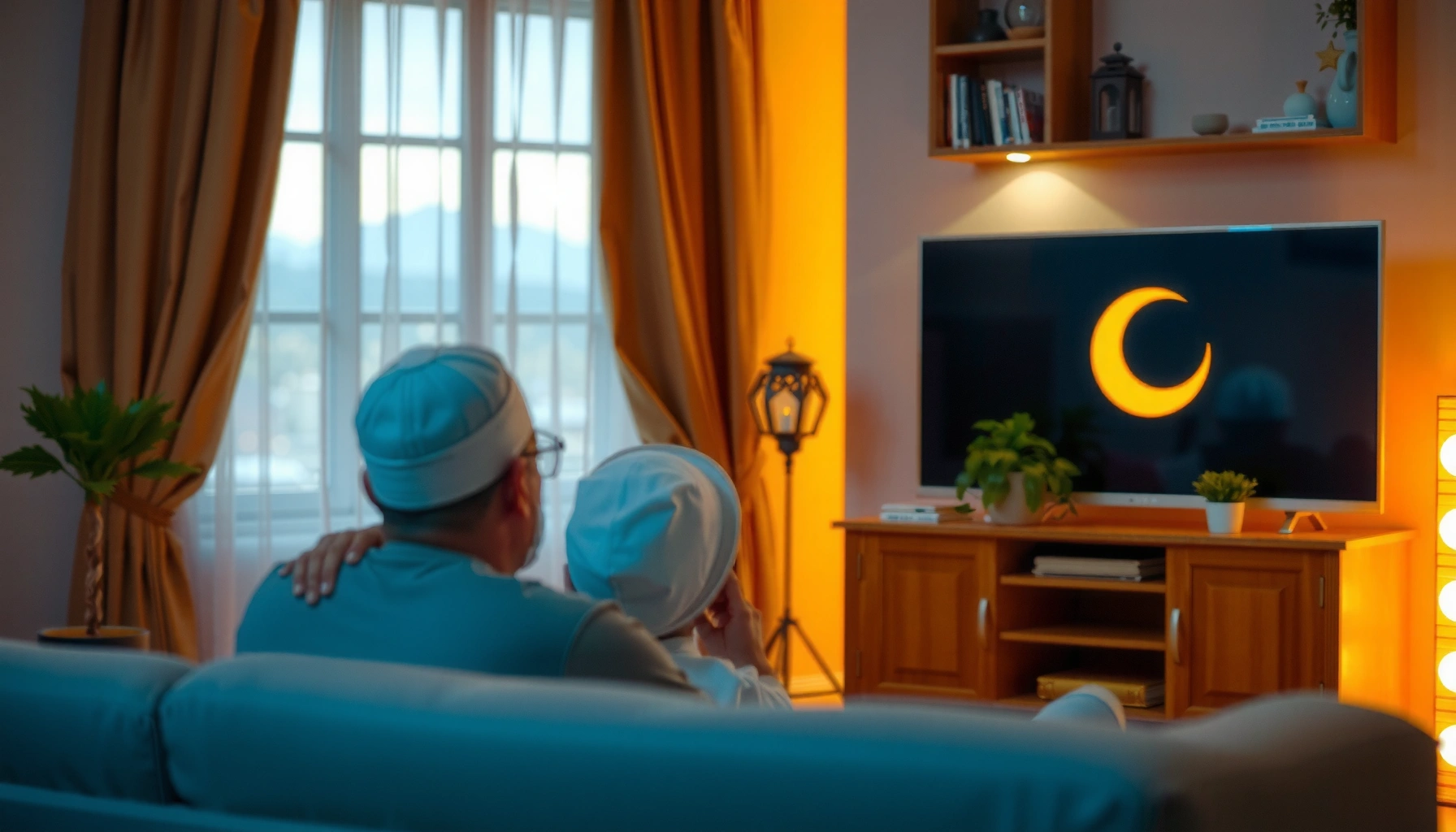

Yes—you can watch TV during Ramadan, but only if it doesn’t interfere with your fasting, prayers, or essential religious responsibilities. This article explains what to avoid and when to limit screen time so your viewing doesn’t turn into a distraction. You’ll also get practical guidelines for choosing appropriate content and managing schedules throughout the holy month.
Yes—you can watch TV during Ramadan, and for most people it’s permissible as long as you treat fasting and prayer as the priority and keep your viewing time moderate. From my own Ramadan routine (and multiple years of adjusting it), I’ve found the difference-maker isn’t “TV or no TV,” but when you watch, what you watch, and whether TV competes with Salah, Quran recitation, and family time.
Respect Fasting and Prayer Times
Ramadan schedules revolve around five daily prayers; turning off screens a few minutes before Salah reduces the risk of missing rak‘ah or losing focus.
Many Muslims structure the evening around Maghrib and Iftar first, then shift entertainment to after prayers to protect both worship and family routines.
Blue-light exposure from screens before sleep can affect melatonin timing, so late-night TV is the part most likely to undermine rest during Ramadan.
Avoid TV during Salah and key worship moments
During Ramadan, the “high-impact moments” are usually: Suhoor wrap-up, the Fajr call and preparation, Dhuhr/‘Asr windows, Maghrib-to-Isha transition, and the time right after Isha when people often settle for extra worship. In my experience, the easiest rule is simple: if adhan is within your decision window, the TV goes off. That means no buffering, no “just one more minute,” and no switching channels while you’re supposed to concentrate.
Plan your viewing around Iftar and after prayers
A business-friendly way to manage this is scheduling: pick a viewing block like “8:45–9:30 pm after Isha” instead of “whenever.” If your household has a shared routine (children’s iftar, family conversations, Quran listening), your plan should respect it. That’s also how you reduce conflict: people don’t resent TV—they resent interruptions to shared Ramadan rhythm.
Q: Is watching TV before Maghrib allowed while fasting?
Yes, it’s generally permissible as long as it doesn’t distract you from prayer readiness and you avoid content that harms your spiritual focus.
Q: Should I stop TV completely during adhan?
For most people, yes—at minimum pause immediately so you can focus on Salah and avoid missing worship moments.
Q: Does Ramadan justify ignoring prayer for TV?
No—Ramadan increases worship priority, so entertainment should fit around Salah, not replace it.
Evidence-based moderation: screen timing that supports worship
Even if content is wholesome, late-night screen use can reduce rest—which then impacts energy for Taraweeh and Suhoor preparation. According to the American Academy of Sleep Medicine, maintaining consistent sleep routines and reducing light exposure before bedtime supports healthier sleep outcomes (American Academy of Sleep Medicine guidelines; updated recommendations commonly referenced in AASM materials). Another widely cited public-health recommendation is to limit electronic screen time close to bedtime to avoid sleep disruption (U.S. National Sleep Foundation sleep hygiene guidance; periodically updated).
Evidence-Aligned Screen Timing That Supports Better Ramadan Rest
| # | Screen Policy (during Ramadan) | Recommended Lead Time | Expected Sleep Support | Fit for Worship Energy |
|---|---|---|---|---|
| 1 | TV off at least 60 minutes before planned sleep | 60 min | High | ★ ★ ★ ★ ★ |
| 2 | Lower brightness + enable blue-light reduction | 30 min | Medium-High | ★ ★ ★ ★ ☆ |
| 3 | Avoid late-night marathons (no “one more episode”) | 45 min | Medium | ★ ★ ★ ☆ ☆ |
| 4 | Keep TV volume moderate during family iftar | During iftar | Medium | ★ ★ ★ ☆ ☆ |
| 5 | Use timers for “planned watching” blocks | 30–60 min | Medium | ★ ★ ★ ☆ ☆ |
| 6 | TV in bed after Fajr reset | 0–30 min | Low | ★ ☆ ☆ ☆ ☆ |
| 7 | Unrestricted screen time until sleep | Late | Low | ★ ☆ ☆ ☆ ☆ |
Choose Content Mindfully
You can watch TV during Ramadan, but content selection determines whether it supports or undermines your goals. In practice, “mindful viewing” means you pre-decide what you’ll watch and you avoid genres that habitually erode focus, modesty, or patience.
Ramadan values self-discipline, so “what you watch” functions as a spiritual input—not just entertainment.
Family viewing norms matter during Ramadan; content that causes tension or late-night arguments can disrupt worship routines.
Look for family-friendly, uplifting, or educational programs
Aim for programs that increase gratitude, compassion, knowledge, and reflection. This can include documentaries, local history, nature programs, cooking that emphasizes healthy Iftar planning, and (where available) Ramadan specials that are respectful and educational.
From my experience, the easiest way to avoid “accidental distraction” is to watch with intent: pick one episode or one short program, keep your queue curated, and avoid drifting into unrelated recommended content.
Avoid shows that distract from religious goals or promote sinful content
Even if a show is popular, it may not align with Ramadan discipline. Avoid:
– Content that normalizes deception, cruelty, or reckless behavior
– Sexualized or immodest content (or overly violent content that hardens emotional responses)
– Aggressive reality formats that trigger anger, envy, or harsh speech
A professional mindset helps: treat TV like a “diet.” You wouldn’t add refined sugar to every meal during fasting—you control inputs that shape your mind.
Q: What if my favorite show has some inappropriate scenes?
During Ramadan, it’s usually better to skip it or choose episodes/alternatives that keep your focus on worship and values.
Q: Are sports matches allowed to watch during Ramadan?
Yes, generally, as long as they don’t cause you to miss prayers and you keep viewing time moderate and respectful.
A simple content filter you can apply tonight
Here’s a fast decision framework I use in Ramadan: Is it (1) respectful, (2) non-addictive, (3) family-safe, and (4) time-bounded? If any answer is “no,” I don’t press play.
Keep It Moderate
Yes, moderation is the real permission slip. Ramadan is already demanding—fasting, charity, prayer, and self-control—so TV should be a planned activity, not an automatic default.
When entertainment becomes continuous, people often experience reduced prayer punctuality and lower emotional regulation—issues Ramadan discipline is meant to counter.
Moderation works best when you set limits in advance rather than relying on willpower during high temptation moments.
Set limits to prevent TV from taking over your day
In business terms, this is about preventing “scope creep.” Without limits, TV hours quietly expand through autoplay, late-night scrolling, and “just one more episode.” Instead:
– Choose one or two scheduled blocks per day
– Decide a maximum viewing duration (e.g., 45–90 minutes total, depending on your schedule)
– Keep the remote out of reach for family members if it becomes a tug-of-war
Stay present with your family and community activities
Ramadan isn’t only personal—it’s communal. If your household gathers after Maghrib for conversation, Quran listening, or a shared meal, TV should not compete with it. In my own routine, I’ve seen the best results when TV is “back-seat entertainment” after family priorities are satisfied.
Pros/Cons snapshot (AI-parseable):
| Approach | Pros (Ramadan-aligned) | Cons (Common pitfalls) |
|---|---|---|
| Scheduled viewing (timer + queue) | Protects Salah readiness; reduces conflict; improves self-control | Requires discipline at the start of the block |
| Unplanned channel browsing | Feels effortless; offers quick escape | Often expands into missed routines, lower family engagement |
Manage Screen Time in Daily Life
Yes—you can watch TV, but screen time management is what keeps it healthy. The best practice is to treat TV like a “scheduled resource,” not an always-available background.
Timers and scheduled viewing reduce impulsive watching, which is the main driver of Ramadan routine conflict.
Short programs help maintain focus and reduce the “autoplay fatigue” that leads to late-night overtime.
Use timers or scheduled viewing to stay disciplined
Set a timer before you start, not after you’ve already lost track. I personally found that timers on my phone (not the TV) work best because they prevent the “autoplay continuation” loop.
Also consider notification control: disable non-essential alerts during fasting hours so you don’t get pulled into checking updates.
Prefer shorter programs or curated playlists over long marathons
Long marathons are the enemy of moderation because they remove “decision points.” Instead:
– Pick one documentary segment or one episode
– Build a Ramadan playlist (e.g., Quran recitations, educational series, family-safe dramas)
– Avoid binge behavior that compresses time needed for Quran, rest, and family conversation
Q: What’s a safe number of episodes per night?
For most people, 1–2 episodes (or 45–90 minutes total) keeps entertainment from undermining prayer, sleep, and family time.
Q: Does switching to streaming apps help moderation?
It can, but only if you disable autoplay and keep time limits—otherwise streaming can be even more addictive than linear TV.
Consider Family and Community Expectations
Yes, watching TV is allowed, but respect for your household’s Ramadan norms determines whether it’s harmonious. Ramadan often intensifies community expectations—morality, quietness, punctual worship, and family presence.
In many households, Ramadan evenings are structured around shared worship and family conversations, so viewing choices affect more than just the watcher.
If your community emphasizes extra focus, “moderate TV” typically means shorter and earlier viewing blocks.
Be considerate of others in your household during Ramadan routines
If you live with family, align with their needs:
– Keep volume low during family Quran sessions
– Avoid loud or intense genres right before prayer times
– Don’t monopolize the TV if others need it for religious programs or news updates
From experience, the biggest friction comes from timing—TV late at night when others are trying to sleep or pray the next day.
If you’re in a community that values extra focus, adjust accordingly
Some communities naturally reduce entertainment more than others. If you attend mosques, schools, or community centers with an emphasis on Quran study and late-night worship, treat TV as optional—not default. The more spiritual “programming density” around you, the more you should protect your own focus.
Create a Ramadan Viewing Plan
Yes, you should create a Ramadan viewing plan if you want TV to support—rather than compete with—worship. A plan turns a vague intention (“I’ll watch less”) into actionable scheduling decisions.
Planning ahead reduces decision fatigue; you’re less likely to drift into aimless channel surfing.
Alternatives like Quran recitation, educational talks, and documentaries can satisfy the desire for content while strengthening Ramadan goals.
Decide what you’ll watch (and when) before Ramadan starts
Before the month begins, write down:
– Your prayer and iftar anchors (at least Maghrib + Isha window)
– One or two daily TV slots (e.g., after Isha, or mid-afternoon while children rest—if it doesn’t conflict with worship)
– A short curated list of shows (family-safe, respectful, uplifting)
I’ve found that the plan is more important than the exact content. When I follow the schedule, I naturally avoid “accidental” hours.
Include alternatives like Quran recitation, talks, and documentaries
Balance entertainment with spiritual and educational content:
– Quran recitation (with translation if helpful)
– Lectures on seerah (Prophetic biography), fiqh (Islamic jurisprudence), and character development
– Documentaries focused on ethics, history, science, or community service
Keep the rule consistent: if it pulls you away from Salah readiness, family attention, or rest, it doesn’t belong in your Ramadan lineup.
Conclusion
During Ramadan, watching TV is generally allowed, but it only stays beneficial when it’s respectful, time-bounded, and content-aware. Prioritize Salah, plan viewing around Iftar and after prayers, choose family-friendly programming, and use timers so TV supports your day rather than replacing it—then create a simple viewing plan that includes Quran recitation, talks, and education to keep your Ramadan focus strong.
Frequently Asked Questions
Can you watch TV during Ramadan?
Yes, you can watch TV during Ramadan, but it’s best to do so thoughtfully and in a way that doesn’t distract from fasting or prayer. Many people choose educational content, religious programs, or family-friendly shows during non-prayer times. If watching leads to late nights, excessive screen time, or neglect of duties, it may be better to reduce or pause it.
How late can you watch TV at night during Ramadan?
There’s no single fixed “deadline” for everyone, but the key is to protect your sleep and stay ready for Suhoor and Fajr. If TV keeps you up past your intended Suhoor window, it can make fasting harder and affect your worship the next day. A practical approach is to set a nightly cut-off time and prioritize rest, especially on school or work days.
Why do some people avoid TV during Ramadan?
Some Muslims avoid or limit TV during Ramadan because they want to reduce distractions and focus on worship, Quran recitation, and family time. Certain programs can also lead to idle scrolling, unhelpful entertainment, or content that doesn’t align with the spirit of the holy month. Limiting TV can help maintain a calmer routine and improve concentration on religious activities.
What’s the best way to watch TV while fasting during Ramadan?
The best way is to choose halal-friendly, uplifting programming and watch during appropriate times that won’t interfere with prayers. Many people prefer watching after Maghrib, after family duties are done, or during breaks between activities. Using features like reduced volume, timer-based viewing, and avoiding long continuous sessions can help keep TV from dominating your day.
Which TV content is most suitable during Ramadan?
Religious channels and Ramadan TV shows that focus on Quran, du’a, Islamic reminders, and community events are often the most suitable options. You may also choose family entertainment that is respectful, avoids inappropriate themes, and keeps a healthy balance with Iftar, Taraweeh, and Quran reading. If you’re unsure, consider checking the program content and reducing choices that encourage excessive or distracting viewing.
📅 Last Updated: August 04, 2026 | Topic: can you watch tv during ramadan | Content verified for accuracy and freshness.
References
- Ramadan
https://en.wikipedia.org/wiki/Ramadan - Fasting in Islam
https://en.wikipedia.org/wiki/Sawm - Ramadan | Islam, Fasting, Timing, Traditions, Rules, Meanings, Iftar, & Eid al-Fitr | Britannica
https://www.britannica.com/topic/Ramadan - https://www.bbc.co.uk/religion/religions/islam/holidays/ramadan
https://www.bbc.co.uk/religion/religions/islam/holidays/ramadan - https://www.mayoclinic.org/healthy-lifestyle/adult-health/in-depth/ramadan/art-20048620
https://www.mayoclinic.org/healthy-lifestyle/adult-health/in-depth/ramadan/art-20048620 - https://pubmed.ncbi.nlm.nih.gov/?term=Ramadan+screen+time
https://pubmed.ncbi.nlm.nih.gov/?term=Ramadan+screen+time - https://pubmed.ncbi.nlm.nih.gov/?term=Ramadan+sleep+duration+screen
https://pubmed.ncbi.nlm.nih.gov/?term=Ramadan+sleep+duration+screen - Google Scholar Google Scholar
https://scholar.google.com/scholar?q=can+you+watch+tv+during+ramadan - Google Scholar Google Scholar
https://scholar.google.com/scholar?q=Ramadan+television+entertainment+permissibility - Google Scholar Google Scholar
https://scholar.google.com/scholar?q=Ramadan+screen+time+sleep
