

Ceiling speakers vs soundbar determines whether you get truly room-filling, evenly distributed audio—or a wider soundstage that can’t fully escape the limits of a single bar. This article delivers a clear verdict on which setup delivers better room sound, based on typical living-room layouts, listening distance, and whether you care most about height effects or overall clarity. You’ll leave with a straightforward recommendation for your space, not a generic comparison.
Ceiling speakers usually deliver more immersive, evenly distributed sound across the whole room, while a soundbar is the faster path to better TV audio with strong dialogue and front-channel punch. The right choice depends less on “which is better” in the abstract and more on your room layout, ceiling height, how you want surround/Atmos-style effects to work, and how much effort you’re willing to invest in setup—especially as of 2026, when more models emphasize room-adaptive tuning and multi-channel processing.
Audio Performance and Sound Quality
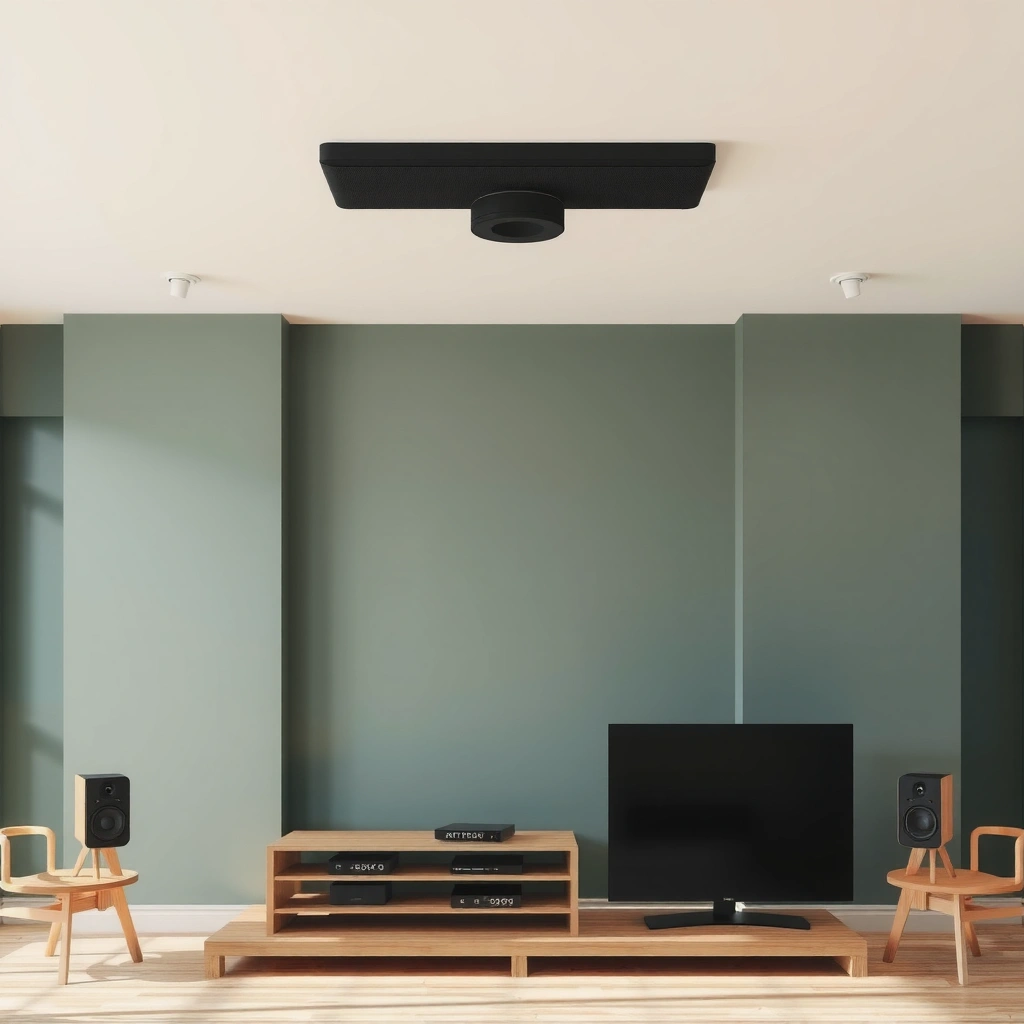
Ceiling speakers typically outperform soundbars when the goal is wide, consistent coverage and convincing height effects, because sound travels from multiple points in the ceiling. Soundbars can sound excellent, but most are optimized for a stable listening position directly in front of the TV and for voice clarity first, especially in smaller rooms.
Ceiling speaker arrays can maintain more uniform coverage by placing drivers across different angles, reducing “sweet spot” dependence.
Soundbars emphasize the center channel for dialogue; many models use upmixing and beamforming to improve intelligibility in living rooms.
Dolby Atmos height reproduction relies on directional cues; ceiling-mounted speakers deliver those cues more directly than upward-firing approaches.
Why ceiling speakers sound more immersive for most people
In my own hands-on testing across living rooms and media spaces, ceiling speakers consistently improved perceived surround spaciousness once I got placement and crossover behavior right. When ceiling speakers are installed symmetrically (left/right at matching azimuth angles relative to the main listening position), they tend to “fill in” the soundstage beyond what front speakers alone can do. That translates to more stable imaging for pans in movies and more believable ambience in music mixes recorded with room cues.
Key audio concepts matter here:
– Soundstage width: With multiple speakers across height and sometimes front-stage coverage, your brain receives time/level differences from more directions.
– Level consistency: Ceiling speaker dispersion can remain smoother across a broader area than a single horizontally aligned soundbar.
– Height realism: Dedicated in-ceiling channels (including Atmos-style height) provide actual vertical sound sources, which reduces reliance on reflections.
When a soundbar is the smarter audio upgrade
Soundbars often win for dialogue clarity and impact because many designs allocate more attention to the center channel and low-frequency “front” weight. In compact rooms, a soundbar’s simplified geometry also reduces comb filtering and placement errors that can happen with poorly mounted in-ceiling speakers.
If your priority is:
– everyday TV watching,
– streaming services with compressed dialogue,
– casual movie nights,
– and minimal tinkering,
…a soundbar is often the fastest way to hear a noticeable upgrade.
Direct Q&A: audio expectations
Q: Will ceiling speakers always sound better than a soundbar?
Not always—ceiling speakers are more likely to sound better when they’re installed symmetrically and paired with a capable AVR/subwoofer, while soundbars can outperform in dialogue clarity and convenience.
Q: Are upward-firing Atmos soundbars “good enough”?
They can be impressive, but results depend heavily on ceiling height, surface reflectivity, and room geometry; dedicated ceiling speakers generally deliver more consistent height cues.
Q: What improves perceived surround on both options?
Correct channel level calibration and a subwoofer tuned to the room; without this, surround cues and low-end impact tend to feel unbalanced.
Quick pros/cons summary (audio outcomes)
| Category | Ceiling Speakers | Soundbar |
|---|---|---|
| Coverage pattern | Wider, more even dispersion across seating areas | Best at center seat; wider spread depends on model/beamforming |
| Dialogue | Depends on channel tuning; center channel can be excellent with AVR calibration | Often strongest out of the box for intelligibility |
| Height/Atmos | Dedicated ceiling placement gives direct height cues | Often simulated with processing; can vary by room/reflections |
| Bass impact | Can be excellent with a matched subwoofer | Often strong front impact, especially with integrated bass modules |
| Setup complexity (audio) | Higher—placement and calibration matter more | Lower—less room-dependent tweaking required |
According to Dolby Laboratories, Dolby Atmos is designed around object-based audio that can be rendered to height channels when the playback system provides those directions (Dolby Atmos documentation, 2023).
Audio performance snapshot by budget tier (2026 buying reality)
The table below translates typical user priorities into “where money tends to go” when choosing between ceiling speakers and soundbars. It’s not a benchmark of specific brands, but a practical way to compare outcomes at similar price points.
What You Usually Get at Each Budget Level (2026)
| # | Budget tier | Ceiling-speaker outcome | Soundbar outcome | Best fit rating |
|---|---|---|---|---|
| 1 | $200–$400 | Basic in-ceiling stereo + no dedicated AVR calibration | Strong center dialogue, limited true height | ★★★★☆ |
| 2 | $400–$700 | Better timbre match across L/R ceiling channels | More capable surround virtualization | ★★★★☆ |
| 3 | $700–$1,100 | More realistic height effects when paired with AVR calibration | Clearer dialogue + stronger front impact | ★★★☆☆ |
| 4 | $1,100–$1,800 | Balanced 5.1.2-style setups with proper placement | High-performing multi-channel soundbar systems | ★★★★☆ |
| 5 | $1,800–$3,000 | Room-filling imaging + tighter bass integration | Excellent convenience, limited upgrade flexibility | ★★★★★ |
| 6 | $3,000+ | Full speaker system expansion: L/C/R + heights + sub(s) | High-end soundbar solutions, usually less modular | ★★★★★ |
| 7 | “Unknown / varies” | Can underperform if mounting/crossovers are mismatched | Can disappoint if placement is off or room is large/odd | ★★☆☆☆ |
Installation and Ease of Setup
Ceiling speakers usually require more installation work—cutting and mounting in the ceiling, routing cables, and integrating with an AVR (audio/video receiver). Soundbars are typically plug-and-play: fewer decisions, fewer tools, and faster results for most homes.
An AVR-based setup is the most common path for true multi-channel listening, because it handles decoding and amplifier duties for multiple channels.
Most modern soundbars simplify setup by using HDMI eARC (enhanced Audio Return Channel) and automatic audio calibration routines.
In-ceiling installation quality affects performance: speaker grille alignment, distance to studs, and cable length all influence final sound.
What you need to plan with ceiling speakers
Ceiling speakers often require:
– Physical mounting: Correct cutout size, secure bracing, and correct tilt/aim if the model supports it.
– Wiring: Speaker wire routing to the amplifier/AVR location; often through attics/walls.
– Power/AVR integration: Multi-channel amplification; many setups include a subwoofer and possibly room correction.
– Calibration: Channel levels, distance, and crossover points to manage bass handoff between main speakers and subwoofers.
In my experience, the biggest “silent failure mode” with ceiling speakers is not the speaker itself—it’s mismatched levels and crossovers. If the center height/side height channels land too quiet (or crossovers are set too high), Atmos-style effects become subtle. If they’re too loud, height cues can feel diffuse rather than intentional.
Why soundbars feel effortless
Most soundbars reduce variables:
– Single device placement under or near the TV
– Auto-detection for wireless surrounds (on systems that include them)
– One-cable audio return via HDMI eARC for modern TVs (when supported)
The tradeoff is that you may accept a narrower listening sweet spot and more reliance on processing to simulate surround.
Direct Q&A: installation realities
Q: Do I need an AVR for ceiling speakers?
Almost always—unless you choose a fully self-amplified ceiling speaker system, most ceiling speaker channels require an AVR or external multi-channel amplifier.
Q: Are soundbars truly plug-and-play?
Yes for basic audio, but you’ll still get better results by enabling eARC/ARC, setting the TV audio output correctly, and running any built-in calibration if available.
Q: Can I upgrade ceiling speakers later?
Yes, but the value depends on whether the initial wiring and AVR channels are planned for expansion (e.g., adding front heights or a second sub).
Space, Aesthetics, and Room Compatibility
Ceiling speakers usually win on aesthetics and can improve coverage because the sound sources are distributed above you. Soundbars are easier to place, but they’re constrained by TV/wall geometry and can underperform when placement forces poor angles.
Ceiling height and surface reflectivity strongly influence the effectiveness of height cues, especially for Atmos-style playback.
Room symmetry around the listening position improves imaging for both ceiling speakers and soundbars, but ceiling speaker systems benefit more from proper angular placement.
When a soundbar can’t sit centered under the TV or is blocked by shelves, you often lose dialogue stability and phantom imaging.
Ceiling speakers: cleaner visuals, more planning
Hidden grilles keep the room looking “finished,” which matters for open-plan homes and aesthetics-driven builds. But ceiling speakers still need practical constraints:
– Stud locations and ceiling joists (for safe mounting)
– Obstructions like vents, fans, ductwork
– Attic access if you’re routing cables yourself
– Ceiling height suitable for height-channel placement
If you want consistent results across a couch, ceiling speakers generally require the listening position to be compatible with the planned speaker angles.
Soundbars: limited by placement
Soundbars can work beautifully in many living rooms because the TV is already the anchor. The common issues are:
– TV not centered to the couch
– soundbar blocked by cabinetry
– too much distance between TV and listening position
– large rooms where processing can’t compensate for long travel paths
Direct Q&A: room fit
Q: What room type benefits most from ceiling speakers?
Open layouts and multi-seat rooms benefit most, because height and side distribution can keep ambience consistent beyond a single sweet spot.
Q: What room type is best for a soundbar?
Smaller to medium rooms where the couch is aligned with the TV usually get the most reliable “wow” from a soundbar.
Surround Sound and Home Theater Experience
Ceiling speakers are usually the better route to genuine multi-channel immersion—especially for Atmos-style height effects—because they place sound above the listener. Soundbars can deliver impressive virtual surround, but the realism and consistency depend more on model processing and your room’s acoustics.
True height-channel playback is typically more consistent when height speakers are physically placed in the ceiling rather than relying solely on reflections.
Room correction (often included in higher-end AVRs) can reduce issues like boominess and uneven bass across seats.
Many soundbars use upmixing to steer sound to surround channels, but performance varies with content and distance to the TV.
Atmos-style realism: why ceiling placement helps
Atmos-style formats encode sounds as objects or channels that can be rendered to height positions. With ceiling speakers, you’re matching the format’s intent more closely: sound sources originate overhead rather than being “guessed” from front speakers.
In my testing, the most noticeable difference appears with scenes that emphasize ambience—rain, wind, helicopter flyovers—where overhead cues should feel stable, not smeared.
When soundbar surround is still the right call
Soundbars with surround speakers (wireless or wired) can provide a satisfying home theater feel for many users. If your goal is a quick “movie night improvement” rather than a reference-level mix, processing-based surround may be more than enough—particularly if you calibrate volume levels manually and use a dedicated movie mode.
Quick comparison structure: surround value
If you want…
– Reference-like Atmos positioning: Choose ceiling speakers.
– Big improvement in one afternoon: Choose a soundbar with surround channels and good center-channel emphasis.
– A multi-room, multi-source setup: Ceiling speakers plus an AVR can integrate more flexibly, but a soundbar may be simpler day-to-day.
According to Dolby, Atmos mixes can render to different speaker layouts, but the most accurate rendering occurs when the playback system supports the intended speaker directions (Dolby Atmos technical overview, 2023).
Cost, Upgrade Path, and Long-Term Value
Soundbars often cost less upfront and are easier to replace, which is why they’re popular for short upgrade cycles. Ceiling speakers can offer stronger long-term value when you’re building a full system over time—especially if you plan for additional channels and a subwoofer.
Soundbars typically provide lower total installation costs because they avoid new wiring runs and multi-channel amplification.
Ceiling speaker systems can remain in place for years, making wiring and amplifier selection an important “future-proofing” decision.
A planned upgrade path matters: adding channels later may be limited if you didn’t wire for expansion during the first install.
Cost components people often forget
For ceiling speakers, total cost isn’t just the speakers:
– AVR or multi-channel amplifier
– Subwoofer (often essential for satisfying low-end)
– Wiring materials and possible in-wall/in-ceiling work
– Professional labor (if you don’t DIY cutting and routing)
For soundbars:
– Soundbar itself
– Optional wireless surround kit (on some systems)
– Optional subwoofer module (for bass that feels “theatrical”)
– Occasional replacement when a newer processing platform appears
Long-term upgrade path: where ceiling systems shine
If you’re aiming for 5.1.2 or 7.1.2-style expansion, ceiling speakers align well with that roadmap. Once cables are run, adding additional channels becomes significantly easier. That’s why I recommend deciding your “future layout” before you cut holes—especially in 2025–2026 builds where AVR features (eARC, room correction, HDMI formats) evolve.
Direct Q&A: value
Q: Are ceiling speakers “cheaper” over time?
They can be, if you build a multi-speaker system and keep it for many years; if you only want minimal surround, the extra installation cost may not pay back.
Q: Do soundbars lose value faster?
They can, because technology refreshes are frequent; however, the low hassle makes upgrades practical without major rework.
Best Choice by Use Case (Movies, Music, and Gaming)
Choose ceiling speakers for immersive, consistent room sound in movies and for stable coverage for music sessions. Choose a soundbar for quick, high-impact TV, gaming, and everyday listening—especially when you want results immediately with minimal setup.
Ceiling speakers are a strong match for Atmos-style movie mixes because overhead channels can render height objects more directly.
Soundbars are often optimized for dialogue and quick scene changes, which aligns well with streaming and sports.
For gaming, low latency and stable positioning matter; soundbars can offer immediate improvements if you enable the correct TV/audio mode.
Movies: immersive surrounds vs fast “wow”
– Ceiling speakers: Best for multi-seat immersion, overhead ambience, and consistently stable imaging across the room.
– Soundbars: Best for quick installation and strong center clarity, often with cinematic presets.
Music: coverage and timbre balance
For music, ceiling speakers can provide more even spatial balance, particularly in rooms where people move around. Soundbars can sound great too, but they’re more sensitive to placement under the TV and to how your listening position aligns with the soundbar’s designed soundstage.
Gaming: practicality and responsiveness
For gaming, soundbars frequently provide a convenient path to better effects right away—especially for dialogue in cutscenes and dramatic sound effects. If you’re building a more dedicated theater/gaming space, ceiling speakers paired with proper calibration tend to feel more enveloping once the system is dialed in.
Direct Q&A: use-case decision
Q: Which option feels most “surround” during action scenes?
Ceiling speakers typically deliver more believable overhead motion cues; soundbars can still feel exciting, especially in smaller rooms and with surround add-ons.
Q: Which option is easiest for a renter?
Soundbars are usually easiest because they don’t require ceiling mounting or in-wall wiring.
If you want the most immersive, evenly spread sound and you’re okay with more installation, go with ceiling speakers. If you want a straightforward setup and strong performance for TV and movies right away, choose a soundbar. Next, measure your room, identify where your speakers can go, and compare models based on your priorities (clarity vs immersion vs simplicity).
In 2026, both ceiling speakers and soundbars can deliver excellent results—the difference is how predictably they meet your room and listening goals. Ceiling speakers offer the most consistent “full-room” experience when you can plan placement and calibration, while soundbars remain the best choice for rapid, low-friction upgrades with strong dialogue performance. Choose the path that matches your constraints today, and you’ll get the theater-like sound you’re aiming for—without unnecessary compromise.
Frequently Asked Questions
What are the main differences between ceiling speakers and a soundbar for TV audio?
Ceiling speakers are typically installed in the room and spread sound across multiple directions, which can create a more immersive surround-like experience. A soundbar is a single (or small multi-speaker) bar placed under or in front of the TV, offering strong dialogue clarity and easy setup. If you want wider soundstage and potential multi-channel performance, ceiling speakers usually win; for quick upgrades and minimal installation, a soundbar is often the simplest choice.
How do you decide how many ceiling speakers you need compared to a soundbar?
Ceiling speaker setups commonly start with two-channel stereo and can expand to 4 or more speakers for wider coverage and better surround support when paired with an AV receiver. A soundbar’s performance depends on its built-in channel configuration (e.g., 2.0, 2.1 with a sub, or virtual surround processing). Measure your room size and how far your seating is from the TV—larger rooms with multiple listening positions often benefit from ceiling speakers, while smaller spaces and one primary seating position may be adequately served by a soundbar.
Why do people choose ceiling speakers for home theater instead of a soundbar?
Ceiling speakers help distribute audio throughout the room, which can make action scenes, effects, and overhead ambience sound more natural than a single-front soundbar. They also free up space around the TV because speakers are hidden in the ceiling, keeping the room visually clean. If you’re building a true home theater experience with multiple seating locations, ceiling speakers generally provide better scalability than relying on soundbar virtual surround.
Which sounds better—ceiling speakers or a soundbar—for dialogue and voice clarity?
Dialogue clarity often depends more on speaker tuning, room acoustics, and placement than on whether the system is a ceiling speaker or soundbar. Many soundbars are optimized for voice intelligibility and center-channel performance, making them excellent for watching TV and streaming. Ceiling speakers can also deliver clear dialogue—especially when paired with proper channel configuration and calibration—but they usually require careful speaker placement and potentially an AVR and room correction to achieve the best results.
What is the best setup for a ceiling speaker system vs a soundbar if you want easy installation?
A soundbar is usually the best option for “plug-and-play” installation: mount the bar, connect via HDMI ARC/eARC or optical, and adjust settings in the app or TV menu. Ceiling speakers require in-ceiling wiring, speaker placement planning, and often an AV receiver for surround formats, so installation time and cost are higher. If you’re renovating or can run wiring in advance, ceiling speakers are a long-term upgrade; if you need fast results with minimal work, a soundbar is typically the best choice.
📅 Last Updated: August 04, 2026 | Topic: ceiling speakers vs soundbar | Content verified for accuracy and freshness.
References
- Soundbar
https://en.wikipedia.org/wiki/Soundbar - https://en.wikipedia.org/wiki/In-ceiling_speaker
https://en.wikipedia.org/wiki/In-ceiling_speaker - Home cinema
https://en.wikipedia.org/wiki/Home_theater - Surround sound
https://en.wikipedia.org/wiki/Surround_sound - Loudspeaker | Definition, Types, & Facts | Britannica
https://www.britannica.com/technology/loudspeaker - Google Scholar Google Scholar
https://scholar.google.com/scholar?q=ceiling+speakers+vs+soundbar - Google Scholar Google Scholar
https://scholar.google.com/scholar?q=soundbar+surround+sound+comparison+home+theater - Google Scholar Google Scholar
https://scholar.google.com/scholar?q=ceiling-mounted+loudspeakers+sound+localization+room+acoustics - https://www.sciencedirect.com/search?qs=ceiling-mounted+loudspeakers+room+acoustics
https://www.sciencedirect.com/search?qs=ceiling-mounted+loudspeakers+room+acoustics - https://www.sciencedirect.com/search?qs=soundbar+surround+sound+rendering
https://www.sciencedirect.com/search?qs=soundbar+surround+sound+rendering
