
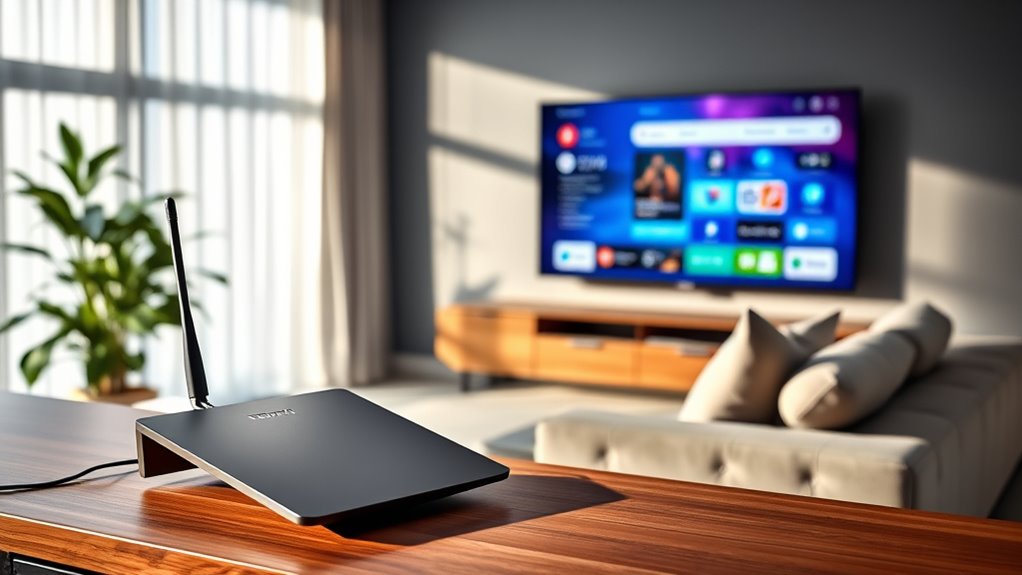

A smart TV doesn’t necessarily need an antenna, but using one can enhance your viewing experience. With an antenna, you get free local channels and improved picture quality, which streaming services can’t always provide. It also gives you access to live broadcasts, making it a great option for sports and news. Understanding how antennas complement smart TVs can help you make informed choices for your entertainment setup. Learn more about optimizing your viewing habits.
Understanding Smart TVs and Their Features
As technology advances, understanding smart TVs and their features becomes essential for anyone looking to enhance their viewing experience. Smart TVs come equipped with a range of smart features, allowing you to stream content, access apps, and browse the internet seamlessly. The user interface plays a vital role in how effectively you can navigate these features. A well-designed interface should be intuitive, enabling you to find your favorite shows and services quickly. Features like voice control and personalized recommendations can further elevate your viewing experience, giving you the freedom to watch what you want, when you want. By familiarizing yourself with these capabilities, you can make informed decisions and truly optimize your entertainment setup.
The Role of Antennas in TV Reception
Antenna technology plays an essential role in how you receive over-the-air television signals. Depending on your location and the channels you want, different antenna types can greatly affect your viewing experience. Indoor antennas are convenient and generally suited for urban areas where signal strength is stronger, while outdoor antennas are often necessary for rural locations to capture signals more effectively. Your choice of antenna can impact the clarity and quality of the channels you receive. Higher signal strength typically translates to better picture quality and fewer interruptions. Understanding these factors allows you to make informed decisions, ensuring you enjoy the programming you desire without unnecessary reliance on cable subscriptions. Ultimately, the right antenna empowers your TV experience.
Benefits of Using an Antenna With a Smart TV
Using an antenna with your Smart TV can greatly enhance your viewing experience by providing access to a wide array of over-the-air channels, often at no additional cost. Here are some key antenna benefits that you shouldn’t overlook:
- Cost Savings: Enjoy free local channels without monthly subscription fees, freeing up your budget for other entertainment.
- Enhanced Picture Quality: Experience clearer and more reliable signals compared to streaming, giving you superior image quality.
- Access to Live Events: Catch live broadcasts, sports, and news in real-time, ensuring you’re always in the loop.
Limitations of Streaming Services
While streaming services offer convenience, you might encounter significant limitations. One major issue is content availability, as not all shows or movies are accessible on every platform. Additionally, your streaming experience hinges on a stable internet connection, making you vulnerable to interruptions or slow speeds.
Content Availability Issues
How often do you find yourself frustrated by the limitations of streaming services? You’re not alone. While streaming offers convenience, it often comes with significant content availability issues that can restrict your viewing experience. Consider these streaming limitations:
- Geographic Restrictions: Many services limit access to certain content based on your location.
- Content Diversity: Not all platforms offer a wide range of genres, leaving gaps in what you can watch.
- Licensing Agreements: Some shows and movies are available only for a limited time or may disappear altogether.
These restrictions can hinder your freedom to explore diverse content. Ultimately, while smart TVs enhance your viewing experience, relying solely on streaming services might not fulfill your entertainment desires.
Internet Dependency Concerns
Streaming services, despite their convenience, come with a significant drawback: dependency on a stable internet connection. If your internet reliability falters, so does your access to content, leaving you frustrated and disconnected. This streaming dependency can be especially problematic during peak usage times or in areas with limited bandwidth options. You might find yourself missing out on live events or binge-worthy shows simply because your connection isn’t up to par. Unlike traditional broadcasts, which can be received through an antenna regardless of your internet status, streaming relies solely on that digital lifeline. Understanding these limitations is essential if you want to maintain the freedom to watch what you want, when you want, without interruptions.
Local Channels and Live Broadcasts
If you’re looking to access local channels and live broadcasts with your Smart TV, understanding the role of an antenna becomes essential. Here are three key aspects to evaluate:
- Local Broadcasts: Many networks provide their content over the air, allowing you to enjoy news, sports, and shows without a subscription.
- Antenna Types: Options like indoor, outdoor, and amplified antennas cater to various needs, ensuring you get the best reception based on your location.
- Signal Quality: Depending on your antenna type and positioning, you can improve your signal quality, enhancing your viewing experience.
Incorporating an antenna not only expands your viewing options but also grants you the freedom to watch your favorite local broadcasts without relying solely on streaming services.
Cost-Effectiveness of Antennas
Investing in an antenna can be a highly cost-effective choice for Smart TV users seeking to access local channels. By opting for an antenna, you can realize significant cost savings compared to cable or streaming subscriptions. You won’t have to pay monthly fees, and many antenna types, whether indoor or outdoor, are available at reasonable prices. With a good quality antenna, you can enjoy free over-the-air broadcasts of your favorite shows, news, and sports events without recurring costs. Additionally, with the right antenna, you can often receive a variety of channels, maximizing your viewing options. Ultimately, using an antenna empowers you to take control of your entertainment without the financial burden of traditional TV services.
Quality of Reception: Antenna vs. Streaming
While antennas offer significant cost savings, they also excel in delivering high-quality reception compared to streaming services. When considering reception quality, here’s how antennas stack up against streaming:
- Signal Strength: Antennas capture over-the-air signals, often providing clearer images and sound, especially in HD.
- Reliability: Unlike streaming, which can suffer from internet issues, antennas maintain consistent performance regardless of your online bandwidth.
- Latency: Antennas provide near-instant access to live broadcasts, while streaming can introduce delays, particularly during peak usage times.
In this antenna comparison, it’s clear that if you prioritize quality reception, an antenna might be your best option. Embracing this choice can enhance your viewing experience without the limitations of streaming services.
Regional Differences in TV Signal Availability
Understanding regional differences in TV signal availability is essential for anyone considering whether to use an antenna with their smart TV. Signal strength can vary dramatically depending on where you live. Urban areas often enjoy stronger signals due to proximity to broadcast towers, while rural regions may face challenges with weaker signals. Here’s a quick overview of regional variations:
| Region | Signal Strength | Antenna Recommendation |
|---|---|---|
| Urban | High | Indoor antenna |
| Suburban | Moderate | Outdoor antenna |
| Rural | Low | High-gain outdoor antenna |
Making the Right Choice for Your Viewing Habits
Choosing the right setup for your smart TV largely depends on your viewing habits and preferences. To make an informed decision, consider the following:
- Content Type: Do you prefer streaming services, live broadcasts, or a mix of both? This will guide your antenna types.
- Location: Your geographical area affects signal strength. Assess whether you need an indoor or outdoor antenna based on your distance from broadcast towers.
- Budget: Determine how much you’re willing to spend. A basic antenna might suffice, or you may opt for a more advanced model for better reception.
Frequently Asked Questions
Can I Use an Antenna With Any Smart TV Brand?
Can you really use any antenna with your smart TV? Most smart TV brands are compatible with various antenna types, but it’s essential to check specific compatibility details for ideal performance and channel reception.
Do Antennas Require an Internet Connection to Work?
Antenna functionality doesn’t require an internet connection; it receives over-the-air signals independently. However, if you want streaming services, you’d still need internet access. So, antennas and internet aren’t dependent on each other for operation.
How Do I Install an Antenna for My Smart TV?
To install an antenna for your Smart TV, connect the antenna to the TV’s coaxial input. Then, navigate to the Smart TV setup menu, scan for channels, and enjoy free over-the-air programming.
Can Smart TVS Stream Without an Antenna?
Sure, smart TVs can stream without an antenna. Embrace the digital age; streaming options abound! From Netflix to Hulu, antenna alternatives are plentiful. So, why not ditch the wires and explore limitless entertainment?
What Channels Can I Receive With an Antenna?
With an antenna, you can receive various channels including local broadcasts, major networks like ABC, NBC, CBS, and FOX. Channel availability varies by antenna types and your location, so check local listings for specifics.
