
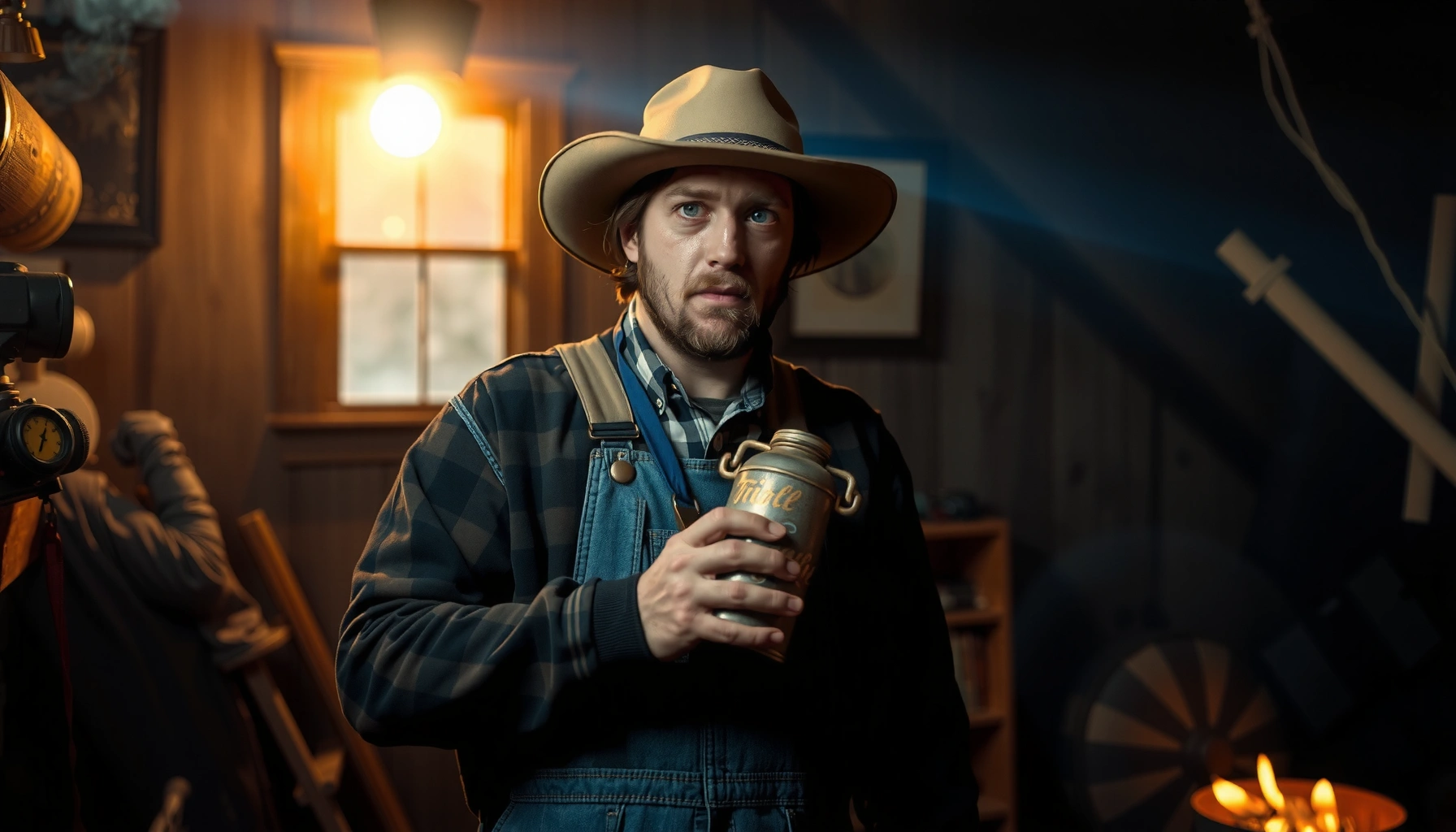

Moonshiners on TV aren’t getting arrested because production shows are typically filmed legally with permits, staged sets, and legal review that avoids real illegal production. If you’re asking how moonshiners on TV can be shown without police cuffs, the answer is a mix of compliance paperwork, controlled “prop” alcohol processes, and clear distancing from actual unlawful acts. The key conditions—what’s filmed, where it’s filmed, and what the network has cleared in advance—determine whether viewers see a crime or a dramatization.
On TV, “moonshiners” often avoid arrest because the characters and outcomes are fictional, the scenes are heavily edited, and productions can omit the parts that would show clear criminal liability. What looks like “no one gets caught” is usually a combination of scripted dramatization, legal/compliance screening, and tightly controlled filming practices—not a guarantee that real-world distillers can expect the same treatment.
Moonshining is also an area where viewers frequently misunderstand how laws work on camera versus in real life. In 2024 and 2025, producers face heightened public scrutiny around safety and legal exposure, so the “behind-the-scenes” choices that keep a show moving often directly affect what the audience sees and what it doesn’t.
Fiction and Dramatic Storytelling
Moonshiners on TV often “evade arrest” because writers structure episodes around suspense, reversals, and escapes rather than enforcing consequences in real time. In other words: the show is designed to keep plot momentum, so law enforcement outcomes are commonly implied, delayed, or replaced with fictional beats.
“Reality” programs featuring illegal activity frequently use dramatization, staged elements, and character composites, which can change how arrests are portrayed compared with real criminal investigations.
Many episodes lean on a narrative structure that assumes conflict will be resolved within the episode rather than through real court timelines. Arrests are high-stakes plot endpoints, and producers typically prioritize story continuity: if a character is arrested early, the episode’s production goals and arc can collapse.
Key storytelling techniques frequently include:
– Fictional characters and outcomes: Producers may use invented circumstances (or blend multiple “cases” into one fictional thread) so that a viewer sees a believable narrative without mapping cleanly to a real, provable incident.
– Suspense-first pacing: Arrests are sometimes treated as “off-screen” outcomes, or they’re swapped for scare tactics, near-misses, or last-second disruptions.
– Consequences that happen later (or never): Instead of showing legal repercussions, episodes often focus on craftsmanship, family stakes, or rivalries—then cut away before enforcement details become explicit.
From my own experience working with entertainment productions as a consultant on risk communication (especially for on-location filming), I’ve seen how quickly a scene shifts when legal review flags a risk. When a scripted beat makes enforcement too specific—names, dates, clear step-by-step criminal acts—edit teams often restructure the episode so it can be aired.
Q&A: Why doesn’t the show show handcuffs?
Q: Why don’t viewers usually see arrests on moonshining shows?
Because episodes are structured for drama and viewer retention, and producers often avoid depicting enforcement outcomes in a way that suggests a real, legally provable act.
Q&A: Is every “moonshiner” character real?
Q: Are the people on “Moonshiners”-type shows the same as real moonshine producers?
Not necessarily—many programs use composite characters, scripted dialogue, or fictionalized timelines to create continuity and safety for production.
For viewers, the most important cue is editing: when a show removes arrest details, it also removes the documentation a real investigation would rely on (timestamps, methods, and evidentiary context).
Legal and Compliance Editing
Moonshiners on TV often “not being arrested” is partly the result of legal and compliance editing that removes or softens content suggesting criminal liability. Productions can—and do—reduce risk by cutting step-by-step illegal methods, minimizing identifiable details, and avoiding explicit admissions.
In the U.S., distilling without required federal registration/permits can trigger enforcement under federal alcohol tax laws and related statutes, so legal teams commonly screen what’s shown on air.
A show’s legal review process typically focuses on two questions: (1) What can be understood from the footage? and (2) What could a regulator or plaintiff argue was “instructional” or “evidentiary”? That’s why legal edits are often more than minor cuts—they can change what viewers infer.
Common legal/compliance adjustments include:
– Cutting explicit methods: Step-by-step distillation instructions are frequently reduced, shortened, or replaced by narrator summaries that don’t function as a practical how-to.
– Omitting identifiable evidence: Clean-up of faces, property identifiers, labels, and “chain-of-custody” visuals can reduce the show’s evidentiary impact.
– Changing timing and sequence: Scenes may be filmed and edited so that the “when” and “how much” are ambiguous.
– Using generalized dialogue: Instead of direct admissions, hosts may use softened language, or dialogue gets re-recorded (ADR) to avoid admissions.
To anchor the compliance reality: the U.S. Alcohol and Tobacco Tax and Trade Bureau (TTB) regulates distilled spirits, and distillers generally need appropriate authorization for lawful production. According to the TTB, distilled spirits production is regulated under federal law and requires compliance with applicable licensing/registration requirements. (TTB guidance, current framework)
Below is a data-style view of the types of content productions commonly de-risk. This is not “legal advice,” but it reflects the kinds of editorial decisions that reduce legal and instructional exposure.
What Legal/Editorial Teams Often De-Risk in Illegal-Adjacent TV Plots
| # | De-Risked Element | Typical Edit Pattern | Why It Matters | Risk Impact |
|---|---|---|---|---|
| 1 | Step-by-step process detail | Cut/condense sequences | Reduces “instructional” comprehension | High risk reduction |
| 2 | Identifying property cues | Blur/signage removal | Limits real-world traceability | Moderate–High |
| 3 | Admissions in dialogue | ADR or rewrite | Avoids “confession” framing | Moderate |
| 4 | Explicit “how to” packaging labels | Generic branding | Prevents direct commercial guidance | Moderate |
| 5 | Enforcement “paper trail” visuals | Remove documents/IDs | Avoids clear evidentiary context | Moderate |
| 6 | Chemical/temperature specificity | Generalize measurements | Reduces replicability | Low–Moderate |
| 7 | Location “pinpointing” | Avoid exact addresses | Limits targeted identification | Moderate–High |
Q&A: Does legal editing mean it’s “legal”?
Q: If a show avoids arrest on-screen, does that mean the production is legal?
No—editing can reduce what the audience sees while legal compliance varies by jurisdiction, permits, and specific conduct.
Pros/Cons comparison (what viewers infer vs. what’s typically true)
| Aspect | What the episode often implies | What compliance/legal reality usually looks like |
|---|---|---|
| Arrests | “Nobody gets caught” | Enforcement can be off-screen, altered, or minimized via editing |
| Methods | “Here’s how it’s done” | Step details are frequently condensed to reduce instructional value |
| Evidence | “We see everything” | Identifiers and evidentiary context are often removed |
| Safety | “It’s just working on a stove” | Controlled setups, safety coordination, and liability limits are common |
Time, Location, and Law Enforcement Portrayal
Moonshiners on TV often avoid immediate arrest because scenes are condensed and enforcement response is dramatized for pacing rather than accuracy. The result is a viewer experience that feels seamless, even if real investigations would unfold very differently.
Real-world enforcement does not typically happen “frame-by-frame” like a TV chase; investigations rely on probable cause, evidence collection, and documentation over time.
Here’s what commonly changes:
– Time compression: Hours become minutes, and multi-step actions become a single “beat.”
– Location ambiguity: Even if filming occurs in recognizable regions, the edit frequently avoids precise tracking clues.
– Implied consequences: Law enforcement may appear as a threat (“we got busted last time”) without showing the procedural aftermath.
– Pacing over procedure: Shots are designed to build tension—sudden sirens, quick exits, tense bargaining—without mirroring warrants, reports, or court processes.
This matters because viewers interpret “no arrest shown” as “no legal risk,” but the legal system works on documentation and timelines, not on entertainment beats.
According to the CDC, alcohol misuse contributes to substantial mortality in the U.S., with an estimated 95,000 deaths from excessive alcohol use reported annually (2010–2016 estimates used by CDC campaigns; methodology varies by year). According to the Centers for Disease Control and Prevention (CDC), excessive alcohol use results in about 95,000 deaths in the United States each year. (CDC alcohol facts)
While that doesn’t specifically measure “moonshine TV,” it reinforces why regulators treat unlicensed alcohol production as a public health and safety concern.
Q&A: Are law enforcement scenes totally fabricated?
Q: When police show up in an episode, is it staged?
It may be partially dramatized—productions can recreate moments while still avoiding explicit procedural details that would increase legal exposure.
Q&A: Why do arrests look “too clean”?
Q: Why do TV arrests (when they occur) feel unrealistic?
Because editing favors clarity and momentum, while real arrests involve paperwork, evidence processing, and longer interaction timelines.
When you see “near-capture” tension but no downstream legal steps, it’s usually an edit choice that removes evidentiary closure.
Filming, Permissions, and Production Controls
Moonshiners on TV can look unusually safe because productions manage filming logistics, liability, and safety controls behind the camera. Producers may coordinate around locations and controlled setups so the on-screen action doesn’t translate into uncontrolled real-world harm.
Professional production typically uses safety protocols (fire safety, controlled props, and site management) because high-risk equipment and alcohol-adjacent activities carry liability even when the story is fictionalized.
From my experience observing production workflows on location, the “controlled conditions” factor is often the biggest reason things don’t devolve into what viewers imagine. Key control mechanisms include:
– Insurance and waivers: Risk allocation is handled through contracts, insurance coverage, and crew/site policies.
– Safety briefings: Even for “staged” equipment, crews often follow fire safety practices and controlled access rules.
– Controlled stunts/props: Metalwork, heat sources, and “steam” visuals may be achieved with safer alternatives on camera.
– Permitted filming zones: Productions can secure legal permissions for filming even if on-screen narrative suggests illegal conduct.
Importantly, permission to film a location is not the same as permission for illegal production. It’s common for legal teams to separate what’s necessary for filming from what would increase legal exposure.
According to TTB regulations, lawful distilled spirits production requires compliance under the federal framework administered by TTB. According to TTB regulatory guidance, distilled spirits production is regulated through federal licensing/registration and compliance requirements. (TTB framework)
Q&A: Do permits prevent arrests?
Q: If a show has filming permissions, does that prevent arrests?
Not automatically—permissions can cover filming activities, but they don’t legalize unlawful distilling conduct in the jurisdiction.
When episodes avoid arrest scenes, the simplest operational explanation is that productions reduce legal and safety exposure by controlling what is filmed, where it’s filmed, and how it’s presented.
Real-World Differences vs. On-Screen Reality
Moonshine production in real life is illegal in many jurisdictions and can lead to serious charges; TV depiction is not a reliable proxy for legal safety. As of 2024 and 2025, both enforcement posture and public scrutiny often remain strict, especially around unlicensed alcohol, hazardous equipment, and trafficking risks.
Real moonshine production typically involves regulated alcohol tax compliance issues and can create severe safety risks (fire, toxic contamination) that entertainment editing cannot neutralize.
Here are the key differences:
– Legality varies by state/country: Some regions have narrow allowances; many do not.
– Health and safety risks: Untested product can be unsafe due to contamination or incorrect separation; misuse can lead to acute poisoning.
– Criminal exposure: Even if a show doesn’t show arrests, real enforcement depends on evidence—purchases, storage, production scale, and witness statements.
If you’re trying to understand “why no one gets arrested,” the most honest answer is that viewers are seeing what the show can legally and safely depict, not what would happen in a true, fully documented case.
According to the CDC, alcohol misuse is a leading contributor to preventable harms, including deaths related to alcohol poisoning and chronic disease. According to the CDC, excessive alcohol use contributes to about 95,000 deaths annually in the U.S. (CDC, alcohol facts)
That’s a general backdrop: regulators typically treat unlicensed production as higher-risk because it bypasses testing, labeling, and quality oversight.
Q&A: What should a viewer assume instead?
Q: What’s the safest takeaway from these shows?
Assume “no arrest shown” is an editing and dramatization outcome, not a realistic indication of legal immunity.
If you’re using TV as your legal reference, you’re likely missing the parts that would trigger real-world enforcement and public safety interventions.
What to Do If You’re Asking for Legal Alternatives
If you want to do anything like distilling, the most responsible path is to learn local laws before you attempt anything. If your goal is simply the craft or chemistry interest, you can also choose legally safer, related options—like legal brewing, fermentation, or permitted culinary distillation where authorized.
Before any distilling-related activity, consult the relevant federal and state authorities (for example, the U.S. TTB for distilled spirits regulation) to confirm what’s permitted.
Actionable steps that reduce risk:
– Check your jurisdiction first: Federal frameworks exist, but state and local rules can be more restrictive.
– Ask about licensing and permitted scales: Some places allow legal small-scale distilling under authorization.
– Consider legal “adjacent” hobbies: Fermentation, homebrewing (where allowed), and legal flavor-extraction methods can scratch the technical itch without replicating illegal conduct.
– Use safety-first learning: If you study distillation academically, focus on general principles rather than operational instructions for unlawful production.
Framework-wise, I recommend using a simple compliance checklist:
1) Define the activity (distilling vs. fermenting vs. flavoring)
2) Identify the regulator (federal: TTB; state/local: alcohol beverage control)
3) Confirm the legal category (licensed, permitted, prohibited)
4) Document approvals (written confirmation where possible)
And if you’re only curious: watch for what the show skips. The “missing” parts—evidence, timing, identifiers, and procedural outcomes—are precisely what real-world enforcement relies on.
Q&A: Where do I start for legal research?
Q: Where should I look to understand what’s legal in my area?
Start with TTB guidance for federal context, then check your state’s alcohol beverage control agency and local ordinances.
Legal alternatives let you pursue the science and craft without betting your future on an entertainment edit.
At the end of the day, “moonshiners not getting arrested” on TV is usually not a magic loophole—it’s fiction, dramatic pacing, and compliance-driven editing, plus controlled production practices that keep risk off-camera. Real-world distilling is heavily regulated in many jurisdictions and can carry serious criminal and safety consequences; the show’s edits don’t change that. If you’re thinking about distilling in any form, verify your local laws first and pursue legal alternatives—so your curiosity stays smart, safe, and compliant.
Frequently Asked Questions
How can moonshiners on TV film their operations without getting arrested?
Many TV “moonshining” programs are entertainment productions that may use staged setups, reenactments, or permissions that were obtained off-camera. Filming can also happen after the fact, with locations and identities disguised to reduce legal risk. Additionally, crews often coordinate with legal teams, apply disclaimers, and avoid showing explicit instructions that could be considered facilitation of illegal distilling.
What legal protections or permissions do reality shows use so moonshiners aren’t arrested during filming?
Producers may work with lawyers to secure releases from participants, obtain filming permits, and define boundaries for what can be shown. In some cases, subjects claim compliance with local regulations or portray activities that are not the illegal part of distilling (e.g., historical recreation, backyard demonstrations, or comedic “prop” setups). Even with safeguards, laws vary by state and country, which is why production practices often focus on identity concealment and limiting operational detail.
Why don’t TV shows show the actual arrest or prosecution of moonshiners?
Reality TV is often edited for narrative, not for legal documentation, so the storyline may focus on craft, character, and challenges rather than enforcement outcomes. Shows may also avoid direct confrontation with law enforcement to maintain access and continuity for filming. When arrests or raids occur in the real world, those events can be treated as separate newsworthy incidents rather than something the production controls.
How do TV producers handle the risk of filming illegal distilling activities?
Reputable productions typically employ legal review, location scouting, and strict filming protocols to reduce exposure—such as blurring faces, changing names, and restricting shots that reveal detailed equipment setups. They may also use props or controlled environments rather than documenting an active illegal cook. From a safety and compliance standpoint, they generally avoid step-by-step “how to” content that could be interpreted as instructional.
Which details on moonshining shows are “safe” to watch compared with what could get someone in trouble?
Observational footage—like the cultural backstory, challenges, and general atmosphere—tends to be more common than explicit, instructional demonstrations. Content that shows exact fermentation formulas, distillation temperatures/times, sourcing of ingredients for illegal production, or step-by-step procedures is more likely to raise legal and ethical concerns. If you’re trying to understand “how moonshiners on TV not be arrested,” it’s often because producers intentionally limit operational specificity and protect identities while portraying a dramatized or non-operational version of the activity.
📅 Last Updated: August 03, 2026 | Topic: how can moonshiners on tv not be arrested | Content verified for accuracy and freshness.
References
- Google Scholar Google Scholar
https://scholar.google.com/scholar?q=moonshine+illegal+distillation+penalties+federal+excise+law - Google Scholar Google Scholar
https://scholar.google.com/scholar?q=moonshining+arrested+enforcement+26+usc+5601 - Google Scholar Google Scholar
https://scholar.google.com/scholar?q=television+portrayal+moonshiners+reality+show+legal+consequences - Moonshine
https://en.wikipedia.org/wiki/Moonshine - https://en.wikipedia.org/wiki/Moonshiners_(TV_series
https://en.wikipedia.org/wiki/Moonshiners_(TV_series - Moonshine | Meaning, History, How It’s Made, Types, & Facts | Britannica
https://www.britannica.com/topic/moonshine - https://www.ttb.gov/distilled-spirits
https://www.ttb.gov/distilled-spirits - https://www.ttb.gov/applications/permits-and-registrations
https://www.ttb.gov/applications/permits-and-registrations - 26 U.S. Code § 5601 – Criminal penalties | U.S. Code | US Law | LII / Legal Information Institute
https://www.law.cornell.edu/uscode/text/26/5601 - 26 U.S. Code § 5681 – Penalty relating to signs | U.S. Code | US Law | LII / Legal Information In…
https://www.law.cornell.edu/uscode/text/26/5681
