
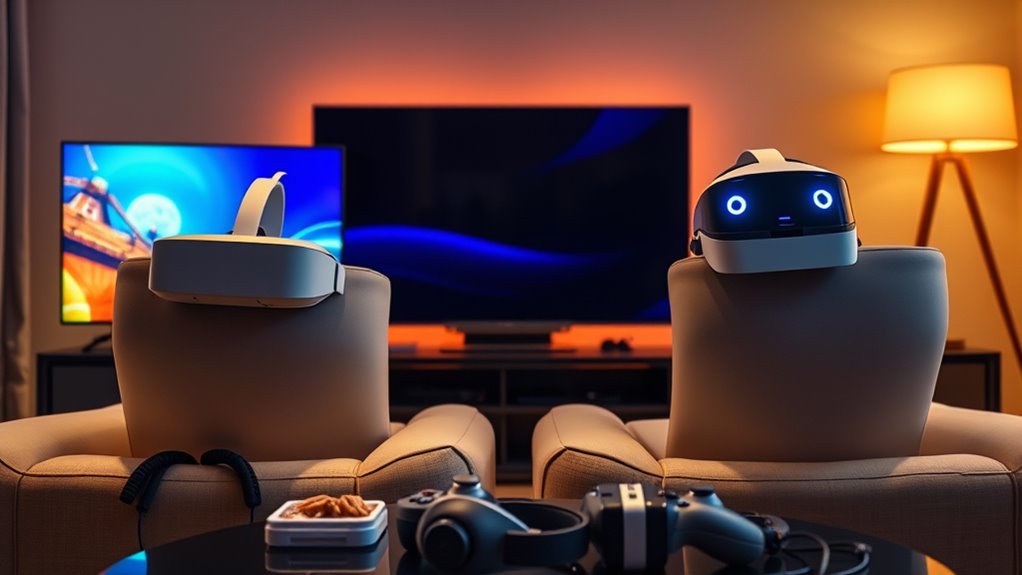

To use two VR headsets on your PS5, first verify both headsets are compatible. You’ll need an HDMI splitter, USB hub, and power adapter for each device. Connect the first headset to your PS5 via HDMI and USB, then configure your audio settings. Next, connect the second headset using the same method. Adjust the PS5 display settings for both headsets, and you’re set for multiplayer gaming. For further tips and troubleshooting, continue exploring the setup process.
Understanding PS5 VR Compatibility
When exploring the world of virtual reality on the PS5, it’s vital to understand its compatibility with various VR headset types. The PS5 primarily supports the PlayStation VR, along with certain third-party options. Each headset has unique specifications, impacting your gaming experience and PS5 performance. For instance, higher-resolution headsets can deliver more immersive visuals, while others may offer enhanced tracking capabilities. It’s important to verify that your chosen headset integrates seamlessly with the PS5, as this can affect not only graphics but also responsiveness and gameplay fluidity. Understanding these differences helps you make informed choices, allowing you to maximize your freedom and enjoyment in virtual environments. So, before diving in, check compatibility to release the full potential of your VR adventure.
Required Equipment for Dual VR Setup
To successfully set up two VR headsets on your PS5, you’ll need some essential accessories and compatible models. Make sure you have the necessary cables, adapters, and any additional hardware that may be required for both headsets. Understanding which VR models work with the PS5 is vital for a seamless experience.
Necessary Accessories
Setting up two VR headsets on your PS5 requires a few essential accessories to guarantee a smooth and immersive experience. You’ll need to focus on the right accessory types and essential cables. Here’s a quick overview:
| Accessory Type | Description | Purpose |
|---|---|---|
| HDMI Splitter | Divides video signal | Connects both headsets |
| USB Hub | Expands USB ports | Supports multiple devices |
| Power Adapter | Provides adequate power | ensures headsets function properly |
| Audio Splitter | Shares audio output | Allows sound for both users |
With these accessories, you can enjoy a seamless VR experience without worrying about compatibility issues!
Compatible VR Models
In order to successfully use two VR headsets on your PS5, it’s essential to confirm that both models are compatible with the console. Start by exploring compatible headset options like the PlayStation VR and newer models such as the PS VR2. These headsets offer unique features, so looking into VR model comparisons can help you understand their differences and how they work together. Verify your PS5 firmware is up to date, as this can affect compatibility. While connecting, remember that using two headsets simultaneously may require additional adapters or settings adjustments. By confirming both headsets meet these criteria, you’ll access an engaging dual VR experience that lets you and a friend enjoy immersive gaming together.
Setting Up Your PS5 for Multiple Headsets
While you might think using multiple VR headsets with your PS5 would be complicated, it’s actually quite straightforward. First, verify both headsets are compatible with the PS5. You’ll want to check the settings menu for audio and video options, as configuring these correctly is essential for a smooth dual gaming experience. Next, set up user profiles for each player to manage your shared virtual reality environment effectively. This way, you can switch between headsets without hassle, guaranteeing each player has their own personalized settings. Remember, it’s all about maximizing that immersive experience while enjoying games together. Once you’ve set everything up, you’ll be ready to plunge into exciting multiplayer adventures like never before!
Connecting the First VR Headset
To connect your first VR headset to the PS5, start by plugging the headset’s HDMI cable into the console’s HDMI port. Next, you’ll need to follow a few simple steps to complete the initial configuration for your first headset setup:
- Connect the headset’s USB cable to the PS5.
- Power on your PS5 and headset.
- Navigate to the settings menu on your PS5.
- Select “Devices” and then “Audio Devices” to configure sound settings.
- Test the headset by launching a VR-compatible game or application.
Connecting the Second VR Headset
Now that you’ve got the first VR headset connected, it’s time to set up the second one. You’ll need to manage user accounts effectively to guarantee each headset works seamlessly. Let’s walk through the steps to get both headsets up and running without a hitch.
Setting Up Headsets
Connecting a second VR headset to your PS5 can seem intimidating, but it’s a straightforward process. To guarantee headset compatibility and enable seamless shared gaming, follow these steps:
- Check Compatibility: Verify that your second headset is compatible with the PS5.
- Connect the Headset: Use the appropriate cables to connect your second VR headset to the console.
- Switch Input: Go into your PS5 settings and select the right input for the second headset.
- Adjust Settings: Fine-tune the audio and visual settings for peak performance.
- Test Functionality: Start a game that supports multiple headsets to confirm everything’s working.
Managing User Accounts
While you might think that managing user accounts for a second VR headset on your PS5 is a complex task, it’s actually quite manageable. Start by ensuring both headsets are properly connected. Next, you’ll need to handle user account management through your PS5 settings. Create a new user profile for the second headset by proceeding to “Users and Accounts.” Select “Add User,” then follow the prompts to set up a profile. This allows each user to maintain their own game saves and preferences, enhancing the VR experience. Remember, switching between accounts is seamless, letting you and your friend enjoy your favorite games without hassle. With a little setup, you’ll both be ready to plunge into virtual worlds!
Configuring VR Settings on PS5
To guarantee a seamless VR experience on your PS5, you’ll need to carefully configure the VR settings for each headset. Start by ensuring both headsets are properly calibrated. This involves adjusting the VR headset calibration settings for each user and selecting the appropriate Dual user settings. Here’s what you should focus on:
- Set up individual profiles for each user
- Adjust display settings for ideal visuals
- Calibrate audio settings to enhance immersion
- Configure motion sensitivity for each headset
- Test tracking accuracy to avoid latency issues
Selecting Multiplayer VR Games
How do you choose the right multiplayer VR games for your PS5 experience? Start by considering your group’s gaming preferences and the types of cooperative gameplay strategies you enjoy. You’ll want games that facilitate seamless interaction and excitement.
Here’s a quick reference table for multiplayer game selection:
| Game Title | Key Features |
|---|---|
| Rec Room | User-generated content, mini-games |
| No Man’s Sky | Space exploration, team missions |
| VRChat | Social interaction, custom avatars |
| Arizona Sunshine | Zombie survival, co-op mode |
Selecting the right game will enhance your immersive experience. Prioritize fun and engagement to guarantee everyone has a blast while exploring the virtual worlds together!
Best Practices for a Smooth Experience
Guaranteeing a smooth experience when using two VR headsets on your PS5 requires attention to both hardware and software settings. By following these best practices, you can enhance your multiplayer experiences and achieve peak performance:
- Update Software: Keep your PS5 and VR headset firmware up to date.
- Adjust Display Settings: Optimize resolution and refresh rates for both headsets.
- Allocate Bandwidth: Limit background applications to prioritize VR performance.
- Position Headsets Correctly: Ensure proper tracking by positioning headsets within the play area.
- Test Connectivity: Regularly check USB and HDMI connections for stability.
Troubleshooting Common Issues
Even with best practices in place, issues can still arise when using two VR headsets on your PS5. Common connectivity issues often stem from improper setup or conflicting signals. To troubleshoot, start by ensuring both headsets are properly connected to the console and that any necessary firmware updates are installed. If one headset isn’t recognized, try disconnecting and reconnecting it, or switching USB ports. For headset performance troubleshooting, check the headset settings in the PS5 menu, and make sure both headsets are configured correctly. If you experience lag or distortion, restart the PS5 and the headsets. Remember, patience is key—sometimes, a simple reboot can resolve many issues and restore your immersive gaming experience.
Frequently Asked Questions
Can I Use Different Brands of VR Headsets on PS5?
You can’t use different brands of VR headsets on PS5 due to limited cross-platform compatibility. Notably, 70% of gamers prefer seamless integration, highlighting the importance of headset performance comparison for a satisfying experience.
Will Both Headsets Work Simultaneously for All Games?
Both headsets won’t work simultaneously for all games due to VR headset compatibility issues and game performance factors. Some titles may only support one headset at a time, limiting your immersive experience.
How Do I Switch Between Headsets Easily?
Picture a magician seamlessly changing hats; you can achieve that with headset switching. For quick setup, just disconnect the current headset and connect the other, ensuring both are recognized by your PS5 for smooth shifts.
Are There Any Limitations for VR Headset Features?
Yes, there’re limitations concerning compatibility issues and feature differences between VR headsets. You might find certain games or functionalities unavailable, impacting your experience. It’s crucial to check compatibility specs for each headset you intend to use.
Can I Share Content Between Two VR Headsets?
Yes, you can share content between two VR headsets, provided they’re compatible and linked to the same account. This setup gives you freedom to experience shared games, enhancing your multiplayer interactions and overall gaming experience.
