
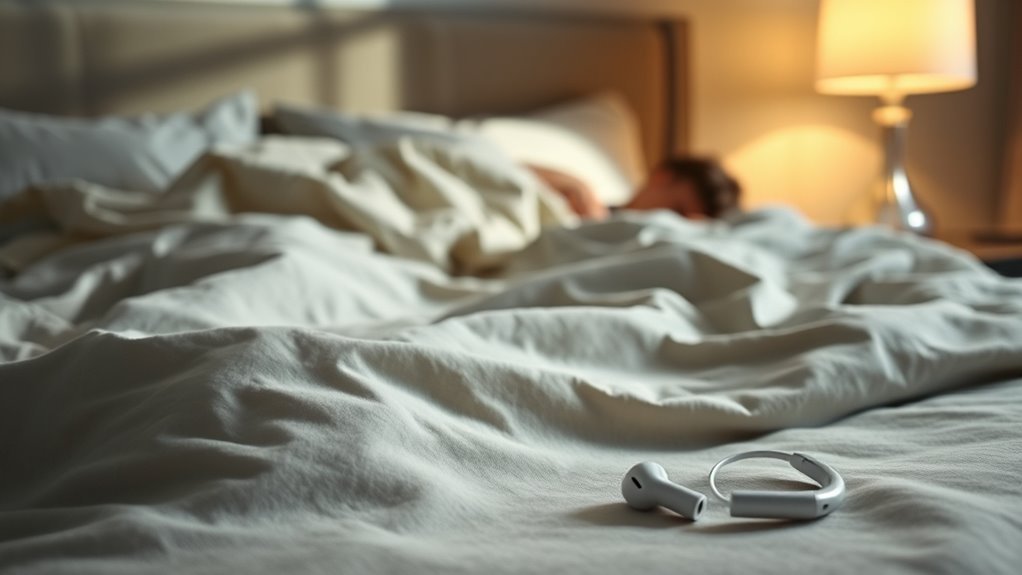

Sleeping with earbuds can have both benefits and drawbacks. While they can help block out noise and promote relaxation, prolonged use can lead to ear infections, discomfort, and disrupted sleep patterns. Hygiene is also a concern, as dirty earbuds can foster bacteria growth. Choosing ergonomic, low-volume options can enhance comfort and protect your hearing. If you want to explore more about the risks and alternatives, there’s plenty more to reflect on this topic.
Understanding Earbuds and Their Use During Sleep
While many people find solace in music or podcasts as they drift off to sleep, understanding the implications of using earbuds during this time is vital. Different earbud types, such as wired, wireless, and sleep-specific designs, can greatly influence your experience. For instance, sleep earbuds often feature a low-profile design that minimizes discomfort while lying down. When it comes to sleep sounds, the right audio can enhance relaxation and improve sleep quality. However, it’s important to choose sounds that are soothing rather than stimulating. By selecting appropriate earbud types and carefully curated sleep sounds, you can create an environment conducive to rest, allowing you the freedom to enjoy your nighttime audio without compromising comfort or quality.
Potential Risks of Sleeping With Earbuds
Sleeping with earbuds can pose several risks that you should consider. From potential ear health issues to impacts on your sleep quality, the drawbacks may outweigh the benefits. Additionally, comfort and safety concerns, such as the risk of damage to your ears or discomfort during the night, warrant careful evaluation.
Ear Health Concerns
Many people enjoy the convenience of listening to music or podcasts while they drift off to sleep, but this habit can pose several ear health concerns. Sleeping with earbuds in can lead to earwax buildup, as the devices can block the natural drainage of wax from the ear canal. Over time, this buildup can cause discomfort and even lead to infections. Additionally, prolonged exposure to sound at high volumes can contribute to hearing loss, especially when earbuds are kept in for hours. The close proximity of earbuds to your eardrums increases the risk of damaging your hearing. To protect your ear health, consider alternatives like pillow speakers or a sound machine that won’t pose the same risks while you sleep.
Sleep Quality Impact
Using earbuds during sleep can greatly impact your sleep quality, as the constant presence of sound may disrupt your natural sleep cycles. Research indicates that while you might enjoy prolonged sleep duration with soothing music or white noise, it can also lead to fragmented sleep. This disruption may prevent you from reaching deeper sleep stages crucial for restorative rest. Additionally, relying on earbuds might diminish your ability to engage in effective relaxation techniques, like mindfulness or breathing exercises, which are important for winding down at night. Instead of enhancing your sleep experience, earbuds could inadvertently compromise it, leaving you feeling less refreshed in the morning. It’s important to weigh these potential risks against your desire for auditory comfort while sleeping.
Comfort and Safety Issues
While you might find earbuds cozy for listening to calming sounds, they can pose several comfort and safety issues during sleep. It’s crucial to reflect on your comfort preferences and follow safety guidelines to minimize risks.
Here’s a brief overview of potential issues:
| Issue | Description |
|---|---|
| Ear Discomfort | Prolonged use can cause soreness or irritation. |
| Risk of Earwax Buildup | Earbuds may block airflow, increasing buildup. |
| Sleep Position Limitations | Certain positions can dislodge or damage the earbuds. |
| Potential Hearing Damage | High volume levels can lead to long-term damage. |
| Fire Hazard | Charging devices near bedding can pose risks. |
Being informed helps you make better choices about your sleep environment.
Ear Infections and Hygiene Concerns
Although sleeping with earbuds can enhance your listening experience, it can also pose significant risks related to ear infections and hygiene. When you wear earbuds for extended periods, especially during sleep, moisture can accumulate in your ears, creating an ideal environment for bacteria and fungi to thrive. To minimize these risks, prioritize ear hygiene by regularly cleaning your earbuds and avoiding the use of shared or dirty devices. Infection prevention is vital; consider using earplugs designed for sleep that are easier to clean and less intrusive. If you notice any signs of discomfort, such as itching or discharge, consult a healthcare professional promptly. Taking these precautions can help you enjoy your nighttime audio without compromising your ear health.
Disrupted Sleep Patterns and Quality
When you wear earbuds to bed, you might unknowingly disrupt your sleep patterns and overall sleep quality. Research indicates that external sounds can interfere with your natural sleep cycles, particularly during lighter sleep stages. Earbuds can amplify this effect by blocking ambient noise, which may lead to fragmented sleep or increased wakefulness throughout the night. Additionally, if you’re listening to stimulating content, such as upbeat music or engaging podcasts, you could inadvertently delay your sleep onset. This disruption can hinder your ability to enter deeper sleep stages, ultimately affecting how rested you feel in the morning. To maintain peak sleep quality, consider the potential impact of earbuds on your nightly rest. Prioritizing healthy sleep habits is essential for your well-being.
Comfort and Fit: Finding the Right Earbuds
When choosing earbuds for sleep, it’s crucial to think about the design, materials, and fit. Earbud shape and size can greatly affect your comfort, especially during extended use. Selecting a pair that conforms well to your ears can enhance your overall sleep experience while minimizing discomfort.
Earbud Design Considerations
Finding the right earbuds is essential for comfort, especially if you plan to wear them while sleeping. Recent earbud technology advancements have led to a variety of options designed specifically for comfort and fit. When choosing earbuds, consider those with ergonomic designs that conform to the shape of your ear. These designs can minimize discomfort during prolonged use, reducing pressure points that often lead to irritation. Look for models that feature adjustable components or soft silicone tips, which can enhance stability and comfort. Ultimately, your choice should reflect your personal preferences while ensuring a snug fit that won’t easily dislodge. Prioritizing comfort will help you enjoy a more restful sleep experience without sacrificing your freedom to listen.
Material and Comfort Factors
Choosing the right materials for earbuds can greatly influence your comfort during sleep. Different material types, such as silicone, foam, and plastic, can affect how the earbuds feel against your ear. Silicone tips often provide a snug fit, but they can become uncomfortable over time, especially if you’re a side sleeper. Foam tips, on the other hand, tend to conform more closely to the ear’s shape, offering enhanced comfort levels. Additionally, consider earbuds with breathable materials that help reduce heat buildup during the night. It’s crucial to test various options to find what works best for you. Prioritizing the right materials will not only enhance your comfort but also improve your overall sleep experience while using earbuds.
Size and Shape Variability
Although many earbuds may seem similar at first glance, size and shape variability play a significant role in achieving the right fit for sleep. Different earbud styles, including in-ear, on-ear, and wireless models, can greatly affect your comfort. It’s crucial to take into account ergonomic designs that contour to the unique shape of your ears. Ill-fitting earbuds can lead to discomfort, especially when you’re lying down, causing distractions that disrupt your sleep. Look for options with adjustable tips or customizable features that accommodate various ear sizes. Testing earbuds before your sleep routine can help guarantee you find a pair that feels comfortable and supportive. Prioritizing the right fit allows you to enjoy your audio experience without sacrificing your well-being during rest.
Alternatives to Sleeping With Earbuds
Many people seek alternatives to sleeping with earbuds to enhance their sleep quality and protect their ear health. Here are three effective options:
Many individuals look for alternatives to earbuds for better sleep quality and ear health.
- White Noise Machines: These devices create consistent sound, helping to mask disruptive noises and promote relaxation.
- Relaxation Apps: Many apps offer guided meditation techniques and calming playlists, allowing you to unwind before bedtime without using earbuds.
- Sleep Masks and Ambient Lighting: Combining sleep masks with dim ambient lighting can create a soothing environment that encourages restful sleep.
Incorporating herbal teas into your evening routine can also promote relaxation. By focusing on sleep hygiene and implementing these alternatives, you can achieve better rest without the potential drawbacks of earbuds.
Tips for Safe Earbud Use at Night
Using earbuds at night can enhance your listening experience, but it’s important to prioritize ear health and comfort. To guarantee safe use, choose earbuds with ergonomic designs that fit snugly without causing discomfort. This minimizes movement during sleep and reduces pressure on your ears. Opt for low-volume settings when listening to sleep soundtracks, as high volumes can lead to hearing damage over time. Consider using wireless earbuds to eliminate the risk of tangling, which might disrupt your sleep. Additionally, set a timer for your soundtracks to avoid prolonged use, allowing your ears to rest. Regularly clean your earbuds to prevent buildup of bacteria, guaranteeing a healthier listening environment while you enjoy your nighttime audio.
Personal Experiences and Recommendations
While some people find sleeping with earbuds comfortable and beneficial for relaxation, others may experience discomfort or health issues. Personal anecdotes and user reviews reveal a variety of experiences. To help you make an informed decision, consider the following recommendations:
- Choose the Right Earbuds: Opt for soft, wireless earbuds designed for sleep to minimize discomfort.
- Limit Volume Levels: Keep the volume low to protect your hearing and prevent disturbances during sleep cycles.
- Evaluate Sleep Quality: Monitor how your sleep changes with earbud use; if you notice disturbances, it might be time to reconsider.
Ultimately, your comfort and health should guide your choice. Listen to your body and adjust accordingly for a peaceful night’s sleep.
Frequently Asked Questions
Can Sleeping With Earbuds Cause Hearing Loss Over Time?
Yes, sleeping with earbuds can lead to hearing loss over time due to prolonged sound exposure. Just like a constant drip erodes stone, continuous sound can wear away your hearing protection. Moderation is key for healthy listening.
What Type of Music Is Best for Sleeping With Earbuds?
For sleeping with earbuds, relaxing playlists and ambient sounds are ideal. They promote tranquility and help you drift off peacefully. Look for soft instrumental tracks or nature sounds to enhance your sleep experience effectively.
How Often Should I Clean My Earbuds for Hygiene?
You should clean your earbuds at least once a week. Use a soft cloth or alcohol wipes, especially for silicone or foam materials, to remove debris and bacteria, ensuring better hygiene and sound quality while enjoying music.
Are Wireless Earbuds Safer Than Wired Ones for Sleep?
Wireless earbuds might seem safer due to fewer wires, but their Bluetooth signals can raise concerns about wireless safety. Comfort levels vary, so choosing the right pair is essential for a good night’s sleep.
Can Sleeping With Earbuds Improve Sleep Quality?
Sleeping with earbuds can improve sleep quality by enhancing your sleep environment. They provide sound masking, which helps block out disturbances, allowing you to relax and drift into deeper, more restorative sleep without interruptions.
