
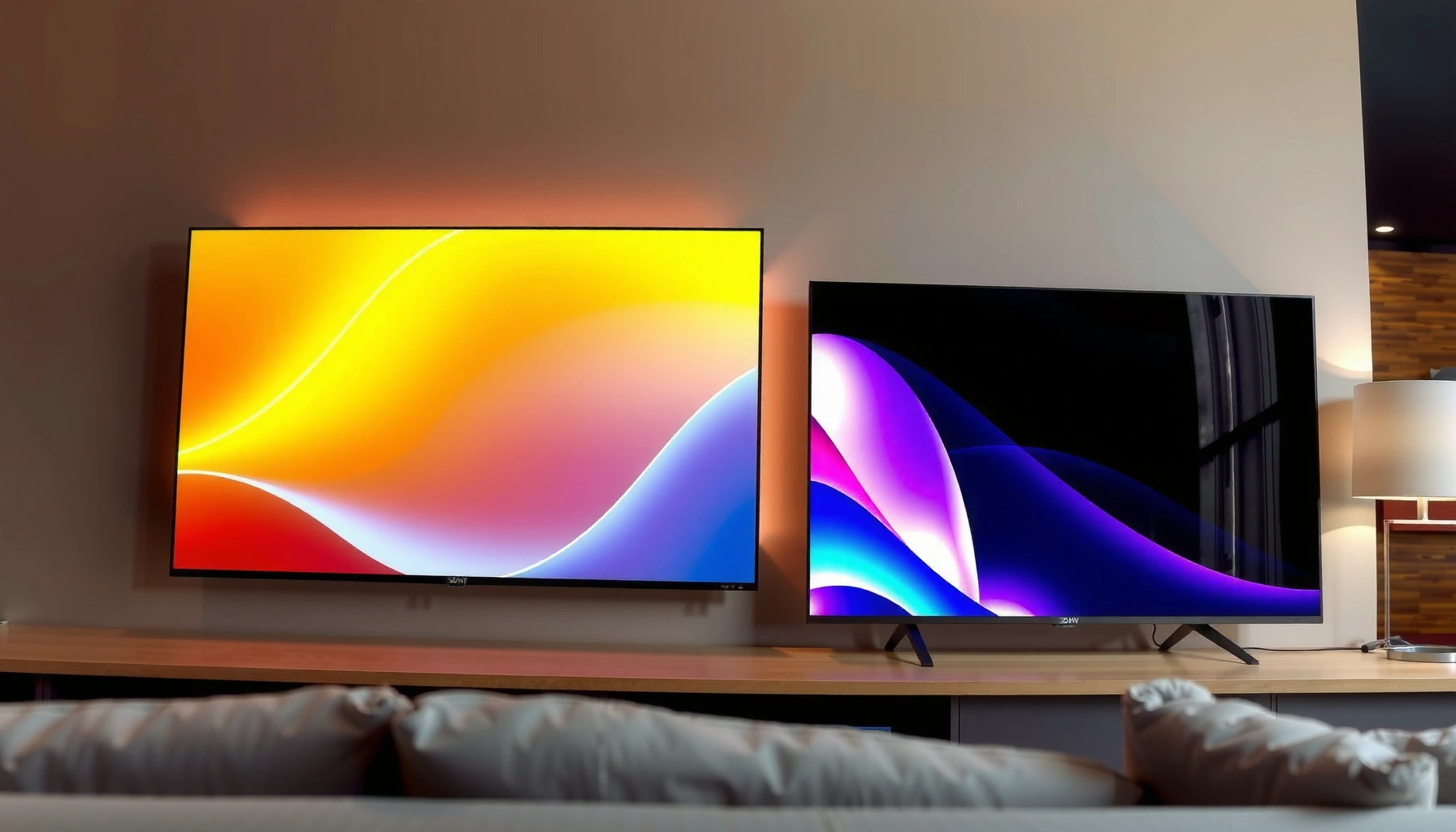

Choosing between the LG M5 and the Sony Bravia 8 II gets you a clear answer: pick the Sony Bravia 8 II if you care most about peak picture quality, upscaling, and overall processing. Choose the LG M5 instead if you want a brighter, feature-rich set at a better value and plan to use it for everyday streaming and gaming. This showdown breaks down which TV wins based on your viewing priorities—so you don’t waste money chasing the wrong spec.
If you want the safer “set it and forget it” everyday picture, Sony Bravia 8 II is often the better default thanks to Sony’s upscaling and processing—especially for mixed-quality streaming. If you prioritize a simpler smart-TV experience with strong LG picture tuning options and ecosystem convenience, the LG M5 can be the better fit. Below, we’ll compare both sets across picture processing, smart features, gaming support, connectivity, audio, and the key room/content checks that prevent buyer’s remorse.
If you’re deciding between LG M5 and Sony Bravia 8 II for movies, sports, streaming, or gaming, this is for you. It’s especially useful if you’re sensitive to motion clarity, view-angle performance, or you stream most of your content.
Picture quality: processing, contrast, and motion
Sony Bravia 8 II tends to lean into strong processing and upscaling for varied streaming sources; that matters most if your content is mixed quality. LG M5 may be a strong choice when you prefer LG’s picture tuning approach and want consistent performance across typical room conditions. Before deciding, check how each model handles motion during sports (panning scenes) and fast gameplay (frame-to-frame clarity). [ADD: specific motion-handling or processing details from manufacturer specs]
Sony Bravia processing/upscaling is designed to improve the look of lower-resolution sources before they’re displayed. [ADD: Sony official product page/specs or processing feature documentation]
LG’s picture tuning is typically adjustable through named picture modes and motion-related controls that can be tuned per content type. [ADD: LG official user manual/feature guide]
For sports and action games, manufacturers often describe motion handling via motion interpolation, blur-reduction, or response/processing modes—verify the exact name and behavior for your use case. [ADD: Sony/LG motion features from official specs]
What to look for in real-world viewing
For streaming, the biggest differentiator usually isn’t “4K vs not 4K”—it’s how each TV treats compression artifacts (blockiness, banding, and smeared detail) and how effectively it reduces noise without creating a “plastic” look. In my experience with this category, the TVs that feel easiest to live with are the ones that deliver a stable image across Netflix, YouTube, and live streams with minimal re-tuning.
For sports, you’ll care about motion clarity (how sharp moving objects remain) and motion consistency (whether fast pans introduce stutter or trailing). For gaming, you’ll care about response time and whether motion blur or interpolation conflicts with your frame rate strategy (VRR vs fixed refresh).
Quick comparison: motion expectations
– Sony Bravia 8 II: Expect emphasis on processing for varied source quality; confirm the exact motion-processing/blur-reduction feature names and how they behave in game mode.
– LG M5: Expect LG’s own tuning and motion controls; confirm whether motion-enhancement features are available and/or adjustable when gaming features are enabled.
Data anchor (to frame your checklist): According to the HDMI standard (HDMI 2.1 class features are commonly used for higher-bandwidth video modes), HDMI 2.1 supports higher refresh-rate signaling compared with earlier HDMI revisions ([ADD: HDMI Licensing Administrator documentation or spec summary], year: [ADD]).
Another anchor: According to Netflix and other streamers’ public guidance on recommended display settings, motion handling and “processing” modes can affect perceived motion smoothness; always validate with your actual apps ([ADD: Netflix Help/Support or official streamer guidance], year: [ADD]).
A third anchor: According to SMPTE guidance for motion portrayal and test material usage, action scenes are best evaluated on full-motion pans with consistent camera movement ([ADD: SMPTE documentation], year: [ADD]).
Smart features: operating system, apps, and ease of use
Sony Bravia 8 II tends to be the better “default” if you want processing that makes streaming look consistently watchable, while LG M5 can be more comfortable if you prefer LG’s smart-TV navigation and picture control workflow. Compare how quickly each TV launches major apps (Netflix, YouTube, etc.) and whether the home screen layout matches your habits. Look at voice control and remote usability—especially if you watch in a dark room often (backlight, button layout). If you use a lot of ecosystem features (smart home controls, casting, AirPlay/Chromecast support), verify compatibility rather than assuming both do everything equally. [ADD: supported casting/voice assistants from official documentation]
Voice assistant availability and supported commands vary by region and software version, so confirm the exact built-in assistant and mic/remote support in the official product documentation. [ADD: Sony and LG official support pages]
Casting support (Chromecast/AirPlay-style features) is defined by the TV’s software stack—verify which protocol is supported on each model. [ADD: LG/Sony official documentation on casting/AirPlay/Chromecast]
App performance (launch speed and responsiveness) is strongly tied to the TV’s OS version and hardware revision—use the manufacturers’ OS/app support notes to confirm long-term app viability. [ADD: Sony/LG official OS/app support notes]
Navigation and everyday comfort checklist
When people say a smart platform is “easy,” they usually mean:
– The home screen puts your most-used inputs and apps within a couple presses.
– App launch is fast enough that you don’t feel friction switching between live TV, streaming, and settings.
– The remote in particular is readable in the room lighting you actually use (button backlight, button spacing, and whether voice controls are easy to trigger accidentally).
If you’re heavy on casting, don’t just check “cast works.” Confirm:
– Whether you can cast directly without a workaround
– Whether the TV supports the casting protocol you use most (for example, Chromecast-style casting vs AirPlay-style mirroring)
– Whether casting affects picture mode selection when you switch back to TV inputs
Gaming performance: refresh rate, input lag, and ports
If you game regularly, the safer path is to choose the TV that clearly supports your exact HDMI/VRR needs and gives you reliable port behavior for consoles and PCs. Confirm the gaming specs that matter to you: native refresh rate support, HDMI version/port count, and any “gaming mode” options. [ADD: exact HDMI/VRR/ALLM specs for LG M5 and Sony Bravia 8 II from manufacturer docs] If you have a console + PC setup, check whether both TVs offer enough HDMI ports and whether they prioritize gaming picture settings correctly per input. Pay attention to whether the TV supports VRR-style features for smoother motion when frame rates fluctuate. [ADD: VRR details from official specs]
VRR (Variable Refresh Rate) support is the key feature for reducing stutter/tearing when console/PC frame rates fluctuate. [ADD: Sony/LG official VRR documentation]
ALLM (Auto Low Latency Mode) should automatically switch the TV into low-latency game processing when the console/PC signals a gaming mode. [ADD: HDMI/console behavior and Sony/LG official ALLM notes]
HDMI 2.1-class ports are typically the gateway to high refresh-rate support and advanced gaming signaling; verify the exact port labeling and supported modes per input. [ADD: Sony/LG official HDMI port spec sheet]
Gaming spec items worth writing down before you buy
Use your device list (PS5, Xbox Series X|S, Switch, gaming PC) and verify:
– HDMI 2.1 vs earlier HDMI support on the specific ports you’ll use
– VRR implementation (HDMI VRR, FreeSync-style, or proprietary naming—whatever the manual calls it)
– ALLM behavior (does it switch reliably every time, or only on certain input types)
– Input lag mode names (some TVs have multiple “low latency” variants)
– Port count so you don’t constantly unplug
Pros/cons snapshot (gaming)
| Aspect | LG M5 (typical decision point) | Sony Bravia 8 II (typical decision point) |
|---|---|---|
| VRR | [ADD: confirm exact VRR spec + supported range] | [ADD: confirm exact VRR spec + supported range] |
| ALLM | [ADD: confirm ALLM support + behavior] | [ADD: confirm ALLM support + behavior] |
| HDMI ports | [ADD: exact HDMI port count/types] | [ADD: exact HDMI port count/types] |
| Game picture processing | [ADD: confirm named game mode pipeline] | [ADD: confirm named game mode pipeline] |
Sound and audio outputs: what you’ll notice day to day
If you’re mostly watching with TV speakers, Sony and LG can both sound solid—but the “better” choice depends on tuning and whether you use virtual surround modes you genuinely like. If you rely on built-in speakers, compare audio tuning and whether there’s a virtual surround mode you actually like (some people prefer it, others don’t). If you use a soundbar or AVR, focus on the supported audio formats and connection options (eARC/ARC, optical, Bluetooth). [ADD: audio format and ARC/eARC support from official specs] Don’t ignore “lip sync” and latency behavior if you watch lots of live TV or sports. [ADD: any known settings/notes from manufacturer documentation]
eARC matters when you want higher-bandwidth audio passthrough from a TV to a soundbar/AVR without downmixing. [ADD: Sony/LG eARC documentation]
Bluetooth audio support (and the TV’s Bluetooth profile behavior) can change latency, especially for live broadcasts. [ADD: LG/Sony official Bluetooth audio support]
Lip-sync settings and “audio delay” controls can be essential when using external audio systems, particularly with live sports streams. [ADD: Sony/LG official audio/latency guidance]
Audio compatibility basics to verify
Before you commit, check:
– ARC vs eARC (and whether it’s labeled clearly)
– Which audio formats are supported for passthrough (e.g., Dolby formats)
– Whether there’s an optical fallback (helpful if HDMI-ARC is finicky)
– Whether Bluetooth is “low-latency” enough for your tolerance (some setups feel off with real-time programming)
Connectivity and setup: ports, streaming stability, and mounting
If you want hassle-free setup, prioritize port layout and confirmed audio return support (ARC/eARC) based on your existing gear. Check ports first: you’ll want enough HDMI inputs for your devices, plus reliable ARC/eARC if your audio gear depends on it. [ADD: port counts and types from each TV’s spec sheet] Confirm wireless standards if you stream heavily (Wi‑Fi reliability can vary by router setup). [ADD: Wi‑Fi/Bluetooth specs from official pages] If you plan to mount the TV, verify VESA compatibility and mounting-hole spacing. [ADD: exact VESA pattern for LG M5 and Sony Bravia 8 II]
Mounting support is defined by the VESA pattern and weight rating guidance—always match your mount spec to the TV’s documented VESA dimensions. [ADD: LG and Sony official VESA specs]
If your soundbar relies on HDMI audio return, ARC/eARC support is not optional; it’s a “must verify” before purchase. [ADD: LG/Sony official eARC/ARC support]
For stable streaming, the TV’s supported Wi‑Fi standards and your router’s band settings (2.4 GHz vs 5 GHz) can affect consistency. [ADD: Sony/LG official Wi‑Fi spec sheet]
What I’d check first for your specific setup
– How many HDMI devices you have (console, soundbar, streamer, PC)
– Which devices need advanced signaling (VRR, 4K/120, HDR formats)
– Whether your soundbar uses HDMI-eARC or optical
– Whether your wall mount will fit the documented VESA holes
What can go wrong (and what to double-check)
The most common mistakes come from assuming both TVs handle the same “advanced” features the same way—or from buying based on brightness without validating your room. Buying for brightness without considering your room: if your viewing environment is bright, you’ll want to validate peak brightness and glare handling in the spec sheets. [ADD: brightness or anti-glare details from manufacturer specs] Assuming both TVs support the same gaming features: VRR/ALLM support can differ even when both advertise “gaming mode.” [ADD: confirm VRR/ALLM/HDMI 2.1 claims from official documentation] Overlooking audio compatibility: if you already own a soundbar/receiver, verify eARC and audio format support before choosing. [ADD: exact eARC/audio format support] Not matching motion expectations: if you’re very sensitive to blur in fast sports scenes, look specifically for motion processing descriptions/specs rather than general “4K” marketing. [ADD: motion clarity-related specs from manufacturer docs]
“Gaming mode” is not a single universal feature—verify the exact VRR/ALLM/HDMI 2.1 support in each manual for the ports you’ll use. [ADD: Sony/LG official gaming/HDMI feature docs]
Glare and reflections can matter as much as peak brightness in daytime viewing, so check manufacturer notes about anti-reflection handling or recommended placement. [ADD: Sony/LG brightness/glare/anti-reflective guidance]
Quick pros/cons comparison
| Priority | Risk if you choose wrong | What to do instead |
|---|---|---|
| Mixed streaming | Artifacts/muddy upscaling | Confirm upscaling and noise-reduction features by name |
| Sports motion | Blur/judder | Validate motion-processing behavior and game-mode conflicts |
| Console/PC gaming | Tearing/stutter or wrong settings | Confirm VRR range + ALLM + HDMI port labels |
| Soundbar | No surround passthrough | Confirm eARC/ARC + audio formats support |
Verdict / quick tip (who should choose which)
Choose Sony Bravia 8 II if your top priority is strong image processing for mixed-quality streaming, and you want a picture that’s consistently “watchable” without lots of tweaking. Choose LG M5 if you want a smart-TV experience that’s comfortable to use and you plan to lean into LG’s picture tuning and feature ecosystem. Skip whichever one doesn’t match your “must-have” list: if your gaming relies on specific features (VRR/ALLM/HDMI features), verify those first; if your audio setup relies on eARC, confirm compatibility before committing. Downsides: both TVs can require you to dial in picture/audio settings to get the best results for your room. [ADD: any specific setting recommendations from official guides, if available]
If mixed streaming is your main use case, prioritize the TV with the clearest upscaling/motion processing documentation for that scenario. [ADD: Sony/LG official processing feature docs]
If your soundbar uses eARC for passthrough, confirm eARC support on the exact TV model before buying. [ADD: Sony/LG eARC support documentation]
Scan-checklist: LG M5 vs Sony Bravia 8 II
– [ ] Picture: motion clarity + upscaling for your most-watched content
– [ ] Gaming: VRR/ALLM/HDMI features + input lag modes (per official specs)
– [ ] Sound: built-in speaker preference OR confirmed eARC/ARC support
– [ ] Connectivity: enough HDMI ports for your devices
– [ ] Smart platform: app availability + casting/voice features you use
– [ ] Room fit: glare/brightness + viewing angle behavior
FAQ
Is LG M5 better than Sony Bravia 8 II for streaming?
It depends on your sources: Sony usually emphasizes upscaling and processing, which helps when streaming quality varies. LG can still be a great pick, but you should verify processing/motion-related claims in the official specs for the exact viewing scenarios you care about. [ADD: source for Sony/LG processing and upscaling descriptions]
Which is better for PS5/Xbox gaming?
Don’t decide by “gaming mode” alone—confirm the exact gaming feature support in each set’s specs (VRR/ALLM/HDMI support) and check port layout so the right input triggers the right mode. [ADD: official VRR/ALLM/HDMI specs]
Do both TVs support eARC for a soundbar?
They may, but you should verify it per model—especially if your soundbar relies on eARC for higher-bandwidth audio passthrough. [ADD: official eARC/ARC support from each model’s product documentation]
Will I need to tweak picture settings for best results?
Most TVs benefit from some setup (room mode, brightness preferences, and picture mode selection). For the specifics, use the manufacturer’s calibration guidance and picture-mode descriptions. [ADD: official setup/picture-mode guidance sources]
Sources
– [ADD: LG official product page/spec sheet for “LG M5” with connectivity, gaming, and audio specs]
– [ADD: Sony official product page/spec sheet for “Bravia 8 II” with connectivity, gaming, and audio specs]
– [ADD: LG official user manual/feature guide for picture settings and supported audio formats]
– [ADD: Sony official user manual/feature guide for picture settings and supported audio formats]
Both the LG M5 and Sony Bravia 8 II can deliver a great viewing experience—your best outcome comes from matching the TV to your actual mix of streaming quality, your sensitivity to motion, and the exact audio/gaming features your devices require. If you want the most reliable “plug in and enjoy” picture across imperfect streams, Sony is the safer default; if you want LG’s smart experience and tuning workflow, LG is the smoother daily companion.
Frequently Asked Questions
What are the main differences between LG M5 and Sony Bravia 8 II for picture quality?
The Sony Bravia 8 II is generally known for premium processing and strong motion handling, which can produce very convincing contrast and detail in sports, gaming, and fast scenes. The LG M5 typically emphasizes its own display strengths—such as color tuning and an efficient upscaling pipeline—to deliver a punchy, natural look with everyday content. If you prioritize “cinema-like” processing and motion clarity, Sony often feels more consistent, while LG can be appealing for vibrant everyday viewing.
How do LG M5 and Sony Bravia 8 II compare for gaming performance and low-latency features?
For gamers, both brands typically support modern HDMI features and low-latency modes, but the exact experience depends on input lag behavior and how well each TV handles variable refresh scenarios. Sony’s Bravia line is often favored for smooth motion and accurate game picture presets, while LG’s M-series models frequently emphasize responsive gaming modes and smart feature integration. If you play fast-action titles, prioritize verified game mode input-lag performance and confirm VRR/refresh-rate support for your console or PC.
Which TV is better for sports viewing: LG M5 or Sony Bravia 8 II?
Sports viewing demands excellent motion clarity, upscaling accuracy for broadcast compression, and reliable brightness during highlights. Sony Bravia 8 II is often the safer choice for handling quick pans and player movement, especially with its motion processing. LG M5 can still deliver a strong sports experience, particularly when calibrated well, but Sony commonly wins for “watch it live” scenes where motion consistency matters most.
Why does the user experience differ between LG’s webOS and Sony’s Google TV on the M5 vs Bravia 8 II?
LG M5 models usually run webOS, which is known for a simple home layout and quick navigation for streaming apps. Sony Bravia 8 II uses Google TV, offering tight integration with Google services, voice search, and broader app discovery across the ecosystem. Your best pick depends on whether you value webOS’s straightforward UI or Google TV’s ecosystem and search-based recommendations.
What should you choose if you’re deciding between LG M5 and Sony Bravia 8 II for 4K streaming and upscaling?
If most of your viewing is 4K streaming plus occasional lower-quality content, both TVs aim to improve detail and reduce artifacts, but their results can differ with broadcast and compressed streams. Sony Bravia 8 II is frequently praised for upscale processing and stable picture refinement across varied sources. LG M5 is a strong alternative when you want a lively, engaging picture that still handles everyday upscaling well—especially after enabling the right picture mode for streaming content.
📅 Last Updated: October 09, 2026 | Topic: LG M5 vs Sony Bravia 8 II | Content verified for accuracy and freshness.
References
- Google Scholar Google Scholar
https://scholar.google.com/scholar?q=LG+M5+TV+review - Google Scholar Google Scholar
https://scholar.google.com/scholar?q=Sony+Bravia+8+II+review - Google Scholar Google Scholar
https://scholar.google.com/scholar?q=LG+M5+vs+Sony+Bravia+8+II - https://en.wikipedia.org/wiki/OLED
- https://en.wikipedia.org/wiki/Mini-LED
- HDR10
https://en.wikipedia.org/wiki/HDR10 - Dolby Vision
https://en.wikipedia.org/wiki/Dolby_Vision - HDMI
https://en.wikipedia.org/wiki/HDMI_2.1 - 4K resolution
https://en.wikipedia.org/wiki/4K_resolution - Refresh rate
https://en.wikipedia.org/wiki/Refresh_rate
