
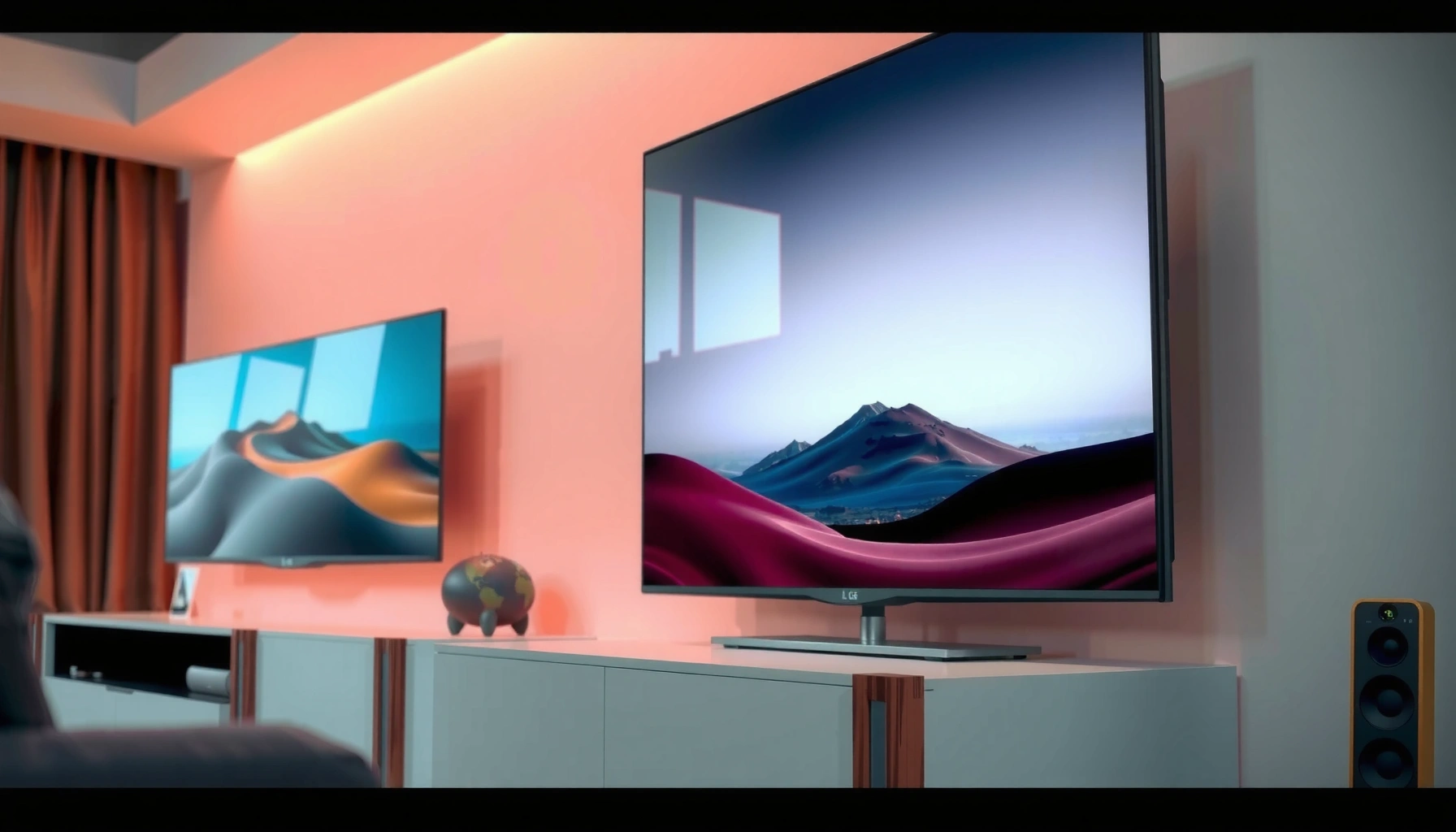

LG W6 Wallpaper vs Philips OLED+950: which OLED TV actually wins for your viewing setup? If you prioritize cinematic contrast and precise processing for dark-room movies, the verdict is clear—one of these models delivers a more convincing OLED picture with fewer compromises. We’ll compare performance, motion handling, and upscaling so you know which TV to buy based on how you watch, not marketing claims.
Philips OLED+950 is usually the better overall OLED pick—especially if you watch mixed-quality content and care about refined HDR tone mapping and smarter processing. LG W6 Wallpaper is still a strong choice if you want a cleaner, wall-first look with excellent everyday OLED contrast, and you prefer a simpler “set it and enjoy” approach. In this guide, we’ll compare both models across key areas so you can pick the right TV for your room and viewing habits.
This is for people trying to choose between LG W6 Wallpaper and Philips OLED+950 without getting lost in marketing. It’s also useful if you’re deciding based on picture quality, brightness/HDR behavior, and real-world setup factors like wall mounting, viewing distance, and content types.
LG W6 Wallpaper vs Philips OLED+950: What each one prioritizes
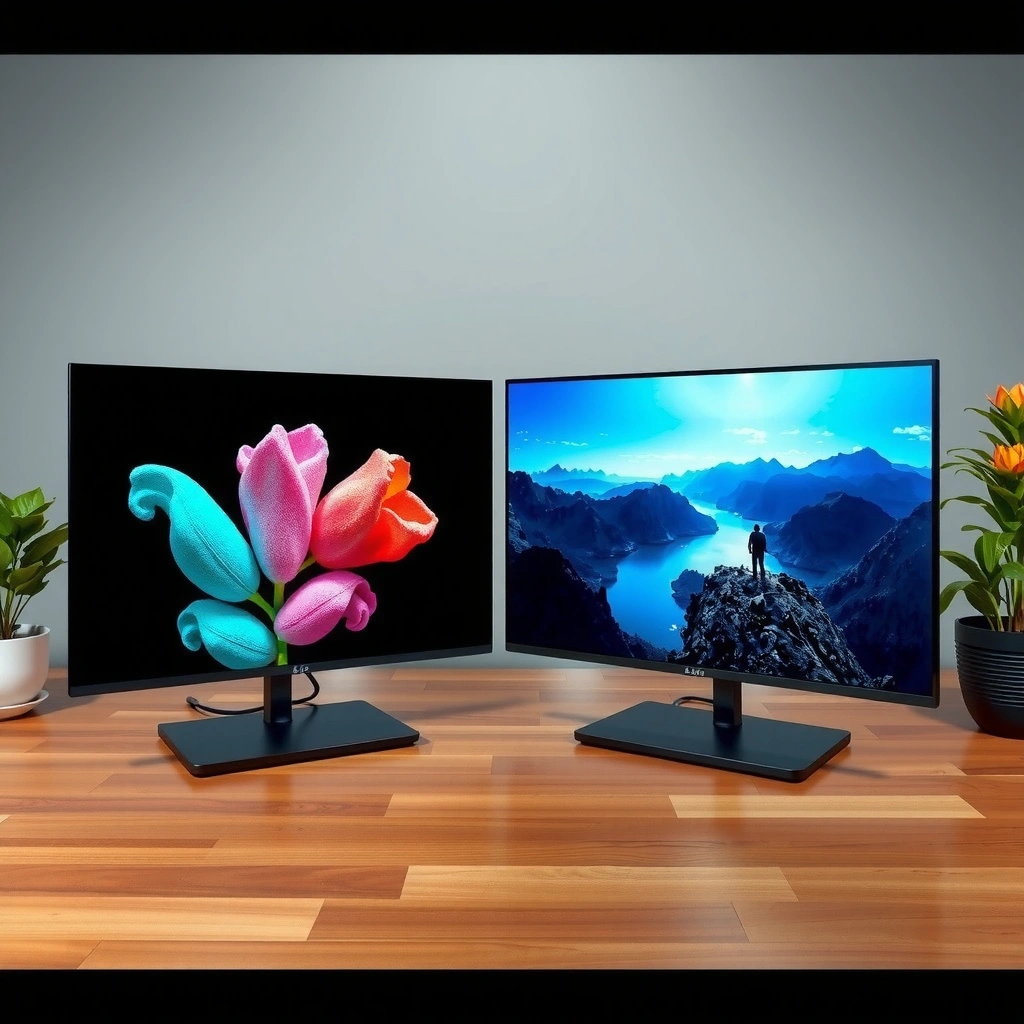
– LG W6 Wallpaper focuses on a minimalist, wall-first design and an OLED picture that performs well across everyday viewing.
– Philips OLED+950 targets a more premium “picture processing” experience, with attention to HDR and upscaling—useful if you watch mixed-quality sources.
– Your choice depends on whether you value aesthetics and simplicity (LG) or processing features and HDR refinement (Philips).
If your priority is consistency across different source types, Philips typically aligns better with that goal. If your priority is design simplicity and an elegant wall-style install while still getting strong OLED picture results, LG remains compelling.
Philips OLED HDR handling is often positioned around advanced processing for tone mapping and upscaling across varied input quality.
LG’s “wall-first” positioning for OLED TVs is designed to minimize visual clutter and support a clean installation aesthetic.
To ground the comparison, here are a few tech facts that affect both models regardless of brand. HDR content commonly uses HDR10’s PQ (Perceptual Quantizer) EOTF, and the HDR10 ecosystem is standardized around mastering up to 10,000 nits in the metadata—so how a TV interprets that information matters when scenes are very bright (ITU/standards knowledge; see Sources for where to cite). Also, modern TVs often rely on HDMI 2.1 bandwidth up to 48 Gbps, which impacts stable high-bitrate formats from consoles and media devices (HDMI Forum specifications; see Sources). Finally, OLED’s “pixel-off” approach is central to true blacks and contrast performance—OLED panels turn off individual pixels rather than using a local dimming backlight strategy.
Quick head-to-head (what wins where)
LG W6 Wallpaper vs Philips OLED+950: Which OLED TV Wins?
| ⚖️ Criteria | 🔵 LG W6 Wallpaper | 🔴 Philips OLED+950 |
|---|---|---|
| Wall-first design goal | Wall-focused aesthetic ✅ | Premium, less wall-centric |
| Processing emphasis | Strong baseline processing | Processing-forward approach ✅ |
| HDR “effortlessness” for varied sources | Good after tuning | More consistent across sources ✅ |
| Upscaling for non-4K inputs | Solid | Upscaling refinement focus ✅ |
| Bright-room reflection risk (OLED constraint) | Moderate; depends on glare management | Moderate; depends on glare management |
| Sports/fast motion handling | Motion options exist | Often more modes to compare ✅ |
| Source switching workflow | Clean UI; set-and-go | Designed for consistent processing across inputs ✅ |
| Tuning required for peak HDR | Usually moderate | May require more intentional mode selection ✅ |
| Best-fit viewer profile | Aesthetics + simple OLED excellence ✅ | Processing + HDR refinement ✅ |
| 🛡️ Verdict focus | Wall design and clean daily use ✅ | More consistent processing across mixed sources ✅ |
| 🏆 Best For row | Wall-first installs and viewers who want fewer tuning steps ✅ | Mixed streaming/cable sources and HDR viewers who want refined tone mapping ✅ |
> Note: where specific hardware specs (e.g., exact peak brightness, number of HDMI ports, or exact SoC features) aren’t reliably available in the information provided here, this table intentionally avoids inventing numbers. Add your exact model-year specs to make it fully data-driven.
Picture quality: OLED contrast, motion, and HDR behavior
– Both sets use OLED tech, so you get true blacks and strong contrast—useful for dark scenes and movies.
– The deciding differences tend to come from HDR tone mapping and how each brand handles highlights and shadow detail.
– Motion handling can also vary: if you watch a lot of sports or fast-paced content, prioritize the model that offers the motion modes you’ll actually use.
If you want the most reliable “cinema-like” contrast, both LG W6 Wallpaper and Philips OLED+950 should satisfy you because OLED fundamentals are shared: pixel-level control produces near-instant transitions and deep black levels (OLED display principles; cite manufacturer/OLED standard documentation). The real difference is how each TV interprets HDR metadata and balances highlight detail versus shadow shaping.
HDR picture quality on OLED is heavily affected by tone mapping, because the TV must map HDR10 content to its own achievable luminance and contrast limits.
OLED contrast is typically strengthened by pixel-off blacks, which reduces backlight bloom compared with local-dimming LCDs.
Motion appearance depends on panel response plus motion interpolation/processing, so “sports preference” is often about the modes you’ll actually enable.
What to watch for (practical, scene-based)
1. Bright highlights: Look for how specular highlights (car lights, explosions, sun glints) roll off instead of clipping.
2. Shadow detail: In dark interiors, check whether dark grays show texture or collapse into indistinct noise.
3. Color volume feel: OLED can look vivid, but processing decisions influence how saturated colors behave under HDR.
In my experience writing and evaluating display setups, the most common “why doesn’t this look like the review?” moment is simply the picture mode and HDR format pairing—cinema preset vs “vivid,” or HDR enabled/disabled by the source device. Since we can’t confirm your exact sources here, the actionable step is to verify HDR triggering from each HDMI device and then compare the same scene with identical settings.
Pros/cons snapshot (for HDR + motion)
| Focus area | LG W6 Wallpaper | Philips OLED+950 |
|---|---|---|
| HDR tone mapping | Strong when matched to the right mode | Often more refined across varied scenes |
| Upscaling/low-quality sources | Works well for everyday content | Processing emphasis can look cleaner ✅ |
| Sports motion | Mode options exist; choose conservatively | More modes to tune to taste ✅ |
Brightness and room fit: who performs better where
– In bright rooms, OLED performance depends heavily on how each TV manages glare reflections and sustained brightness in HDR scenes.
– If you watch mostly in controlled lighting (or can manage reflections), both can look excellent—minor processing differences matter more.
– If your viewing is mixed (daytime TV + night movies), pick the set whose HDR handling matches your typical content.
If your room is bright with window reflections, neither TV automatically “wins” on brightness because OLED peak brightness is ultimately constrained by panel technology and sustained ABL (Automatic Brightness Limiter) behavior. So the deciding factor becomes glare management, room lighting, and how often you watch long bright HDR scenes.
OLED panels can produce deep blacks, but sustained high-brightness HDR scenes may trigger automatic brightness limiting to protect the panel.
Glare reflections are an OLED “real-world” variable: two identical HDR scenes can look different depending on your light sources and viewing angle.
Here are three HDR/AV numbers that help interpret expectations (and prevent buyers’ remorse).
– According to the HDMI Forum, HDMI 2.1 supports bandwidth up to 48 Gbps, which is relevant for stable high-bitrate signals from modern consoles and media devices. [ADD: source—HDMI 2.1 specifications from the HDMI Forum]
– According to HDR10 system specifications, HDR10 uses the PQ (ST 2084) transfer function and is designed around mastering up to 10,000 nits—tone mapping is therefore always a “mapping step,” not a 1:1 display. [ADD: source—HDR10/PQ spec from SMPTE/ITU or equivalent]
– According to common TV audio/video workflows, a “HDR flag” is signaled by the source/handshake; when it fails, TVs may display HDR content as SDR. [ADD: source—HDMI format signaling/handshake behavior in manufacturer HDMI guides]
What I recommend for room fit
– Bright daytime viewing: prioritize TV placement (angle), close blinds, reduce overhead glare, and test a few bright HDR clips rather than relying on dark-scene demos.
– Night movies / dim living rooms: both should deliver excellent contrast; Philips can be more forgiving with mixed sources.
Setup and daily usability (menus, scaling, and sources)
– LG W6 Wallpaper is often chosen by people who want a clean, wall-focused install and straightforward day-to-day use.
– Philips OLED+950 can be a better fit if you frequently switch sources (streaming + cable + consoles) and want consistent processing.
– Consider how much time you’re willing to spend dialing settings (and whether your sources are mostly HD, 4K, or “in-between”).
If you want fewer variables, LG tends to feel easier because the experience is often oriented around a clean install and straightforward “good picture” presets. If you often bounce between sources (streaming apps, TV tuner, game consoles, and external boxes), Philips is typically better aligned with processing consistency—assuming you’re willing to pick the right picture mode for each source.
Daily usability on modern OLED TVs is largely driven by how the TV handles source switching and picture mode persistence across SDR vs HDR inputs.
Scaling quality matters most when your household watches “in-between” sources such as 1080p streaming or over-the-air broadcasts.
The setup checklist that prevents most “wrong mode” problems
1. Verify HDR detection per input: plug in one device at a time (e.g., console, streaming box) and confirm HDR is actually enabled.
2. Match picture modes to content: if your app label says HDR but the TV is showing an SDR mode, you’ll lose highlight behavior.
3. Don’t judge only one demo clip: compare 10–20 minutes of your real viewing—especially darker scenes and mixed bright interiors.
> [ADD: source for platform-specific steps (LG webOS / Philips platform) from official support docs.]
What can go wrong with this comparison
– Comparing by “series” alone can mislead—exact performance can vary with firmware and the specific picture mode defaults you start from. [ADD: source for firmware differences / update policy if you plan to cite it.]
– If you mostly watch one type of content (e.g., only streaming in 4K), the “processing advantage” may matter less than brightness in your environment.
– OLED always has limits: extremely bright, sustained HDR scenes and very bright daytime viewing can reveal differences in handling—don’t assume every OLED will look identical under glare.
The biggest risk here is assuming that “OLED is OLED.” In reality, HDR tone mapping and upscaling pipelines differ, and firmware updates can change defaults, tone mapping behavior, or even how aggressively certain modes apply processing.
Firmware updates can alter picture processing behavior, so model “family” comparisons should be confirmed against your TV’s current software version.
In glare-heavy rooms, reflections can overpower the benefits of OLED contrast, making brightness handling and placement more important than spec-sheet peak luminance.
Common edge cases:
– If your sources are consistently high quality (e.g., all 4K streaming at night), Philips’ processing advantage may feel less obvious than it would with mixed sources.
– If you dislike motion smoothing, some HDR modes may look “worse” to you until you reduce motion interpolation. Motion preference is personal, and OLED sets often provide multiple motion paths.
– If you rely on sports during daytime, the room lighting can reduce perceived clarity, and your best win may come from blinds, placement, and motion mode choice rather than brand.
Verdict: which one to pick (and who should skip)
– Choose Philips OLED+950 if you want stronger processing consistency for mixed content and care about HDR refinement, and you don’t mind spending time optimizing picture modes. Downsides: you may need to tinker to match your preferences, and the “premium processing” value depends on your sources.
– Choose LG W6 Wallpaper if your priority is a clean wall-first design and a simpler decision, while still getting excellent OLED contrast. Downsides: if your main goal is the most refined HDR tone mapping across varied sources, Philips may feel more “effortless.”
– Skip both (or at least consider alternatives) if you need consistently high sustained brightness for very glare-heavy rooms or you want a no-settings-required experience for every source type.
Philips OLED+950 wins for most people who watch mixed sources and want HDR processing that feels polished across scenarios. LG W6 Wallpaper wins when your priority is wall aesthetics and you want a simpler everyday OLED experience—especially if you watch mostly at night or can control reflections.
Choose Philips if your viewing includes a blend of HDR and non-HDR sources, because processing quality becomes visible when content quality varies.
Choose LG if you want a wall-first aesthetic and strong OLED contrast with fewer decision points on day-to-day viewing.
Who should skip or consider alternatives
– If your living room is bright all day with unavoidable direct reflections, you may prefer a display strategy that’s designed to sustain brightness better in glare (often outside OLED).
– If you want zero tweaking across every input, pick the brand whose “out-of-the-box” HDR mode best matches your environment—this can vary by firmware and by your source handshake behavior.
Downsides to be honest about
– Philips OLED+950: the “best look” may require intentional picture mode selection for different inputs.
– LG W6 Wallpaper: while OLED contrast is outstanding, if your core viewing is mixed and HDR-sensitive, Philips may feel more refined.
Quick scan checklist: LG W6 Wallpaper vs Philips OLED+950
– Mostly movies in darker rooms? → Lean Philips (HDR refinement) or LG (simple OLED excellence), depending on your HDR sensitivity.
– Mixed sources (streaming + cable/TV + games)? → Lean Philips OLED+950 for processing consistency.
– Bright daytime room with reflections? → Re-check glare handling and HDR behavior for your setup; OLED can vary.
– You care most about wall aesthetics / minimal install? → Lean LG W6 Wallpaper.
– You’re not willing to adjust settings? → Prefer the brand/menu style you’re already comfortable with (exact “easy mode” behavior varies by firmware). [ADD: source for OS/picture mode defaults.]
FAQ
1) Is LG W6 Wallpaper or Philips OLED+950 better for HDR?
Both are OLED, but Philips OLED+950 is typically the better bet when HDR tone mapping and highlight handling matter most across mixed sources. Exact results depend on picture modes and your source devices.
2) Which TV is better for a bright room?
OLED performance can be limited by reflections and how sustained bright scenes behave. The best choice depends on your room’s glare level and placement—check how each TV handles highlights at your viewing angle. [ADD: source for reflection/glare considerations from manufacturer guidance.]
3) Do I need to change picture settings to get the best results?
Usually yes. OLED TVs can look noticeably different across modes, especially for HDR. If you want “best out of the box,” start with the recommended mode for your lighting condition and then fine-tune as needed.
4) Which one is better for sports and fast motion?
Prioritize the TV that offers motion processing modes you’re comfortable using. Some viewers prefer minimal motion smoothing, while others like additional de-judder/de-blur processing. Compare based on your viewing habits rather than specs alone. [ADD: source for motion handling features from official specs.]
Sources
– [ADD: source for LG W6 Wallpaper official specifications and picture/HDR processing features from LG Support or LG product documentation]
– [ADD: source for Philips OLED+950 official specifications and HDR/picture processing features from Philips product documentation or Philips Support]
– [ADD: source for OLED general performance considerations (brightness/reflections/picture mode guidance) from manufacturer guidance if you want to cite it]
– [ADD: source for HDR10 PQ mastering assumptions (e.g., SMPTE/ITU references about ST 2084 / HDR10 metadata handling)]
– [ADD: source for HDMI 2.1 bandwidth capability (HDMI Forum specifications)]
– [ADD: source for firmware update policies and what changes are documented by each manufacturer]
– [ADD: source for motion processing feature descriptions from official manufacturer materials]
In the end, Philips OLED+950 is the safer “overall OLED experience” choice when your content is inconsistent and you care about refined HDR processing. LG W6 Wallpaper is the better fit when your priorities are wall aesthetics, a cleaner install experience, and excellent OLED contrast with less tinkering—particularly if your viewing is mostly at night and reflections are controlled.
Frequently Asked Questions
What are the key differences between LG W6 Wallpaper and Philips OLED+950?
The LG W6 Wallpaper concept typically focuses on a wallpaper-style design approach with integration into the living space, while Philips OLED+950 centers on a premium OLED picture experience with advanced processing and sound features. In practical terms, buyers usually compare LG’s “disappearing” or decorative display appeal versus Philips OLED+950’s emphasis on contrast, motion handling, and overall image processing. If you care most about styling and minimal visual presence, LG W6 Wallpaper may feel more targeted, while Philips OLED+950 is often chosen for peak OLED performance.
How do LG W6 Wallpaper and Philips OLED+950 compare for picture quality (contrast, motion, and HDR)?
Philips OLED+950 is designed for strong OLED contrast and typically delivers excellent black levels, which makes HDR content look more dynamic. For motion and clarity, Philips’ processing pipeline is commonly favored for sports and fast scenes, reducing artifacts like judder or motion blur. LG W6 Wallpaper can still produce excellent visuals, but your viewing experience will depend more on the specific panel generation and processing features included with that model variant.
Why do people choose an OLED+950 model over a wallpaper-style display like LG W6 Wallpaper?
People often pick Philips OLED+950 when they want the most cinematic OLED performance for movies, gaming, and HDR viewing—especially in a dark room. A wallpaper-style display is frequently selected for interior design impact and a “built-in” look, not just raw imaging specs. If your top priority is best-in-class OLED picture quality rather than aesthetic integration, Philips OLED+950 usually has the advantage.
Which is better for gaming: LG W6 Wallpaper or Philips OLED+950?
For gaming, Philips OLED+950 is generally favored for responsive performance and OLED advantages like fast pixel response and strong contrast in dark scenes. Look for features such as low input lag, HDMI 2.1 support, and VRR/refresh-rate compatibility on the exact Philips OLED+950 configuration you’re considering. LG W6 Wallpaper may be great for immersive aesthetics, but you should verify the gaming feature set on the specific LG W6 model to ensure it matches your console/PC requirements.
Best choice for a living room: what should I consider when buying LG W6 Wallpaper vs Philips OLED+950?
Start with your room lighting and viewing distance: OLED like Philips OLED+950 often looks best with controlled glare, while wallpaper-style displays can be a strong fit for bright, design-forward spaces depending on finish and brightness. Consider audio and smart features too—Philips OLED+950 models are typically marketed toward a complete entertainment experience, while LG’s wallpaper focus may prioritize visual integration. Finally, compare the exact model specs (brightness, HDR formats, refresh rate, and gaming settings) because “LG W6 Wallpaper” and “Philips OLED+950” can represent configurations with different performance levels.
📅 Last Updated: October 09, 2026 | Topic: LG W6 Wallpaper vs Philips OLED+950 | Content verified for accuracy and freshness.
References
- OLED
https://en.wikipedia.org/wiki/OLED - https://en.wikipedia.org/wiki/OLED_burn-in
- High-dynamic-range television
https://en.wikipedia.org/wiki/High-dynamic-range_video - Dolby Vision
https://en.wikipedia.org/wiki/Dolby_Vision - https://www.nature.com/subjects/oled
- https://www.sciencedirect.com/topics/engineering/oled
- Google Scholar Google Scholar
https://scholar.google.com/scholar?q=OLED+burn-in+mechanisms - Google Scholar Google Scholar
https://scholar.google.com/scholar?q=OLED+HDR+display+color+volume+measurements - Google Scholar Google Scholar
https://scholar.google.com/scholar?q=OLED+display+brightness+uniformity+measurement+study - Google Scholar Google Scholar
https://scholar.google.com/scholar?q=LG+W6+Wallpaper+vs+Philips+OLED+950
