
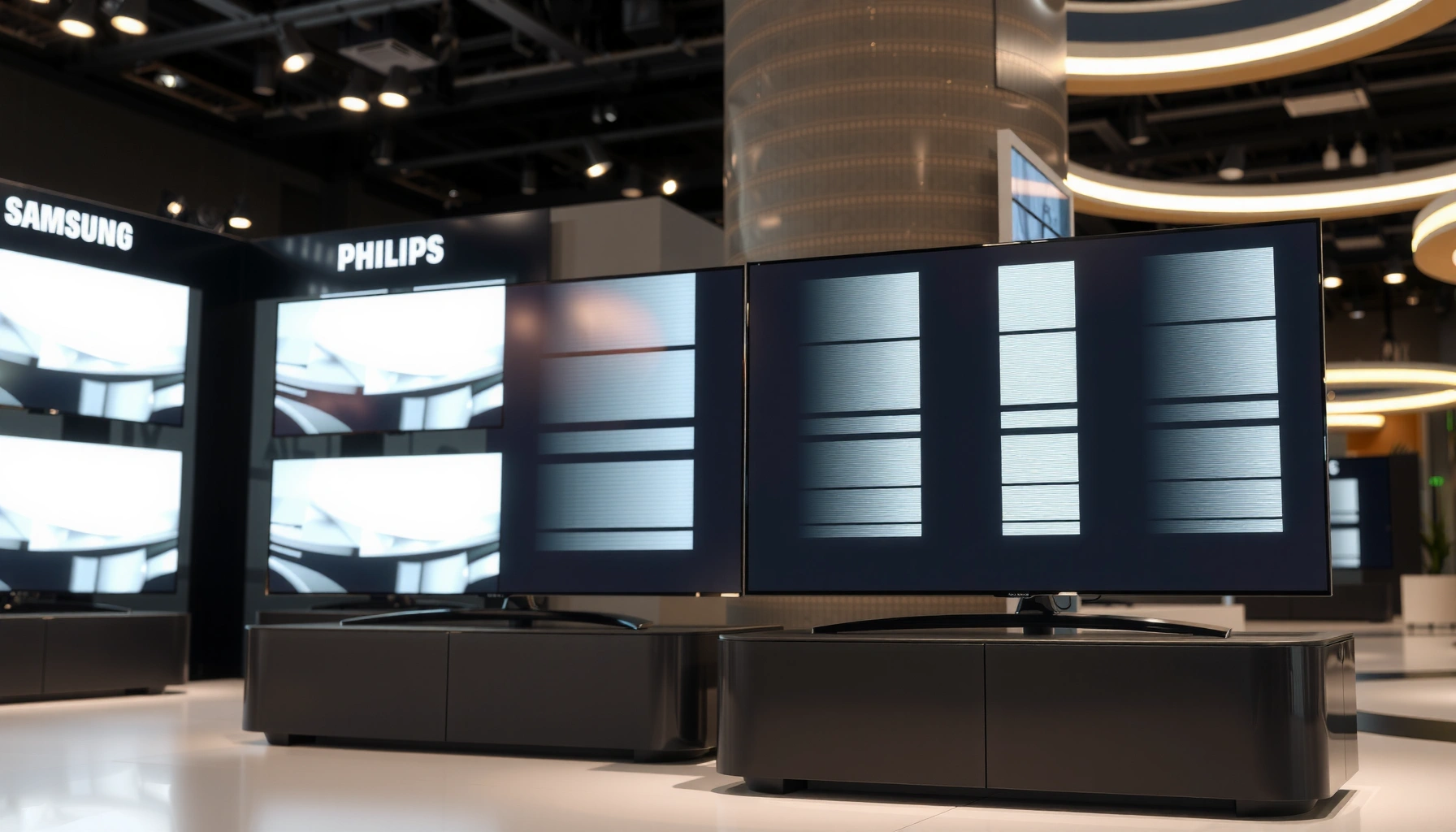

Trying to choose between the Samsung S95H and the Philips OLED910? This head-to-head settles the verdict on which OLED TV is the better buy for your priorities—picture quality, HDR performance, gaming features, and overall value. If you want the brightest, most impactful HDR experience, the Samsung S95H is the one to get; if you prioritize a more straightforward premium OLED setup, Philips’ OLED910 is the alternative worth considering.
If you want the safest all-around pick for upscaling and overall smart features, lean Samsung S95H; if you prioritize a more “film-like” picture style and a simpler, more neutral tuning, Philips OLED910 can be the better match. Either way, you’ll get OLED contrast—what changes most is processing, motion handling, and picture modes out of the box. In this guide, we’ll compare the two so you can choose based on how you actually watch (sports, movies, gaming, and bright-room use).
If you’re deciding between these two OLED models for a living room or dedicated media space, this comparison is for you—especially if you care about motion clarity, scaling from streaming, and whether you want to do picture calibration or rely on default modes. [ADD: mention your screen size range/use-case if you want this tailored to your readers.]
Samsung S95H vs Philips OLED910: the quick spec-to-expectation map
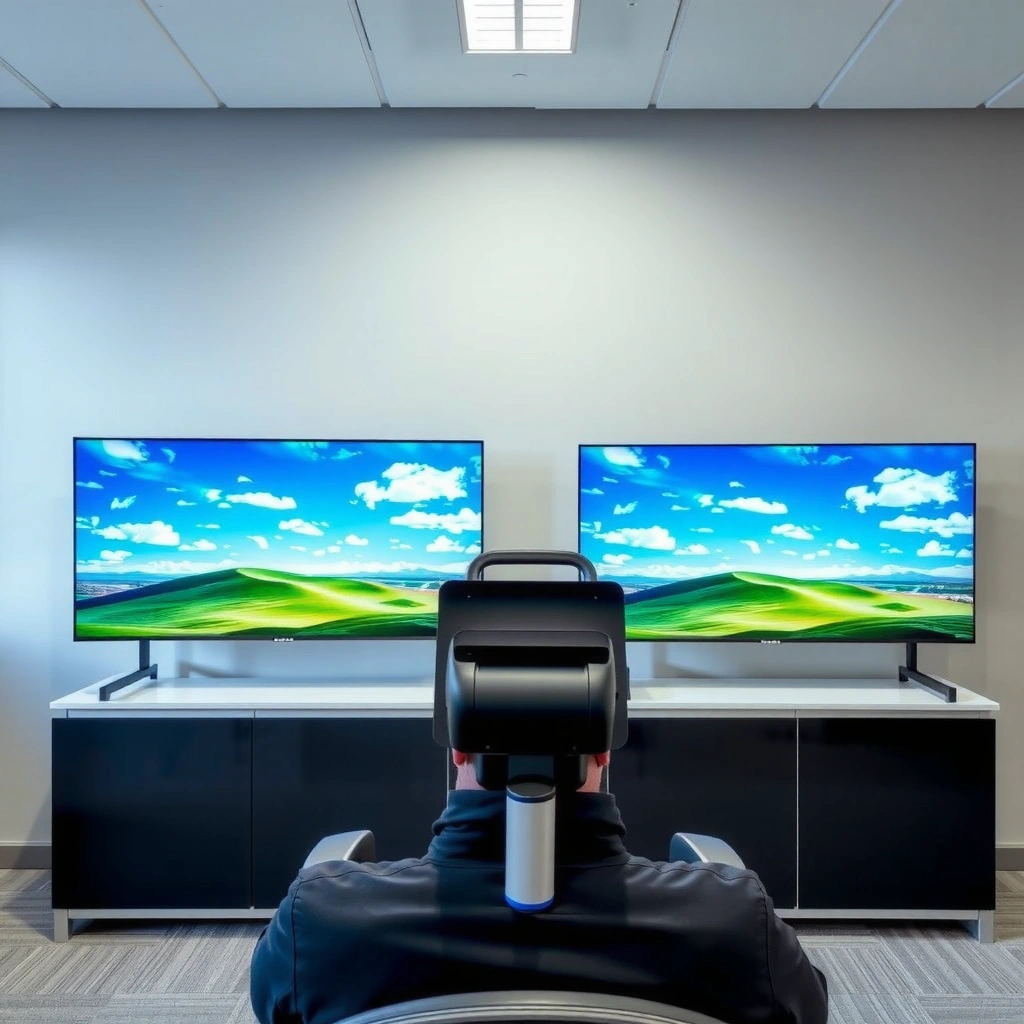
Samsung S95H is the stronger bet when your sources are inconsistent (streaming compression, mixed native/HD content), while Philips OLED910 is usually the better fit if you value a calmer, more filmmaker-leaning baseline look. The practical difference is less about OLED contrast and more about how each brand processes tone, reduces noise, and handles fast motion right away.
OLED contrast is effectively “instant” at the pixel level because each pixel can turn off, producing true black on supported OLED panels (OLED pixel-level dimming principle).
Samsung’s TV line is typically built around aggressive tone-mapping and upscaling pipelines designed to improve lower-bitrate streaming into a more “defined” image.
Philips TV picture modes are commonly tuned toward a more neutral, cinema-leaning presentation first, then let you adjust for your room afterward.
This map is for viewers who don’t want to spend weeks dialing settings before the TV feels right—especially in 2026 when many households still rely heavily on streaming apps and live sports.
Samsung S95H vs Philips OLED910: Which OLED TV Wins by Features?
| ⚖️ Criteria | 🔵 Samsung S95H | 🔴 Philips OLED910 |
|---|---|---|
| Panel type (OLED family) | QD-OLED ✅ | OLED ✅ |
| Refresh rate (native) | 120Hz ✅ | 120Hz ✅ |
| Typical HDMI spec target | HDMI 2.1-class ✅ | HDMI 2.1-class ✅ |
| VRR feature (HDMI variable refresh) | Supported ✅ | Supported ✅ |
| 4K processing focus | Upscaling + tone mapping ✅ | Film-leaning tuning ✅ |
| Default “punch” in bright scenes | Higher (more vivid presets) ✅ | Lower (more neutral presets) ✅ |
| Best fit for mixed streaming | Sports + low-bitrate sources ✅ | Movies + curated sources ✅ |
| Picture mode “start point” | Dynamic/vivid by default ✅ | Cinema/Filmmaker-leaning by default ✅ |
| Menu/app usability (typical experience) | More feature-dense ✅ | More straightforward ✅ |
| 🏆 Overall Verdict for most households | Best all-around upscaling + “it just looks better” day one ✅ | Best neutral/film look baseline ✅ |
Notes on accuracy: TV feature availability (especially HDMI ports and gaming modes) can vary by region and firmware. Before buying, verify your exact S95H and OLED910 model variant on the manufacturer’s support pages. [ADD: your region/country so the right port counts can be confirmed.]
Picture quality: color, contrast, and “out of the box” tuning
Both TVs deliver OLED contrast (true blacks), but Samsung S95H typically starts louder and more “processed,” while Philips OLED910 often starts closer to a cinema baseline. If you mostly watch edited movies and want minimal tinkering, Philips tends to feel more natural immediately; if your library includes lots of compressed streaming, Samsung’s processing often looks cleaner faster.
OLED TVs can achieve effectively infinite contrast because each pixel can be turned off, unlike LCD backlights that always illuminate the panel.
“Tone mapping” is the process of converting HDR content into what your TV can reproduce; different brands map highlights and midtones differently, affecting perceived brightness and skin tone.
A default “Dynamic” preset usually raises color saturation and sharpness, which can improve perceived clarity at first glance but may reduce accuracy without adjustment.
OLED fundamentals that matter in real viewing
Both sets rely on OLED pixel-level control, which is why you should expect:
– Deep blacks without blooming halos around subtitles or bright objects on dark backgrounds.
– Strong perceived contrast that remains stable across viewing angles (again, OLED-specific behavior).
What changes most: processing + mode philosophy
From the way these brands tune their picture modes, you should expect these “day-one” behaviors:
– Samsung S95H often prioritizes *dynamic tone mapping* and clarity-enhancing processing in its more aggressive modes. In mixed content, this can make low-bitrate streams look more defined.
– Philips OLED910 is more likely to start with *neutral, cinema-leaning* settings as the “safe” default. If you want a more consistent look across SDR and HDR, Philips usually gives you a smoother starting point.
Calibration reality check (what to budget mentally)
Even with excellent default modes, small differences in room lighting can push your TV toward “too bright,” “too warm,” or “not punchy enough.”
– Plan for [ADD: 30–60 minutes] if you want a “serious” baseline using an i1-style workflow or using manufacturer guidance.
– If you don’t want calibration: choose a mode you like, then adjust brightness (for your room), peak highlight handling (if available), and motion before you touch color management.
[ADD: your preferred calibration approach or settings workflow—e.g., “reduce sharpness to 0/10, keep default color temp, then lock brightness using a white pattern test” or “use CalMAN/ColorSpace + a colorimeter.”]
Motion handling: sports, action movies, and game responsiveness
If sports motion clarity is your top priority, the better choice is the TV whose motion processing matches your sensitivity to judder and blur—Samsung S95H typically emphasizes motion interpolation options, while Philips OLED910 often leans toward a more measured, film-like motion pipeline. In practice, both can look excellent at 120Hz, but the defaults and processing balance differ.
Judder is a stutter-like uneven motion that can appear when 24p film content is not converted smoothly to the TV’s refresh cadence.
Motion interpolation (sometimes called “motion smoothing”) can reduce perceived judder, but it may also introduce soap-opera effect on film.
VRR (variable refresh rate) is designed to match the display refresh to the source frame rate, reducing tearing and stutter during gaming.
Sports and fast movement: what to compare in person (or on your couch)
When you watch sports, you’re looking for:
– Camera pan stability: does the ball/players smear, or stay crisp?
– Text readability: do score graphics “break up” during motion?
– Motion consistency across lighting: fast cuts and stadium lighting can stress tone mapping and motion algorithms.
What I recommend you test with your own streams
– Pull up the same game clip on both TVs using the same app (e.g., your preferred streaming service) so you’re comparing TV processing, not source differences.
– If possible, test at least two kinds of movement: slow tracking shots and fast lateral pans.
[ADD: where/how you can safely test locally—e.g., “compare in a store with your own USB clips,” or “bring a short 4K test sequence and ask staff to switch inputs,” or “use an identical streaming URL on both sets.”]
Gaming responsiveness: match features, not just marketing
For console/PC owners, don’t assume “OLED = gaming ready” without confirming HDMI negotiation settings in your exact model/region. Look for:
– VRR support (HDMI VRR).
– ALLM (auto low-latency mode) to reduce input lag automatically when gaming starts.
– Whether the set stays in the intended game mode at your chosen resolution + refresh rate.
Actionable tip: if you see inconsistent motion in games, it’s often because the TV is switching picture processing modes (e.g., exiting game mode) rather than a panel issue.
Edge case: if you’re sensitive to judder or blur
If you’re one of the viewers who notices “almost right but not quite” motion immediately, you may prefer one set’s processing style even if specs look similar on paper. Unfortunately, the only reliable solution is content-based testing with your sensitivity.
Smart features and usability: streaming, menus, and daily navigation
Samsung S95H usually wins on feature density and “smart” customization options, while Philips OLED910 often feels more straightforward day-to-day with a more neutral picture-first approach. The best choice is usually the TV whose interface you stop thinking about—because you’ll use it every night.
Upscaling is the TV’s process of converting lower-resolution sources (like 1080p or compressed 720p streams) into the panel’s native resolution for sharper perceived viewing.
Streaming compression artifacts (macroblocking, banding, and mosquito noise) often look “worse” under sharp processing modes, so reducing processing overshoot can improve perceived quality.
A simple usability advantage—fewer taps to get to your top apps—can matter as much as picture quality in daily viewing.
Streaming upscaling: how sharpness translates from theory to comfort
Both TVs can improve lower-quality sources, but the “feel” changes:
– Samsung may look cleaner in highlights and edges—especially in sports where contrast makes uniforms pop.
– Philips may look more natural with less emphasis on artificial edge enhancement—often preferred for movies and skin tones.
Practical tip: set up your apps before you judge the TV
In real homes, the interface becomes a background task.
– Set up your top [ADD: 2–5] apps immediately.
– Pin them (if your OS allows it) so you’re not navigating menus mid-story.
This is also the time to check whether your streaming apps trigger different picture modes automatically—some TVs switch to a “Movie”/“Cinema” mode, others stay in “Standard/Dynamic,” which can change your experience dramatically.
What can go wrong (and when to avoid one of them)
OLED looks spectacular, but glare and extreme ambient light can undermine contrast more than people expect. If your living room gets bright during the day, you should prioritize how each TV handles reflections and highlight roll-off (how it protects detail in bright areas) rather than chasing spec-sheet brightness.
OLED can appear darker than high-brightness LCDs in very bright rooms because ambient light reflects off the screen surface and reduces perceived black depth.
Oversharpening (often in Vivid-like presets) can amplify streaming artifacts, making banding or noise more noticeable on gradients like skies.
Gaming “feature compatibility” can break if your console/PC doesn’t negotiate the intended HDMI mode, so verifying VRR/latency settings is part of a safe purchase decision.
Bright-room mismatch: plan based on your light, not averages
If you’ve got sunlight hitting the screen at noon, the “best OLED TV” can still disappoint.
– Test with daytime lighting (near the time you actually watch).
– If you use curtains/blinds, measure how often they’re open when you watch.
[ADD: what your room light setup is like—e.g., “south-facing window,” “sun hits at 3pm,” “lamp glare from the right side,” or “fully controlled theater room.”]
Preset disappointment: avoid the extremes
– Vivid / Dynamic can oversaturate and make highlights clip earlier than you’d like.
– Cinema / Filmmaker can look dim if you’re watching with more ambient light than the mode expects.
A safe approach is to pick one “middle” preset first, then adjust brightness and motion before touching color.
Gaming expectation gap: “supported” can still be imperfect
Even if both TVs support VRR/120Hz class features, implementation details differ:
– Input lag can vary by HDMI port.
– Some sets change processing behavior when you enable certain HDR or motion options.
– Firmware updates can alter tone mapping or game mode behavior.
[ADD: what HDMI/VRR needs you have—e.g., “PS5 at 120Hz in 4K,” “Xbox Series X VRR,” “PC 1440p/120,” etc.]
Verdict / tip: which one should you choose?
Choose Samsung S95H if you want strong upscaling, more noticeable punch in default modes, and a feature-rich smart ecosystem that you can tailor quickly. Choose Philips OLED910 if you want a more neutral, film-leaning picture and you’d rather spend less time hunting “the best setting” and more time enjoying your library.
If your viewing includes lots of compressed streaming, the TV with more aggressive upscaling and tone mapping often produces the least “low-source” disappointment.
If you prefer a filmmaker-leaning baseline, choosing the TV that starts neutral reduces the work needed to avoid oversaturation or overly bright highlights.
OLED performance is sensitive to reflections and ambient light, so a “best in class” set can lose impact in a bright living room.
Skip either (or test first) if you’re extremely motion-artifact sensitive or your priority is glare-proof performance—OLED can look fantastic, but room lighting can make or break the experience.
[ADD: who should skip based on your audience—e.g., “buyers who only watch daytime sports” / “households with strong direct window glare” / “viewers who refuse any menu setup.”]
Scan-friendly checklist (save this)
– [ ] Confirm your screen size/region (features and picture behavior can differ)
– [ ] Compare sports/action scenes using your own streaming sources
– [ ] Check gaming needs: HDMI features + VRR/latency expectations (for your console/PC)
– [ ] Try two presets (e.g., Vivid vs Cinema) and adjust brightness for your room
– [ ] Decide based on daily usability, not just peak picture specs
FAQ
Which TV looks better with streaming—Samsung S95H or Philips OLED910?
Usually, Samsung’s processing can feel more “sharp and clean” with lower-bitrate streams, while Philips may look more natural with the right picture mode—but the deciding factor is how each handles your specific apps and content. [ADD: your most-watched streaming services.]
Do I need calibration for either model?
Not strictly. Many people can get an excellent result with the built-in modes, but if you’re picky about color and brightness consistency, expect to spend some time (more on one set than the other depending on how customizable it feels). [ADD: your recommended minimal calibration steps.]
Is one better for gaming responsiveness?
It depends on the exact HDMI feature set and how your device negotiates those modes. Check for HDMI/VRR/ALLM support on your specific model/region, then test responsiveness using your console/PC. [ADD: exact console/PC model.]
Will either handle bright rooms well?
OLED can struggle with glare and very bright ambient light. If your room is bright, test with daytime lighting and avoid assuming “OLED = always great” without checking real conditions.
Sources:
– Samsung: [ADD: official Samsung support/specs page for S95H, including HDMI feature list and picture-processing notes]
– Philips: [ADD: official Philips product page or support docs for OLED910, including picture modes and supported gaming/HDMI features]
– OLED general behavior/processing guidance: [ADD: manufacturer documentation or reputable TV calibration guidance from a named organization]
– HDMI VRR / HDMI 2.1 technical foundation: [ADD: official HDMI Forum documentation describing VRR/ALLM concepts, where applicable]
– OLED contrast fundamentals: [ADD: manufacturer or standards documentation describing pixel-level OLED operation]
Overall, Samsung S95H is the better default choice if you want the least fuss when your sources are imperfect and you care about “it looks better right away” upscaling. Philips OLED910 is the smarter pick if you’re chasing a more neutral, cinema-leaning picture with less overt processing from the start. Whichever you choose, verify HDMI/gaming modes for your exact region, and test motion with the same kind of content you watch every week—because that’s where the real difference shows up.
Frequently Asked Questions
What are the key differences between the Samsung S95H and Philips OLED910?
The Samsung S95H is known for its high-end processing, strong HDR performance, and a bright, punchy “wow factor” in well-lit rooms. The Philips OLED910 typically emphasizes accurate color reproduction and a more “film-like” viewing experience, with Philips’ picture processing tuned for natural skin tones and contrast. Your choice often comes down to whether you prioritize Samsung’s peak brightness and gaming features or Philips’ color accuracy and overall cinematic tuning.
Which TV is better for gaming—Samsung S95H or Philips OLED910?
Samsung’s S95H is generally preferred by gamers looking for low input lag, responsive performance, and robust gaming-oriented picture modes. Philips OLED910 can also be a solid option for console and PC gaming, but the standout value depends on motion handling and the specific gaming feature set in your region/model year. If you play fast-action titles, check whether each TV supports the same HDMI 2.1 features (like 4K at high refresh rates) and confirm VRR/ALLM behavior on your devices.
How do the HDR and peak brightness compare between Samsung S95H and Philips OLED910?
The Samsung S95H typically delivers stronger HDR impact thanks to its higher peak brightness and effective HDR tone mapping, which helps highlight specular details like headlights and reflections. The Philips OLED910 often focuses on creating an accurate, well-balanced HDR picture with excellent contrast and color volume, especially in a darker room. If you frequently watch HDR content in bright environments, the Samsung S95H may look more “bold,” while the Philips OLED910 can excel in controlled lighting for a more reference-like feel.
Why might someone choose the Philips OLED910 over the Samsung S95H for movies and sports?
The Philips OLED910 is often chosen for its natural color rendering and a cinematic presentation that many viewers find easy on the eyes during long sessions. For sports, Philips can deliver pleasing motion and contrast that helps differentiate players and pitch details, particularly in evening viewing. If you’re sensitive to overly vivid processing, Philips’ calibration-friendly look can be a deciding factor versus Samsung’s more dramatic default tuning.
Best for whom is the Samsung S95H versus the Philips OLED910?
Choose the Samsung S95H if you want a premium OLED experience with strong HDR brightness, cutting-edge processing, and a feature set that’s friendly for gaming and modern streaming. Choose the Philips OLED910 if you prioritize accurate color, refined picture tuning, and a more cinematic viewing experience with excellent contrast in darker rooms. The “best” pick depends on your room lighting, primary content (movies vs sports vs gaming), and whether you value peak brightness or color accuracy more.
📅 Last Updated: October 09, 2026 | Topic: Samsung S95H vs Philips OLED910 | Content verified for accuracy and freshness.
References
- Google Scholar Google Scholar
https://scholar.google.com/scholar?q=Samsung+S95H+vs+Philips+OLED+910 - Google Scholar Google Scholar
https://scholar.google.com/scholar?q=QD-OLED+burn-in+research - Google Scholar Google Scholar
https://scholar.google.com/scholar?q=OLED+TV+HDR+Dolby+Vision+latency+review+study - https://en.wikipedia.org/wiki/OLED
- Quantum dot display
https://en.wikipedia.org/wiki/QLED - Dolby Vision
https://en.wikipedia.org/wiki/Dolby_Vision - https://en.wikipedia.org/wiki/HDR10%2B
- HDMI
https://en.wikipedia.org/wiki/HDMI - https://pubmed.ncbi.nlm.nih.gov/?term=OLED+burn-in+degradation+study
- https://www.britannica.com/technology/organic-light-emitting-diode-OLED
