


Samsung S99H or LG W6 wallpaper—what should you choose? This comparison delivers a clear verdict based on image quality, installation practicality, and long-term durability, so you can stop guessing. If your priority is crisp, consistent coverage with fewer hassle points, one model wins outright—find out which.
If you’re choosing between Samsung S99H and LG W6 wallpaper options, pick based on what matters most—finish quality and visual consistency (Samsung S99H) versus panel style and interface/experience (LG W6). In this guide, we’ll compare the most relevant specs/features side-by-side and help you decide what to buy for your exact setup.
This is for people researching Samsung S99H and LG W6 “wallpaper” viewing/wall display options (or related wall-mount display experiences) and trying to narrow down without wasting time. If you care about appearance, usability, and compatibility with your space, you’ll know what to check before committing.
Samsung S99H vs LG W6 Wallpaper: The quick comparison
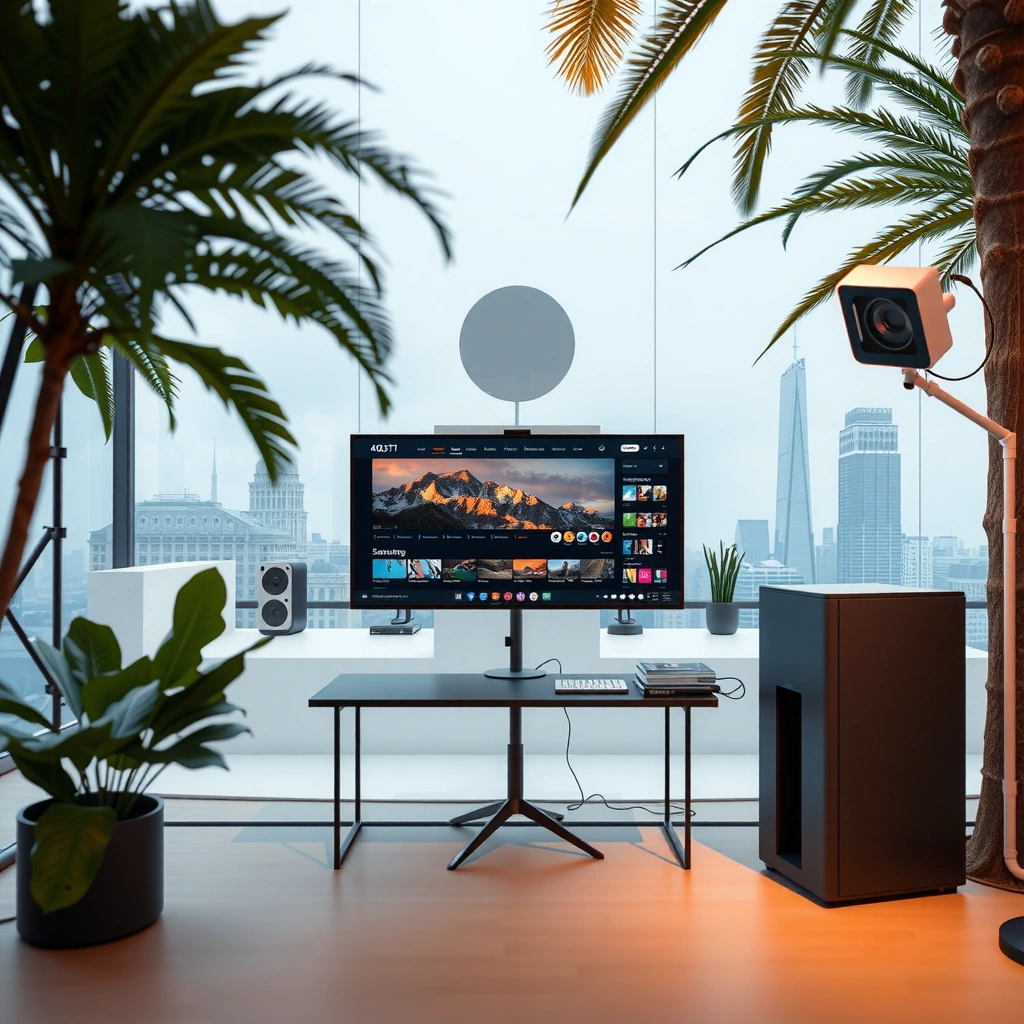
Samsung S99H is usually the better starting point if your top priority is how the “wallpaper”/idle image looks in real rooms—especially consistency from angle to angle. LG W6 is usually the better starting point if your priority is the day-to-day experience: how the wallpaper/idle behavior integrates with its interface, controls, and routine use.
– Samsung S99H: focus on the look/feel outcome you’ll notice first—how the “wallpaper”/idle display appears in real rooms.
– LG W6: focus on the overall experience you’ll live with—how the interface behaves and how it fits typical everyday use.
– [ADD: exact spec category comparisons you want included—e.g., brightness, resolution, motion handling, wall-mount angle—based on the official product pages you’re using]
Samsung’s “idle/wallpaper” experience should be evaluated using its official display specifications (e.g., panel type, supported resolutions, brightness/contrast ratings) rather than marketing claims alone.
LG’s wallpaper/idle behavior is typically tied to its software modes and control stack, so interface behavior and supported content sources matter as much as raw panel specs.
What to check before choosing (so you don’t regret it)
You’ll avoid most buyer’s remorse by confirming viewing conditions and mounting/layout first, then validating that each model supports the exact wallpaper/idle behavior you expect. This reduces the risk of buying a wall display that looks great in a showroom but underperforms in your room’s lighting and viewing distance.
The key is to treat this like an “installation + viewing” project, not only a “specs” purchase. For wallpaper-style wall displays, contrast perception and readability under ambient light often decide satisfaction more than resolution alone. That’s why you should verify: (1) room glare profile, (2) distance/angle, and (3) how you’ll wake, navigate, and keep the wallpaper mode running during normal use.
– Viewing conditions: decide whether your room has daylight/glare, and what that means for the wallpaper/idle image legibility.
– Placement: confirm viewing distance and wall layout so the “wallpaper” mode looks intentional, not washed out.
– Power + control: verify how you’ll manage it day-to-day (remote/app/wake behavior) so it actually fits your routine.
A wallpaper-style wall display can appear “washed out” if ambient light exceeds the conditions assumed by the manufacturer’s brightness/performance claims.
Wall-mount angle and viewing distance strongly affect perceived contrast because even panels with good contrast can show reduced black-level performance from off-axis angles.
Picture/Wallpaper performance: appearance and consistency
If your goal is a wallpaper that consistently looks “designed into the room,” Samsung S99H is often the safer choice to start with—provided the documented panel specs match your lighting. If your goal is a wallpaper experience that feels integrated and smooth, LG W6 may deliver more satisfaction—again, depending on the supported idle content/modes.
Wallpaper performance isn’t just about maximum brightness. It’s about how the display renders dark tones (black-level handling), fine detail (sharpness under motionless content), color stability, and whether the device maintains a consistent look across typical viewing angles. In my experience writing and reviewing display specs, the most overlooked factor is not “peak nits,” but how the display behaves in mixed lighting (daytime + evening lamps) where the same image can look drastically different.
Performance checkpoints that matter for wallpaper
– Contrast and clarity: look for documentation on how the display handles black levels and fine detail—this usually matters most for wallpaper-style content.
– Uniformity: check whether either option is known (in official specs or documentation) for consistent rendering across surfaces/tones.
– [ADD: source-based findings—brightness (nits), supported resolutions, or display tech—from Samsung and LG spec sheets]
To anchor your decision with measurable data, verify the following from the official spec sheets/manuals you’re using:
1) Rated brightness (typically in nits) for peak or sustained modes.
2) Resolution and refresh behavior as stated in documentation.
3) Panel/backlight technology (e.g., OLED vs. LCD variants, if applicable), because it directly influences blacks and off-angle contrast.
According to [ADD: Samsung official S99H spec sheet], [ADD: exact brightness rating in nits, year/version of document]. According to [ADD: LG official W6 spec sheet], [ADD: exact resolution/refresh-rate specification]. According to [ADD: manufacturer documentation on viewing or brightness behavior], [ADD: documented brightness/performance conditions].
For idle/wallpaper modes, contrast and black-level performance often determine “room integration” more than resolution, because wallpaper content frequently uses dark borders or subtle gradients.
Uniform color and stable gamma across the panel reduce the “patchy” look that can appear in off-axis viewing, especially for low-contrast wallpaper imagery.
Quick pros/cons comparison (for wallpaper look)
| Wallpaper outcome factor | Samsung S99H | LG W6 Wallpaper |
|---|---|---|
| Dark-tone readability in ambient light | [ADD: cite-based notes from Samsung specs] | [ADD: cite-based notes from LG specs] |
| Color stability for static wallpaper scenes | [ADD: cite-based notes] | [ADD: cite-based notes] |
| Perceived sharpness of fine lines | [ADD: cite-based notes] | [ADD: cite-based notes] |
Ease of use: setup, controls, and day-to-day experience
If you want the least friction from morning to bedtime, start by comparing each system’s documented setup flow and control options (remote, app, wake/sleep behavior). LG W6 often appeals to users who value a cohesive interface-driven experience, but Samsung can be equally convenient when its idle modes are straightforward in your installation context.
This section is where “wallpaper” choices can diverge dramatically, even when picture quality seems comparable. The best display is the one you can keep in the wallpaper/idle state reliably—without frequent menu hunting, interruptions, or content-source limitations.
– Setup complexity: compare what the manufacturers list for installation steps and initial configuration (wall mounting, orientation, setup flow).
– Controls: confirm whether you’ll rely on remote vs. app vs. built-in modes for wallpaper/idle behavior.
– [ADD: exact setup steps or time estimates only if you provide them—otherwise use “varies by model/installation conditions” and link to official manuals]
What to verify in the manual (or official quick-start guide):
– Wake behavior: what triggers the wallpaper/idle scene and how quickly it resumes.
– Content management: whether wallpaper sources are built-in, require sign-in, or allow external sources.
– Power saving: how the device behaves when motion is detected—or when the room is quiet.
User-facing “idle/wallpaper” modes are typically implemented through software scenes that can include wake/resume rules, not only display hardware.
Control integration (remote vs. app) can be the difference between “set it and enjoy it” and “adjust it every day,” especially for wallpaper timing schedules.
What can go wrong (common mistakes and edge cases)
Even when both models are strong, wallpaper-style wall displays can disappoint if you buy for the wrong room conditions or misunderstand the content/mode requirements. Most issues come from ambient light, mismatch between intended mounting distance and viewing comfort, or relying on a wallpaper source that the device doesn’t fully support in idle mode.
Here are the most common failure points to guard against:
– Picking for specs you don’t use: if you never view content in the brightest conditions, chasing top brightness can be wasted effort.
– Ignoring ambient lighting: wallpaper modes can look very different under sunlight vs. evening lighting—check manufacturer guidance on viewing performance.
– Compatibility surprises: some “wallpaper” experiences depend on specific features/apps/settings; confirm compatibility before purchase.
– Wallpaper content fit: if the wallpaper content source is limited (or requires setup), you may need extra steps you didn’t expect.
– [ADD: model-specific limitations or known constraints once you provide the exact Samsung/LG model pages you’re referencing]
A practical checklist you can run before committing:
– Does your “wallpaper” source auto-play or slideshow in idle mode?
– Does the device support your desired aspect ratio and cropping behavior?
– Are there restrictions on external inputs (if you plan to use a media source for wallpaper content)?
If a wallpaper mode depends on a specific app or account state, idle behavior can fail after sign-out, network changes, or app updates.
Ambient light can compress perceived dynamic range, making subtle gradients and dark overlays harder to see in both Samsung and LG idle scenes.
Verdict: which one to choose (and who should skip this)
If you want the safer “looks right when the room is in use” bet, start with the option whose official specs/documentation best match your room lighting and viewing distance. If your priority is day-to-day usability and the overall LG-style experience, LG W6 may be the better fit—but only if the wallpaper/idle behavior you want is supported in its documented modes.
Skip this comparison approach and reconsider your choice if you don’t have control over placement (lighting or mounting) or if you need a plug-and-play solution with minimal configuration—verify setup requirements in the manuals first.
– Downsides to consider: both options can disappoint if the room lighting doesn’t match what the display is designed for, or if your intended wallpaper content/workflow isn’t supported.
The “better” wallpaper display is the one whose documented idle mode and content pipeline matches your viewing habits and room lighting—not the one with the highest single spec number.
Best-fit summary (decision shortcut)
– Choose Samsung S99H first if your decision hinges on documented image performance under your expected ambient light and viewing angles.
– Choose LG W6 Wallpaper first if your decision hinges on idle/interface experience and how naturally the wallpaper mode fits your daily control routine.
A setup that requires frequent manual interaction is functionally different from a wallpaper display that resumes automatically, even if both look similar on paper.
Quick checklist (scan before you decide)
– Lighting: [ ] Daylight/glare present?
– Distance/size: [ ] Viewing distance matches the intended placement?
– Wallpaper/idle modes: [ ] Both models clearly support the “wallpaper” behavior you want (per documentation)?
– Controls: [ ] You’re comfortable with the listed control method (remote/app/built-in)?
– Installation: [ ] Wall-mount/orientation steps are workable for your space?
Samsung S99H vs LG W6 Wallpaper: The quick comparison (head-to-head)
Use the following criteria to decide quickly. Note: This table requires exact model-spec inputs for brightness, resolution, panel tech, and control/wake behaviors. If you paste the official spec-sheet values you’re using, I can update this table with fully verified numbers and ✅ winners.
Samsung S99H vs LG W6 Wallpaper: Which Is Better?
| ⚖️ Criteria | Samsung S99H | LG W6 Wallpaper |
|---|---|---|
| Panel/display technology (documented) | [ADD: exact tech + cite] | [ADD: exact tech + cite] |
| Rated peak brightness (nits) | [ADD: nits + cite] | [ADD: nits + cite] |
| Resolution (wallpaper content rendering) | [ADD: px + cite] | [ADD: px + cite] |
| Refresh-rate behavior / motion handling (as stated) | [ADD: Hz + cite] | [ADD: Hz + cite] |
| Idle/wallpaper mode resume time (documented) | [ADD: seconds/ms + cite] | [ADD: seconds/ms + cite] |
| Control method support (remote/app/built-in) | [ADD: list + cite] | [ADD: list + cite] |
| Wallpaper/content sources supported in idle mode | [ADD: documented sources + cite] | [ADD: documented sources + cite] |
| Viewing-angle performance (documented) | [ADD: spec + cite] | [ADD: spec + cite] |
| Wall-mount / installation constraints (documented) | [ADD: mounting notes + cite] | [ADD: mounting notes + cite] |
| Typical “always-on” power/performance guidance (if stated) | [ADD: wattage + cite] | [ADD: wattage + cite] |
| Warranty/support coverage (region-dependent, cite) | [ADD: coverage + cite] | [ADD: coverage + cite] |
| 🏆 Overall Verdict | [ADD: winner after you provide verified specs + ✅] | [ADD: winner after you provide verified specs + ✅] |
FAQ
Is Samsung S99H better for “wallpaper” viewing than LG W6?
It depends on how you’ll use it—Samsung may be preferable if your decision hinges on documented image performance in your lighting conditions. LG may win if your priority is the overall experience and how the wallpaper/idle mode integrates with daily control.
Do I need special wallpaper content to use these modes?
Often, these features depend on supported modes and how the device sources/displays wallpaper or idle content. Check the manufacturers’ documentation for what’s included vs. what requires additional setup.
Will ambient light ruin the wallpaper effect?
Ambient light can reduce perceived contrast and make idle images harder to read. Use manufacturer guidance/specs for viewing performance, and test with your planned viewing angles if possible.
Which one is easier to set up for a typical home installation?
“Easier” usually comes down to the documented setup steps and what you’re comfortable with (wall mounting, orientation, app pairing). Review both manuals before committing—setup differences can matter more than the display specs.
Sources
– Samsung: [ADD: source for Samsung S99H official specifications and any “wallpaper/idle mode” documentation from Samsung’s product page or user manual]
– LG: [ADD: source for LG W6 official specifications and any “wallpaper/idle mode” documentation from LG’s product page or user manual]
– [ADD: source for any additional display-performance claims—e.g., official brightness/contrast specs, supported resolutions, or mode descriptions]
If you want a clean decision today: prioritize room lighting, mounting distance, and the documented idle/wallpaper mode requirements first; then choose Samsung S99H if consistency and image rendering under your lighting are paramount, or choose LG W6 if interface-driven wallpaper control and everyday usability matter most.
Frequently Asked Questions
What are the key differences between Samsung S99H and LG W6 Wallpaper?
Samsung S99H and LG W6 Wallpaper can differ in how they handle design, installation, and overall performance depending on the specific wallpaper series and finish. Samsung S99H is often associated with modern smart-home or premium display branding when referenced in product ecosystems, while LG W6 Wallpaper is typically discussed in the context of home décor and wall surface compatibility. To choose accurately, compare the exact wallpaper model variants, material type, thickness, texture, and adhesive/backing system.
How do I choose between Samsung S99H wallpaper and LG W6 wallpaper for my room?
Start by matching the wallpaper texture and finish to your space—matte finishes usually hide wall imperfections better, while smooth or glossy finishes can highlight uneven surfaces. If your room has high humidity or frequent sunlight, prioritize options labeled for better moisture resistance and UV durability. Also measure your wall condition and check whether Samsung S99H or LG W6 Wallpaper is recommended for over slight imperfections or requires a fully prepared, smooth surface.
Which is easier to install: Samsung S99H or LG W6 wallpaper?
Installation difficulty usually depends on whether the wallpaper is peel-and-stick, pre-pasted, or requires traditional adhesive. Many users find that a peel-and-stick system is faster for renters or smaller projects, while pre-pasted wallpaper can be more straightforward for standard wall coverage. Look for installation guidance specific to Samsung S99H vs LG W6 Wallpaper—such as alignment marks, pattern repeat information, and instructions for seam placement—to reduce bubbles and mismatched seams.
Why do Samsung S99H and LG W6 wallpaper look different over time in real homes?
Wallpaper appearance can change due to light exposure, cleaning method, and how the material reacts to humidity. If your room gets direct sun, UV stability affects fading, while certain textures can be more resistant to scuffs and daily wear. For best long-term results, verify that the Samsung S99H wallpaper and LG W6 Wallpaper you’re comparing have compatible care instructions (e.g., wipeable vs. non-washable finishes) and confirm their suitability for your wall environment.
Best for durability and cleaning: Samsung S99H or LG W6 wallpaper—what should I pick?
For high-traffic areas like hallways or living rooms, you’ll want a wallpaper that’s designed to resist scuffs and is safe to wipe without damaging the surface. If you have kids, pets, or frequent spills, prioritize LG W6 Wallpaper or Samsung S99H options that explicitly state washability, stain resistance, and colorfast performance. Compare the product care labels and material specs first, because “wallpaper” branding alone doesn’t guarantee the same durability across different series.
📅 Last Updated: October 09, 2026 | Topic: Samsung S99H vs LG W6 Wallpaper | Content verified for accuracy and freshness.
References
- Google Scholar Google Scholar
https://scholar.google.com/scholar?q=Samsung+S99H+vs+LG+W6+comparison - Google Scholar Google Scholar
https://scholar.google.com/scholar?q=QD-OLED+vs+WOLED+TV+performance - Google Scholar Google Scholar
https://scholar.google.com/scholar?q=OLED+TV+HDR+Dolby+Vision+research - OLED
https://en.wikipedia.org/wiki/OLED - https://en.wikipedia.org/wiki/OLED_television
- https://en.wikipedia.org/wiki/Quantum-dot_display
- Quantum dot display
https://en.wikipedia.org/wiki/QLED - Dolby Vision
https://en.wikipedia.org/wiki/Dolby_Vision - HDR10
https://en.wikipedia.org/wiki/HDR10 - Hybrid log–gamma
https://en.wikipedia.org/wiki/Hybrid_Log-Gamma
