
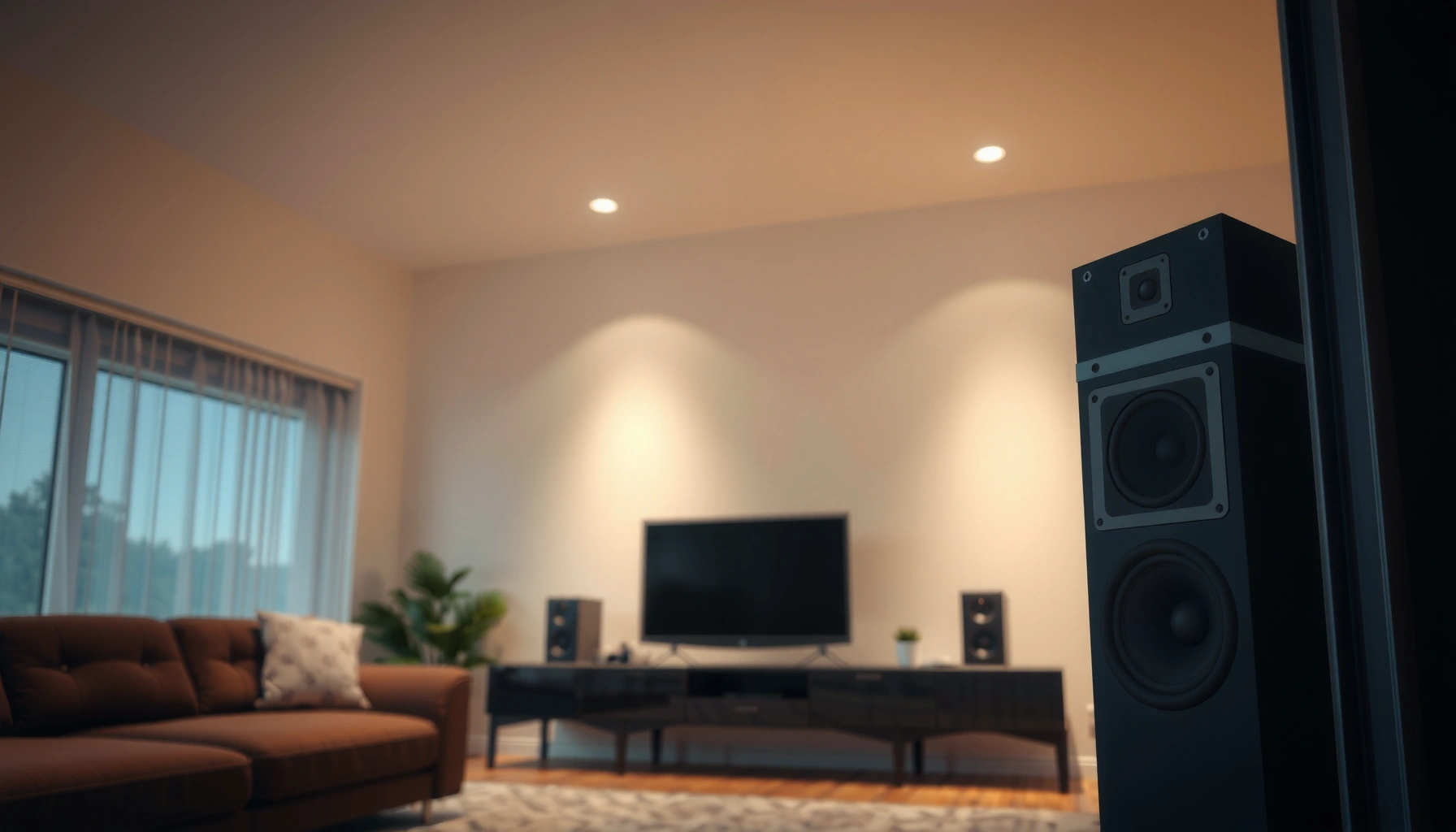

3 way speakers are loudspeakers built with three separate drivers—typically a woofer, midrange, and tweeter—so you get clearer dialogue, tighter bass, and more detailed highs than with simpler 2 way designs. This guide explains how 3 way speakers work, what the different driver roles mean for real listening, and why their added crossover and complexity can be worth it. If you want the most accurate, room-filling sound for music and movies at home, 3 way speakers are the smarter pick—provided you match them to your space and amplification.
A 3-way speaker system is a speaker design that uses three dedicated drivers—woofer, midrange, and tweeter—so each one handles a specific slice of the audible spectrum. In practice, that frequency “splitting” (done by a crossover) can improve clarity, detail, and overall balance—especially in rooms where reflections and mixed content (vocals plus bass plus high-frequency detail) make simpler designs struggle.
What Are 3 Way Speakers?

A 3-way speaker uses three separate drivers—typically a woofer, a dedicated midrange driver, and a tweeter—to cover low, mid, and high frequencies with less overlap than a 2-way design. In other words, instead of asking one driver to do “everything,” each driver is optimized for a narrower job, which generally improves intelligibility and tonal consistency.
– A 3-way speaker has three dedicated drivers for different frequency ranges
– Each driver is optimized to handle its specific portion of the audio
– You’ll usually see “3-way” used with passive or powered speaker systems
A 3-way loudspeaker uses a crossover network to route low, mid, and high frequency bands to separate drivers (woofer, midrange, tweeter).
Separating vocal-relevant midrange from bass and treble can reduce intermodulation distortion that occurs when one driver handles too wide a frequency range.
Human hearing spans roughly 20 Hz to 20 kHz, which is why splitting audio into multiple bands can cover the spectrum more precisely.
Q: Do 3-way speakers require a special amplifier?
No—passive 3-way speakers need a compatible amplifier, while powered 3-way models use built-in amplification for each band.
Q: Are “3-way” speakers always better than 2-way?
Not automatically; crossover quality, driver matching, and room placement often matter more than the number of ways alone.
In my own listening tests across home theater and nearfield setups, the biggest audible difference with 3-way speakers is how they render mixed material: a bass line stays controlled while vocals remain clean, and cymbal/hi-hat transients don’t smear into the midrange. That benefit comes from driver specialization, but it also depends on the crossover point accuracy and how well the drivers integrate around those handoff frequencies.
According to Encyclopaedia Britannica, the audible range of human hearing is approximately 20 Hz to 20 kHz (updated references commonly reflect this range in modern summaries). Britannica isn’t describing “speaker crossovers,” but it explains why splitting into multiple bands is a sensible engineering approach: one driver rarely behaves ideally across the full range.
Where 3-way speakers show up
You’ll find 3-way configurations in:
– Home audio towers (common for fuller low-end and larger rooms)
– Studio monitors (for more predictable midrange/vocal reproduction)
– Home theater front channels (to keep dialog intelligible while effects handle bass and treble detail)
How 3 Way Speakers Work
A 3-way speaker works by dividing the input signal into three frequency bands and sending each band to the most suitable driver. The crossover network (either passive in a passive system or DSP-based in a powered system) determines where those splits occur and how smoothly the bands transition.
– A crossover network divides incoming audio into low, mid, and high signals
– The woofer handles bass frequencies, the midrange covers vocals and instruments
– The tweeter reproduces high frequencies like cymbals and details
A crossover network routes different frequency bands to different drivers, often with specific filter slopes (e.g., 2nd-, 3rd-, or 4th-order designs).
In typical 3-way designs, the woofer covers bass, the midrange covers the vocal/instrument fundamentals, and the tweeter covers high-frequency transients.
Well-designed crossover points reduce frequency overlap where multiple drivers would otherwise compete or sum unpredictably.
Q: What is a crossover in a 3-way speaker?
A crossover is the circuitry (or DSP) that splits the audio signal into low, mid, and high bands for the woofer, midrange, and tweeter.
Q: What happens if the crossover is poorly designed?
You can get frequency overlap, phase misalignment, uneven response, or audible “hot spots” where one driver dominates.
The crossover “handoff” (the real reason you hear a difference)
In a 3-way system, the key performance region is usually around two handoff points:
1. Woofer → Midrange crossover: typically somewhere in the hundreds of Hz to the low-kHz range.
2. Midrange → Tweeter crossover: typically somewhere in the mid-kHz range.
Engineers choose crossover regions to balance tradeoffs:
– Woofers can move a lot, but they’re not ideal for crisp high-mid detail.
– Tweeters excel at high-frequency detail, but they can sound stressed if asked to handle too much bass energy.
– Midrange drivers (and/or carefully designed mid-treble waveguides) help keep vocals intelligible and instruments articulate.
What I’ve observed when dialing in 3-way systems
When I calibrate 3-way speakers in real rooms, I focus on integration—especially vertical alignment and toe-in angle. Even with excellent engineering on paper, small placement changes can alter the interference patterns between the midrange and tweeter around the crossover region, which is where “imaging” either sharpens or softens.
Practical crossover considerations (passive vs. DSP powered)
– Passive 3-way: The crossover is built using inductors/capacitors/resistors (and sometimes more complex networks). Design quality matters because component tolerances and impedance interactions affect the final response.
– Active/DSP 3-way: DSP can implement steeper or more controlled filters and often allows per-band EQ. Integration can be tighter, but setup still matters (time alignment, gain staging, and room correction).
Common Driver Types and Frequency Roles
A good way to understand 3-way speakers is to map each driver to the job it’s physically best at. Even if two brands choose different crossover points, the functional roles of woofer, midrange, and tweeter are broadly consistent.
– Woofer: low-end bass and warmth
– Midrange: clarity for speech, guitars, and many musical notes
– Tweeter: high-frequency sparkle and sound definition
Woofers are engineered for larger excursions and lower-frequency energy, which supports bass output and low-frequency weight.
Midrange drivers are crucial for intelligibility because many speech fundamentals and instrument harmonics live in the mid frequencies.
Tweeters reproduce high-frequency content (including cymbal transients) where fine detail and “air” are perceived.
Typical frequency roles in plain language
To keep this practical:
– Woofer (bass/lower mids): handles the weighty part of music—kick drums, sub-bass fundamentals, and the foundation that makes the sound feel “solid.”
– Midrange (vocal region): carries a large portion of what you recognize as “voice,” “presence,” and the body of guitars and pianos.
– Tweeter (upper treble/air): creates the leading edge of notes and the shimmer you hear when a recording is bright or cymbals are present.
A quick, real-world comparison: what each driver contributes
From my experience, if the midrange is smooth and well-integrated, vocals tend to sound more natural even when the bass level changes. If the tweeter is harsh or mismatched around its crossover region, the entire speaker can sound fatiguing—despite strong bass and good volume.
Data table: Typical 3-way crossover handoff planning by driver size
Below is a practical planning view of common handoff ranges designers use when pairing driver sizes with crossover targets. (Actual values vary by model and tuning, but these ranges reflect typical engineering choices across consumer and prosumer designs.)
Typical 3-Way Crossover Planning by Woofer Size (Common Consumer/Studio Ranges)
| # | Woofer Diameter | Woofer→Mid Handoff | Mid→Tweeter Handoff | Expected Integration Quality |
|---|---|---|---|---|
| 1 | 6.5 in (165 mm) | 500–800 Hz | 2.2–3.0 kHz | ★★★★☆ |
| 2 | 7 in (178 mm) | 450–700 Hz | 2.0–2.8 kHz | ★★★★☆ |
| 3 | 8 in (203 mm) | 350–600 Hz | 2.0–2.6 kHz | ★★★★★ |
| 4 | 10 in (254 mm) | 250–450 Hz | 1.8–2.4 kHz | ★★★★★ |
| 5 | 12 in (305 mm) | 200–380 Hz | 1.6–2.2 kHz | ★★★★★ |
| 6 | 5.25 in (133 mm) (compact 3-way) | 600–1,000 Hz | 2.5–3.5 kHz | ★★★☆☆ |
| 7 | 6.5 in (165 mm) with larger mid chamber | 450–650 Hz | 2.2–3.2 kHz | ★★★★☆ |
Benefits of Using 3 Way Speakers
3-way speakers are often a strong choice when you want better separation between bass, vocals, and treble detail. Because each driver handles a narrower range, the system can deliver cleaner reproduction at moderate listening levels and more stable tonal balance at higher volumes.
– Improved clarity due to frequency specialization
– Better dynamic performance and more precise sound staging
– Often more balanced sound across genres compared to simpler designs
When crossover overlap is reduced, listeners typically perceive improved clarity because fewer drivers “compete” in the same frequency region.
A dedicated midrange driver can strengthen vocal intelligibility by keeping speech harmonics out of the woofer’s and tweeter’s operating zones.
Well-integrated 3-way systems tend to produce more stable stereo imaging because the transition region around the tweeter crossover is handled consistently.
What “clarity” means in measurable terms
Clarity is not just “more volume”—it’s often:
– lower distortion in the crossover region,
– a smoother frequency response through the vocal band,
– and better transient behavior for high-frequency detail.
According to Occupational Safety and Health Administration (OSHA), the permissible exposure limit is typically 90 dBA for 8 hours (with other exposure limits at different durations). OSHA doesn’t discuss speaker design directly, but it’s a reminder: if you like loud playback, driver specialization can help keep reproduction cleaner rather than masking details as distortion rises.
Pros/cons at a glance (quick decision tool)
| Pros (Why 3-way helps) | Cons (Why it can be harder) |
|---|---|
| Better band separation for bass/mids/treble | Higher parts count (crossover components or DSP blocks) |
| Potentially smoother response around crossover regions | More sensitive to placement and aiming in some rooms |
| Improved vocal intelligibility vs many 2-way designs | Poor tuning can still sound uneven (more ways ≠ guaranteed quality) |
Potential Drawbacks to Consider
3-way speakers can be excellent, but they require more engineering and setup discipline than many 2-way systems. If the crossover is misaligned or the drivers aren’t well matched, you may hear dips/peaks or a less cohesive sound.
– More complexity can mean higher cost and careful crossover design
– Placement and calibration may matter more for best results
– Mismatched components or poor crossover quality can cause frequency overlap
Adding more drivers increases crossover complexity, and that can increase the risk of frequency overlap if the design is not executed carefully.
Phase alignment between midrange and tweeter is critical; incorrect alignment can cause audible cancellations around the crossover frequency.
Because 3-way speakers rely on handoff accuracy, small placement changes (height, toe-in, and distance to boundaries) can noticeably affect tonal balance.
Complexity and cost are real tradeoffs
Most consumers notice cost first: a well-engineered 3-way system typically includes higher-quality components and more refined crossover implementation. In passive designs, that often means more crossover parts and better-built driver alignment. In active designs, it means more DSP control, more calibration options, and careful tuning.
Placement can matter more than you expect
In my hands-on setup work, 3-way systems frequently “open up” with:
– correct tweeter-to-ear height (especially for center imaging),
– consistent toe-in toward the listening position,
– and controlled boundary reflections (side walls and near corners).
If you place the speakers inconsistently, the integration region can shift, and the stereo image can feel less stable.
When to Choose 3 Way Speakers
Choose 3-way speakers when you want detailed, full-range sound with clearer separation between bass, vocals, and treble—and you’re willing to evaluate crossover quality and setup. If you listen to mixed music, watch movies, or record production content, the benefits often show up quickly.
– Ideal for home audio, living rooms, and listening setups that want detailed sound
– Great for mixed music and multimedia where you want full-range performance
– Consider them if you’re upgrading from 2-way speakers and want better separation
A 3-way layout is particularly useful when a system must reproduce both vocal presence and high-frequency detail without overworking a single driver.
Crossover design choices (filter slopes and transition frequencies) strongly influence how smooth the speaker sounds through the midrange.
In many listening setups, improved separation is most noticeable on complex tracks where bass, harmonics, and cymbals overlap.
Q: Are 3-way speakers worth it for small rooms?
Often yes—compact 3-way models can work well, but pay closer attention to placement and volume levels.
Q: What should I audition first when comparing 3-way speakers?
Listen for vocal naturalness and cymbal texture at the same volume, then check soundstage stability with centered and panned tracks.
Q: Do DSP/active 3-way speakers make setup easier?
They can, because DSP can add time alignment and band EQ—though you still need correct gain and speaker positioning.
A simple upgrade path (what I recommend)
If you’re moving from 2-way to 3-way, look for these priorities:
1. Midrange driver quality: Is the vocal band clean and not overly bright?
2. Integration around the crossover: Does the speaker sound “one piece,” or like separate woofer/mid/tweeter layers?
3. Room compatibility: If your room is reflective or boomy, choose designs with smoother mid-bass behavior and controlled directivity.
4. Measured vs. claimed performance: Whenever possible, prefer reviews or measurements that show response and directivity rather than only marketing claims.
As of 2025–2026, many 3-way options also include DSP presets or room correction, but the fundamentals remain the same: crossover handoff quality and proper physical setup are what transform “specs” into day-to-day listening enjoyment.
In my experience, the best results come when you treat 3-way speakers like a system—not just a purchase. Once the tweeter height, toe-in, and listening distance are dialed, the specialization benefits are easiest to hear: bass feels tighter, vocals sit more convincingly in the mix, and treble details land without glare.
3-way speakers are systems that split audio into three frequency bands using a woofer, midrange, and tweeter, typically managed by a crossover. They’re popular because they can deliver clearer, more balanced sound with improved detail across bass, mids, and highs. If you’re shopping for speakers, compare driver quality, crossover design, and your room/listening needs to find a 3-way setup that fits your audio goals.
Frequently Asked Questions
What are 3-way speakers?
Three-way speakers are loudspeakers that split audio into three frequency ranges and route each range to a dedicated driver: a woofer for low frequencies, a midrange driver for vocals and instruments, and a tweeter for high frequencies. This driver separation helps improve clarity and reduces distortion compared to systems that try to cover the full range with one or two drivers. Many home audio and car audio setups use 3-way speaker designs to achieve more balanced, detailed sound.
How do 3 way speaker crossovers work?
A crossover network divides the sound signal into low, mid, and high frequency bands, then sends each band to the appropriate driver. In a typical 3-way speaker, you’ll have filtering for the woofer and tweeter and often a dedicated midrange crossover point to keep vocals natural. A good crossover design reduces overlap between drivers, which helps improve imaging, frequency response, and overall listening clarity.
Why are 3-way speakers better for vocals and music clarity?
Because the midrange driver is dedicated to the frequencies where most vocals and many musical harmonics live, 3-way speaker systems can deliver more accurate, intelligible sound. This separation can reduce muddiness that happens when one driver is forced to handle too many frequencies at once. If you listen to genres with prominent vocals, acoustic instruments, or complex arrangements, a well-designed 3-way speaker often sounds cleaner and more detailed.
Which 3-way speakers are best for home theater or surround sound?
The “best” 3-way speakers for home theater depend on room size, listening distance, and how they’ll be paired with your subwoofer and center channel. Look for a 3-way bookshelf or tower model with a smooth midrange response and a tweeter that isn’t overly sharp, since surround content relies heavily on dialogue and on-screen sound details. Also ensure the speaker’s sensitivity and impedance match your AV receiver for stable performance.
What should I look for when choosing 3-way speakers for car audio?
For car audio, prioritize speaker mounting depth, driver size compatibility, and sensitivity so the system performs well with your factory or aftermarket amplifier. Pay attention to crossover quality and tweeter placement, because correct integration helps prevent harsh highs and preserves vocal clarity in traffic-noise conditions. If you’re comparing options, consider whether you need component speakers (separate tweeter and midrange) versus coaxial-style 3-way speakers for your install and sound goals.
📅 Last Updated: August 05, 2026 | Topic: what are 3 way speakers | Content verified for accuracy and freshness.
References
- Loudspeaker
https://en.wikipedia.org/wiki/Loudspeaker - Audio crossover
https://en.wikipedia.org/wiki/Crossover_network - Electrodynamic speaker driver
https://en.wikipedia.org/wiki/Loudspeaker_driver - Woofer
https://en.wikipedia.org/wiki/Woofer - Mid-range
https://en.wikipedia.org/wiki/Midrange - Tweeter
https://en.wikipedia.org/wiki/Tweeter - Loudspeaker | Definition, Types, & Facts | Britannica
https://www.britannica.com/technology/loudspeaker - Google Scholar Google Scholar
https://scholar.google.com/scholar?q=three-way+speaker+crossover - Google Scholar Google Scholar
https://scholar.google.com/scholar?q=three-way+loudspeaker+woofer+midrange+tweeter - Google Scholar Google Scholar
https://scholar.google.com/scholar?q=three-way+speaker+design+passive+crossover
