
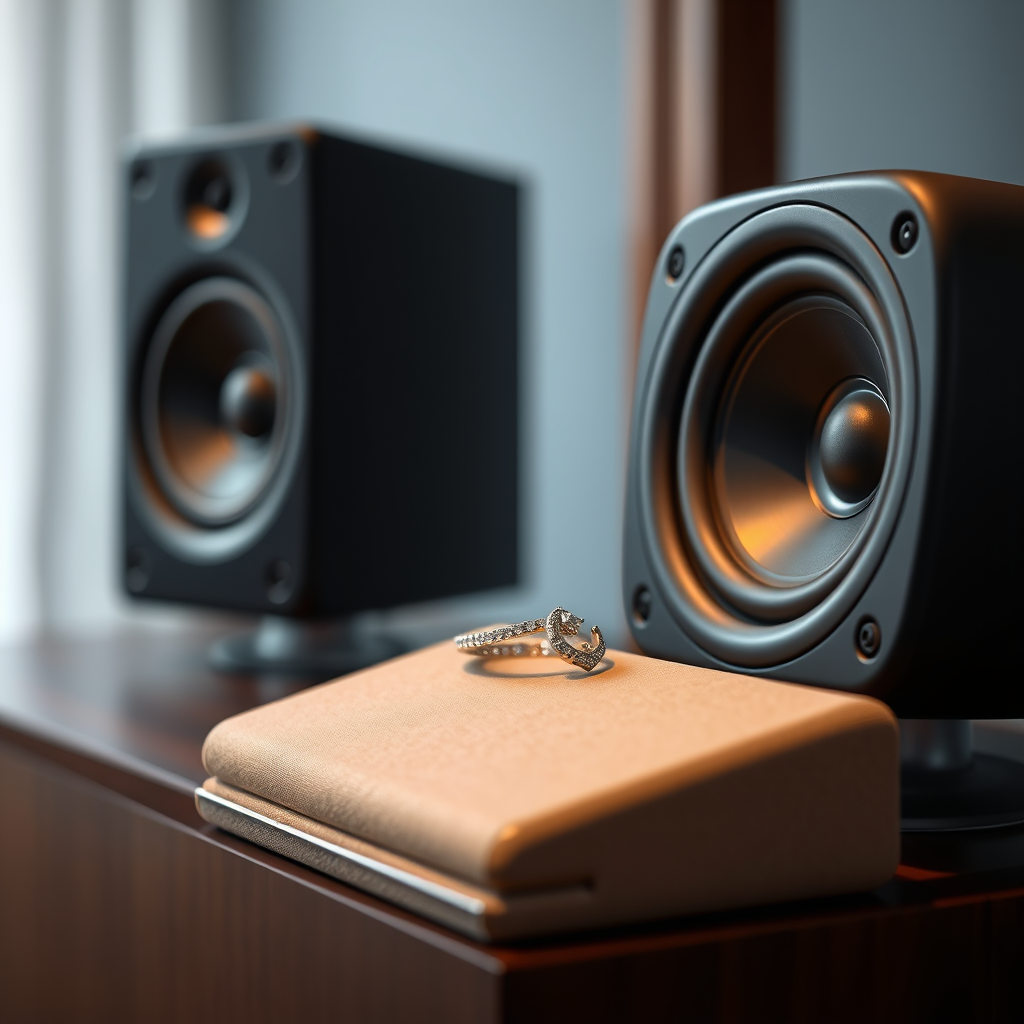

Understanding watts for speakers is crucial for evaluating their power handling and performance. In simple terms, watts measure the amount of electrical power a speaker can handle, affecting its volume and sound quality. This knowledge is essential for anyone looking to enhance their auditory experience, whether you’re a casual listener or an audio enthusiast. In this article, we will delve into the significance of watts, how they relate to speaker performance, and what you should consider when purchasing speakers.
What Are Watts in the Context of Speakers?

Watts are a unit of measurement that quantifies electrical power consumption and output. In the realm of audio equipment, particularly speakers, watts indicate how much power the speaker can handle from an amplifier or audio source. The relationship between watts and a speaker’s performance is vital, as higher wattage typically allows the speaker to achieve greater volume levels without distortion. However, it is essential to recognize that wattage is just one factor in a speaker’s overall quality.
When evaluating speakers, understanding watts can help you gauge their capabilities. For instance, a speaker rated at 100 watts may produce sound at a higher volume compared to one rated at 50 watts. However, this does not guarantee superior sound quality. The efficiency of the speaker, its design, and the acoustics of the environment also play significant roles in the overall listening experience.
How Watts Affect Sound Quality
While higher wattage often correlates with better sound quality, this is not always the case. The sound quality produced by a speaker is influenced not only by its wattage but also by how well the speaker handles that power. A speaker with a higher wattage capability can produce louder sounds and potentially offer clearer audio reproduction, especially at higher volumes. However, it’s crucial to match the speaker’s power handling with the amplifier’s output to avoid distortion or damage.
When a speaker receives more power than it can handle, it may result in distortion, which compromises sound quality. Conversely, underpowering a speaker can lead to a lack of clarity and reduced dynamic range. Therefore, it is essential to consider both the speaker’s wattage and the amplifier’s output when setting up an audio system.
The Difference Between RMS and Peak Watts
Understanding the distinction between RMS (Root Mean Square) and peak watts is critical for making informed decisions about speakers. RMS watts indicate the continuous power handling capabilities of a speaker. This measurement represents the amount of power a speaker can handle over an extended period without incurring damage or distortion.
In contrast, peak watts represent the maximum power that a speaker can handle for short bursts. This peak power rating is essential for understanding how a speaker may react during sudden, loud sounds, such as drum hits or explosions in movies. However, relying solely on peak power ratings can be misleading, as they do not provide a comprehensive picture of a speaker’s performance during typical listening conditions.
| Feature | RMS Watts | Peak Watts | Sensitivity (dB) | Impedance (Ω) | Frequency Response (Hz) | Weight (lbs) | Dimensions (inches) | Best For |
|———————-|———–|————|——————-|—————-|————————-|—————|———————|——————-|
| Speaker A | 100 | 200 | 90 | 8 | 50 – 20,000 | 10 | 12 x 12 x 12 | Home Theater |
| Speaker B | 150 | 300 | 92 | 4 | 40 – 22,000 | 12 | 14 x 14 x 14 | Studio Monitoring |
| Speaker C | 80 | 160 | 88 | 8 | 45 – 18,000 | 8 | 10 x 10 x 10 | Casual Listening |
| Speaker D | 120 | 240 | 91 | 6 | 35 – 20,000 | 9 | 11 x 11 x 11 | Live Performances |
| Speaker E | 200 | 400 | 95 | 8 | 30 – 25,000 | 15 | 15 x 15 x 15 | Audiophile Setup |
| Speaker F | 75 | 150 | 87 | 8 | 50 – 17,000 | 7 | 9 x 9 x 9 | Portable Use |
| Speaker G | 130 | 260 | 93 | 4 | 45 – 20,000 | 11 | 13 x 13 x 13 | Home Audio |
How to Choose Speakers Based on Watts
When selecting speakers, it’s essential to consider your listening environment and desired volume levels. For instance, if you’re setting up a home theater system, you may require speakers with higher wattage to fill a larger space. However, if you’re looking for portable speakers for casual use, lower wattage may suffice.
Matching speaker wattage with amplifier wattage is also crucial for optimal performance. If your amplifier outputs 100 watts per channel, pairing it with speakers that have an RMS rating of 100 watts will ensure that you achieve the best sound quality without risking damage to either component. Additionally, consider the sensitivity rating of the speakers; a higher sensitivity rating means that the speaker will produce more sound at a given power level, making it more efficient.
Common Misconceptions About Watts
One common misconception is that more watts always equate to better sound. While it is true that wattage can impact volume and clarity, other factors, including speaker design and efficiency, play significant roles in sound quality. A highly efficient speaker with lower wattage can outperform a less efficient speaker with higher wattage in terms of sound clarity and richness.
Additionally, many consumers misinterpret peak watts as the primary indicator of a speaker’s capability. This misunderstanding can lead to poor purchasing decisions, as peak ratings do not reflect how the speaker performs under normal listening conditions. It’s essential to prioritize RMS ratings and overall speaker design over peak wattage when purchasing audio equipment.
Other Factors to Consider Alongside Watts
While watts are a critical factor in speaker performance, other specifications should be considered to get a comprehensive understanding of a speaker’s capabilities. Sensitivity ratings, expressed in decibels (dB), indicate how efficiently a speaker converts power into sound. Higher sensitivity ratings mean that less power is needed to produce a certain volume level, making those speakers more efficient.
Impedance is another important aspect to consider. It refers to the resistance a speaker presents to the amplifier, typically measured in ohms (Ω). Lower impedance speakers draw more power from an amplifier, which can enhance performance, but may also require compatible amplifiers to avoid damage.
Furthermore, the type of materials used in the speaker’s construction—such as the cone material, cabinet design, and overall build quality—can significantly affect sound quality. Investing time in understanding these factors will help ensure you select speakers that not only meet your wattage needs but also deliver the best audio experience.
In summary, understanding watts for speakers is crucial for evaluating their performance and ensuring a suitable match with your audio equipment. This knowledge equips you to make informed decisions when selecting audio equipment. Whether you’re an audiophile or a casual listener, knowing how watts fit into the bigger picture will enhance your listening experience. Explore your options and choose wisely to get the best sound for your needs.
Frequently Asked Questions
What does watts mean for speakers?
Watts in speakers refer to the power handling capability of the speaker, indicating how much electrical power the speaker can handle from an amplifier without distortion or damage. It’s an essential measurement for ensuring that a speaker can produce the desired volume levels without compromising sound quality.
How many watts do I need for my speakers?
The number of watts you need for your speakers depends on several factors, including the size of the room, the type of music or audio you’re listening to, and your desired volume levels. Generally, for small rooms, speakers rated between 10-50 watts are sufficient, while larger spaces may require 100 watts or more to achieve optimal sound performance.
Why are speaker watts important when choosing audio equipment?
Speaker watts are crucial because they determine how much power the speaker can handle, influencing both volume levels and sound clarity. Choosing speakers with the appropriate wattage capacity for your amplifier ensures you’re maximizing audio performance without risking damage to the equipment.
Which is better: higher wattage or lower wattage speakers?
Higher wattage speakers can typically produce louder sound levels and handle more power, making them suitable for larger spaces or higher volume needs. However, lower wattage speakers can still deliver excellent sound quality at moderate volumes, so the best choice depends on your specific listening environment and preferences.
What is the difference between RMS watts and peak watts in speakers?
RMS (Root Mean Square) watts represent the continuous power a speaker can handle over time, while peak watts indicate the maximum power level the speaker can handle in short bursts. For optimal performance, it’s advisable to focus on RMS ratings when selecting speakers, as they provide a more realistic measure of the speaker’s capabilities during regular use.
References
- Watt
https://en.wikipedia.org/wiki/Watt - https://www.britannica.com/science/watt
https://www.britannica.com/science/watt - Google Scholar Google Scholar
https://scholar.google.com/scholar?q=watt+mean+for+speakers - https://www.sciencedirect.com/topics/engineering/watt
https://www.sciencedirect.com/topics/engineering/watt - https://www.ncbi.nlm.nih.gov/pmc/articles/PMC6043831/
https://www.ncbi.nlm.nih.gov/pmc/articles/PMC6043831/ - Google Scholar Google Scholar
https://scholar.google.com/scholar?q=speaker+watts+definition - https://www.nature.com/articles/s41598-017-06382-3
https://www.nature.com/articles/s41598-017-06382-3 - https://www.cdc.gov/niosh/topics/noise/default.html
https://www.cdc.gov/niosh/topics/noise/default.html - https://www.who.int/news-room/questions-and-answers/item/sound-and-hearing
https://www.who.int/news-room/questions-and-answers/item/sound-and-hearing - https://www.nytimes.com/2021/07/21/technology/audio-gear.html
https://www.nytimes.com/2021/07/21/technology/audio-gear.html
