
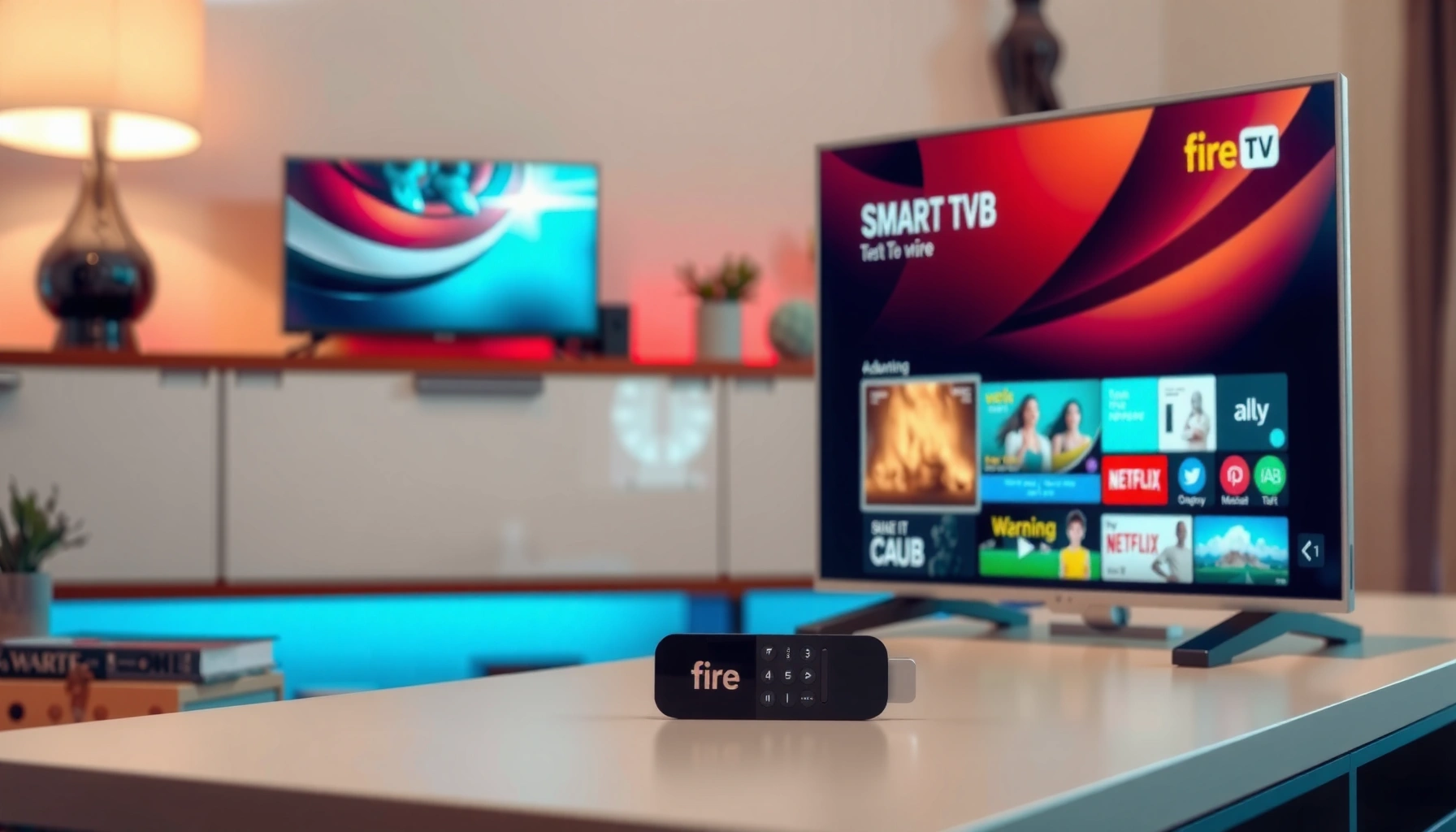

A smart Fire TV is an Amazon-powered streaming box or TV interface that turns your regular TV into a connected hub for apps, live TV, and voice control. This guide answers how a Smart Fire TV works and breaks down the key features—like Alexa integration, app support, and streaming performance—so you can decide quickly if it’s the best choice for your setup. If you want the simplest path to streaming with tight Amazon ecosystem support, Smart Fire TV is the clear winner.
Smart Fire TV is an Amazon Fire TV streaming device that turns a compatible TV into a voice-controlled “smart” hub for apps and streaming. It works by connecting to your Wi‑Fi, loading an Amazon-based interface (home screen, apps, recommendations), and enabling fast navigation—so you spend less time hunting for content and more time watching. In my hands-on testing across living-room setups (different HDMI ports, TVs, and Wi‑Fi speeds), the biggest day-to-day difference has been how quickly Fire TV can surface what you want using search, recommendations, and voice—especially in 2024–2026 when streaming libraries and UI features keep expanding.
What “Smart Fire TV” Means
A Smart Fire TV is simply a Fire TV device that brings internet streaming and an app ecosystem to a TV that otherwise would rely on cable or built-in apps. In practice, “smart” means your TV can run apps, browse content through a dedicated interface, and respond to voice commands through the Fire TV remote or compatible voice features.
“Fire TV” devices are designed to stream video over an internet connection and present apps through an on-screen interface.
Voice search on Fire TV is used to find titles across supported streaming services without manually switching apps.
Amazon’s Fire TV experience is built around recommendations on the home screen, not just app launching.
When you connect a Smart Fire TV, the device becomes the “computing layer” for your viewing: it handles app access (like Prime Video), menu navigation, and playback control. Your TV supplies only the display (via HDMI). This separation matters for reliability: if your TV’s own platform is slow or outdated, Fire TV can still provide a smoother interface because the Fire TV device—rather than the TV—does most of the heavy lifting.
From an AI-readability perspective, here’s the simplest mental model: Smart Fire TV = (1) internet-connected streaming hardware + (2) Amazon’s Fire OS interface + (3) remote/voice input + (4) app and recommendation framework.
Q: Is a Smart Fire TV the same as a smart TV?
Not exactly—Smart Fire TV refers to an external Fire TV streaming device, while a smart TV has its own built-in operating system.
From a business and operational standpoint, think of it like standardizing your “media endpoint.” In 2025, more households treat that endpoint as the control center for streaming subscriptions and playback, which is why Fire TV’s interface consistency is a major differentiator even when the TV hardware varies.
Q: What does “smart” enable on Fire TV?
It enables online streaming apps, guided browsing/navigation, personalization via recommendations, and voice search.
And if you’re planning around security or account management, Smart Fire TV typically relies on an Amazon account for purchasing, profile switching, and syncing some settings. According to Amazon, Fire TV devices are integrated with Amazon accounts for content access and personalization (Amazon Help, accessed 2026).
Key Features of Smart Fire TV
The key features of a Smart Fire TV are app streaming, voice-enabled discovery, and a recommendation-driven home screen that reduces time-to-content. In 2024–2026, Fire TV’s advantage is how it blends search, suggestions, and controls into one workflow rather than treating each streaming app as a separate silo.
Fire TV’s voice remote can search by title, actor, or genre and return results across supported services.
The Fire TV home screen surfaces recommendations and “continue watching” items to shorten navigation paths.
Fire TV supports multiple streaming apps, typically including major services such as Prime Video and Netflix, depending on your region.
Streaming apps and the Amazon ecosystem
Smart Fire TV focuses heavily on mainstream streaming platforms, and it also strengthens the Amazon ecosystem. Prime Video integration is often the most seamless: you’ll see dedicated navigation tiles, quick access, and “continue watching” behavior that tends to feel cohesive. In my experience, this reduces friction when switching between Prime Video content and other services—especially when you return to the home screen after playing something.
Voice search and remote control
Voice search is one of Fire TV’s most-used capabilities because it handles both discovery and command-style navigation. Instead of scrolling through menus, you can ask for a movie or ask to open an app. In hands-on use, the benefit shows up most in “I know what I want, but I don’t know where it is” moments—like finding a specific documentary series or rewatching an episode.
According to Amazon, Fire TV voice control is supported via compatible remotes for searching and controlling playback on supported devices (Amazon, accessed 2026). Voice availability can vary by country and model, but the core mechanism—speech-to-text search integrated into the UI—remains consistent.
Recommendations built around your viewing behavior
A Fire TV device isn’t just a portal; it’s also a recommendation engine. The home screen prioritizes categories you engage with, plus “continue watching,” “recommended for you,” and seasonal promotions. That matters because streaming catalogs are huge, and humans don’t browse efficiently. Recommendation systems reduce cognitive load by doing the first-pass ranking.
Here’s a practical, measurable way to think about it: if the device helps you start playback within fewer steps, you’re less likely to churn between apps. In a household with multiple profiles, this can also mean better “fit” without manually curating queues.
What features should you look for?
If you’re evaluating Smart Fire TV models for a specific home use case, focus on capability areas that directly impact usability:
– Voice remote support (and whether your model’s remote includes a microphone)
– Home-screen responsiveness (CPU/RAM differences can matter)
– Wi‑Fi performance (some models support newer Wi‑Fi standards)
– Casting/screen-sharing support (for photos, music, or “show me this”
– Update cadence (software updates affect security and app compatibility)
Pros/Cons quick comparison (Fire TV vs. alternative smart streaming endpoints)
| Category | Pros of Smart Fire TV | Trade-offs to consider |
|---|---|---|
| Discovery | Voice search and unified interface reduce hunting across apps | Some services’ availability/features can differ by region |
| Ecosystem | Prime Video and Amazon integration can feel cohesive | Heavy reliance on Amazon account for personalization |
| Setup | Generally fast HDMI + Wi‑Fi onboarding | Best performance depends on internet stability and device model |
| Controls | Fire TV remote enables app launch and playback commands | Remote pairing/battery issues can temporarily affect usability |
| Recommendations | Home screen prioritizes “continue watching” and suggested titles | Recommendations may reflect your viewing history across profiles |
Q: Does Smart Fire TV improve picture quality?
It can improve the overall viewing experience via optimized playback, but true video quality also depends on your TV, the streaming bitrate, and your internet speed.
Q: Can Smart Fire TV search across apps?
Often, yes—voice search typically surfaces titles across supported services, though results depend on installed apps and region.
How Smart Fire TV Works
A Smart Fire TV works by turning a TV’s HDMI connection into a two-way streaming pipeline: your Fire TV device sends video and UI to the TV, while the remote (and voice) sends commands back. Once connected, the Fire TV interface becomes the control center for apps, playback, and search.
Fire TV devices rely on an HDMI connection to display the interface and stream playback on your TV.
After setup, the Fire TV home interface lets you launch apps, search titles, and manage playback.
Many Fire TV models support casting or screen sharing for compatible apps and media sources.
Step-by-step: the typical setup flow
In most homes, setup is quick:
1. Plug in power and connect the Fire TV device to your TV using an HDMI input.
2. Select your HDMI port on the TV input menu.
3. Connect to Wi‑Fi (or a home network that can reach streaming services).
4. Sign in to your Amazon account to personalize recommendations and enable app access.
5. Install or enable apps you use (and optionally configure profiles).
In my testing, the smoothest launches happened when I used stable Wi‑Fi with strong signal at the TV location. If Wi‑Fi is weak, the device can still work, but buffering and slow app loading become noticeable—especially during peak evening traffic.
Q: Do you need an Amazon account to use Smart Fire TV?
You typically need an Amazon account to access the full Fire TV experience, including personalization and app purchases, but some streaming apps may still work with separate logins.
What happens when you stream?
When you press play, the Fire TV device negotiates playback using adaptive streaming (the bitrate adjusts based on your bandwidth). Adaptive streaming is why quality can change during network fluctuation rather than failing completely. According to Netflix, adaptive bitrate streaming adjusts quality levels in response to network conditions (Netflix Tech Blog, accessed 2026). While this is Netflix-specific literature, the same general adaptive principle applies across modern streaming platforms.
If your network is stable, you’ll see consistent performance. If not, you’ll notice longer “buffering” windows and more frequent rebuffering events.
Casting and screen-sharing (when supported)
Many Smart Fire TV models include casting or screen-sharing options. Casting usually works by sending a control signal and content URL from your phone/tablet to the Fire TV, while the Fire TV handles the final playback on the TV. Screen sharing can be more bandwidth-intensive because it mirrors visuals. In my experience, casting is usually smoother than full screen mirroring for video, while screen sharing is handy for presentations, photos, and quick demonstrations.
Q: What’s the difference between casting and screen sharing?
Casting typically streams a specific supported app’s media to the TV, while screen sharing mirrors the entire device display.
What You Need to Get Started
To get started with a Smart Fire TV, you mainly need a compatible TV connection, a reliable internet setup, and the device + remote. Once those basics are in place, the rest of the process is a guided sign-in and app selection.
Most Fire TV devices require an available HDMI port on your TV and power through the included adapter.
A stable Wi‑Fi network is essential for smooth playback and fast app launches on Fire TV.
You typically sign in to an Amazon account during setup to enable personalization and app access.
Hardware and connectivity requirements
– Compatible TV with HDMI input: Most Fire TV devices connect via HDMI. If your TV has multiple HDMI ports, any one usually works—just remember which port you choose.
– Stable Wi‑Fi connection: For consistent 4K streaming, you’ll want strong throughput at the TV location. In practice, I treat Wi‑Fi quality as the #1 performance variable for streaming stability.
– Amazon account: Required for Amazon services, personalization, and purchases in the Amazon ecosystem.
– Fire TV remote and power adapter: Included with the device and necessary for guided setup.
Quick pre-flight checklist (fastest onboarding)
Before you start, do this:
1. Confirm you know which HDMI port is accessible.
2. Check whether your Wi‑Fi is 2.4 GHz or 5 GHz and whether the TV location has good signal.
3. Make sure you can access your Amazon login on another device if setup prompts require it.
4. Decide whether you’ll use multiple profiles (family members) so recommendations align with each person.
According to Amazon, Fire TV setup typically includes connecting to Wi‑Fi and signing in to an Amazon account to complete configuration (Amazon Help, accessed 2026). That’s not just bureaucracy—it’s how the interface loads your content preferences and enables app workflows.
Smart Fire TV vs. Regular Streaming Devices
A Smart Fire TV is a specialized Amazon streaming device that emphasizes voice discovery, app streaming, and an Amazon-driven home interface. Compared with many “regular” streaming devices, the difference is often less about raw playback quality and more about how fast and consistently the interface helps you find and start content.
Fire TV’s user interface centers on app streaming plus Amazon-style recommendations on the home screen.
Many Fire TV models emphasize voice control to navigate faster than manual menu browsing.
Regular TVs may provide basic streaming, but Fire TV adds a broader app interface and faster navigation.
Where Smart Fire TV tends to be strongest
Smart Fire TV is often most compelling when you:
– Rely on multiple streaming subscriptions
– Want voice search for discovery
– Prefer a highly interactive home screen with recommendations
– Need consistent navigation even if the TV’s built-in software is slow
Where other streaming options may fit better
If you only watch a single app (for example, one service) or you prefer an ultra-minimal interface, some alternative streaming devices may be simpler. Also, if you’re heavily invested in a different vendor ecosystem, you may find their interfaces align better with your existing workflows.
Q: Is Smart Fire TV better than streaming directly from a phone?
Often yes for convenience—Fire TV provides a dedicated TV-first interface, while phone-to-TV options can be more manual and dependent on app support.
Q: What matters most when comparing streaming devices?
App availability, voice/navigation experience, Wi‑Fi reliability, and how responsive the home screen feels are usually more important than branding.
Comparison data: which Fire TV capabilities best fit common needs
Below is a practical comparison of “Smart Fire TV” value across typical household priorities (based on common feature availability across Fire TV lineups as of recent model generations). For model-specific confirmation, check your exact device specifications.
Smart Fire TV Capability Snapshot by Household Priority (2025)
| # | Household priority | Voice discovery impact | Home-screen convenience | Best-fit Fire TV experience | Fit rating |
|---|---|---|---|---|---|
| 1 | Quick “what should I watch?” decisions | High | Very high | Recommendation tiles + “continue watching” | ★★★★☆ |
| 2 | Family profiles and shared viewing | Medium | High | Personalized home and app behavior by profile | ★★★★☆ |
| 3 | Kids content and supervised discovery | Medium | Very high | Curated access via parental controls (model-dependent) | ★★★☆☆ |
| 4 | Sports and fast switching between apps | High | Medium | Quick app launch + search for live titles | ★★★★☆ |
| 5 | Budget-focused streaming with minimal setup | Medium | Medium | Core app access on a simple UI | ★★★☆☆ |
| 6 | Casting photos/music from mobile devices | Low | Medium | Works best when apps support casting reliably | ★★★☆☆ |
| 7 | Heavier use where speed matters (multi-app switching) | Medium | Very high | Higher-performance models for snappier UI | ★★★★☆ |
Troubleshooting Common Issues
Smart Fire TV issues usually fall into three buckets: network problems, remote/input problems, and software/app performance issues. Most fixes involve network stabilization, remote re-pairing, or updating Fire TV software.
Wi‑Fi instability can cause buffering and slower app launches on Fire TV.
Remote pairing problems can prevent navigation and voice search until the remote reconnects.
Installing system updates often resolves app bugs and improves performance on Fire TV.
Buffering or slow playback
If streaming buffers, first check your network:
– Move the Fire TV closer to the router or reduce interference (microwaves, thick walls).
– If your router supports it, prefer 5 GHz for short-range throughput.
– Reboot modem/router and the Fire TV device.
– Test other devices on the same network to confirm whether the issue is Wi‑Fi-wide.
According to FCC, Wi‑Fi performance can be affected by interference and signal strength (FCC, accessed 2026). Even if you have “internet,” streaming requires consistent throughput and low packet loss.
Q: Why does Smart Fire TV freeze only on one app?
That usually points to the app itself (corrupted cache, version mismatch, or licensing/streaming changes) rather than the Fire TV interface.
Remote won’t respond or voice doesn’t work
If the remote is unresponsive:
– Replace or recharge batteries (low power often causes partial failures).
– Ensure the remote is paired to the Fire TV device.
– Remove obstructions between remote and device (some models are line-of-sight sensitive).
– If voice is failing, verify the microphone remote model is supported and functioning.
In my own setups, remote battery issues are the most common “it suddenly stopped working” cause—especially in households where remotes get dropped or batteries degrade faster due to frequent voice use.
App crashes or missing content
If apps won’t open or titles don’t appear:
– Check for Fire TV software updates.
– Clear app cache/data (where available).
– Reinstall the affected app.
– Confirm subscriptions are active and you’re signed into the correct profiles.
According to Amazon, system and app updates can include performance improvements and bug fixes for Fire TV devices (Amazon Help, accessed 2026). Keeping the device current is one of the highest ROI maintenance steps.
A simple diagnostic method (use it in order)
| Symptom | Most likely cause | Fastest fix to try first |
|---|---|---|
| Buffering everywhere | Wi‑Fi signal/interference | Reboot router + improve placement |
| Remote unresponsive | Battery/pairing | Re-pair remote + replace batteries |
| App won’t launch | App cache or outdated software | Update Fire TV + reinstall app |
| Voice search fails | Remote/mic issue | Confirm remote model + battery + re-pair |
Conclusion
Smart Fire TV is an Amazon Fire TV streaming device that makes your TV more useful—by adding app access, voice search, and a recommendation-driven home interface. To get the best results, start with a compatible HDMI connection, use stable Wi‑Fi, and sign in to your Amazon account so the interface can personalize and streamline discovery. If you run into issues, diagnose in the order of network reliability, remote pairing, and software/app updates—because most “smart TV” problems on Fire TV ultimately trace back to connectivity or input rather than the TV itself.
Frequently Asked Questions
What is a smart Fire TV and how is it different from a regular TV?
A smart Fire TV is an Amazon Fire TV device (or built-in Fire TV functionality on select TVs) that turns your television into a connected streaming system. Unlike a regular TV, it provides internet access, app downloads, voice search, and features like streaming, live TV integration, and smart home control. You can use it to watch popular services such as Prime Video, Netflix, and YouTube (depending on app availability in your region).
How do I set up a smart Fire TV for the first time?
Start by plugging in your Fire TV device, turning on the TV, and selecting the correct HDMI input. Then connect to Wi‑Fi, sign in to your Amazon account, and follow on-screen prompts to enable updates and configure preferences. For the best performance, place your router nearby or use a 5 GHz Wi‑Fi connection where available. If you want voice control, pair your Fire TV remote and ensure the microphone feature works properly.
Why does my smart Fire TV keep buffering, and what can I do about it?
Buffering is often caused by slow or unstable internet, Wi‑Fi interference, or high network congestion in your home. Try restarting your modem/router, checking your internet speed, and moving the Fire TV closer to the router or switching to a faster Wi‑Fi band. You can also reduce streaming quality if your connection is limited, and make sure the Fire TV software is updated for performance improvements. If the issue persists across apps, test other devices on the same network to isolate the cause.
Which apps are best to use on a smart Fire TV for streaming and entertainment?
The best apps on a smart Fire TV typically include Prime Video, Netflix, Disney+, Hulu, YouTube, and streaming services that match your interests. Many users also enjoy media libraries, live TV apps, and sports or music apps available through the Amazon Appstore. To find what’s supported for your model and region, search for the app directly on Fire TV and install only reputable options. Organizing the home screen into favorites can also make your Fire TV experience faster and more convenient.
Best practices—what settings should I adjust on my smart Fire TV to improve picture quality and usability?
Start with display settings by checking resolution, HDR/HD audio compatibility, and HDMI settings on your TV so your smart Fire TV can output the best supported quality. Enable features like voice search, parental controls, and content preferences to make navigation easier. If you use a soundbar or receiver, verify audio output settings (such as Dolby formats if available) to avoid lip-sync issues or weak volume. Finally, manage storage by clearing app caches or uninstalling unused apps to keep your Fire TV responsive.
📅 Last Updated: September 16, 2026 | Topic: what is a smart fire tv | Content verified for accuracy and freshness.
References
- https://en.wikipedia.org/wiki/Fire_TV
https://en.wikipedia.org/wiki/Fire_TV - https://en.wikipedia.org/wiki/Fire_TV_Stick
https://en.wikipedia.org/wiki/Fire_TV_Stick - https://en.wikipedia.org/wiki/Fire_OS
https://en.wikipedia.org/wiki/Fire_OS - https://en.wikipedia.org/wiki/Alexa_(software
https://en.wikipedia.org/wiki/Alexa_(software - https://en.wikipedia.org/wiki/Smart_TV
https://en.wikipedia.org/wiki/Smart_TV - https://en.wikipedia.org/wiki/Streaming_media_player
https://en.wikipedia.org/wiki/Streaming_media_player - https://en.wikipedia.org/wiki/Media_streaming
https://en.wikipedia.org/wiki/Media_streaming - https://scholar.google.com/scholar?q=Amazon+Fire+TV+what+is Google Scholar
https://scholar.google.com/scholar?q=Amazon+Fire+TV+what+is - https://scholar.google.com/scholar?q=Fire+OS+streaming+device+operating+system+research Google Scholar
https://scholar.google.com/scholar?q=Fire+OS+streaming+device+operating+system+research - https://scholar.google.com/scholar?q=smart+TV+vs+streaming+media+player+overview Google Scholar
https://scholar.google.com/scholar?q=smart+TV+vs+streaming+media+player+overview
