
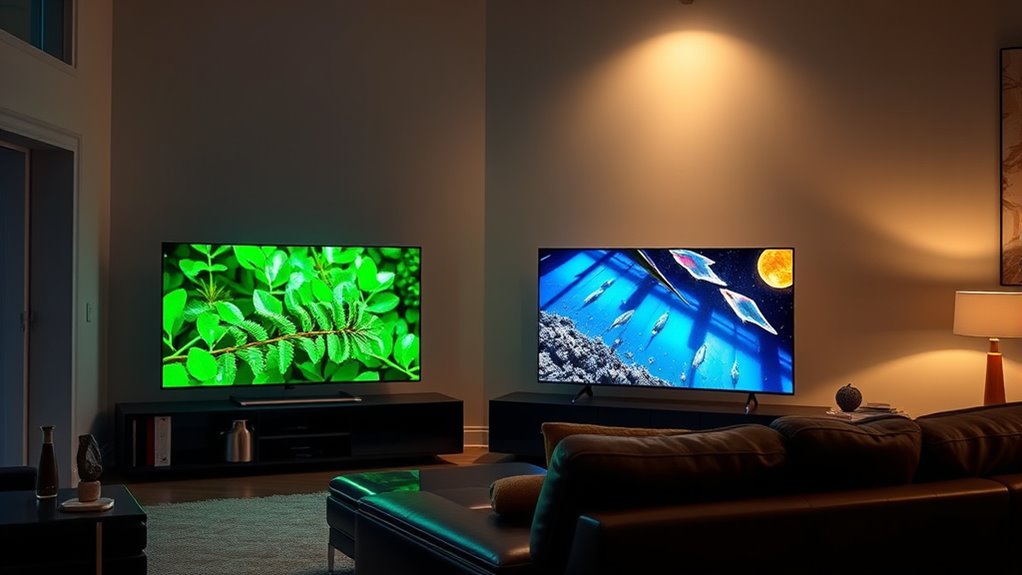

When comparing Samsung and LG smart TVs, you’ll find distinct strengths. Samsung offers superior brightness and sleek design, making it great for bright rooms. In contrast, LG’s OLED technology excels in deep blacks and rich colors, perfect for dark environments. Both brands have intuitive interfaces, but Samsung’s Tizen OS provides a broader app selection. Your choice should depend on your priorities, like gaming performance or price. Explore further to discover more insights into these brands.
Picture Quality Comparison
When it comes to picture quality, both Samsung and LG offer impressive technologies that cater to different viewing preferences. Samsung excels in brightness levels, often providing brighter images, which is excellent for well-lit rooms. Their Quantum Dot technology enhances color accuracy, resulting in vivid and dynamic visuals. On the other hand, LG’s OLED technology delivers deeper blacks and remarkable contrast, which might appeal to those who value cinematic experiences in darker environments. While LG can struggle with peak brightness compared to Samsung, its color accuracy is exceptional, showcasing a wider color gamut. Ultimately, your choice may depend on whether you prioritize brightness for daytime viewing or the rich contrast and depth offered by OLED for evening entertainment.
Design and Build Quality
When considering the design and build quality of Samsung and LG Smart TVs, you’ll notice differences in aesthetic appeal and material quality that may influence your decision. Both brands aim for ergonomic design, aiming to enhance user experience while maintaining a sleek appearance. Evaluating these aspects can help you determine which TV aligns better with your preferences and living space.
Aesthetic Appeal
While both Samsung and LG offer cutting-edge technology in their smart TVs, their aesthetic appeal markedly differs in design and build quality. Samsung tends to focus on sleek, minimalist designs with sophisticated color schemes, making their models suitable for modern interiors. On the other hand, LG embraces a more vibrant and playful approach, often integrating unique shapes and finishes.
- Samsung’s ultra-thin bezels enhance the viewing experience.
- LG’s signature OLED displays provide striking visual richness.
- Samsung often features a uniform finish that blends seamlessly with decor.
- LG’s bold color options can make a statement in any room.
- Both brands prioritize a clean look, but their design philosophies cater to different tastes.
Ultimately, your choice may depend on your personal aesthetic preferences.
Material Quality
The aesthetic appeal of a smart TV often goes hand-in-hand with its material quality and build construction. When evaluating Samsung and LG, consider their approach to material sourcing and durability testing. Samsung typically utilizes premium materials that guarantee a sleek look while enhancing longevity. Their rigorous durability testing demonstrates a commitment to withstand wear and tear. On the other hand, LG also emphasizes high-quality materials, often focusing on innovative designs that appeal to modern consumers. Both brands have made strides in balancing aesthetics and durability, but Samsung may edge out slightly regarding build quality. Ultimately, your choice might hinge on which brand aligns better with your preferences for material quality and overall design integrity.
Ergonomic Design
Although both Samsung and LG prioritize aesthetics in their smart TV designs, ergonomic considerations play an essential role in user experience. When you evaluate these televisions, consider the following ergonomic benefits that enhance user comfort:
- Screen Height: Adjustable stands allow for ideal viewing angles.
- Weight Distribution: Balanced designs prevent tipping and enhance stability.
- Remote Control Design: Intuitive layouts reduce strain during extended use.
- Cable Management: Built-in solutions minimize clutter and promote a clean environment.
- Viewing Distance: Recommendations for size-to-distance ratios help reduce eye strain.
Smart Features and User Interface
When comparing Samsung and LG smart TVs, the differences in operating systems can greatly impact your experience. You’ll want to evaluate app availability and how each brand’s voice control features enhance usability. Understanding these elements will help you make an informed decision based on your preferences.
Operating System Comparison
While both Samsung and LG have made significant strides in their smart TV operating systems, each offers a unique user experience that caters to different preferences and needs. Samsung’s Tizen OS is known for its intuitive interface and regular software updates, ensuring you stay current with features. Meanwhile, LG’s webOS emphasizes ease of navigation and personalization.
- Samsung’s Smart Hub provides quick access to apps and settings.
- LG’s Magic Remote allows voice control and gesture navigation.
- Tizen supports a wide range of smart home devices.
- webOS offers a customizable dashboard for seamless access.
- Both systems receive frequent updates, enhancing performance and user experience.
Ultimately, your choice will depend on which features resonate more with your viewing habits.
App Availability
The choice between Samsung and LG smart TVs also hinges on app availability, which greatly affects the overall smart experience. Samsung offers a broader app selection, including popular streaming services and niche applications, ensuring you find what you want. However, LG’s platform is known for its user-friendly interface, enhancing app performance and accessibility. While Samsung might have more options, LG excels in how these apps function, providing a smoother experience. Ultimately, your decision may depend on whether you prioritize a wide range of applications or prefer a more streamlined interface with reliable app performance. Both brands aim to enhance your viewing experience, so consider what features are most important to you before making a choice.
Voice Control Features
As smart technology continues to evolve, voice control features have become an essential aspect of the user interface for both Samsung and LG smart TVs. You’ll find that both brands offer impressive voice command integration, enhancing your viewing experience. However, their performance can vary regarding voice recognition accuracy.
- Samsung’s Bixby often excels in context understanding.
- LG’s ThinQ AI is designed for seamless interaction with smart home devices.
- Both brands support multiple languages, catering to diverse users.
- Customization options allow you to set preferred voice commands.
- Regular software updates improve overall functionality and accuracy.
Ultimately, your choice may depend on which voice control features align best with your needs and preferences.
Gaming Performance
When it comes to gaming performance, both Samsung and LG smart TVs offer features that cater to the needs of gamers, but they do so in distinct ways. Samsung’s models typically excel in refresh rate, providing smoother motion during fast-paced gaming. This can enhance your overall gaming experience. On the other hand, LG focuses on reducing input lag, which is essential for competitive gaming, allowing you to react faster to in-game actions. Additionally, LG’s OLED technology offers superior contrast and color accuracy, enriching the visual experience. Ultimately, your choice may depend on whether you prioritize refresh rates for fluidity or input lag for responsiveness. Both brands have unique strengths that can elevate your gaming sessions, so consider what matters most to you.
Price and Value for Money
Price and value for money play crucial roles in deciding between Samsung and LG smart TVs. When weighing your options, it’s essential to evaluate budget considerations and whether you’re looking for a long-term investment.
- Samsung TVs often come with premium features, which may justify higher prices.
- LG models generally offer competitive pricing with excellent value, especially in mid-range options.
- Both brands provide varying price points, catering to different budgets.
- Think about the longevity of the product; a higher upfront cost might save you money in the long run.
- Reflect on the features that matter most to you, as these can influence perceived value.
Ultimately, aligning your priorities with your budget will lead to a more satisfying purchase.
Customer Support and Warranty
After considering price and value, another important factor in choosing between Samsung and LG smart TVs is the level of customer support and warranty offered by each brand. Samsung typically provides a one-year warranty, covering parts and labor, with the option to extend it for an additional fee. Their customer service is generally rated well, with accessible online resources and support teams. On the other hand, LG also offers a one-year warranty, but some customers report longer wait times for assistance. Both brands have warranty options that cater to different needs, but Samsung often gets higher marks for prompt customer service. Ultimately, your choice may hinge on which brand aligns better with your expectations for support and reliability.
Conclusion: Making the Right Choice
Choosing between Samsung and LG smart TVs can be a complex decision, especially since both brands offer unique features and technologies that cater to different preferences. Your choice may hinge on several factors, and it’s crucial to reflect on what aligns with your needs and values.
- Display technology (QLED vs. OLED)
- Smart TV interface and usability
- Brand loyalty and ecosystem compatibility
- Long-term investment in durability and performance
- Customer support and warranty options
Ultimately, whether you lean towards Samsung or LG, think about how these aspects fit into your lifestyle. Evaluating your viewing habits and future needs can guide you in making a choice that not only meets your immediate desires but also serves as a worthwhile, long-term investment.
Frequently Asked Questions
Which Brand Has Better Energy Efficiency Ratings?
When comparing brands, LG often has better energy ratings, indicating lower power consumption. Analyzing these metrics can help you choose a TV that aligns with both your environmental values and your budget.
Are Samsung TVS Better for Sports Viewing Than LG?
Samsung TVs often excel in sports motion clarity and picture quality, making them a strong choice for sports viewing. Their advanced technology reduces blur, enhancing your experience during fast-paced games compared to many LG models.
How Do Samsung and LG Handle Software Updates?
Samsung typically offers more frequent updates and extended software support, ensuring your TV stays current longer. LG, while also providing updates, may not match Samsung’s consistency, possibly affecting your viewing experience over time.
What Are the Best Models From Each Brand?
When choosing your next TV, consider Samsung’s QN90A and LG’s C1 OLED; both represent the best models from their brands. Brand comparisons reveal unique strengths, so weigh your preferences carefully for the ultimate viewing experience.
Do Samsung or LG Offer Better Sound Quality Features?
Samsung generally excels in sound technology, often integrating advanced audio performance features like Q-Symphony. However, LG’s AI Sound Pro offers excellent spatial audio. Ultimately, your choice may depend on specific model comparisons and personal preferences.
