
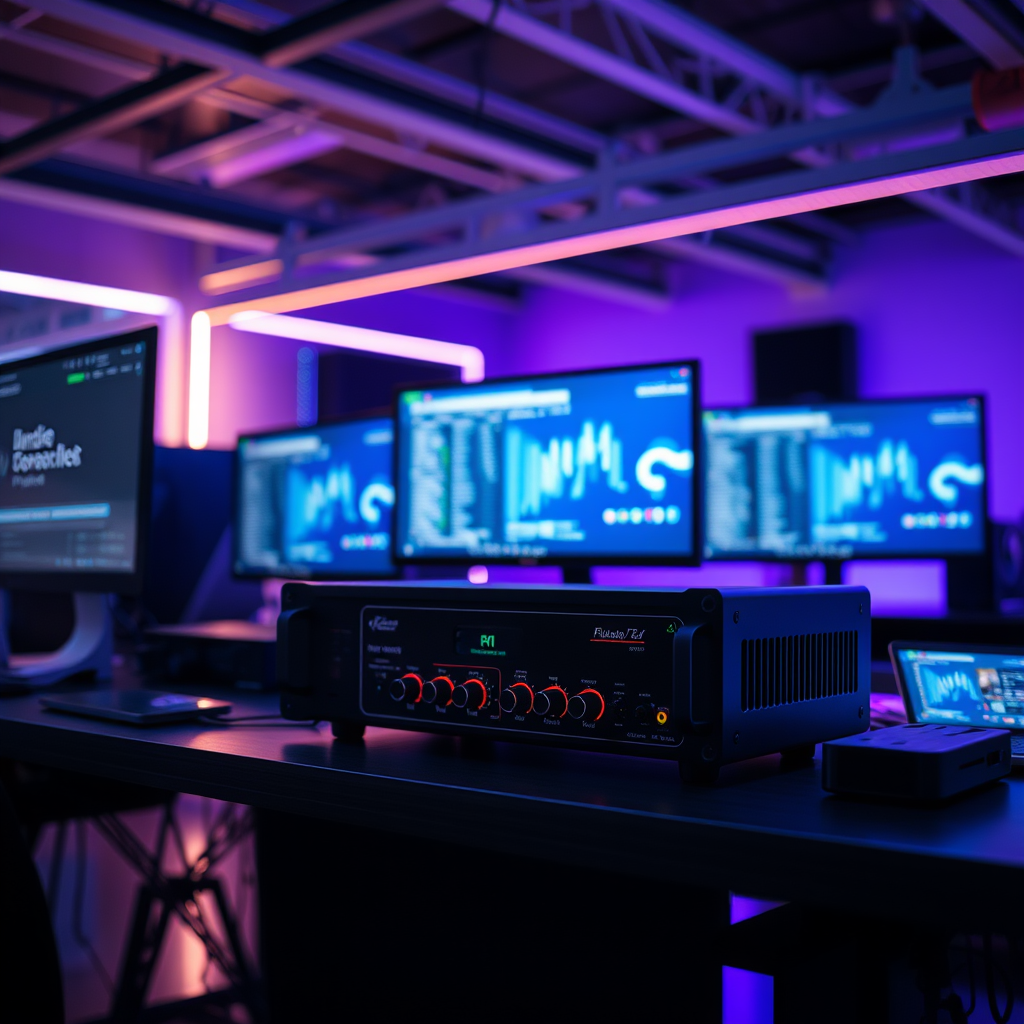

The primary function of an amplifier, or amp, for speakers is to boost audio signals, enabling speakers to produce louder and clearer sound. Amplifiers are essential components in audio systems, enhancing not only the volume but also the overall sound quality, making them indispensable for both casual listeners and audiophiles alike. This article will explore how amplifiers enhance sound quality, improve audio performance, and their role in various audio setups.
Understanding Amplifiers
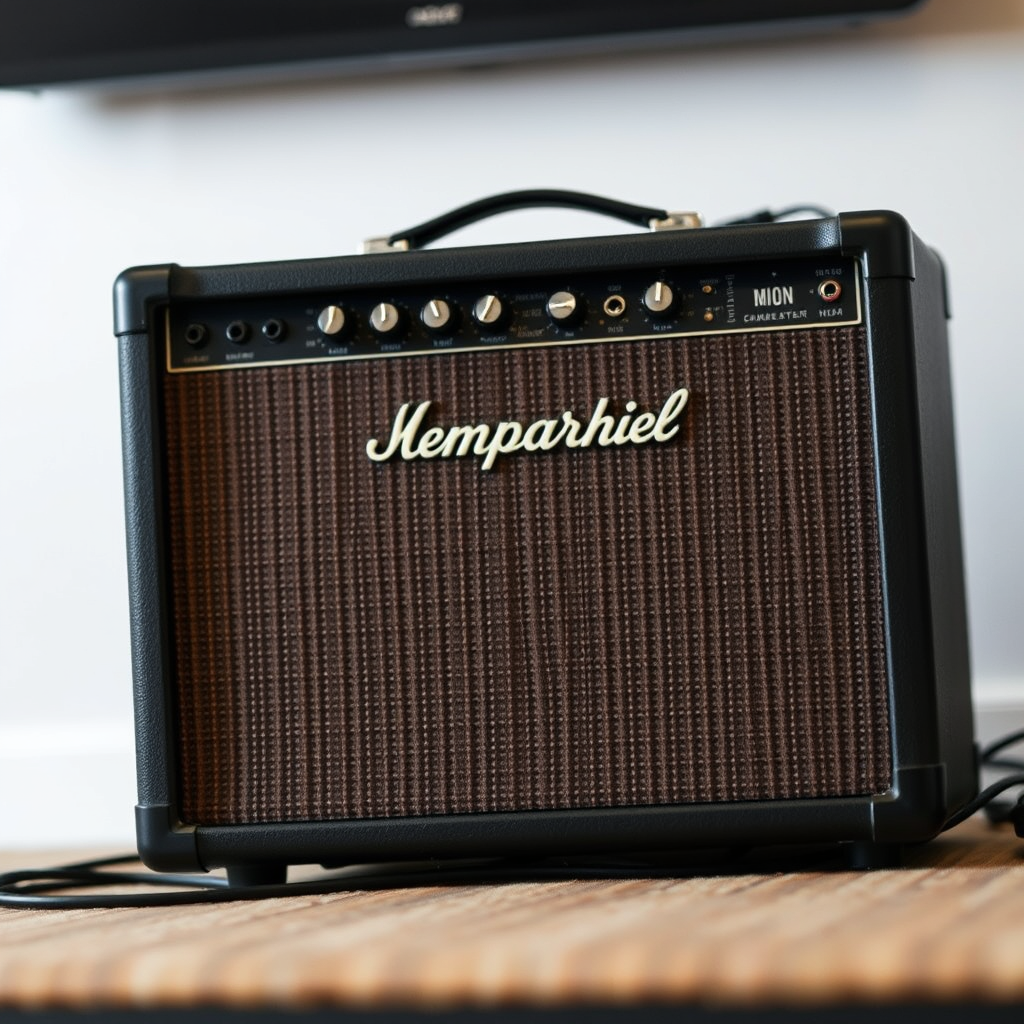
Amplifiers play a crucial role in any audio setup by increasing the power of audio signals. This amplification allows speakers to reach higher volumes without introducing distortion, thereby maintaining clarity and fidelity in sound reproduction. There are various types of amplifiers, including integrated amplifiers, which combine both a preamplifier and a power amplifier in one unit, preamplifiers that prepare low-level signals for amplification, and power amplifiers that drive the speakers directly. Each type of amplifier serves distinct purposes depending on the audio system configuration and the specific needs of the user.
For example, integrated amplifiers are popular for home audio systems because they simplify the setup process by combining two functions into one device. In contrast, professional audio setups often utilize separate preamplifiers and power amplifiers to achieve greater flexibility and performance customization.
How Amplifiers Improve Sound Quality
An amplifier provides more than just volume; it delivers clean, undistorted audio that enhances the overall listening experience. High-quality amplifiers are designed to minimize noise and distortion, allowing listeners to appreciate the subtleties and nuances in music that may go unnoticed without amplification. This clarity can significantly impact the enjoyment of various audio formats, including music, movies, and live sound.
Moreover, an effective amplifier can improve the dynamic range of audio playback, meaning it can reproduce both the quietest and loudest parts of a track with accuracy. This capability is crucial for genres such as classical music, where the contrast between soft passages and powerful crescendos is essential for an authentic listening experience. High-fidelity amplifiers can elevate the performance of even modest speakers, making them sound much better than they would without amplification.
The Role of Impedance Matching
Impedance matching is a vital aspect of amplifier performance that ensures optimal compatibility between speakers and audio sources. Each speaker has an impedance rating, typically measured in ohms, which indicates how much resistance it offers to the electrical current. Amplifiers are designed to work within specific impedance ranges. Proper matching between the amplifier’s output impedance and the speaker’s input impedance is crucial for achieving maximum power transfer and minimizing potential damage to either component.
When the impedance is mismatched, it can lead to several issues, including reduced audio quality, overheating of the amplifier, and even permanent damage to the speakers or amplifier itself. Understanding and ensuring proper impedance matching can significantly enhance the longevity and reliability of your audio setup.
Top 7 Amplifier Brands and Their Features (2024)
| # | Brand | Power Output (W) | Impedance (Ω) | Signal-to-Noise Ratio (dB) |
|---|---|---|---|---|
| 1 | Yamaha | 100 | 8 | 110 |
| 2 | Denon | 140 | 6 | 105 |
| 3 | Marantz | 90 | 8 | 115 |
| 4 | Onkyo | 130 | 6 | 100 |
| 5 | Sony | 110 | 8 | 102 |
| 6 | NAD | 120 | 8 | 108 |
| 7 | Pioneer | 150 | 6 | 95 |
Choosing the Right Amplifier for Your Speakers
Selecting the right amplifier for your speakers requires careful consideration of several factors, including power output, impedance ratings, and personal listening preferences. The power output, measured in watts, should match your speakers’ capabilities to ensure optimal performance. Underpowering speakers can lead to distortion and potential damage, while overpowering them can cause overheating and failure.
It’s also important to consider the impedance ratings of both the amplifier and the speakers. Most consumer speakers have an impedance of 4, 6, or 8 ohms, and the amplifier should be capable of handling these loads effectively. Researching compatibility and reading reviews can provide valuable insights into how specific amplifiers perform with particular speaker models.
Additionally, audiophiles may want to explore features such as built-in equalizers, digital signal processing (DSP), and connectivity options. These functionalities can enhance your audio experience, allowing for greater customization and control over sound quality.
Common Misconceptions About Amplifiers
Despite their importance, there are several misconceptions about amplifiers that can mislead consumers. One common belief is that higher wattage always equates to better sound quality. While wattage is important, the quality of the amplifier’s components, including the power supply and circuitry, also plays a crucial role in sound fidelity. A lower wattage amplifier with high-quality components can outperform a higher wattage amplifier with inferior parts.
Another misconception is that amplifiers are only necessary for large speakers or professional setups. In reality, even small bookshelf speakers or compact systems can benefit from the clarity and power provided by an amplifier. Investing in a quality amp can dramatically improve the audio quality of any system, regardless of size.
Integrating an Amp into Your Audio Setup
Integrating an amplifier into your audio setup requires proper connections and configurations to ensure optimal performance. Start by identifying the components of your system, including the source (such as a CD player, turntable, or streaming device), the amplifier, and the speakers. Use high-quality cables to connect these components, ensuring secure and interference-free connections.
Explore different configurations based on your preferences and space. For instance, a dedicated amplifier for subwoofers can enhance low-frequency performance, while a home theater setup might require multiple amplifiers to power various channels effectively. Understanding different wiring configurations, such as parallel and series connections, can also help you optimize your system for the best audio experience.
It’s advisable to conduct listening tests after the installation to fine-tune the settings. Adjusting the gain, balance, and equalization can significantly impact the overall sound quality, allowing you to tailor the audio experience to your preferences.
The importance of an amplifier in a speaker system cannot be overstated. By boosting audio signals and improving sound quality, amplifiers enhance your listening experience significantly. If you’re looking to upgrade your audio setup, consider investing in a quality amplifier that matches your speakers for the best results. With the right amplifier, you can unlock the full potential of your audio system, ensuring that every note and nuance of your favorite music is delivered with precision and clarity.
Frequently Asked Questions
What does an amp do for speakers?
An amplifier (amp) boosts the audio signal from your audio source, allowing speakers to produce sound at higher volumes without distortion. It increases the power output, which is crucial for driving larger speakers or delivering a richer audio experience in home theaters or music systems.
How does an amplifier improve sound quality for speakers?
An amplifier enhances sound quality by providing a clean, powerful signal that allows speakers to perform optimally. It reduces distortion and enables deeper bass response, clearer highs, and an overall more balanced sound, making your listening experience more enjoyable.
Why do I need an amplifier for my passive speakers?
Passive speakers require an external power source to function, which is provided by an amplifier. Without an amp, passive speakers cannot produce sound as they lack built-in amplification, making it essential for achieving the desired audio performance.
What is the best amplifier type for home speakers?
The best amplifier type for home speakers often depends on your specific needs, but generally, a Class AB amplifier is favored for its balance of sound quality and efficiency. If you’re looking for high fidelity and clarity, a Class A amp might be ideal, while Class D amplifiers offer compact size and efficiency for more casual listening.
Which factors should I consider when choosing an amplifier for my speakers?
When selecting an amplifier for your speakers, consider the power output (measured in watts), compatibility with your speaker impedance, and the desired sound quality. Additionally, evaluate the features you need, such as connectivity options, built-in equalizers, and the overall design to ensure it fits within your audio setup.
References
- Amplifier
https://en.wikipedia.org/wiki/Amplifier - Amplifier | Audio, Signal Processing & Volume Control | Britannica
https://www.britannica.com/technology/amplifier - https://www.sciencedirect.com/topics/engineering/amplifier
https://www.sciencedirect.com/topics/engineering/amplifier - Google Scholar Google Scholar
https://scholar.google.com/scholar?q=amplifier+for+speakers - Google Scholar Google Scholar
https://scholar.google.com/scholar?q=what+does+an+amplifier+do+for+speakers - https://www.audioholics.com/how-to-articles/what-is-an-amplifier
https://www.audioholics.com/how-to-articles/what-is-an-amplifier - https://www.thebalance.com/what-is-a-speaker-amplifier-2683905
https://www.thebalance.com/what-is-a-speaker-amplifier-2683905 - https://www.nytimes.com/2017/05/17/technology/personaltech/how-amplifiers-work.html
https://www.nytimes.com/2017/05/17/technology/personaltech/how-amplifiers-work.html - https://www.verywellmind.com/what-is-an-amplifier-5190990
https://www.verywellmind.com/what-is-an-amplifier-5190990 - Google Scholar Google Scholar
https://scholar.google.com/scholar?q=what+does+an+amp+do+for+speakers

[…] The simplest approach is to plug the streaming device into an available HDMI port and power it using its included adapter or USB power port if supported. Then switch your smart TV input to the corresponding HDMI channel and complete the streaming device setup for Wi‑Fi and account sign-in. This method often avoids smart TV Wi‑Fi setup issues and provides a consistent user interface across devices. If you use a soundbar or receiver, connect audio through ARC/eARC or the sound system’s recommended inputs for the best audio experience. […]
[…] to the Bluetooth SIG, the headset audio experience depends on proper pairing and supported profiles like A2DP (music) and HFP (calls) (Bluetooth SIG). […]
[…] – Better seal can improve bass and overall sound quality […]
[…] The safest approach is non-powered testing: visual inspection and mechanical checks. Gently press the cone edge and listen for scraping, uneven resistance, or rattling that can indicate a rubbing voice coil or broken surround. You can also shake the speaker lightly (with the grille off) to see if there are loose parts, and verify that the terminals are not cracked or corroded. Avoid using high volume or unknown power sources because speaker drivers can be damaged without proper impedance matching. […]
[…] If you watch movies or play games, prioritize low-latency Bluetooth hardware to get the best TV audio experience with […]
[…] separating amp channels). The goal is to reduce inter-modulation between bass and treble, improving overall sound quality and […]
[…] the best audio experience, use HDMI from the cable box to the projector if you want sound through the projector’s speakers […]
[…] to CTA (Consumer Technology Association), analog RF signals over coax depend on proper impedance matching (commonly 75Ω) for best reception, which is exactly why using the designated RF coax ports […]