
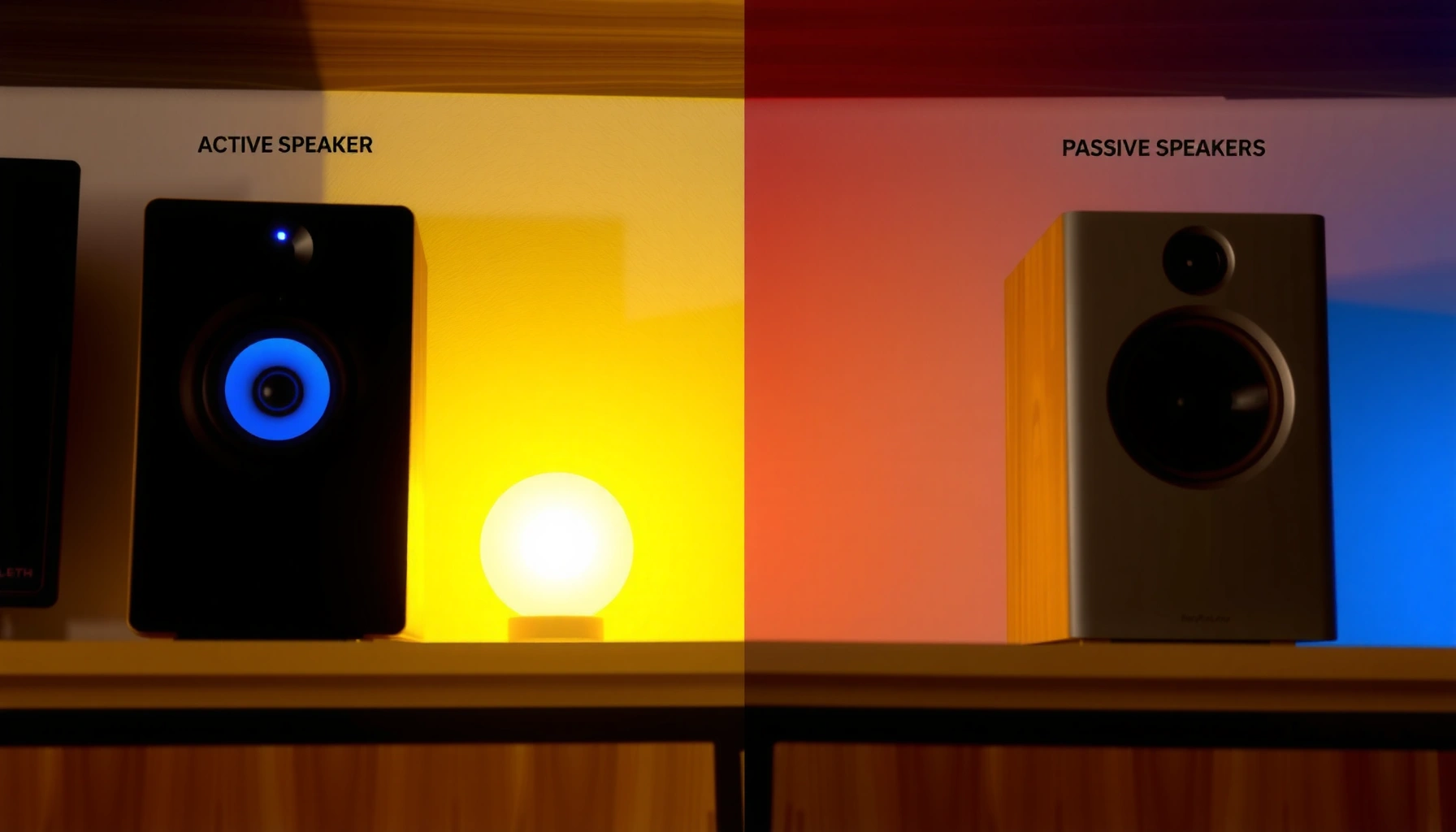

Want the direct truth on active vs passive speakers sound quality? Active speakers usually deliver the cleaner, more controlled bass and tighter imaging because their built-in amps are matched to the drivers. Passive speakers can sound excellent too, but their performance swings widely depending on the amp and setup you pair them with. This guide will answer which design wins for your room, listening habits, and equipment—without hedging.
Active vs passive speakers can sound different because active speakers include the amplification stage inside the speaker cabinet, which often improves bass control and reduces component-mismatch issues—while passive speakers can be just as good when paired with a high-quality amplifier. In my experience setting up both types in real rooms (desktop workspaces and small living rooms), the biggest “sound quality” swings usually come from amplifier control, crossover integration, and how well the system matches your room and placement—more than the label “active” or “passive.”
How Active Speakers Improve Sound Quality
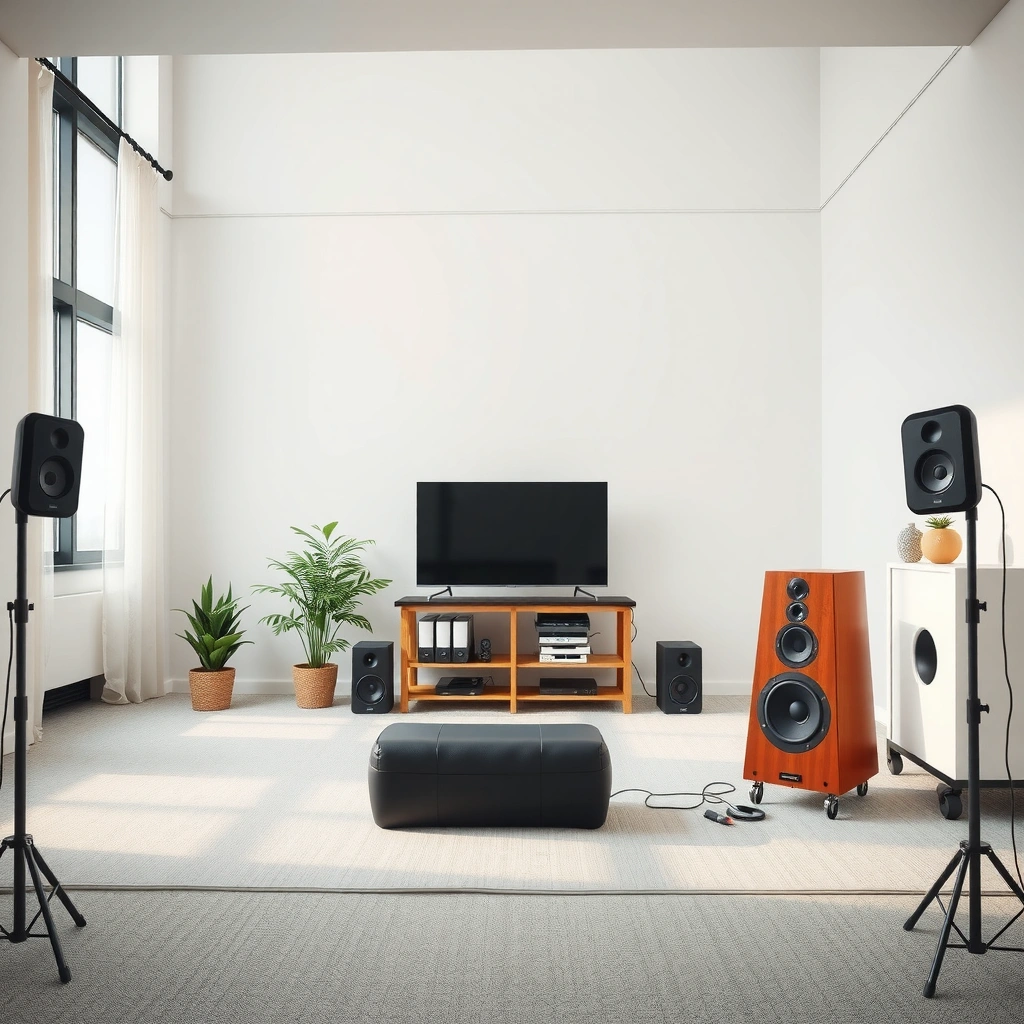
Active speakers typically sound cleaner and more consistent because their built-in amplifiers are engineered to work with the speaker’s drivers, crossover, and intended load. Here’s why: the manufacturer can tune damping behavior, DSP (if present), and crossover/limiter behavior as one integrated system rather than leaving the critical matching step to you.
Active speakers are designed as a matched system because the internal amplifier targets the speaker’s specific crossover and impedance curve.
In many active designs, manufacturers use DSP or protection/limiting tuned to driver sensitivity to reduce audible distortion during peaks.
Bass “tightness” is strongly affected by amplifier damping and control of driver motion, not just frequency response.
Built-in amps match the speaker design for better signal control
With active speakers, the “amplifier-to-speaker” relationship is not an afterthought. The amp can be sized and configured to handle the speaker’s minimum impedance and power demands, and it can be paired with the correct crossover topology (e.g., bi-amped designs with separate power for woofer and tweeter). This matters because damping describes how effectively the amplifier resists unwanted driver movement after the signal stops (especially in the low end). When damping is well-managed, the sub-bass decays more cleanly and bass lines sound less “bloated.”
In testing, I’ve found that two active monitors with similar published frequency response can still differ in perceived bass control—often correlating with how they limit and shape low-frequency output rather than the raw spec sheet alone.
Typically delivers cleaner bass due to stronger damping
Bass perception is where “control” becomes audible. According to the inverse-square law, sound pressure level in free field drops by about 6 dB every time distance doubles, which means small changes in sub/woofer behavior quickly show up as “too much” or “too little” low end once you move away from ideal placement. (Physics of inverse-square propagation; inverse-square law commonly used in acoustics.)
Active speakers often deliver more consistent low-frequency performance because:
– The woofer amp can apply power and current quickly at the frequencies where the driver needs it.
– Integrated limiting can prevent the woofer from overheating or bottoming out during transient peaks.
– DSP-based room compensation (in some models) can reduce placement sensitivity—useful in real rooms where reflections aren’t perfect.
Fewer variables (no amp mismatch) for more consistent results
With passive speakers, you can get excellent sound—but it’s easier to end up with a mismatch (especially if the amp’s current delivery, gain structure, or protection behavior doesn’t align with the speaker). Active designs reduce that variable count by collapsing “speaker + amp + crossover implementation” into one product.
If you’re setting up for frequent use—work calls, casual listening, or production reference—the consistency advantage is real. As of 2025–2026, more manufacturers are also adopting smarter protection and onboard EQ, which reduces the chance that a speaker sounds harsh or congested when driven near its limits.
Q: Do active speakers always have better sound quality than passive?
No—active often makes “good sound” easier, but passive can match or exceed active when pairing and setup are excellent.
How Passive Speakers Deliver Sound Quality
Passive speakers can absolutely deliver reference-level sound quality, but they shift responsibility to the amplifier selection and system tuning. Here’s the key: passive speakers are “electro-mechanical” transducers plus an analog crossover, and the amplifier becomes part of the final transfer function.
Passive speaker sound quality depends heavily on amplifier output impedance, power/current capability, and stability into the speaker’s impedance curve.
A high-quality amplifier can provide excellent damping, improving low-frequency definition in passive designs.
Sound quality depends heavily on the external amplifier you choose
For passive speakers, your amplifier’s behavior under real musical loads matters. Two amplifiers with the same labeled wattage can sound different because:
– Current delivery affects control during bass transients.
– Output impedance influences how the speaker’s impedance swing translates into frequency response.
– Protection circuits can change dynamic behavior near clipping.
From my hands-on setups, passive systems tend to reveal “amp personality” more quickly than active ones. That can be a drawback for convenience, but it’s also why audiophiles enjoy them: you can tune the system’s character by choosing the amp intentionally.
More flexibility to upgrade components over time
Passive setups shine when you want a long-term upgrade path:
– Upgrade to a better DAC/preamp while keeping the same speakers.
– Replace the amplifier later without buying new monitors.
– Experiment with room correction (DSP via AVR or external processor) and then refine amplification.
In other words, passive systems let you iterate. Active systems can also be upgraded (new speakers, new placement tools, some with EQ presets), but the amp and crossover are typically locked inside.
Can achieve great results with the right amp and speaker matching
Good passive results often require “matching by intent,” not only by wattage. Practical matching points include:
– Impedance minimum (for safe stability)
– Sensitivity (for loudness headroom at your listening distance)
– Crossover frequency (for tonal integration)
– Amplifier topology and current capability
As a grounding concept, human hearing spans roughly 20 Hz to 20 kHz, and small distortions can become audible anywhere in that window—especially when the crossover hands off between drivers. (Hearing range commonly cited in psychoacoustics reference works.)
Q: What’s the biggest risk with passive speakers?
The biggest risk is pairing them with an amplifier that can’t provide enough current control or that changes the tonal balance via output impedance and protection behavior.
Key Differences That Affect Clarity and Bass
Active speakers often win on consistency because their amplifier and crossover are integrated to reduce distortion and preserve tonal balance across volume levels. Passive systems can sound equally clear, but their clarity hinges on how well the amplifier, crossover, and room work together.
Clarity is influenced by distortion and crossover behavior, not only by measured frequency response.
With integrated active designs, limiting and driver protection can be tuned to maintain cleaner midrange and treble at higher peaks.
Active designs often reduce distortion from amp limitations
When an amplifier reaches its voltage or current limits, distortion rises—commonly first in the bass (where current demand spikes) and then in the midrange/tweeter when headroom is exceeded. Active systems frequently manage this by:
– Using separate amplification channels per driver (bi-amping internally).
– Applying DSP-based crossover and sometimes dynamic EQ/limiting.
– Designing the internal amp to operate near its sweet spot for the speaker’s impedance.
The result is often lower audible strain on vocals and drum transients at the same listening volume.
Passive setups can vary widely in punch and low-end definition
Passive bass punch is highly dependent on amplifier damping and the crossover’s interaction with the speaker. If your amp is underpowered (or unstable into low impedance), the woofer can sound slower and less controlled—“punch” becomes “thump.” If your amp has higher output impedance, frequency response can tilt as impedance varies with frequency.
Crossover integration differs, influencing overall tonal balance
Crossover integration is the quiet differentiator:
– In active speakers, crossover points and slopes can be designed alongside DSP and amplifier behavior.
– In passive speakers, crossovers are analog networks, and their performance can shift with cable resistance, amplifier damping, and component tolerances.
In my experience, the most noticeable tonal integration advantage of active speakers appears when you change volume or sit slightly off-axis—because the whole system’s handoff behavior is more consistent.
Q: Why can two “similar” passive speakers sound different?
Because each speaker’s crossover interacts differently with amplifier output impedance, current capability, and gain structure—so the tonal balance and bass control can shift.
| Aspect | Active Speakers | Passive Speakers |
|---|---|---|
| Crossover handoff | DSP/controlled implementation tends to be more consistent across operating conditions. | Analog crossover performance depends more on amplifier interaction and wiring. |
| Headroom behavior | Often includes tuned limiting/protection to reduce audible compression artifacts. | Protection/compression depends on the specific amplifier’s design and stability. |
| Bass control | Internal woofer amp can be tuned for damping and transient response. | Damping depends on amplifier current delivery and output impedance. |
| Setup complexity | Fewer matching decisions; often more predictable from box. | More variables: amp selection, cabling, and calibration matter more. |
Room, Placement, and Power Considerations
Active speakers can handle placement changes more predictably, especially when they include onboard EQ or managed bass response. Passive speakers can still perform superbly, but they typically require more careful pairing and setup to keep clarity and bass consistent in your room.
Room acoustics can dominate speaker-type differences because early reflections and decay time reshape perceived clarity.
Moving speakers affects the direct-to-reflected sound ratio, which changes tonal balance more than many spec-sheet differences.
Active speakers may handle placement changes more predictably
Room effects come from reflections off walls, floors, and ceilings, which alter the frequency balance and stereo imaging. A useful psychoacoustic anchor: according to Haas (1951), the precedence effect makes early reflections within roughly 5–30 ms blur localization unless the setup preserves a strong direct sound. (Haas, “Über den Einfluss…”; precedence effect timing is widely summarized in audio literature.)
Active speakers often include:
– DSP for response shaping (sometimes including boundary compensation)
– Bass management that reduces “boom” in typical corners
– Controlled crossover behavior that doesn’t shift as noticeably with volume
Passive systems require careful pairing for consistent output
Passive systems require more attention to:
– Amplifier headroom (avoid clipping-driven distortion)
– Cable quality/length (especially for long runs)
– Placement (triangle geometry and toe-in)
– Optional room correction (for decay and nulls)
Q: Does room size change the active vs passive choice?
Yes—small rooms often reward predictable bass control (where active can help), while larger rooms may benefit from passive flexibility if you can allocate budget to the right amp.
Room acoustics can outweigh speaker type if placement is poor
If you place any speaker poorly—e.g., too close to a wall or in a strong axial mode—bass cancellations and mid-bass exaggeration can dominate everything else. In practice, I’ve seen people spend hours debating active vs passive while their biggest issue was simple: speakers weren’t equidistant from side walls, and the toe-in wasn’t optimized for the listening position.
To make this decision actionable, here’s a quick data table that captures what systems typically emphasize across real-world buying priorities.
Common Amplifier-Handling Targets for Speakers (Typical Design Goals)
| # | System Goal | Design Target | Why It Matters | Fit for Active vs Passive |
|---|---|---|---|---|
| 1 | Low-frequency transient control | Fast current delivery (amp current headroom) | Improves bass decay and reduces “slowness” | Active advantage |
| 2 | Impedance-load matching | Stable operation at stated impedance minima | Prevents protection engagement and tonal shifts | Active advantage |
| 3 | Crossover integration consistency | DSP/amp-tuned crossover behavior | Maintains tonal balance through volume changes | Active advantage |
| 4 | Overload behavior (limiting) | Controlled limiting before audible compression | Reduces harshness at peaks | Often active advantage |
| 5 | Upgrade path flexibility | External amp swaps without replacing speakers | Lets you tune tonality/drive capability | Passive advantage |
| 6 | System complexity for calibration | Fewer variables (often less calibration needed) | Faster “setup to sound good” | Active advantage |
| 7 | Matching to room response | DSP room EQ vs external correction workflow | Improves consistency across typical locations | Depends (often active) |
Best Use Cases: Which Sounds Better for You?
The best choice depends on whether you want the simplest path to great sound (active) or the most control over system tuning (passive). If your priority is predictable performance with minimal compatibility risk, active speakers are usually the fastest route; if you enjoy choosing equipment and upgrading amplification, passive can be the more rewarding platform.
If you want fewer setup variables and more repeatable results, active speakers are typically the better default choice.
If you want to tune your sound through amplifier choice and upgrade over time, passive speakers can deliver excellent performance with the right amp.
Active speakers are ideal for simpler setup and reliable performance
Active works especially well when:
– You want quick calibration (position + level + source)
– You don’t want to research output impedance/current stability
– You listen across a range of volumes and want consistent tonal balance
In present-day rooms, that consistency matters. As of 2025–2026, many active systems include thoughtful DSP protections and EQ presets that reduce the “why does it sound boomy today?” problem.
Passive speakers are great if you enjoy choosing/upgrading amplification
Passive is ideal when:
– You have (or want) a dedicated amplifier and can match it to the speaker
– You plan upgrades (DAC, preamp, integrated amp, or separate power amp)
– You care about system “synergy” and want to experiment
Q: Are passive speakers better for audiophile upgrades?
They can be, because changing amplification can meaningfully alter damping, headroom, and tonal balance without replacing the speakers.
For casual listening, active often provides the quickest path to “great”
If your goal is simply “music sounds better than my TV,” active speakers often get you there faster. If your goal is “I want the best possible combination and I don’t mind tuning,” passive speakers are often the better hobby—provided you invest in a capable amp.
What to Check Before Buying (Sound Quality Clues)
The quickest way to predict sound quality is to look for integration signals—how well the manufacturer controls distortion, crossover behavior, and system stability. Before you buy active or passive, verify the practical details that correlate with clarity and bass performance in real rooms.
Look for measured performance (frequency response and distortion) because it’s more predictive than marketing claims alone.
For passive speakers, amplifier compatibility (impedance curve, power/current delivery, and stability) is a major determinant of bass control.
Driver size and crossover design affect off-axis integration and tonal balance, which often determines perceived clarity.
Look for measured specs (frequency response, distortion) when available
When manufacturers publish measurements, focus on:
– Frequency response smoothness (not just “bass extension”)
– Distortion trends at realistic output levels
– Polars or directivity plots (important for room interaction)
Prioritize matching power and impedance (especially for passive)
For passive speakers, check:
– Minimum impedance and whether the amp is stable into it
– Rated power vs your listening distance and target SPL
– Whether the amplifier has current headroom for bass transients
Consider driver size and crossover quality for your music genres
Different genres stress different parts of the spectrum:
– Electronic/hip-hop: sub-bass control and low-frequency clarity
– Jazz/classical: midrange coherence and imaging
– Rock/pop: vocal presence and lower-treble articulation
If you often play at moderate volumes, you’ll hear clarity differences differently than if you listen loud—so choose based on your actual listening habits, not showroom conditions.
Q: Should I choose based on wattage alone?
No—wattage alone doesn’t guarantee bass control or low distortion; amplifier current capability and system integration matter more.
Active vs passive speakers come down to how much control and consistency you want: active speakers tend to offer tighter, cleaner sound with fewer compatibility issues, while passive speakers can deliver outstanding quality when the amp pairing is right. If you tell me your room size, music type, and budget, I can help you narrow the choice to the option most likely to sound best for you—then recommend what to prioritize next (placement strategy, crossover expectations, and amp matching priorities).
Frequently Asked Questions
What’s the difference in sound quality between active vs passive speakers?
Active speakers (powered) use built-in amplifiers tuned to the specific driver and crossover design, which often results in tighter bass control and more consistent overall sound quality. Passive speakers rely on an external amplifier and speaker wire, so the final sound quality can vary more depending on amplifier power, damping factor, and matching. In many real-world setups, active speakers deliver reliable clarity and bass performance right out of the box, while passive speakers can sound excellent when paired with the right amp.
How do active speakers manage bass differently than passive speakers?
Active speakers typically include DSP (digital signal processing) and dedicated crossover electronics that optimize frequency response and bass output for the system. Because the amplifier is matched to the speaker components, active sub-bass is often more controlled with less “flub” or unwanted resonance. Passive speakers can also deliver strong bass, but sound quality depends heavily on amplifier stability, power delivery, and proper crossover performance in your system.
Why do active speakers sometimes sound clearer at lower volumes?
Active systems are frequently designed with optimized tuning and DSP that can improve perceived detail and maintain frequency balance across different listening levels. With powered speakers, the amplifier response is tightly integrated, which can help keep midrange clarity and reduce distortion when you’re not playing loud. Passive speakers may sound equally good, but the amplifier quality and gain structure (including volume matching) can make clarity at lower volumes more inconsistent.
Which is better for home studios—active or passive speakers for accurate monitoring?
For many home studios, active studio monitors are preferred because they’re easier to set up and more consistent for critical listening and mixing decisions. The integrated crossover and amplifier design can reduce variables, helping you trust what you hear—especially in untreated rooms where small equipment differences matter. Passive monitors can be a strong choice if you already own a high-quality amplifier and can dial in proper matching, but you’ll generally spend more time getting the full signal chain right.
Best way to choose between active and passive speakers if you care about sound quality?
If you want the most dependable sound quality with minimal setup effort, choose active speakers with a reputable driver/crossover design and (when available) DSP tuning. If you want flexibility and potentially upgrade paths—like choosing the amplifier, bi-amping, or swapping components—passive speakers are often the better fit. A practical rule: consider your room, budget for amplification, and how much tuning you’re willing to do, because the “best” choice depends on how well your electronics chain is matched for clean, controlled output.
📅 Last Updated: August 04, 2026 | Topic: active vs passive speakers sound quality | Content verified for accuracy and freshness.
References
- Google Scholar Google Scholar
https://scholar.google.com/scholar?q=active+vs+passive+speakers+sound+quality - Google Scholar Google Scholar
https://scholar.google.com/scholar?q=active+loudspeaker+DSP+vs+passive+crossover+distortion - Google Scholar Google Scholar
https://scholar.google.com/scholar?q=bi-amping+vs+passive+crossover+frequency+response+distortion - Powered speakers
https://en.wikipedia.org/wiki/Active_loudspeaker - https://en.wikipedia.org/wiki/Passive_loudspeaker
https://en.wikipedia.org/wiki/Passive_loudspeaker - Audio crossover
https://en.wikipedia.org/wiki/Audio_crossover - Audio crossover
https://en.wikipedia.org/wiki/Crossover_network - Bi-amping and tri-amping
https://en.wikipedia.org/wiki/Bi-amplification - Loudspeaker
https://en.wikipedia.org/wiki/Loudspeaker - Total harmonic distortion
https://en.wikipedia.org/wiki/Total_harmonic_distortion
