

Connecting a turntable to speakers can significantly enhance your audio experience, allowing you to enjoy vinyl records with rich sound quality. In this guide, you’ll learn the steps to successfully hook up your turntable to various types of speakers, ensuring that you can enjoy your favorite music in no time.
Understanding Your Equipment
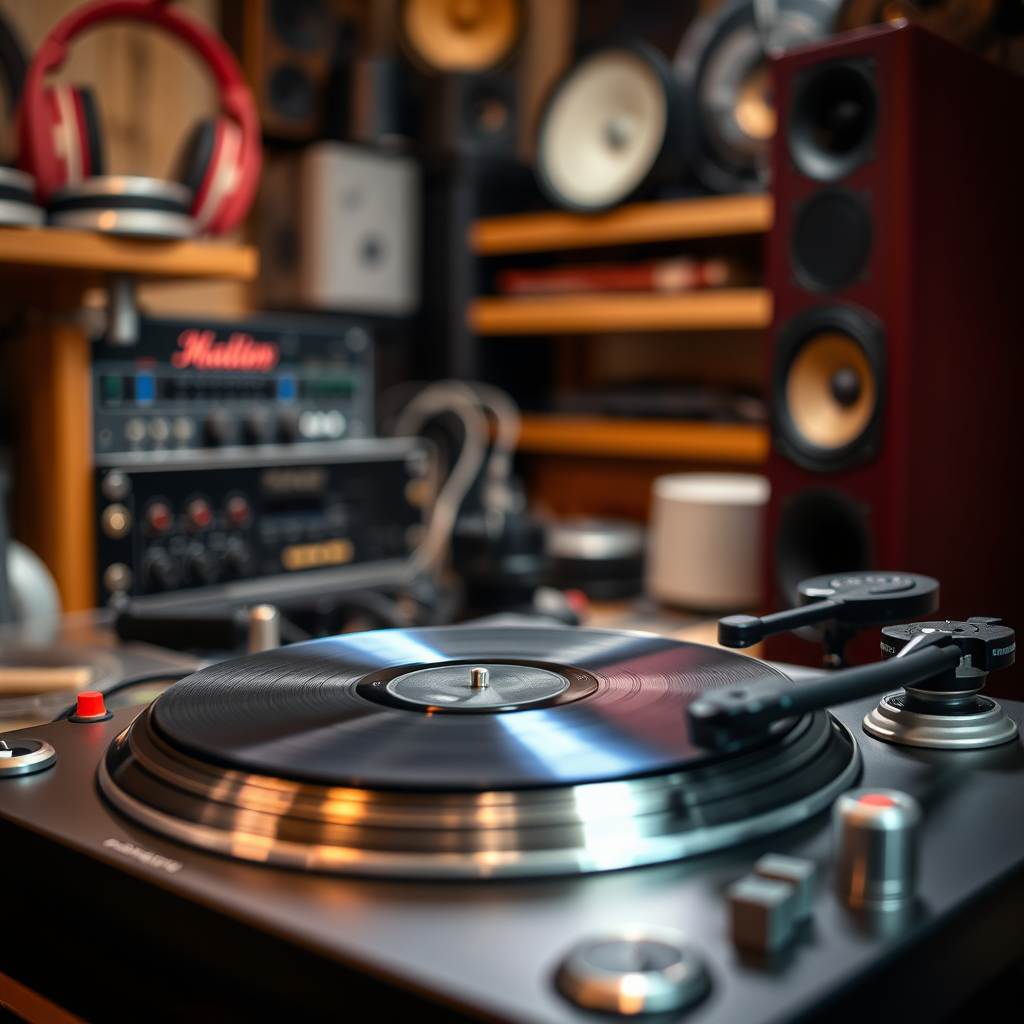
To effectively connect a turntable to speakers, you must first understand the types of equipment involved. Turntables can generally be categorized into three main types: manual, automatic, and USB. Manual turntables require the user to lift the tonearm and place it on the record, while automatic models handle this process automatically. USB turntables are designed to connect directly to a computer, allowing for digital recording of vinyl.
Next, you must identify the type of speakers you have. Powered (or active) speakers come with built-in amplifiers and can be connected directly to the turntable. On the other hand, passive speakers require an external amplifier or receiver to drive the sound.
Required Cables and Adapters
To connect your turntable to speakers, you’ll need specific cables and possibly adapters. The essential cables include:
– RCA Cables: These are the most common cables for connecting turntables to powered speakers.
– Speaker Wires: Necessary for connecting passive speakers to an amplifier.
– 3.5mm AUX Cables: Used when connecting to systems with a 3.5mm input.
If you are using passive speakers, you will also need a phono preamp. This device boosts the weak signal from the turntable to a level that can be processed by the amplifier. Many modern turntables come with a built-in preamp, but if yours does not, an external preamp is essential.
Connecting a Turntable to Powered Speakers
Connecting a turntable to powered speakers is a straightforward process. Follow these steps:
1. Locate the RCA Output: On the back of your turntable, find the RCA output ports, typically marked with red (right) and white (left) colors.
2. Connect RCA Cables: Plug one end of the RCA cables into the turntable’s output and the other end into the corresponding inputs on the powered speakers.
3. Power Supply: Ensure your powered speakers are connected to a power source and turned on. Most powered speakers will have a power switch and a volume control, so set your initial volume to a moderate level to avoid sudden loud sounds.
By following these steps, you can enjoy your vinyl collection with enhanced sound quality through your powered speakers.
Connecting a Turntable to Passive Speakers
Connecting a turntable to passive speakers requires a bit more setup, as you will need an amplifier or receiver. Here’s how to do it:
1. Connect the Turntable to a Phono Preamp: If your turntable does not have a built-in preamp, connect it to an external phono preamp using RCA cables.
2. Amplifier Connection: Use another set of RCA cables to connect the output of the phono preamp to the input on your amplifier.
3. Speaker Wire Connection: Connect the passive speakers to the amplifier using speaker wires. Make sure to match the positive (+) and negative (-) terminals correctly to ensure proper phase alignment.
4. Impedance Matching: Check the impedance ratings of your speakers and amplifier to ensure they are compatible. Most home audio speakers range from 4 to 8 ohms.
By following these steps, you’ll create a robust audio system that brings your music to life.
Top 7 Turntable Brands and Their Features (2024)
| # | Brand | Type | Built-in Preamp | Price Range |
|---|---|---|---|---|
| 1 | Audio-Technica | Manual | Yes | $150 – $450 |
| 2 | Pro-Ject | Manual | Yes | $199 – $499 |
| 3 | Rega | Manual | No | $299 – $700 |
| 4 | Denon | Automatic | Yes | $299 – $599 |
| 5 | Sony | Automatic | Yes | $199 – $349 |
| 6 | Fluance | Manual | Yes | $249 – $499 |
| 7 | LP&NO.1 | USB | Yes | $119 – $249 |
Troubleshooting Common Issues
Even with the best setup, you may encounter some common issues when connecting your turntable to speakers. Here are a few problems you might face and their solutions:
– Humming or Buzzing Sound: This can often be traced back to grounding issues. Ensure that the turntable is properly grounded to the amplifier, especially if you notice a hum when playing records. Check if the ground wire is securely connected to the ground terminal on the amplifier.
– Distortion or Poor Sound Quality: This could be due to several reasons, including a damaged stylus or incorrect tracking weight. Make sure your stylus is clean and in good condition. Additionally, check the tracking force settings according to the manufacturer’s recommendations.
– No Sound: If you hear no sound at all, first check all cable connections. Ensure that power is supplied to your speakers and that the correct input is selected on your amplifier or speakers.
Enhancing Your Setup
To further improve your listening experience, consider the following upgrades:
– Upgrade Your Phono Preamp: A high-quality phono preamp can significantly enhance sound reproduction by providing better signal processing and noise reduction.
– Speaker Isolation Pads: These pads can help reduce vibrations and improve sound clarity by decoupling the speakers from the surface they rest on.
– High-Quality Cables: Investing in premium RCA and speaker cables can provide better conductivity and reduce signal loss, enhancing overall sound performance.
Maintenance Tips for Your Turntable and Speakers
Maintaining your turntable and speakers is crucial to ensure optimal performance and longevity. Here are some maintenance tips:
– Cleaning the Stylus: Use a stylus brush or a specialized cleaning solution to gently clean the stylus regularly. This will prevent dust buildup that can degrade sound quality.
– Cleaning Records: Use a microfiber cloth or a dedicated record cleaning solution to clean your vinyl records. This will help maintain sound quality and extend the life of your records.
– Speaker Placement: Regularly adjust the placement of your speakers to find the optimal position for sound quality. Experiment with different placements to see how it affects the audio experience.
Summarizing the steps to connect your turntable to speakers can streamline your listening experience and enhance your enjoyment of vinyl records. Whether you’re using powered or passive speakers, following the outlined steps will help you successfully set up your audio system. Don’t hesitate to explore further upgrades to improve your sound quality and keep your equipment well-maintained for the best performance.
Frequently Asked Questions
What equipment do I need to hook up a turntable to speakers?
To connect a turntable to speakers, you typically need a turntable, speakers, and either a receiver or an amplifier. If your turntable has a built-in preamp, you can connect it directly to powered speakers. Otherwise, you’ll need a separate phono preamp to boost the signal before it reaches your speakers.
How do I connect a turntable to passive speakers?
To connect a turntable to passive speakers, you will need a receiver or amplifier that has a phono input. First, connect your turntable to the phono input using RCA cables, then connect the speakers to the amplifier using speaker wire. Ensure the receiver is powered on, and adjust the volume to your preference for optimal sound quality.
Why is a phono preamp necessary for my turntable setup?
A phono preamp is necessary because it amplifies the low-level signal produced by the turntable’s cartridge to a standard line level. This process not only boosts the signal but also applies equalization to improve sound quality. Without it, the sound from your turntable will be weak and may not be compatible with most speakers or amplifiers.
What is the best way to connect a Bluetooth turntable to wireless speakers?
The best way to connect a Bluetooth turntable to wireless speakers is to enable Bluetooth pairing mode on both devices. Once they are discoverable, select your wireless speakers from the turntable’s Bluetooth settings. This allows you to stream music without the hassle of wires, creating a clean and modern audio setup.
Which RCA cables should I use for connecting my turntable to speakers?
For connecting a turntable to speakers, it is best to use high-quality, shielded RCA cables to minimize interference and ensure optimal audio quality. Look for cables that are specifically designed for audio applications, as they will typically offer better durability and sound performance, enhancing your overall listening experience.
References
- Phonograph
https://en.wikipedia.org/wiki/Turntable - Turntable | Vinyl Records, Record Players, Hi-Fi Audio | Britannica
https://www.britannica.com/technology/turntable - https://scholar.google.com/scholar?q=how+to+hook+up+a+turntable+to+speakers Google Scholar
https://scholar.google.com/scholar?q=how+to+hook+up+a+turntable+to+speakers - https://www.sciencedirect.com/topics/engineering/turntable
https://www.sciencedirect.com/topics/engineering/turntable - Google Scholar Google Scholar
https://scholar.google.com/scholar?q=turntable+connectivity - https://www.nytimes.com/2021/01/14/technology/turntables-vinyl.html
https://www.nytimes.com/2021/01/14/technology/turntables-vinyl.html - https://www.bbc.com/culture/article/20201215-how-vinyl-is-making-a-comeback
https://www.bbc.com/culture/article/20201215-how-vinyl-is-making-a-comeback - https://www.hifiengine.com/manual_library/turntable-connection.shtml
https://www.hifiengine.com/manual_library/turntable-connection.shtml - https://pubmed.ncbi.nlm.nih.gov/26921514/
https://pubmed.ncbi.nlm.nih.gov/26921514/ - how to hook up a turntable to speakers – Search results
https://en.wikipedia.org/wiki/Special:Search?search=how+to+hook+up+a+turntable+to+speakers
