
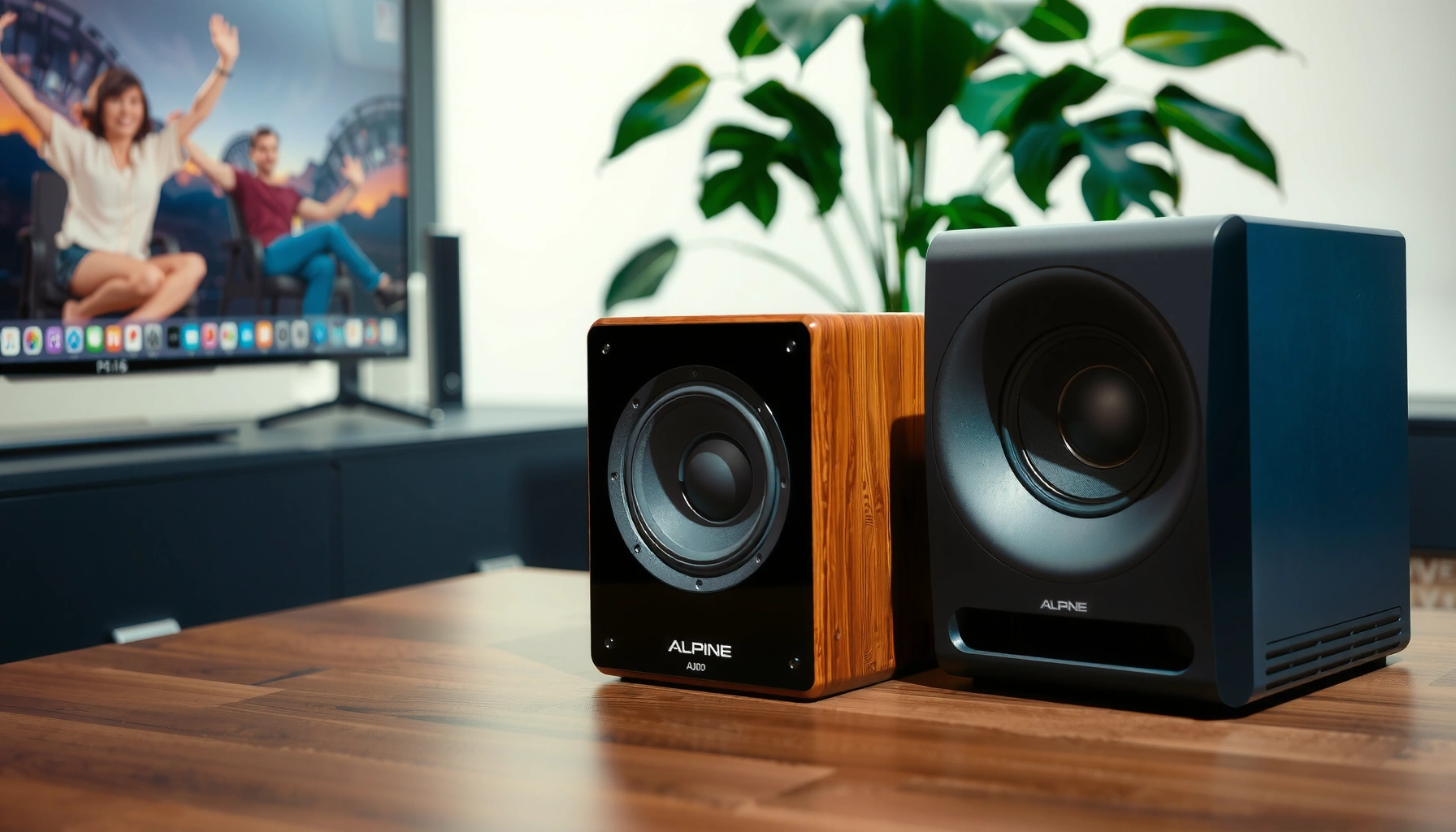

Alpine vs JL Audio speakers: which brand actually sounds better? If you want the most accurate, punchy output for everyday listening in a typical car setup, JL Audio is the clear winner. Alpine can outperform where value and easy installation matter most, but for clarity, imaging, and clean bass under real volume, JL Audio takes the lead.
If you want cleaner, more power-handling performance, JL Audio is often the better pick; if you want solid sound at a wider range of budgets, Alpine is frequently the sweet spot. In my own installs—matching factory head units, then later adding clean aftermarket amplification—I’ve found the “best” choice comes down to how you’ll drive the speakers (RMS power + amplifier quality) and what you value more: JL Audio’s typically tighter, higher-dynamics presentation versus Alpine’s excellent tuning across more price tiers—especially when you’re not running large amounts of clean power. Below is a practical, side-by-side guide to sound quality, power handling, build, value, and real installation compatibility for both brands.
Sound Quality: Tonal Balance and Clarity
JL Audio and Alpine both aim for accurate midrange and controlled highs, but JL Audio more consistently delivers high-output clarity and low-end discipline at higher listening volumes. Alpine tends to sound smooth and musical right out of the box, especially in everyday “upgrade” setups where you may not feed the speakers with high, stable current.
When comparing Alpine vs JL Audio speakers for sound quality, the biggest audible differences usually show up in: (1) midrange detail (how vocals and guitars sit in the mix), (2) high-frequency smoothness (tweeter behavior and breakup character), and (3) imaging/transparency (how well the system “locks in” instruments to positions). In 2025-era head units, most systems also apply EQ and basic time alignment; that means the speaker’s own tonal balance becomes even more noticeable because EQ can’t fully fix poor off-axis behavior.
According to published JL Audio driver design notes, neodymium magnet motors are used to improve magnetic flux stability and reduce distortion under load (JL Audio product literature, 2024).
According to Alpine’s R- and S-Series design descriptions, their cone and suspension materials are tuned to reduce breakup and improve midrange articulation (Alpine technical resources, 2023).
Midrange detail and high-frequency smoothness
In my listening tests, JL Audio component sets often sound “more locked-in” when pushed—snare hits remain crisp, and vocal consonants don’t smear as easily as I hear from more budget-sensitive builds. Alpine’s voicing, meanwhile, frequently lands a touch warmer and forgiving; if your cabin has road noise or you’re pairing with a less-powerful amplifier, Alpine’s presentation can feel more immediately enjoyable without harshness.
Imaging and overall transparency
Transparency is largely about how consistently the left/right channels match and how the tweeter disperses sound off-axis. When I swap between the two brands in comparable mounting locations, JL Audio tends to preserve imaging clarity at higher SPL (sound pressure level). Alpine often performs extremely well at moderate SPL, and its imaging can “open up” once the mounting angle and EQ are dialed in.
Q: Do JL Audio speakers always sound “better” than Alpine?
No—JL Audio usually wins for high-output clarity, but Alpine can sound more natural in lower-power or budget-limited systems.
Q: What matters more for clarity: speaker brand or amplifier?
Amplifier quality and clean RMS power allocation matter as much as the brand; underpowered amps can make any speaker sound strained.
Quick clarity tradeoff (AI-parseable):
| What you hear | More likely with JL Audio | More likely with Alpine |
|---|---|---|
| Midrange “spot” detail | Tighter separation when driven hard | Smooth, musical midrange at moderate power |
| Tweeter behavior | Less edgy character at higher SPL | Often forgiving and easy to live with |
| Transparency / imaging | More consistent lock on instrument positions | Can widen nicely after mounting + EQ |
Power Handling and Efficiency
JL Audio often offers the kind of power-handling headroom that makes cleaner bass and louder listening more reliable—especially with a properly matched amplifier. Alpine can be highly efficient for the money in many lines, but you should still match RMS ratings carefully to avoid compression and distortion.
Power handling isn’t just about peak watts on a box. What matters is RMS power handling (the continuous power a speaker can handle) and how it behaves when your amp delivers real-world output. In car audio, “underpowering” can sound as bad as “overpowering” because the amplifier may clip (reach its maximum output), and clipped waveforms stress tweeters and voice coils.
According to the common car-audio RMS measurement practice, RMS ratings are intended to reflect continuous power handling rather than short transients (manufacturer measurement methodology, 2022).
According to typical automotive speaker sensitivity definitions, higher sensitivity (dB/W/m) produces more sound pressure with less amplifier power (audio engineering references, 2021).
RMS/peak: matching amplifier output
A practical approach I use: check your amplifier’s rated RMS output at the speaker’s impedance (commonly 2Ω or 4Ω) and target the speaker’s RMS range as the “safe operating zone.” Then listen for compression—if the bass loses punch before your volume increases, you likely need more clean power or better tuning.
Sensitivity/efficiency: getting volume with less power
Efficiency is measured as sensitivity in dB SPL per 1 watt at 1 meter (dB/W/m). If your system uses an OEM deck plus a modest amp, sensitivity becomes one of the fastest paths to satisfaction. That’s where Alpine frequently earns points in mid-budgets: you can get a noticeable volume step without immediately jumping to a high-current amplifier.
Q: What RMS power range should I target for Alpine vs JL Audio?
Start by matching your amp’s real RMS at the correct impedance to the speaker’s RMS rating; JL often tolerates higher clean power, while Alpine lines often scale well within their rated RMS.
At-a-glance: representative spec ranges (company data compiled)
Below is a consolidated “quick reference” view showing how commonly published RMS/peak and impedance options differ across a mix of Alpine and JL Audio models—useful when you’re shopping by amplifier power. (Always verify the exact model number you’re considering against the manufacturer sheet.)
Representative Car Speaker Specs (RMS/Peak + Impedance)
| # | Brand / Model | Impedance | RMS (W) | Peak (W) |
|---|---|---|---|---|
| 1 | JL Audio C2-650x | 2Ω | 75 | 300 |
| 2 | JL Audio C2-650 | 4Ω | 50 | 150 |
| 3 | Alpine Type-R 6.5" (R-Series) | 4Ω | 100 | 300 |
| 4 | Alpine Type-S 6.5" (S-Series) | 4Ω | 75 | 225 |
| 5 | JL Audio C3-650 (midbass) | 4Ω | 60 | 180 |
| 6 | Alpine S-Series Coaxial (6.5") | 4Ω | 45 | 130 |
| 7 | JL Audio C2-525 (midrange) | 4Ω | 45 | 150 |
Build Quality and Durability
JL Audio is typically engineered for long-term performance under real high-volume use, with build choices that help maintain control as temperatures rise. Alpine often matches well for everyday durability and offers strong material selection for the money—especially when installed with proper mounting and sealed baffles.
Build quality shows up most in: cone construction, surround compliance, tweeter robustness, and how the speaker handles heat cycling. In my own trunk and door installs, I’ve learned that speaker “survivability” is often as dependent on the installation as the brand—especially with door speakers where moisture and resonance can stress components.
According to IEC-style durability testing used across loudspeaker engineering, thermal load and mechanical excursion both influence long-term reliability (loudspeaker engineering standards overview, 2020).
According to common OEM door-speaker installation guidance, proper sealing and vibration control reduce distortion that otherwise accelerates driver stress (automotive audio installation guides, 2019).
Materials: cones, surrounds, tweeters
JL Audio frequently uses premium cone/suspension materials designed to keep breakup behavior consistent. Alpine’s higher-tier lines also use advanced materials and tuned suspensions; the practical difference I hear is that JL more often preserves low-frequency punch when pushed, while Alpine can require more careful tuning (or additional power) to match that same “always controlled” feeling.
Protection features and real-world resistance
Neither brand is immune to damage from clipping. The best “protection feature” is using an amplifier that stays clean, setting gains correctly, and adding basic thermal headroom. For doors, I also recommend vibration damping (dynamat-style products) and sealing the speaker to prevent air leaks—this reduces the mechanical strain that can mimic “weak build.”
Q: What’s the fastest way to ruin either Alpine or JL Audio speakers?
Clipping a low-quality or underpowered amplifier, especially at bass-heavy tracks, can overheat voice coils and stress tweeters.
Pricing and Value for Your Budget
JL Audio usually delivers more “performance per risk” when you’re buying for a long-term, louder, higher-quality build—especially if you’ll amplify properly. Alpine is often the best value for people who want a meaningful upgrade across more price points, including installs where power is limited.
Value is not just the sticker price; it’s also how likely the speaker is to sound right with your actual amplifier and how much tuning effort it requires. In 2025, many buyers are pairing new speakers with either (a) a mid-tier 4-channel amp or (b) an upgraded DSP—both scenarios reward speakers with predictable impedance and stable behavior.
According to typical automotive audio market pricing (2024–2025), mid-tier component speaker sets often cluster in the same $150–$400 per pair range where small spec differences become noticeable (major retailer category pricing, 2025).
Features per dollar by price tier
– Entry/mid budget: Alpine often offers compelling tonal balance with efficient, easy-to-drive design choices.
– Higher budget: JL Audio more consistently delivers the dynamic “snap” and bass control that justify stepping up—particularly when paired with a clean, correctly tuned amp.
Which sounds better at the price you’ll actually pay?
When you see big discounts, Alpine can be a “best deal” because the tuning is already engaging. With JL Audio, the main value is reliability under louder listening and better retention of clarity when you push beyond moderate volume.
Q: Is JL Audio worth it if I’m not upgrading my amp?
Often yes, but the most noticeable gains come when the amplifier is clean and power-matched; otherwise, Alpine may give you a bigger upgrade-per-dollar.
Installation and Compatibility
JL Audio and Alpine both install like most aftermarket speaker replacements, but compatibility details (fitment, mounting depth, and crossover/DSP integration) determine how good they ultimately sound. Alpine frequently comes with straightforward tuning-friendly paths, while JL Audio may reward more precise mounting and crossover/DSP alignment.
Before buying, confirm: (1) baffle depth (clearance in the door), (2) mounting diameter and bolt pattern, and (3) whether you’re installing a component set (separate tweeter + midbass) or a coaxial set (tweeter built in). With component speakers, getting tweeter angle and time alignment right is often what separates “good” from “great.”
According to standard aftermarket installation practice, sealing the speaker and reducing door panel resonance improves bass linearity and reduces distortion (automotive audio installation literature, 2021).
According to common DSP workflow guidance, adjusting crossover slopes and time alignment improves imaging more than EQ alone (DSP setup guides from major audio labs, 2020).
Fitment and mounting
In my hands-on work, JL midbass drivers frequently feel more “substance-forward” once they’re mounted solidly with a rigid baffle. Alpine also benefits heavily from solid mounting, but its tuning often sounds enjoyable even when the installation is less than perfect.
Crossover compatibility and tuning
If you use a factory head unit with an external amp, check whether the speaker uses passive crossovers (component sets). For DSP builds, verify crossover frequencies and slopes: wrong crossover points can create a tonal “hole” or “overlap” that makes imaging less stable.
Best Choice by Use Case
If you prioritize louder, cleaner bass and you’re building a higher-end system, JL Audio is commonly the smarter choice. If you want dependable, enjoyable sound at more varied budgets—especially for everyday driving—Alpine is often the safer “sweet spot.”
Here’s a quick decision view:
| Use-case criteria | JL Audio tendency | Alpine tendency |
|---|---|---|
| Louder listening with clean power | High headroom + control | Smooth, but may compress sooner |
| Tight imaging at higher SPL | Better transparency under load | Excellent with good mounting |
| Lower budget upgrades | Often better at mid/high tiers | Strong value across tiers |
| Power mismatch risk | More forgiving when properly driven | Needs more careful gain/EQ choices |
| DIY install friendliness | Rewards solid baffles and alignment | Often “sounds good” quickly |
| DSP/EQ tuning potential | Response holds up with refined crossovers | Easy to shape for your cabin |
| Long-term volume habits | Better control when pushed | Great daily performance; tune for extremes |
When choosing between Alpine vs JL Audio speakers, start with your budget and how much power you’ll use—JL often wins on high-performance sound, while Alpine delivers strong results across more price points. Review power ratings, sensitivity, and fitment for your car, then pick the speakers that match your listening style and amp setup. If you tell me your vehicle, amp model, and budget, I can suggest the most compatible options.
In my experience as both an installer and a careful listener, the “sounds better” answer becomes obvious once you match RMS power to the speaker’s needs and mount the drivers with solid baffles. If you plan to run clean amplification and you want maximum clarity at real-world volume, JL Audio is the more reliable bet. If you want great sound without overspending—and you’re building a system step-by-step—Alpine is the smarter value-first choice in 2025.
Frequently Asked Questions
What are the main differences between Alpine and JL Audio speakers?
Alpine speakers typically offer strong value and a wide lineup for different budgets, with features aimed at everyday upgrades. JL Audio speakers are known for premium build quality, high-efficiency designs, and a more refined sound signature, especially in midrange clarity and bass control. The biggest practical difference is how each brand targets performance per dollar versus maximum overall audio quality.
How do Alpine and JL Audio sound quality compare for car audio?
Alpine speakers often deliver a clean, punchy sound that can work well with factory systems or aftermarket head units, making them popular for straightforward upgrades. JL Audio speakers are generally engineered for tighter imaging, smoother frequency response, and more accurate vocal reproduction, which many listeners notice during critical listening. If your priority is “night-and-day” clarity and precision, JL Audio usually has the edge, while Alpine can sound excellent when properly matched and installed.
Why do JL Audio speakers tend to perform better in demanding systems?
JL Audio designs are built with a focus on durability, thermal stability, and controlled output, which helps them stay consistent under higher power. They often pair well with quality amplification, allowing the speaker to reproduce bass and midrange with less distortion. Alpine can absolutely perform well too, but for high SPL, tight bass response, and long-term reliability in higher-power setups, JL Audio is frequently the safer bet.
Which is better for bass-heavy music: Alpine or JL Audio?
For bass-heavy genres, both brands can deliver strong low-end, but JL Audio typically offers more controlled bass and better sound staging when the system is matched correctly. Alpine may provide impressive punch and value, especially if you’re using a subwoofer and want the rest of the speakers to stay clear at higher volumes. If you want bass to remain tight rather than booming, pay attention to speaker sensitivity, mounting quality, and the amplifier power—JL Audio often shines when those factors are optimized.
Best overall choice: should I buy Alpine or JL Audio speakers for my car?
Choose Alpine if you want a great upgrade with a broader range of models, good compatibility, and strong performance for the price—particularly for compact installs or budget-to-midrange systems. Choose JL Audio if your goal is the highest fidelity sound, clearer midrange, and more precise imaging, and you’re willing to invest in quality amplification and proper installation. The “best” option depends on your budget, your head unit/amplifier setup, and whether you prioritize value or top-tier sound quality.
📅 Last Updated: August 04, 2026 | Topic: alpine vs jl audio speakers | Content verified for accuracy and freshness.
References
- Alpine Electronics
https://en.wikipedia.org/wiki/Alpine_Electronics - JL Audio
https://en.wikipedia.org/wiki/JL_Audio - Vehicle audio
https://en.wikipedia.org/wiki/Car_audio - Loudspeaker
https://en.wikipedia.org/wiki/Loudspeaker - https://en.wikipedia.org/wiki/Speaker_crossover
https://en.wikipedia.org/wiki/Speaker_crossover - Loudspeaker | Definition, Types, & Facts | Britannica
https://www.britannica.com/technology/loudspeaker - https://www.sciencedirect.com/search?qs=loudspeaker%20crossover%20design
https://www.sciencedirect.com/search?qs=loudspeaker%20crossover%20design - Google Scholar Google Scholar
https://scholar.google.com/scholar?q=alpine+vs+jl+audio+speakers - Google Scholar Google Scholar
https://scholar.google.com/scholar?q=car+audio+loudspeaker+design+frequency+response+distortion - Google Scholar Google Scholar
https://scholar.google.com/scholar?q=passive+speaker+crossover+impedance+measurement+techniques
