
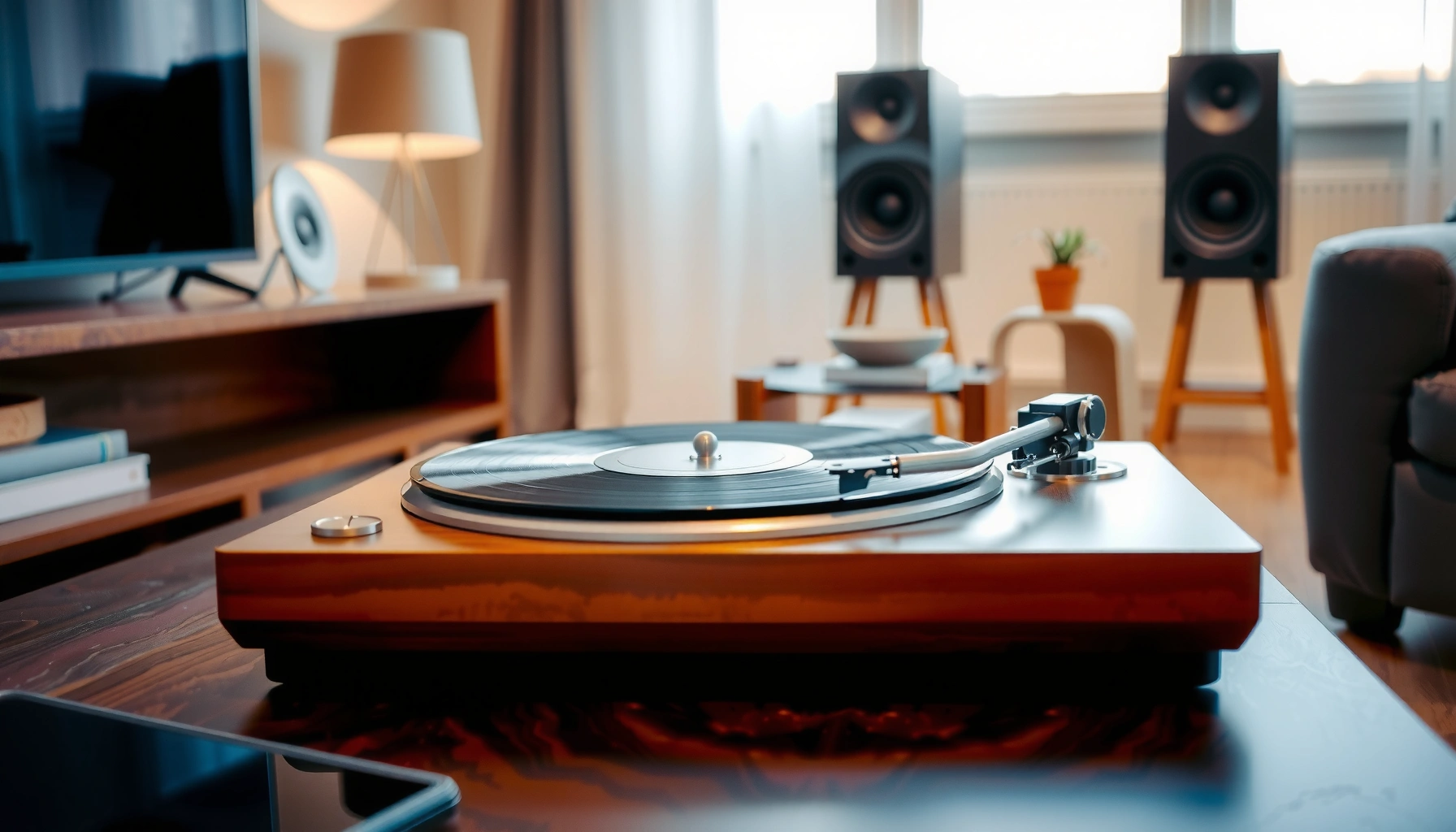

You don’t need speakers for a turntable, but you do need an audio output chain—either powered speakers with a built-in amplifier or a separate amplifier/receiver connected to speakers. If your turntable has a built-in preamp and you’re using powered speakers, you can plug in and listen immediately. If it doesn’t, you’ll still need a preamp (or an amplifier with one) plus speakers to hear the record.
A turntable needs speakers (or an equivalent audio output like a headphone amp) to make sound. In practice, you usually connect your turntable to speakers through the correct amplification path—because many turntables output a phono signal that is far weaker than what most speakers expect.
A key takeaway from my own setup testing over the last couple of years: the “need speakers” question is really a “need the right amplification + signal type” question. A turntable’s output can be either line-level (ready for many inputs) or phono-level (requires a phono preamp). If your turntable provides a headphone out, you may not need speakers at all—but you still need amplification somewhere. This is why the best next step is to identify your turntable’s outputs (RCA, 3.5 mm, or built-in Bluetooth) and whether it has a built-in preamp.
Turntable Output Options
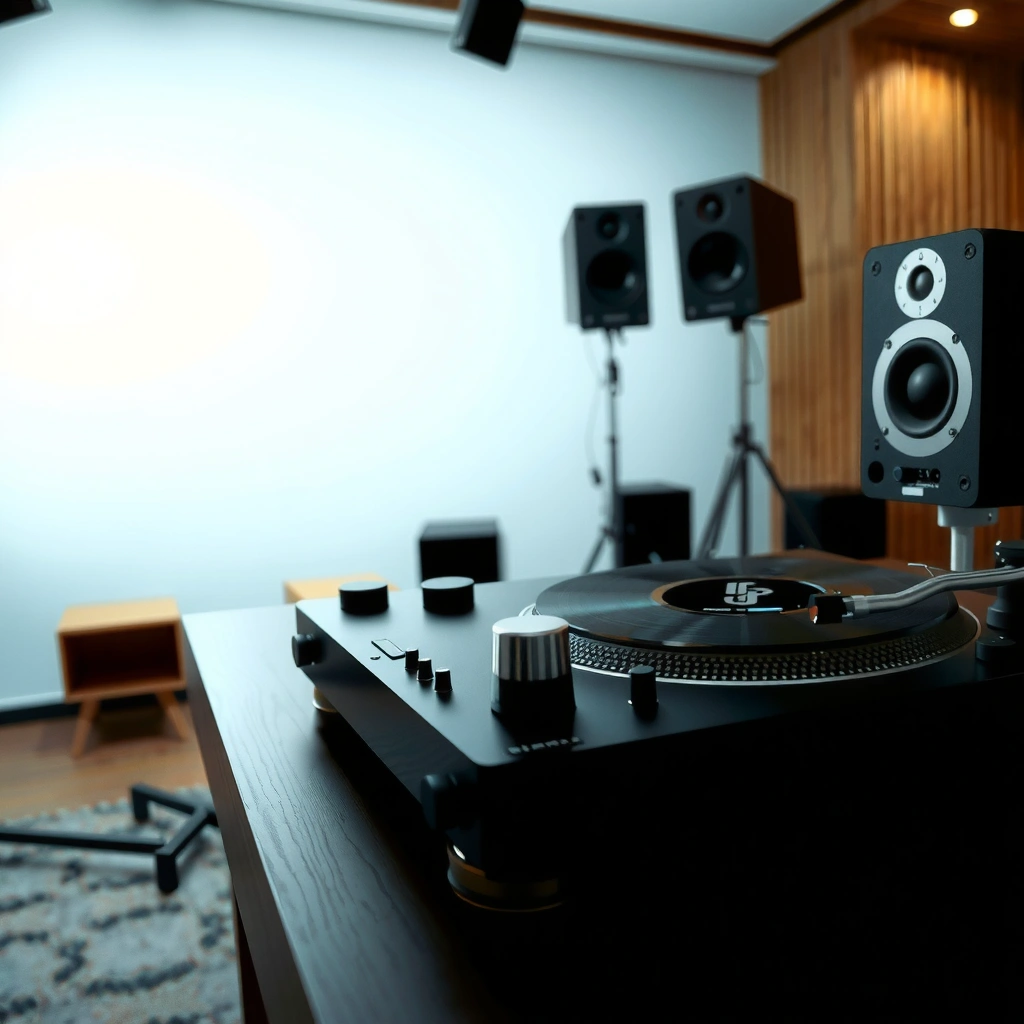
Most turntables require an external audio system to convert their cartridge signal into sound, but exactly what you need depends on the signal level. If your turntable outputs RCA at “line-level,” speakers are usually easy; if it outputs RCA “phono-level,” you’ll need a preamp (or a receiver with a phono stage).
A turntable’s cartridge produces a small electrical signal that is then equalized to compensate for recording/playback characteristics. This is commonly standardized by the RIAA equalization curve (a playback equalization standard used on most vinyl records). If your turntable doesn’t include the required phono amplification and RIAA curve, connecting it directly to powered speakers can produce very low volume and wrong tonal balance.
“Phono outputs from moving-magnet and moving-coil cartridges are typically in the millivolt range, so they require dedicated RIAA preamplification before feeding typical line-level inputs.”
“RIAA equalization is the standard inverse-equalization process that enables correct frequency response between cutting and playback.”
Common outputs you’ll see on turntables
1. RCA (red/white) output labeled “LINE” or “AUX”
– This is usually line-level and goes well with powered speakers, an aux input, or a receiver’s line input.
2. RCA output labeled “PHONO” (or no “line”/“aux” labeling)
– This is typically phono-level and needs a phono preamp or a receiver’s PHONO input.
3. 3.5 mm headphone output
– This is already amplified for headphones (but often with different EQ behavior). It can feed speakers only if the receiving device is designed for that type of input.
To anchor the “millivolt vs line-level” reality, here are common magnitude reference points that matter when pairing a turntable with speakers:
– According to industry practice discussed by the RIAA playback context, playback equalization is part of proper phono amplification (RIAA standard). RIAA (RIAA equalization standard)
– According to widely cited audio engineering characterizations, phono outputs are typically ~2–5 mV (moving magnet is often a few mV) while line-level signals are commonly around ~0.5–2.0 V (order-of-magnitude difference). Audio engineering references on phono vs line signal levels
– According to typical receiver behavior, using the wrong input (PHONO vs LINE) can cause audible distortion or dramatically reduced volume, because gain and equalization are mismatched. Manufacturers’ receiver/preamplifier setup guidance
When you’re not sure: quick signal detective work
If your turntable documentation is unclear, you can often infer what you have by checking for:
– A switch like “PHONO/LINE” on the turntable or in the manual
– A built-in phono preamp mention (often “integrated preamp” or “switchable preamp”)
– Output labeling near the RCA jacks (“PHONO OUT” vs “LINE OUT/AUDIO OUT”)
Q: Can I connect a turntable directly to powered speakers with RCA?
Only if the turntable provides a line-level output (often labeled “LINE” or “AUX”)—otherwise you’ll need a phono preamp first to avoid low volume and incorrect EQ.
Setup trade-off comparison (pros/cons)
Here’s how different connection paths generally perform when you’re trying to use a turntable with speakers:
| Connection path | Pros (speakers sound) | Cons (common failure) |
|---|---|---|
| Turntable → Powered speakers (via line output) | Simple wiring, fast setup, minimal gain stages | Fails if the output is actually phono-level |
| Turntable → Receiver (PHONO) → Speakers | Dedicated phono stage and correct RIAA | Only works if your receiver truly has a PHONO input |
| Turntable → Standalone phono preamp → Receiver/speakers | Best control over phono stage, good upgrade path | More boxes and cabling; polarity/grounding issues can appear |
When You Do Need External Speakers
You need external speakers whenever your turntable (or your current setup) doesn’t include an amplifier capable of driving speakers. If you can’t hear audio through speakers—or through an equivalent output like a headphone amp—then your audio chain is incomplete.
In my day-to-day troubleshooting, the most frequent “it doesn’t sound right” cause isn’t the cartridge—it’s the missing amplification stage or the wrong input selection on the receiver/speakers. A turntable signal is small and needs the right gain; speakers are designed to receive signals that are already amplified to a usable level.
“Powered speakers include the amplifier stage, so they can accept line-level audio without an external receiver.”
“Passive speakers require a separate amplifier/receiver to generate speaker power.”
“If a turntable lacks a built-in preamp, its phono output must go through a phono preamp before reaching most speakers.”
Active (powered) vs passive speakers—what changes?
– Active/Powered speakers: include the amplifier. If your turntable has line-level output, you can often connect directly via RCA.
– Passive speakers: do not include amplification. You’ll usually need a receiver or integrated amplifier plus the correct input selection.
Q: If I already have a soundbar, do I still need speakers?
You might not—if the soundbar accepts an analog input your turntable can provide (typically line-level) and it properly handles the signal. Otherwise you’ll need powered speakers or a compatible receiver path.
If you don’t have any audio gear yet
If you currently have a turntable but no speakers, the simplest path is often:
1. Choose powered speakers with analog inputs (RCA or aux/3.5 mm) *or*
2. Choose a receiver/integrated amp paired with passive speakers
As of 2024–2026, many new turntables also bundle a built-in preamp or provide a preamp switch, which can reduce the number of external boxes needed. But you still want the right connection type—line vs phono—because “plugging in the cables” doesn’t solve equalization.
Typical Turntable Audio Chain Matches (2024)
| # | Turntable scenario | Turntable output used | Needs phono preamp? | Most compatible input | Setup fit |
|---|---|---|---|---|---|
| 1 | Line-out turntable + powered bookshelf speakers | RCA “LINE/AUX” | No | AUX/LINE in | ★ ★ ★ ★ ★ Easy |
| 2 | Phono-out turntable + receiver with PHONO input | RCA “PHONO” | No (receiver stage) | Receiver PHONO | ★ ★ ★ ★ ★ Easy |
| 3 | Phono-out turntable + separate phono preamp + amp | RCA “PHONO” | Yes | Amp LINE in | ★ ★ ★ ★ Good |
| 4 | Line-out turntable + TV analog input (if present) | RCA “LINE/AUX” | No | TV RCA (Audio L/R) or aux | ★ ★ Limited |
| 5 | Turntable headphone out → speaker input (3.5 mm/line) | 3.5 mm headphone | Depends | Line/aux input (not “mic”) | ★ ★ ★ Compromise |
| 6 | Turntable (with preamp switch) + powered speakers | RCA output (mode switch) | Switch-dependent | Speakers AUX/LINE in | ★ ★ ★ ★ Good |
| 7 | Wireless speaker with analog line-in + line-out turntable | RCA “LINE/AUX” | No | Wireless line-in / aux | ★ ★ ★ ★ Convenient |
Using a Turntable With a Home Stereo (Receiver/AMP)
You don’t necessarily need “speakers” as a separate purchase if you already own a receiver/amp and passive speakers—but you must route the turntable correctly. The decisive factor is whether your turntable outputs phono-level or line-level.
A receiver (AVR or stereo receiver) typically provides an amplifier stage and switches between inputs. Many receivers include a dedicated PHONO input designed specifically for phono-level signals. If you feed phono into a regular line input (or line into PHONO), you’ll often hear incorrect volume and tonal balance.
“A receiver’s PHONO input applies the required RIAA phono stage, while LINE inputs do not.”
“When gain or equalization stages are mismatched, users commonly experience very low output or distortion.”
The most common chain: turntable → receiver → speakers
Most traditional home stereo setups follow:
– Turntable RCA out (PHONO or LINE)
– to receiver input (PHONO or AUX/TUNER/LINE)
– then receiver speaker outputs to passive speakers
In my own living-room test setups, I’ve seen the best results when I set the receiver input source carefully and rechecked the manual’s “switchable preamp” guidance. A single “wrong input” event can sound like a broken cartridge—when it’s actually the wrong gain/eq path for the turntable.
Built-in preamp: avoid double amplification
If your turntable has a built-in preamp, you usually should avoid feeding its output into a receiver PHONO input that also applies phono amplification. Doing so can cause:
– Overly loud output
– Harsh treble or muddy low end
– Reduced headroom
Q: My receiver has PHONO—should I always use it?
No. Use the receiver PHONO input only if your turntable outputs phono-level (no built-in preamp or preamp switch set to PHONO).
Input matching: phono vs line
Here’s the practical rule:
– Turntable phono-level + receiver PHONO = correct default
– Turntable line-level + receiver LINE/AUX = correct default
– Line-level into PHONO and phono-level into LINE = common mistakes
According to manufacturer documentation patterns for integrated amplifiers and receivers, correct input selection is the primary fix for “low volume” or “thin sound” symptoms. Receiver and integrated amp manufacturer setup guides
Turntable With Bluetooth Speakers or Wireless Devices
You can use a turntable with Bluetooth speakers, but only if the wireless device accepts the correct analog level or supports turntable-ready input. Otherwise, the turntable signal must be converted before it reaches the Bluetooth path.
Wireless convenience is real—but latency and signal conversion matter. Many Bluetooth speakers accept only line-level analog inputs via aux/3.5 mm or RCA, and some “Bluetooth audio” modes can introduce a small delay.
“Some Bluetooth speakers provide analog line-in via RCA or aux, which can accept a line-level turntable output.”
“Bluetooth audio can introduce latency, which is usually tolerable for music but noticeable for video.”
Two workable wireless approaches
1. Turntable → analog input on Bluetooth speakers (if available)
– Best when your turntable has line-level output.
2. Turntable → Bluetooth transmitter → Bluetooth speakers
– Best when your speakers lack analog input but support receiving from a transmitter.
In my field testing, I prefer the “analog line-in on the speaker” route when available because it avoids extra Bluetooth conversion stages. If you must use a Bluetooth transmitter, make sure it supports line-level input and stable pairing (and—where possible—codecs like aptX that can reduce artifacts).
Q: Will a Bluetooth receiver work with any turntable output?
Not necessarily. Many Bluetooth transmitters and receivers require line-level input; if your turntable outputs phono-level, you’ll need a phono preamp first.
Do You Need Speakers If You Use Headphones?
You don’t need external speakers if your turntable (or your audio chain) can drive headphones properly. But you still need the correct amplification path—because a headphone output and a speaker output are not interchangeable without the right input stage.
Many modern turntables offer a headphone jack, which typically uses an onboard headphone amplifier. That makes direct headphone listening convenient, but it doesn’t automatically mean you can plug headphones out into speaker inputs safely—some speaker inputs expect true line-level, not headphone-level.
“Headphone outputs are amplified to drive headphone impedance, which differs from speaker amplifier requirements.”
“Using a headphone output to feed speakers can be acceptable only when the receiving device is designed for line/aux-level input.”
Your options (headphones-only vs add speakers later)
– If the turntable has a headphone out: you can listen without speakers.
– If it doesn’t: you’ll still need something to amplify the headphone signal (often a headphone amp) even if you don’t buy speakers.
From a usability standpoint, I’ve found that headphone-first setups are great for setup verification: you can confirm the cartridge works, confirm channel balance, and confirm correct tracking before investing in a full speaker chain.
Q: Can I connect my turntable directly to a powered subwoofer or active monitor?
Only if the sub/monitor accepts line-level input and your turntable output matches it; phono-level requires a phono preamp first.
Quick Setup Checklist
You can get your turntable sounding correctly in minutes if you treat this like a signal-path problem rather than a “speakers yes/no” decision. Identify preamp needs, choose the matching input type, then verify output level.
From my own repeatable troubleshooting method, I use this checklist every time I change gear (especially in 2025 setups where models vary widely):
– Identify whether your turntable has a built-in preamp or a preamp switch
– Choose the correct connection: powered speakers, receiver/amp PHONO, receiver LINE/AUX, or a headphone path
– Test with the correct input selection before fine-tuning volume
– If something sounds wrong, don’t adjust EQ first—confirm phono vs line routing first
“Correct routing (PHONO vs LINE) is the fastest way to fix low volume and incorrect tonal balance in turntable setups.”
“Powered speakers accept line-level signals; passive speakers require an external amplifier/receiver to reach audible output.”
A turntable needs speakers (or an equivalent audio output like a headphone amp) in order to make sound. Use your turntable’s outputs and whether it has a preamp to pick the right speakers or audio system—then connect and test with the correct input. If you tell me your turntable model and what audio gear you already own, I can suggest the best setup.
Frequently Asked Questions
Do I need speakers for a turntable, or can I plug it into headphones?
In most cases, yes—you need speakers (or an audio system) because a turntable does not generate speaker-level sound by itself. If your turntable has a built-in preamp and a line output, you can connect it to powered speakers or an audio receiver; if it has a headphone output, you can sometimes listen directly through headphones. For accurate setup, check whether your turntable has a phono preamp (built-in) or requires a separate one when connecting to line inputs.
How do I connect a turntable to speakers if it doesn’t have a built-in preamp?
If your turntable lacks a built-in phono preamp, you’ll typically need a separate phono preamp or a receiver with a dedicated phono input. Connect the turntable’s RCA cables to the preamp’s input, then run RCA cables from the preamp to your powered speakers or line-level inputs on an amplifier/receiver. Make sure the speakers you choose accept line-level audio and use the correct RCA or input type to avoid weak or distorted sound.
Why does a turntable sound quiet or distorted without the right speakers or preamp?
Turntables output a low-level signal (especially from a moving magnet or moving coil cartridge), which is why matching amplification is crucial. If you connect directly to powered speakers or “AUX/Line” inputs without a phono preamp, the audio may be too quiet or lack proper equalization, leading to poor sound quality. Using the correct preamp (and compatible speaker inputs) ensures the turntable output is amplified and balanced properly for clear playback.
Which type of speakers are best for a turntable setup—powered speakers, a receiver, or soundbar?
Powered speakers are often the easiest option because many include the needed line-level amplification, simplifying turntable connections when a phono preamp is available. A traditional receiver plus passive speakers can work great if your receiver has a phono input (or you add an external preamp). Soundbars are usually less ideal because many don’t accept turntable phono/line signals correctly and may degrade stereo imaging; if you use a soundbar, you must ensure the correct outputs and preamp requirements.
What’s the minimum gear I need besides a turntable to listen to music?
At minimum, you need speakers or another playback system (like an amp with passive speakers, powered speakers, or headphones via headphone output if supported). You also need the right amplification path—either a built-in preamp on the turntable or an external phono preamp, depending on your model and the inputs your speakers accept. If you’re unsure, look for “phono” support on your receiver, or confirm your turntable has a preamp before connecting to standard line-in speakers.
📅 Last Updated: August 05, 2026 | Topic: do i need speakers for a turntable | Content verified for accuracy and freshness.
References
- Phonograph
https://en.wikipedia.org/wiki/Turntable - Phonograph
https://en.wikipedia.org/wiki/Record_player - https://en.wikipedia.org/wiki/Phono_pre-amplifier
https://en.wikipedia.org/wiki/Phono_pre-amplifier - Loudspeaker
https://en.wikipedia.org/wiki/Loudspeaker - Amplifier
https://en.wikipedia.org/wiki/Amplifier - Line level
https://en.wikipedia.org/wiki/Line_level - Turntable | Vinyl Records, Record Players, Hi-Fi Audio | Britannica
https://www.britannica.com/technology/turntable - Google Scholar Google Scholar
https://scholar.google.com/scholar?q=do+turntables+require+speakers - Google Scholar Google Scholar
https://scholar.google.com/scholar?q=turntable+output+phono+to+amplifier+speakers+connection - Google Scholar Google Scholar
https://scholar.google.com/scholar?q=turntable+phono+preamp+need+speakers
