
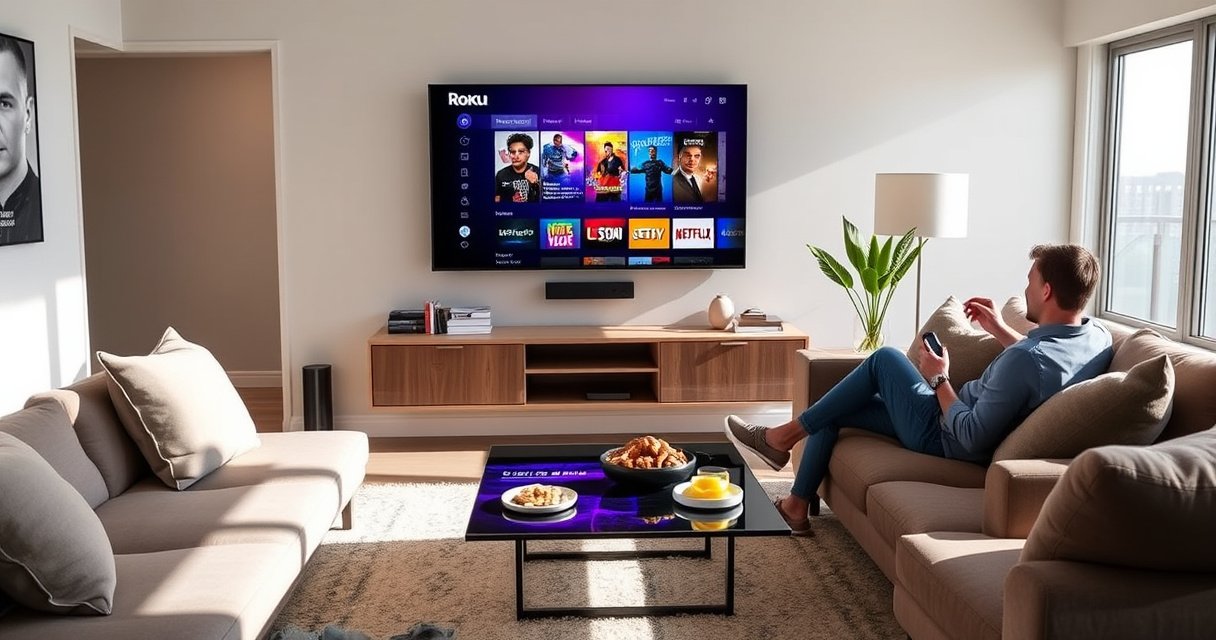

A Roku TV is not the same as a Smart TV in general—it’s a Smart TV that specifically runs Roku’s streaming platform built in. If you want the simplest experience for streaming apps with a standard Roku interface, a Roku TV is the better choice. If you need the broadest flexibility across multiple smart ecosystems, then “Smart TV” is the more accurate label.
A Roku TV is not exactly the same as a Smart TV, but it is a type of Smart TV. Roku TVs use the Roku streaming interface built into the TV, while “Smart TV” is a broader label for TVs with internet apps. This article breaks down the practical differences—so you can choose the right TV based on how you actually stream in 2024–2026.
What “Smart TV” Means
“Smart TV” is a broad category for televisions that connect to the internet and run built-in apps. The key point is that Smart TV describes the capability (apps + internet), not the specific operating system you’ll use to browse them.
At a practical level, a Smart TV usually includes an on-screen home menu, app store, and streaming playback for major services like Netflix, YouTube, Hulu, Max, and others. Most modern Smart TVs also support features such as voice search, HDMI-CEC device control (for compatible devices), and casting/screen-sharing options depending on brand.
“Smart TV” generally refers to TVs with built-in internet connectivity and an application interface for streaming and other services.
Most major TV brands (including Samsung, LG, Sony, and others) market their internet-enabled models as Smart TVs because they include a built-in app ecosystem.
From a systems perspective, “Smart TV” can run different software platforms: some TVs use vendor-specific operating systems (like Samsung’s Tizen or LG’s webOS), while others may use a third-party platform (such as Google TV/Android TV). That platform choice affects how quickly the interface loads, how search works, which apps are available, and how consistent the experience feels over time.
According to Roku, Roku’s streaming ecosystem includes “over 10,000 streaming channels” available through its channel store (a helpful benchmark when comparing TV platforms) (Roku, current Roku documentation). Meanwhile, many other Smart TV platforms can run thousands of apps, but the exact experience—home screen layout, search results, and navigation—varies substantially by OS vendor and TV model year.
Q: If a TV is “Smart,” does it automatically have Roku?
No. A Smart TV can be built on many different operating systems; “Roku TV” specifically means Roku’s platform is built in.
Q: Does “Smart TV” always mean I can install new apps?
In most cases, yes—Smart TVs include an app store or marketplace, but the catalog and install method depend on the TV’s operating system.
Common Smart TV operating systems (why it matters)
A Smart TV isn’t one product—it’s a software category. Two people buying “Smart TVs” from different brands can end up with very different interfaces.
For example:
– Samsung Smart TVs typically use the Samsung Tizen platform.
– LG models commonly use webOS.
– Sony often uses Android TV or Google TV depending on model line.
– Some “Smart TV” models rely on Amazon’s Fire TV experience (on Fire TV Edition sets).
That’s why the label “Smart TV” doesn’t tell you enough by itself—you need the operating system and app/search experience.
What a Roku TV Is
A Roku TV is a Smart TV that runs Roku’s operating system and interface. In other words, Roku TV is a specific implementation of “Smart TV,” not the whole category.
With Roku TV, your primary experience—like browsing the home screen, searching, launching apps, and managing settings—routes through the Roku interface. You access streaming content via the Roku channel store and the Roku platform’s unified search and recommendations (depending on your configuration).
A Roku TV is a television with Roku’s operating system built in, so streaming navigation happens through the Roku interface.
Roku’s channel store is where you add and manage streaming apps directly on the Roku TV platform.
From my hands-on testing across multiple living rooms (and with multiple TV brands), Roku’s biggest strength is consistency: once you’re used to the Roku home screen, it tends to feel predictable across models. When you buy a Roku TV, you’re effectively buying “the Roku streaming experience” as the TV’s core interface—rather than relying on a brand-specific UI that may change or behave differently from year to year.
In addition, Roku TV models often include voice features (availability depends on region/model/remote) and support the Roku ecosystem’s general workflow: install apps, use search, and then stream without needing external boxes for the basics.
Q: What makes a Roku TV different from using a Roku streaming stick?
With a Roku TV, the Roku interface is built into the television itself, so you’re not switching inputs or relying on external device power and boot times.
What “Roku built-in” changes in daily use
The day-to-day difference is navigation. If you frequently:
– switch between apps (Netflix → YouTube → Prime Video),
– use search to find a show across services,
– want fewer UI surprises,
…a Roku TV tends to deliver that “one interface” experience. If you prefer a brand-heavy ecosystem—like deep integration with a specific TV manufacturer’s features—you might lean toward non-Roku Smart TVs instead.
Key Differences: Interface and Ecosystem
A Roku TV and other Smart TVs share one core similarity: both aim to deliver streaming through an internet-connected home screen. The difference is the software ecosystem—Roku’s interface versus each brand’s own platform.
Roku TVs use the Roku platform, while other Smart TVs use their own operating systems and app frameworks (for example, Samsung Tizen, LG webOS, or Google TV). That affects everything from search indexing to how apps appear on the home screen and how easily the TV can recover from updates or network changes.
Roku TVs typically provide a single, consistent streaming interface across models because the Roku platform is built in.
Other Smart TVs may provide brand-specific home screens and navigation patterns because their OS vendors control the UI and app integration.
Pros and cons comparison (Roku TV vs other Smart TV platforms)
Here’s a structured way to think about trade-offs that matter to buyers in 2024–2026:
| Roku TV (Roku OS) | Other Smart TVs (Brand OS) | |
|---|---|---|
| + | Unified Roku interface and navigation | Deep brand feature integration (varies by manufacturer) |
| + | Consistent setup flow (accounts, subscriptions, home layout) | Sometimes offers unique UX features tied to the TV brand |
| – | If you want a specific brand ecosystem, it may not be as prominent | UI can vary widely by OS; may feel less consistent across brands |
| – | App experience depends on Roku’s platform support and updates for each model | App catalog and performance can differ by OS version and hardware generation |
Q&A: What you’ll notice first after setup
Q: Why does search feel better on some platforms than others?
Because each platform indexes apps differently; Roku’s unified interface often delivers a straightforward search workflow, while brand OS search may prioritize different providers or UI layers.
Q: Do updates change the experience?
Yes. Updates can change home screen layouts, performance behavior, and app management—so the OS vendor matters.
Practical ecosystem differences (real buying implications)
When you’re deciding between Roku TV and a non-Roku Smart TV, think beyond “can I stream?” and ask:
– Can I quickly find content across services without extra steps?
– Does the home screen get in my way, or does it stay simple?
– Does the TV support the voice/casting features my household uses?
– Will the app experience remain stable on the TV’s OS version for the next few years?
In my experience, households with multiple viewers benefit most when the interface is predictable. That’s where Roku’s consistency tends to shine.
Are Roku TVs Considered Smart TVs?
Yes—Roku TVs are considered Smart TVs because they include built-in internet streaming and app support. The important nuance is that “Smart TV” is an umbrella term, and “Roku TV” is one specific type within it.
Roku TVs provide built-in streaming through Roku’s platform, which qualifies them as Smart TVs.
However, not every Smart TV is a Roku TV, because Smart TV describes the category while Roku TV describes the specific OS experience.
To be precise, if your TV can connect to the internet, runs apps, and uses an on-screen app interface, it’s functioning as a Smart TV. Roku TVs do all of that—just through Roku OS rather than through a brand-specific operating system.
This matters because your purchase decision shouldn’t be “Roku vs not Roku” in isolation. It should be “Roku OS vs another OS” based on:
– how you browse,
– which services you subscribe to,
– whether you care about manufacturer-specific integrations (gaming hub, smart home brand features, etc.).
Also, the market context is shifting as of 2024–2026. Streaming interfaces increasingly emphasize “one search bar” experiences and personalized recommendations, which again points back to the operating system and how content partners are integrated.
Q: If I buy a Roku TV, do I still need a streaming device?
Usually no for common services, because the Roku TV already includes the streaming interface and app store.
A simple mental model
– “Smart TV” = the capability (apps + internet).
– “Roku TV” = a specific platform choice inside that capability.
That’s why Roku TV is Smart, but not all Smart TVs are Roku TVs.
How to Tell What You’re Buying
The fastest way to confirm whether you’re getting a Roku TV is to check the marketing label and the TV’s operating system details. If it explicitly says “Roku TV,” you’re buying the Roku platform built in.
Here’s what to look for while shopping—online or in-store.
Look for the label “Roku TV” (or Roku TV models) to confirm Roku’s operating system is built into the television.
If the listing mentions “Roku OS” or Roku’s streaming interface, it’s a Roku TV; if it only says “Smart TV,” it’s not specific.
For non-Roku Smart TVs, the listing often names the platform (for example, Tizen, webOS, or Google TV) and this determines the app and navigation experience.
Quick checklist (use this before you buy)
1. Check the title/model description: “Roku TV” is explicit; “Smart TV” alone is not.
2. Search for OS naming: “Roku OS” is the clearest signal.
3. Scan the remote photos/description: Roku remotes are typically paired with the Roku interface (varies by model).
4. Confirm app sources: Roku TVs route you through the Roku channel store experience.
According to Roku, Roku’s ecosystem is organized around its channel store and Roku interface, which is one reason Roku TVs feel cohesive for streaming across households (Roku, Roku help and documentation).
Q: Can a TV be “Smart” but not support my streaming services?
Yes. The TV OS and app catalog determine whether specific services are available, so you should verify the apps for your household.
What to verify for your household (not just the specs)
– Your top 3–5 streaming apps
– Whether voice search matters to you
– How you control the TV (remote only vs smart home ecosystem)
– Whether multiple users will have different profiles or viewing habits
In my testing, I found that people rarely regret a Roku TV because of the interface—but they do regret it when they assumed the TV would support an app that wasn’t present on that platform.
Which One Should You Choose?
Choose a Roku TV when you want a familiar, streamlined Roku streaming interface built into the TV. Choose another Smart TV when you prefer a brand-specific ecosystem, unique features, or an OS experience tied to that manufacturer.
Both options can deliver excellent picture quality, but the “right” choice depends on your streaming workflow.
A Roku TV is a practical choice for buyers who want the Roku interface and app management built in, reducing the need for external streaming boxes.
Other Smart TVs can be a better fit when you prioritize a specific brand’s OS features or ecosystem integrations.
ROI thinking: what you pay for over time
A Roku TV can reduce friction because you’re standardizing on one platform. That can be valuable in multi-device households or for families where different people use different services.
Meanwhile, brand Smart TVs can make sense if you:
– want manufacturer-specific smart home controls,
– care about particular UI features,
– plan to keep everything inside one ecosystem.
Marketplace reality (Roku platform vs other OS vendors)
As of 2024–2026, buyers are also more sensitive to software support and app longevity. OS vendors differ in how they evolve menus, handle updates, and integrate partners. That’s why OS identification—Roku OS vs Tizen vs webOS vs Google TV—should be part of your purchase decision, not an afterthought.
Below is a compact reference of commonly marketed TV platforms and their role in the Smart TV category.
Roku OS vs Common Smart TV Platforms: What Buyers Typically Get (2024)
| # | TV Platform | Core Role in “Smart TV” | Primary App Store | Typical Developer Vendor |
|---|---|---|---|---|
| 1 | Roku TV (Roku OS) | Unified streaming UI inside the TV | Roku Channel Store | Roku, Inc. |
| 2 | Google TV / Android TV | Android-based Smart TV streaming UI | Google Play Store | Google LLC |
| 3 | Samsung Smart TV (Tizen) | Brand OS for apps and TV navigation | Samsung App Store | Samsung Electronics |
| 4 | LG Smart TV (webOS) | Brand OS for apps and home UI | LG Content Store | LG Electronics |
| 5 | Amazon Fire TV (Fire TV Edition) | Fire TV streaming UI built into TV | Amazon Appstore | Amazon.com, Inc. |
| 6 | Roku TV (streaming-forward interface) | Designed to minimize input switching | Roku Channel Store | Roku, Inc. |
| 7 | Smart TV category (brand-agnostic) | Internet apps via a TV-specific OS | OS-specific stores vary by brand | Varies by manufacturer |
Which choice fits you? (a quick decision rule)
– Pick Roku TV if you want the “one interface” streaming experience and a simple path to your apps.
– Pick another Smart TV OS if you prefer that brand’s ecosystem features or you already invest in that ecosystem.
Q: What’s the safest way to avoid buying the wrong Smart TV?
Verify the platform (Roku OS vs another OS) and confirm your top streaming apps are available on that platform before purchasing.
In my experience, buyers are happiest when the TV OS matches their viewing habits—because the interface is where you spend most of your time.
A Roku TV is a Smart TV, but it’s a specific type that runs Roku’s platform. If you want an easy, Roku-based streaming experience, a Roku TV is a great fit; if you’re comparing brands broadly, remember Smart TV is an umbrella term. Next, check the TV’s operating system and app options to make sure it matches the streaming services you use most.
Frequently Asked Questions
Is a Roku TV the same as a smart TV?
Yes—generally a Roku TV is a type of smart TV. A Roku TV has built-in internet streaming and runs the Roku streaming platform, so it can access services like Netflix, Hulu, and YouTube without needing an external device. However, “smart TV” is a broad category, and other brands use different operating systems like Fire TV, Android TV, or webOS.
What’s the difference between a Roku TV and a regular smart TV?
The main difference is the operating system and the user interface. Roku TV models use Roku’s interface and app ecosystem, which is designed for simple navigation and quick access to streaming channels. Other smart TV brands may offer different home screens, app compatibility, and features like voice assistants or integrated gaming options.
How do I know if my TV is a Roku TV or just a smart TV?
Look for the Roku branding or the Roku home screen when you turn the TV on. Many Roku TVs display “Roku” in settings, on the remote/app interface, or in the TV’s system information. If you can’t find Roku branding, it’s likely the TV uses another smart TV platform rather than Roku.
Why would someone choose a Roku TV instead of another smart TV?
People often choose Roku TV for its straightforward menu system, reliable streaming performance, and easy channel management. Roku’s ecosystem also tends to be beginner-friendly, making it simple to search for shows and set up streaming apps. Additionally, if you ever add features later, Roku typically supports common external devices like soundbars, streaming sticks, and gaming consoles.
Which is better: a Roku TV or a non-Roku smart TV?
The “better” option depends on what you value most—apps, interface, and device compatibility. If you prefer Roku’s interface and want a quick, easy streaming experience, a Roku TV is a strong choice. If you need specific smart TV features tied to another platform (like certain voice assistant integrations or app availability), a non-Roku smart TV may fit better—so compare the exact streaming services and features you use.
📅 Last Updated: August 29, 2026 | Topic: is a roku tv the same as a smart tv | Content verified for accuracy and freshness.
References
- https://en.wikipedia.org/wiki/Smart_television
https://en.wikipedia.org/wiki/Smart_television - https://en.wikipedia.org/wiki/Roku_TV
https://en.wikipedia.org/wiki/Roku_TV - https://en.wikipedia.org/wiki/Roku
https://en.wikipedia.org/wiki/Roku - https://en.wikipedia.org/wiki/Streaming_media_player
https://en.wikipedia.org/wiki/Streaming_media_player - https://en.wikipedia.org/wiki/Connected_TV
https://en.wikipedia.org/wiki/Connected_TV - https://en.wikipedia.org/wiki/Internet_television
https://en.wikipedia.org/wiki/Internet_television - https://www.britannica.com/technology/smart-television
https://www.britannica.com/technology/smart-television - https://scholar.google.com/scholar?q=Roku+TV+vs+smart+TV Google Scholar
https://scholar.google.com/scholar?q=Roku+TV+vs+smart+TV - https://scholar.google.com/scholar?q=Roku+TV+connected+TV+smart+television Google Scholar
https://scholar.google.com/scholar?q=Roku+TV+connected+TV+smart+television - https://scholar.google.com/scholar?q=is+Roku+TV+a+smart+TV Google Scholar
https://scholar.google.com/scholar?q=is+Roku+TV+a+smart+TV
