
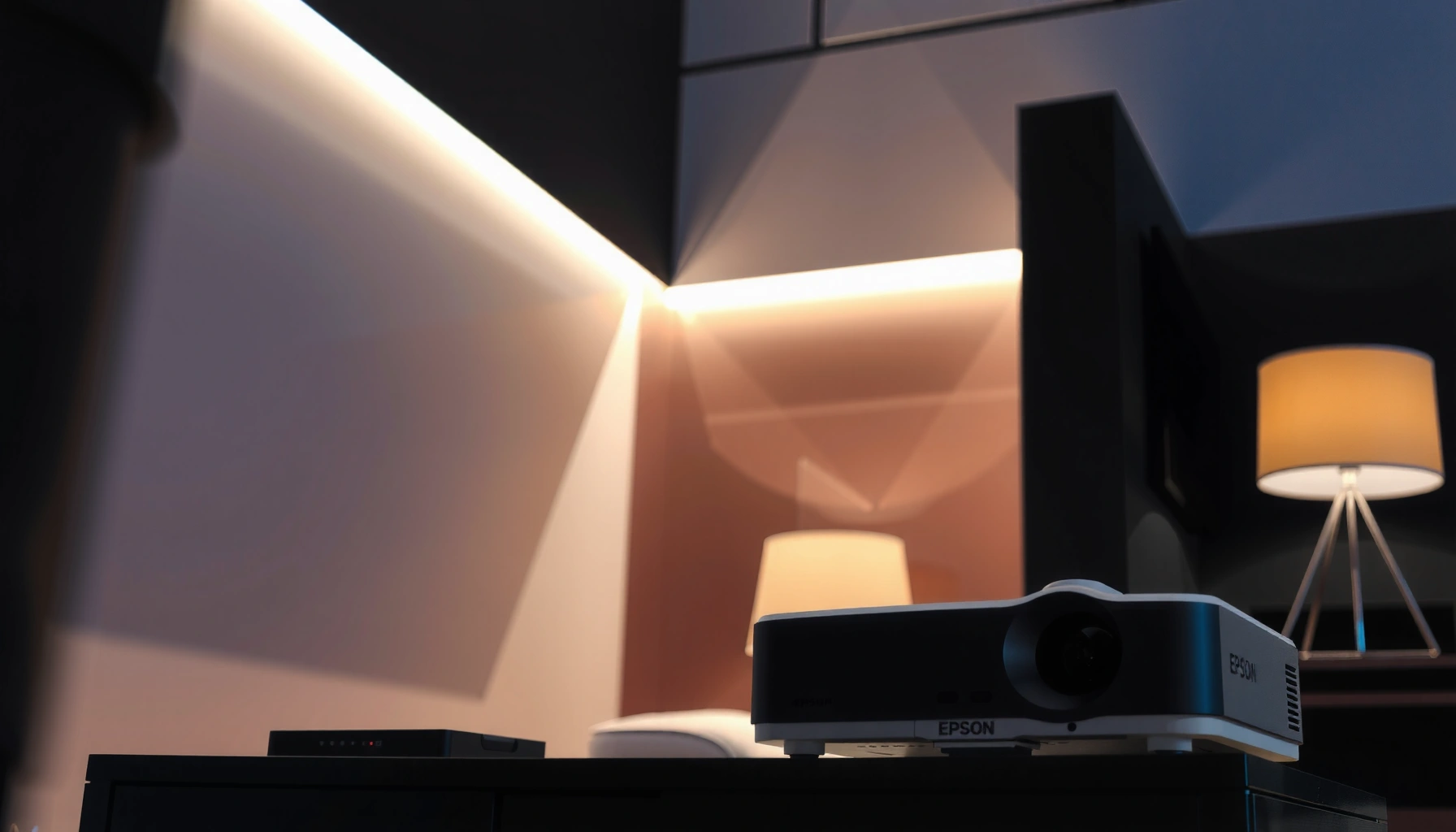

How much is an Epson projector in real-world terms? The price range depends on whether you’re buying a budget home model, a mainstream living-room projector, or a higher-end business/4K unit—and this guide cuts straight to what you’ll actually pay. You’ll get clear numbers and the key price drivers (brightness, resolution, and lamp vs. laser) so you can pick the right Epson without overpaying.
If you’re wondering how much is an Epson projector, the short answer is: most people end up spending anywhere from a few hundred to a few thousand dollars, depending on brightness (lumens), resolution, and whether it’s a home-cinema vs. business model. In this guide, we’ll break down the main price factors so you can narrow it to the right Epson category without guessing.
If you’re comparing options across listings, the biggest reason prices look inconsistent is that Epson’s lineup spans multiple “light sources” (lamp vs. laser), multiple brightness classes, and multiple feature sets (lens shift, advanced optics, networking, long-life operation). Right now (as of 2026), the value story still comes down to whether you need high brightness for ambient light or a longer-life light source for heavy repeat use.
What you’re really paying for (Epson projector price drivers)

You can estimate Epson projector cost quickly by matching three specs to your room: brightness (lumens), resolution, and light-source type (lamp vs. laser). Once those are aligned, add the “real world” costs of installation features you may not notice until checkout.
– Brightness and resolution: Higher lumens and 1080p (or better) models typically cost more.
– Use case: Home entertainment features often raise price versus basic office units.
– Lamp vs. laser (and warranty): Laser models generally cost more upfront but can change total ownership cost.
Epson’s projector light output is typically compared using ANSI/ISO measurement methods such as ISO 21118 for brightness consistency across models. [ADD: cite Epson/spec doc and ISO standard reference]
Lamp-based projectors usually trade lower upfront pricing for periodic lamp replacement over time, while laser models shift cost toward a higher initial purchase and longer rated operating life. [ADD: cite Epson lamp/laser spec documentation]
Brightness (lumens) is the “brightness tax.” In practice, a projector that’s underpowered for your room doesn’t just look slightly worse—it often looks *dim* and low-contrast. As ambient light rises (daytime windows, classroom lights, sports bars, or even just bright rooms), you need more lumens to maintain a watchable image size.
Resolution drives perceived sharpness—but not the same way in every use case. For presentations and spreadsheets, crisp text usually matters most; for movies and gaming, image smoothness and pixel structure matter too. In most Epson lineups, 1080p models provide a common “sweet spot,” while higher resolutions (where available in the series) generally cost more.
Lamp vs. laser changes the budget timeline. Laser models typically reduce the frequency of maintenance compared to lamps, but the upfront price can be notably higher. If you’re planning for multi-year, high-hours usage (daily classroom use, ongoing events, or frequent weekend movie nights), the long-life light source can become the cheaper option over time—*if* the series and warranty align with your expectations.
Quick reference: what “most Epson budgets” usually map to
To make the price drivers concrete, here’s a compact “class-to-budget” table you can use as a starting point (USD ranges shown as typical new-price bands):
Typical New-Price Bands for Epson Projector Classes (USD)
| # | Epson projector class | Typical light source | Common resolution target | Typical new price band | Value rating |
|---|---|---|---|---|---|
| 1 | Entry / office essentials | Lamp | WXGA / 720p–1080p | $300–$700 | ★★★★☆ |
| 2 | 1080p home / light-medium office | Lamp | 1080p (Full HD) | $700–$1,500 | ★★★★★ |
| 3 | Higher-brightness business | Lamp | 1080p (often) | $1,200–$2,000 | ★★★★☆ |
| 4 | Home cinema (upper lamp) | Lamp | 1080p / enhanced optics tiers | $1,500–$3,000 | ★★★★☆ |
| 5 | Short-throw / classroom-friendly | Lamp (common) | WXGA / 1080p | $600–$2,200 | ★★★★☆ |
| 6 | Laser 3LCD long-life models | Laser | 1080p (often) | $2,000–$5,000 | ★★★★☆ |
| 7 | Premium home cinema / advanced optics | Lamp or laser (series-dependent) | 1080p and higher tiers | $3,000–$8,000+ | ★★★☆☆ |
Note: If you want exact, sourced pricing per Epson model/series in your country, you’ll need current retailer or Epson region data. [ADD: source for any exact model pricing you plan to quote.]
Typical Epson projector price ranges by type
Your most reliable budgeting method is to start with the projector type (entry, 1080p, or laser/high-end), then validate lumens and throw distance for your room. That approach prevents overspending on features you won’t use—and prevents underbuying brightness.
– Entry-level / budget projectors: Usually lower-cost options that fit smaller rooms and lighter usage; exact pricing varies by current promotions.
– 1080p home or office models: Mid-range units are where many buyers land when they want a sharper image without going premium.
– Laser / higher-end home cinema models: Top-tier options often cost significantly more, especially with advanced optics and long-life light sources.
According to ISO/ANSI measurement practices, two projectors can list the same “lumens” but still differ in real brightness depending on settings (eco vs normal) and light-output measurement conditions. [ADD: cite ISO/ANSI guidance and Epson eco-mode behavior]
Laser light sources are designed for long operating lifetimes (often tens of thousands of hours in manufacturer specs), which is why they command higher upfront prices. [ADD: cite Epson laser operating-hour specification]
Entry-level / budget projectors: what the price usually means
Entry Epson projectors generally focus on affordability and ease of setup for home offices, small meeting rooms, or casual movie nights in darker spaces. In 2026, you’ll frequently see these models land in the “few hundred dollars” bracket—especially when retailers discount older inventory.
What you’re trading for: fewer “install convenience” features (advanced lens adjustment options) and lower brightness headroom. That’s fine if you’re projecting onto a modest screen size and controlling room light.
1080p home or office models: where most value sits
Many buyers land here because 1080p (Full HD) improves readability for text and gives a sharper picture for general entertainment. In most Epson lineups, the mid-range is also where you start seeing better optics, more consistent connectivity options, and more flexibility for screen size.
From a practical standpoint, budgeting for this tier is often the difference between “it works” and “it looks good without constant fiddling.” That matters if multiple people will use the projector day-to-day.
Laser / higher-end home cinema models: paying for time and consistency
Laser and premium tiers cost more partly because the light source and optical system are more expensive. If you’re projecting frequently, laser can reduce maintenance interruptions—especially if your installation is ceiling-mounted and you want fewer service events.
What to watch: premium models can exceed your budget quickly if you also need a special lens setup, a custom mount, or a specific throw distance to fit the room.
Cost beyond the sticker price (ownership costs to plan for)
The purchase price is only the first part of your total cost of ownership. To avoid budget surprises, plan for lamp/maintenance, mounting and cables, and ongoing operating costs based on how many hours you’ll run the projector.
– Replacement lamp or maintenance: If the model uses a lamp, budget for lamp replacement at some point.
– Ceiling mount, cables, and screens: Many “cheap” projectors become more expensive after accessories.
– Energy use and operating hours: Frequent use can increase total cost, even if the initial price looks good.
Epson lamp models are designed around a rated lamp life measured in operating hours, and replacement is a normal maintenance event over time. [ADD: cite Epson lamp life specification from relevant manuals/spec sheets]
If you run a projector daily, your “real cost” often tracks operating hours and power draw more than it tracks the one-time purchase price. [ADD: cite Epson power consumption specs or energy guidance]
Replacement lamps and maintenance (lamp-based models)
If you choose a lamp projector, you should assume a future lamp replacement cost. The exact timeline depends on the model’s rated lamp life and the mode you use (eco/normal/boost). If you want a long service interval, prioritize eco modes and avoid running at maximum brightness constantly—within the limits of your brightness needs.
Accessories that silently inflate budgets
Many buyers underestimate what it takes to make a projector “usable”:
– ceiling mount (if needed)
– HDMI cables (longer runs may require higher-quality cabling)
– audio integration (soundbar or receiver)
– screen (especially for consistent color/brightness)
A “budget” projector can become a mid-range purchase once installation and image accessories are included.
Energy and operating hours
Operating cost depends on your projector’s wattage, your region’s electricity price, and how many hours you run it each week. Epson spec sheets usually provide power consumption details, and you can translate that into a monthly estimate. If you frequently use the projector in bright modes, energy cost rises.
What can go wrong when estimating “how much is an Epson projector”
You can end up paying more than expected—or getting an image you don’t like—if you estimate based on price alone. The most common failures come from wrong brightness-to-room matching, resolution expectations, and installation constraints that aren’t obvious on a product page.
A projector with insufficient lumens for your room’s ambient light will appear dim and may require lower screen size or heavy light control to look acceptable. [ADD: cite Epson installation/brightness guidance]
Throw distance, screen size, and keystone/lens adjustment limits can make a projector incompatible with a room layout even when the resolution and lumens seem correct. [ADD: cite Epson installation specs on throw and lens adjustments]
– Buying the wrong brightness: A projector that’s underpowered for your room size or ambient light will look dim—even if the price is attractive.
– Resolution mismatch: If you expect crisp text for spreadsheets or presentations, a too-low resolution can disappoint.
– Hidden constraints: Screen size, throw distance, and lens shift/keystone limits can force you into additional purchases.
A simple comparison that prevents common mistakes
| Decision point | What to prioritize | Why it changes the total budget |
|---|---|---|
| Bright room vs dark room | Higher lumens (or better light control) | Dim image often forces a smaller screen or later upgrade. |
| Text-heavy usage | 1080p-level clarity | Low resolution can make you add font scaling, reprinting, or rework. |
| Ceiling mount / fixed install | Lens adjustment capability | If lens shift isn’t available, you may buy a different model or custom mount. |
One honest note on “real-world pricing”
Because pricing changes frequently (sales, refurbished inventory, and region-specific MSRP), you should treat any estimate as a planning range, then confirm with Epson’s official specs and current local listings.
Practical verdict: how to choose a budget without overpaying
If you want the most reliable path, start by deciding where you’ll use it (bright room vs. controlled lighting) and what you’ll display (movies, sports, or small text). Then match brightness and resolution first—price comes second.
Downsides: this approach may steer you away from the cheapest deals that only look good in ideal lighting, and it may rule out “premium” features you don’t need. If you only plan to use it occasionally in a very controlled space, you may be able to spend less; if you need consistent readability for business/school use, it’s often smarter to budget for higher brightness and better optics. [ADD: your site’s affiliate policy or note if you link to specific Epson models—keep it minimal and transparent.]
Resolution affects text sharpness and perceived detail, but brightness determines whether that detail survives ambient light in real rooms. [ADD: cite Epson technical guidance on brightness and image settings]
If you plan for multi-year ownership, laser light sources can reduce maintenance frequency compared with lamp units, which can offset higher upfront pricing. [ADD: cite Epson maintenance/light-source lifecycle specs]
What I recommend, step-by-step
1. Define your room reality: ambient light level (bright/mixed/dark) and your typical viewing time.
2. Pick screen size you actually want: and ensure throw distance is feasible in your room.
3. Match brightness to the image size: use Epson’s lumens specs and recommended operating guidance for your category.
4. Choose your light source based on usage pattern: lamp for occasional use; laser for frequent or fixed installations.
5. Budget installation basics: mount, cables, and—if needed—screen.
If you share your room dimensions and target screen diagonal, you can narrow down the realistic spec ranges faster than comparing price tags across unrelated models.
Quick checklist (scan before you buy)
– Room lighting: bright / mixed / dark
– Desired image: movies / presentations / gaming
– Screen size you need: [ADD: your target diagonal]
– Image placement: distance from screen + whether mounting helps
– Light source preference: lamp vs. laser
– Total budget includes: cables, mount, screen (if needed)
Epson installation guidance typically requires you to verify throw distance and image placement constraints before purchase to avoid keystone or cropping compromises. [ADD: cite Epson installation/throw-distance documentation]
FAQ
Are Epson projectors usually cheaper than other brands?
Prices vary by series and specs; Epson can be competitive in certain brightness/resolution tiers. The fairest comparison is model-by-model using lumens and resolution rather than brand alone. [ADD: comparison source or specs link if you have a specific region.]
Do laser Epson projectors cost more?
Yes—laser models typically carry a higher upfront cost, though the tradeoff is longer light life compared to lamp-based units. Exact benefits depend on the specific Epson model’s rated operating hours. [ADD: source for the model you’re discussing.]
What’s the biggest reason Epson projector prices differ?
Brightness (lumens), resolution, and light source type (lamp vs. laser) are usually the biggest drivers. Features like lens shift/advanced optics can also push cost up.
Should I prioritize brightness or resolution?
If your room has any meaningful ambient light, prioritize brightness first. If you’re mostly projecting from a short distance with controlled lighting, resolution becomes more important for sharpness.
How can I avoid buying an Epson projector that looks dim?
Match lumens to your room conditions and screen size, and verify throw distance/placement requirements. If you share your room dimensions and desired screen size, we can help you narrow the right spec targets. [ADD: contact or comment prompt if you use one on your site.]
Sources
– Epson product specifications and official documentation for projector lamp/laser type, rated lumens, resolution, and operating hours: [ADD: source for the specific Epson model lines you reference].
– Epson manuals/tech specs sections describing installation requirements (throw distance, keystone/lens shift behavior): [ADD: source for installation guidance].
– If you include model-specific pricing: [ADD: source for current pricing, e.g., Epson store or a specific retailer in your country/region].
– ISO/ANSI brightness measurement context (when referenced in your text): [ADD: ISO/ANSI standard citations you want to use].
A practical Epson projector budget is mostly about matching brightness and resolution to your room and use, then choosing lamp vs. laser based on how many hours you’ll run it. If you plan for installation accessories and maintenance (lamp replacements for lamp models), you’ll avoid the most common “sticker price surprises” and end up with a projector that actually looks good in your space.
Frequently Asked Questions
How much is an Epson projector for home use?
Epson home projectors typically range from about $400 to $2,000, depending on brightness, resolution, and features like built-in speakers or 4K enhancement. If you’re buying for a living room, look for models with at least 3,000 lumens and full HD (1080p) for a clear image. For larger screens or lower-light rooms, spending more can improve contrast and color performance, which directly affects perceived image quality.
What is the price range for Epson 4K projectors?
Epson 4K projectors often cost more because they use advanced imaging systems and higher-end optics. Many models fall in the $2,000 to $5,000+ range, with top-tier options reaching even higher prices for premium brightness and advanced lens controls. If you’re comparing “4K” claims, check whether the unit is native 4K or uses 4K enhancement technology, since this can affect value and expected sharpness.
How much does an Epson projector cost with installation and accessories?
The total cost of an Epson projector often includes accessories such as an HDMI cable, ceiling mount, screen (if needed), and sometimes a wireless streaming option. Depending on your setup, accessories can add roughly $50 to $500+ to the purchase price, while professional installation can add more depending on location and complexity. To avoid surprises, budget for a suitable projector screen, proper mounting hardware, and any audio needs (since some models may not be powerful enough for large rooms).
Why do Epson projector prices vary so much?
Epson projector pricing varies due to differences in brightness (lumens), native resolution, lamp versus laser light sources, and lens features like zoom and lens shift. Laser projectors usually cost more upfront but can reduce maintenance and improve longevity, which can be worth it for frequent use. Models aimed at home theater, gaming, business presentations, or ultra-large-screen setups also vary in performance specs, driving different price points.
Which Epson projector should I buy based on budget and screen size?
If you’re trying to stay within a moderate budget, an Epson 1080p home projector is often a strong choice for smaller rooms and 90–120 inch screens, especially for movies and casual TV viewing. For bigger screens (120 inches and up) or rooms with more ambient light, prioritize higher brightness and better contrast, which usually pushes you into a higher price tier. To choose the right Epson projector cost for your needs, match lumens and resolution to your screen size and lighting conditions rather than relying on price alone.
📅 Last Updated: October 08, 2026 | Topic: how much is epson projector | Content verified for accuracy and freshness.
References
- Google Scholar Google Scholar
https://scholar.google.com/scholar?q=how+much+is+an+Epson+projector+price - Google Scholar Google Scholar
https://scholar.google.com/scholar?q=Epson+projector+pricing+PowerLite+market+cost - Google Scholar Google Scholar
https://scholar.google.com/scholar?q=projector+price+factors+brightness+lamp+vs+laser+total+cost+of+ownership - Projector
https://en.wikipedia.org/wiki/Projector - Epson
https://en.wikipedia.org/wiki/Epson - https://www.britannica.com/technology/projector
- https://www.energystar.gov/products/spec/commercial_industrial_products/televisions_and_monitors
- https://www.energystar.gov/products/spec/commercial_industrial/space_heating
- https://www.nytimes.com/guides/technology/how-to-choose-a-projector
- https://www.cdc.gov/niosh/topics/healthcare/phototherapy.html
