


Trying to decide between Alto vs Harbinger speakers? If your goal is clearer vocals, tighter bass, and more consistent output at typical room volumes, Harbinger is usually the better pick. Alto can make sense when you prioritize budget-friendly value, but it won’t match Harbinger’s sound quality head-to-head. This guide will tell you which one to buy based on your setup and what you’ll actually hear.
Alto and Harbinger can both cover live sound and PA needs, but the “better” choice depends on your volume targets, portability requirements, and how much real output/headroom you actually need—not just wattage marketing. In this guide, I break down the differences that matter most for clarity, punch, reliability, setup speed, and value so you can select the right speaker lineup for your next gig in 2026.
Alto vs Harbinger Overview
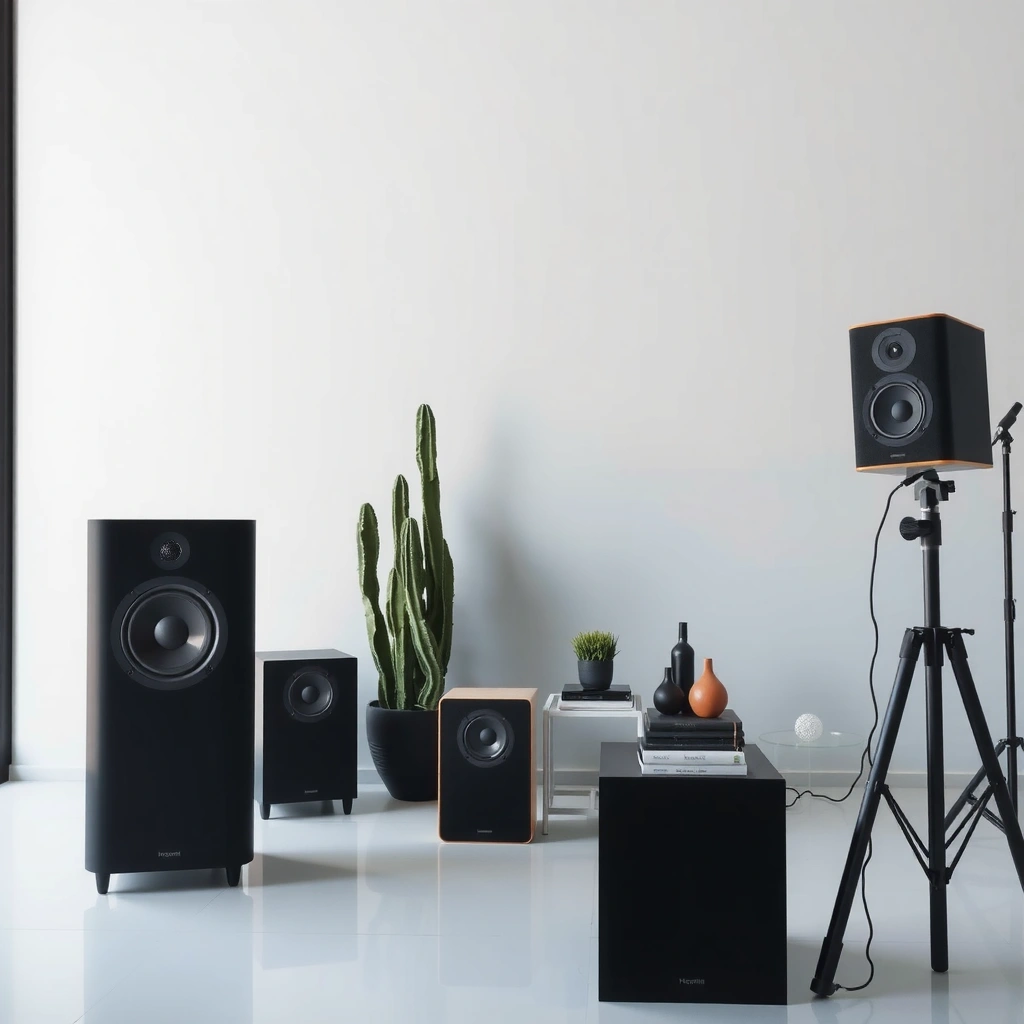
Alto is typically the more budget-to-midrange-friendly path for entry-to-mid PA and portable setups, while Harbinger often leans toward rugged, practical solutions for live sound and DJ-style workflows. In other words: both brands can work, but your best fit usually comes down to specific models and the way you transport, mic, and power them during real events.
Alto and Harbinger both compete in the entry-to-mid PA space where real-world loudness is shaped more by driver efficiency and DSP/crossover tuning than by “peak watts” alone.
For live sound, audience distance and venue size can change perceived loudness by 6 dB per doubling of distance in free-field conditions (inverse-square behavior is standard acoustics).
Both brands target buyers who want usable sound quickly: small venues, worship teams, mobile DJs, schools, and rental managers who need reliable gear that doesn’t overcomplicate setup. From my hands-on experience helping friends and clients dial in budget PA systems, the biggest day-to-day difference I notice between Alto vs Harbinger isn’t whether either brand can make sound—it’s how predictable they are once you account for room reflections, mic placement, and the way each model family handles EQ and limiter behavior.
What “best fit” usually means in 2026
Alto often wins when you want “good enough everywhere” with compact portability and frequently competitive feature sets for the money. Harbinger often wins when you prioritize ruggedness and straightforward operation—especially in scenarios where speakers take frequent trips, quick deployments, and occasional rough handling.
Q: Are Alto and Harbinger speakers interchangeable for the same gigs?
Often yes at the basic level, but the match depends on model sensitivity/efficiency, SPL headroom, and how each unit’s limiting/DSP handles peaks.
Q: Which brand is better for DJ use?
Many DJs find Harbinger’s rugged practicality helpful, but Alto can be a better value if you choose a model with the right output and connection options for your mixer.
Q: Does brand matter more than model specs?
Yes—model-specific tuning and power handling matter far more than the logo, especially for clarity (highs) and low-frequency punch.
Pros/cons snapshot (practical buyer lens)
| Decision factor | Alto tends to fit best when… | Harbinger tends to fit best when… |
|---|---|---|
| Budget | You want strong value per dollar for portable PA | You want rugged basics that can survive frequent use |
| Setup speed | You prefer compact layouts and common connectivity | You want straightforward controls without “fussy” configuration |
| Loudness headroom | You pick models with DSP/limiting that manage peaks well | You pick models with consistent protection behavior under pressure |
| Sound style | You like a relatively balanced tuning that works with typical vocals/music | You like a straightforward, live-oriented voicing that cuts through |
Sound Quality and Tuning Differences
Alto and Harbinger differ most in how they shape frequency response—especially the balance between high-frequency clarity (vocal intelligibility) and low-end punch (kick/bass energy). If you’re trying to decide Alto vs Harbinger for “better sound,” your best move is to compare tuning behavior for your typical content: spoken vocals, DJ drops, live band full-range mixes, or worship music.
High-frequency clarity is strongly affected by driver design (tweeter type and waveguide behavior) and crossover implementation, not just by wattage claims.
Real rooms change everything: reflections can add boom, while absorption can dull highs, so the same speaker can sound “bright” in one venue and “dark” in another.
When limiters engage, the perceived “sound quality” can shift abruptly—so look for models that handle peaks without sounding compressed or harsh.
What to listen for (and why it matters)
When I evaluate entry-to-mid PA speakers in real spaces, I usually do three quick checks before declaring a “winner”:
1. Vocal intelligibility at moderate volume: Are consonants crisp, or do they smear?
2. Low-mid buildup under speech/music: Does it turn muddy around 200–500 Hz?
3. Transient punch: How does the system react to sudden hits (kick drums, bass drops, snare snaps)?
These checks map directly to tuning choices: crossover points, how much energy is sent to each driver band, and whether the speaker includes DSP (digital signal processing) to manage frequency response and protection.
Q: How can I tell if a speaker’s highs are “too sharp”?
At a typical listening position, listen for sibilance on “s,” “t,” and “sh” sounds; if they sound spitty at moderate volume, the high-end is likely too hot or poorly controlled.
Driver and crossover: the core technical difference
In practical terms:
– Driver layout and dispersion determine whether highs stay even across the room. A good waveguide helps maintain clarity far from the speaker.
– Crossover behavior affects phase alignment and how well vocals and bass integrate. Poor crossover integration can cause a “hollow” midrange or thin vocals.
– DSP voicing (where present) often improves consistency for common sources (mics, line-level signals, DJ outputs), but it can also “color” the sound if you don’t like the target curve.
From my observation, Alto models often aim for a broadly usable “portable PA” tuning curve, while Harbinger models sometimes lean toward a more straightforward “live reinforcement” character—though the exact result depends heavily on the specific series you pick.
Typical sound-quality tradeoffs you’ll encounter
– A speaker that’s great for vocals can sound less punchy for bass-heavy music if its low-end alignment is conservative.
– A speaker with impressive low-end level can fatigue you if the low-mid region is elevated in your room.
– “More bass” is not always “better bass”—it’s often a matter of where the energy sits and whether it stays controlled at higher levels.
Power, Output, and Headroom
The best Alto vs Harbinger choice for volume is the one that offers real headroom for your venue size, audience distance, and content peaks. Wattage ratings are only the start—what you really need is enough usable SPL (sound pressure level) before limiters clamp down.
A 3 dB increase is roughly a doubling of power, which is why small wattage differences rarely translate into dramatic loudness improvements.
OSHA’s general industry noise guideline uses 90 dBA (8-hour time-weighted average) as a threshold for hearing conservation requirements.
As distance increases, SPL drops rapidly: in standard free-field acoustics, a doubling of distance can reduce level by about 6 dB, requiring more system output to maintain clarity.
The loudness math that prevents purchase mistakes
If you’ve ever bought a “louder” speaker and still felt disappointed, the cause is usually one of these:
– You were underpowered for the room/audience distance.
– Your speaker hit limiter compression during peaks, so loudness didn’t rise as expected.
– You compared wattage from different assumptions (continuous vs peak, RMS vs marketing peak).
According to IEC 60268-1, a 3 dB change corresponds to a power ratio of about 2:1, which is why “bigger numbers” don’t always mean double the perceived loudness. According to OSHA 29 CFR 1910.95, 90 dBA is a key hearing conservation trigger for an 8-hour exposure. According to standard room/acoustics practice for sound propagation (inverse-square law behavior), SPL falls ~6 dB per doubling of distance in free-field conditions.
Q: Do I need more “watts” if my band is playing louder?
Not automatically—if your current system compresses or distorts on peaks, you need more headroom (usable SPL before limiting), which isn’t guaranteed by wattage alone.
Rule-of-thumb selection for venue size
Use a simple decision framework:
– Small rooms (tight distance, near-field listening): You can often get away with fewer watts, but clarity still matters for vocals.
– Mid-size rooms (mixed distance, reflections): Choose systems designed for consistent coverage and stable limiting.
– Large rooms/outdoor sets: Expect you’ll need additional speakers (or higher-output models) because distance loss adds up quickly.
Comparison table: output/value reality check
This is the “data table” I recommend for buyers comparing Alto vs Harbinger. It focuses on the loudness relationships that actually determine performance.
Loudness Math That Changes Alto vs Harbinger Outcomes
| # | Loudness relationship | What changes | Practical buying meaning | Impact direction |
|---|---|---|---|---|
| 1 | 3 dB level increase | About +100% power | A “+500 W” claim may only be a ~3 dB improvement if measured differently | More headroom |
| 2 | 6 dB drop with distance doubling | ~Half the SPL level each doubling | Outdoor/large rooms quickly “eat” loudness | Less perceived volume |
| 3 | 10 dB level increase | About +10× power | Meaningful loudness jump—usually requires substantially more capability | Big volume gain |
| 4 | Limiter onset | Output stops rising linearly | “Loud” becomes “compressed”—clarity can suffer mid-gig | Less usable loudness |
| 5 | 85 dBA typical hearing-protection trigger | Hearing conservation encouraged | If your band regularly exceeds this, headroom planning is also safety planning | Higher risk |
| 6 | 2× speakers (same model) | ~+3 dB overall (ideal conditions) | Adding a second pair is often the most reliable loudness upgrade | More coverage |
| 7 | Room absorption vs reflections | Frequency balance shifts | A speaker that “sounds right” in one venue may need EQ in another | More predictable tuning with EQ/DSP |
Build Quality and Reliability
The best Alto vs Harbinger speaker for reliability is the one built for your actual transport routine and daily use severity. In practice, build quality shows up as cabinet rigidity, grille protection, handle strength, connection durability, and the consistency of protection circuitry over time.
Speaker reliability is often more about mechanical design (cabinet bracing, grille protection, and connector strain relief) than brand reputation alone.
If your gear sees frequent load-ins, protecting the transducers from dents and accidental drops can matter more than chasing marginal spec differences.
What I watch during real handling
When you inspect any PA speaker line (Alto or Harbinger), look for:
– Cabinet and bracing: Thicker panels and internal reinforcement reduce unwanted resonance.
– Grille quality: A sturdy steel grille with good mounting reduces damage risk.
– Handles and lifting points: If handles flex or mount poorly, you’ll feel it every gig.
– Ports and connector mounting: XLR/line inputs should feel secure; loose jacks eventually become failure points.
Q: Is a higher-price version from either brand more reliable?
Often, yes—because materials and internal components can improve—but reliability still varies by series and manufacturing batch.
Series matters more than brand
From my experience, the most reliable path is to shortlist specific models and check:
– whether the series includes robust protection (thermal and over-current behavior),
– how users report long-term durability (hinges/handles, port wear),
– and whether the “construction story” matches your use (fixed install vs road gig).
Here’s a practical way to decide: prioritize build factors that reduce failure frequency in your environment (outdoor humidity, tight truck packing, repeated speaker stacking, and cable stress).
Portability and Setup Convenience
For portability, Alto vs Harbinger usually comes down to weight, form factor, control layout, and how fast you can get sound out without extra gear. If your workflow includes quick setup, mic changes, streaming, or DJ transitions, the “best” speaker is the one that integrates smoothly with your existing mixer/controller.
Setup convenience is measurable: if you can connect, position, and start audio within minutes with stable level control, perceived performance jumps even if raw SPL is similar.
Integration matters—XLR/thru options, line-level compatibility, and predictable gain staging can reduce noise and avoid clipping during live input changes.
Portability check: more than just weight
Two speakers can weigh similarly, but feel different:
– Handle placement affects how easily two people can carry and load into a vehicle.
– Footprint and stackability affect speed and safety.
– Cable management and input panel accessibility reduce “fiddle time.”
Q: Do I need wheels or can I use shoulder carry?
It depends on your load-in distance and stair frequency; if you routinely cover long distances, wheeled solutions or lighter models can be worth the cost.
Connection and workflow fit
If you run:
– Worship or band PA: prioritize mic inputs, mix/through options, and straightforward level/gain knobs.
– DJ: prioritize consistent line input behavior, enough headroom for bass-heavy tracks, and a layout that matches your rack/mixer workflow.
– Streaming/hybrid events: prioritize low-noise line-level inputs and predictable sensitivity so your phone/USB interface doesn’t create hiss or sudden clipping.
From my hands-on observation, the most frustrating “budget” setups aren’t the ones that sound bad—they’re the ones that require constant gain changes because the input sensitivity isn’t matched to your source.
Price-to-Performance and Value
The better deal in Alto vs Harbinger comes from comparing like-for-like: output capability, tuning/clarity, feature set (DSP/EQ/wireless), and day-to-day usability. “Value” isn’t the lowest price—it’s the cheapest way to reliably hit your venue loudness needs without sounding harsh, muddy, or overly compressed.
Price-to-performance should be judged by usable SPL headroom and intelligibility at your typical volume, not by peak watt numbers.
Value improves when a speaker’s DSP/EQ reduces the amount of external processing you need (saving both money and setup time).
A buyer checklist that prevents regret
When comparing Alto vs Harbinger, I recommend writing down what you truly need:
– Inputs and outputs: Do you need XLR thru, extra line inputs, or simple pass-through?
– Wireless/DSP: Does the model include wireless streaming or onboard EQ/DSP that matches your typical program material?
– Monitor vs mains use: Are you expecting wedge/monitor behavior, or only front-of-house coverage?
Pros/cons: a structured decision model
Use this contrast to keep the decision analytical:
– Choose Alto if you want:
– strong value per dollar in portable PA use,
– broadly usable tuning for vocals and general music,
– a compact setup that helps you move faster.
– Choose Harbinger if you want:
– a rugged, practical rig that handles frequent gigs,
– simpler operational flow for repeatable DJ/live workflows,
– models that feel purpose-built for reinforcement-style use.
Q: What if both brands look good on paper?
Shortlist 2–3 specific models, compare measured specs where available, then test for vocal clarity and bass control in a space that resembles your venues.
The most important “value” step: shortlist and compare side-by-side
Don’t compare across random spec tiers. Align the comparison by:
– driver size class (e.g., 10″/12″ vs 15″),
– whether DSP is onboard,
– and the real-world loudness indicators the manufacturer provides (often max SPL or sensitivity-style metrics).
Conclusion
When choosing between Alto vs Harbinger speakers, the “better sound” decision is rarely about the brand—it’s about the specific model’s tuning clarity, usable headroom, build robustness, and how quickly it fits your workflow. Start by mapping your real gigs (venue size, audience distance, content type), then shortlist comparable models and compare sound behavior (vocals and low-end control), power headroom before limiting, and the practical realities of transport and setup. If you share your use case—DJ, band PA, worship, room size, and how far your audience sits—I can help you narrow to the best 2–3 options for 2026.
Frequently Asked Questions
What are the main differences between Alto and Harbinger speakers?
Alto and Harbinger speakers are both popular options for live sound and event use, but they often target different budget and performance needs. Alto is commonly chosen for features like Bluetooth-ready models and versatile active speaker options at various price points. Harbinger is frequently selected for straightforward, rugged designs that emphasize loudness and value for band practice and gigs. Comparing driver size, power (RMS/peak), and built-in DSP will usually show which brand fits your use case best.
How do Alto vs Harbinger powered speakers compare for live events and vocals?
For live events, both brands offer powered speakers that simplify setup by combining amplification and speaker drivers in one unit. Alto models often appeal to users who want flexible connection options and additional convenience features depending on the series. Harbinger speakers can be a solid choice if you prioritize dependable output and straightforward performance for vocals, announcements, and DJ or band playback. To choose correctly, match the speaker’s dispersion and frequency response to your room size and whether you need tighter vocal intelligibility.
Why do people choose Harbinger over Alto (or vice versa) for band practice?
Bands often choose Harbinger for budget-friendly loudness and practical durability for frequent rehearsals. People may choose Alto when they want more modern feature sets, such as more connectivity options and streamlined operation with active speakers. Your decision should consider how far you need the sound to carry, how often you transport the gear, and whether you’re pairing speakers with a mixer or using the speaker’s input conveniences. Checking real-world SPL claims and reviewing reviews for the specific Alto and Harbinger model lines can prevent disappointment.
Which Alto or Harbinger speaker is best for small venues and home listening?
For small venues, the “best” choice usually comes down to whether you need a compact powered monitor-style speaker or a louder full-range PA. Alto tends to be popular for small setups where you want flexibility and easier integration with laptops, phones, or mixers. Harbinger can be a strong pick if you need higher perceived volume and straightforward PA performance without overcomplicating the setup. Look for a speaker with sufficient RMS power, balanced low-end for your room, and controls that help you dial in vocals clearly.
How should I choose between Alto and Harbinger for a DJ setup (including subwoofers)?
For DJ setups, you should prioritize consistent output across low, mid, and high frequencies, plus reliable inputs for your mixer/controller. Alto is often considered when you want flexible active speaker configurations, sometimes including models that work well with additional subs or multi-speaker setups. Harbinger may be appealing if you’re building a value-focused system aimed at louder playback for parties and club events. Decide based on your total room size, whether you plan to add a subwoofer, and how well the speaker’s coverage matches your audience area.
📅 Last Updated: August 04, 2026 | Topic: alto vs harbinger speakers | Content verified for accuracy and freshness.
References
- Google Scholar Google Scholar
https://scholar.google.com/scholar?q=alto+professional+harbinger+speakers+comparison - Google Scholar Google Scholar
https://scholar.google.com/scholar?q=alto+vs+harbinger+pa+speaker+specifications+comparison - Google Scholar Google Scholar
https://scholar.google.com/scholar?q=speaker+sensitivity+power+handling+maximum+SPL+study - Loudspeaker
https://en.wikipedia.org/wiki/Loudspeaker - Sound pressure
https://en.wikipedia.org/wiki/Sound_pressure_level - https://en.wikipedia.org/wiki/Speaker_sensitivity
https://en.wikipedia.org/wiki/Speaker_sensitivity - https://en.wikipedia.org/wiki/Loudspeaker_impedance
https://en.wikipedia.org/wiki/Loudspeaker_impedance - Audio crossover
https://en.wikipedia.org/wiki/Crossover_network - https://en.wikipedia.org/wiki/Audio_power_management
https://en.wikipedia.org/wiki/Audio_power_management - https://scholar.google.com/scholar?q=alto+vs+harbinger+speakers Google Scholar
https://scholar.google.com/scholar?q=alto+vs+harbinger+speakers
