
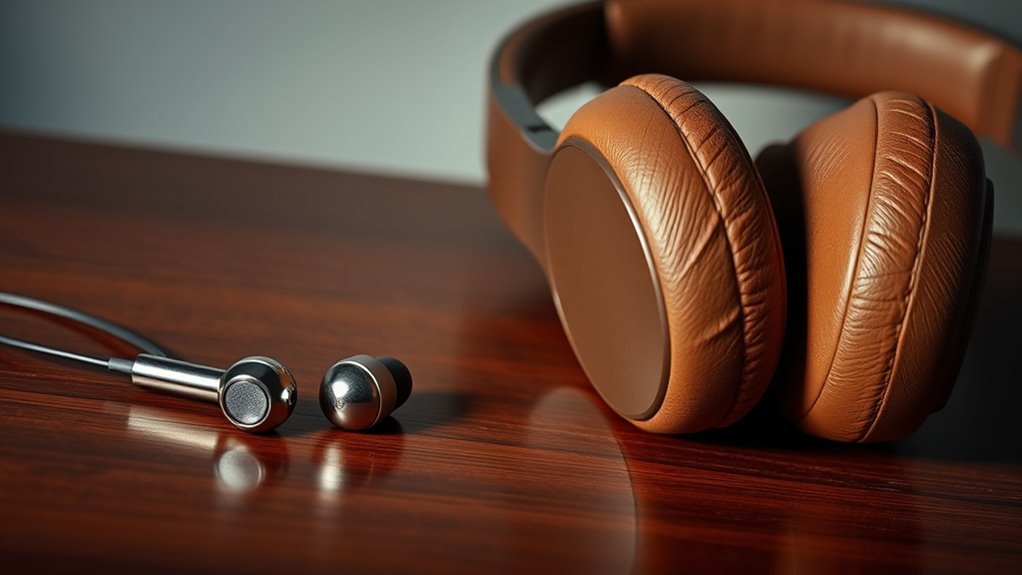

Headphones are generally better for your ears than earbuds. They provide superior sound quality and richer bass due to larger drivers. Comfort-wise, headphones often feature ergonomic designs, making them ideal for longer listening sessions. While both can pose hearing risks, earbuds sit closer to your eardrum, increasing the risk of noise-induced hearing loss. Understanding the nuances of comfort, sound quality, and risks can help you choose the right audio gear for your listening habits.
Sound Quality Comparison
When considering sound quality, it’s essential to recognize that headphones typically outperform earbuds in several key areas. Headphones often provide superior bass response, delivering deeper and more resonant low frequencies due to their larger drivers. This enhanced bass can considerably elevate your listening experience, especially in genres that thrive on low-end impact.
Moreover, headphones usually offer greater soundstage depth, allowing you to perceive music with better spatial separation. This means you can discern individual instruments and vocals more clearly, creating an immersive audio environment. In contrast, earbuds tend to compress sound, limiting their ability to reproduce these qualities effectively. If you prioritize high fidelity and a rich auditory experience, headphones are generally the better choice for achieving ideal sound quality.
Comfort and Fit
Although both earbuds and headphones serve the same fundamental purpose of delivering audio, their comfort and fit can vary greatly, impacting your overall listening experience. Earbuds are often lightweight and portable, but their fit can be less secure, leading to discomfort during extended use. Conversely, headphones usually feature an ergonomic design, providing better cushioning and support around your ears. This makes them ideal for long listening sessions. Additionally, many headphones come with adjustable sizing, ensuring a customized fit for different head shapes. Ultimately, your choice should depend on your personal comfort preferences and how frequently you plan to use them. Prioritizing a good fit will enhance your listening enjoyment and reduce the risk of discomfort.
Noise Isolation and Awareness
Noise isolation and awareness are critical factors to contemplate when choosing between earbuds and headphones, as they greatly influence the listening experience. Understanding how each option interacts with environmental sounds and employs noise cancellation technology can enhance your enjoyment and safety.
Noise isolation and awareness are essential considerations when selecting between earbuds and headphones, impacting both enjoyment and safety.
- Earbuds: Often provide passive noise isolation through a snug fit.
- Headphones: Typically offer better active noise cancellation for immersive sound.
- Awareness: Some headphones allow you to hear surroundings even while listening.
- Sound Quality: Headphones generally produce richer audio due to larger drivers.
- Versatility: Earbuds are more portable but may compromise on sound isolation.
Potential Hearing Risks
As you consider your choice between earbuds and headphones, it’s vital to be aware of potential hearing risks associated with their use. Both options can lead to hearing damage if you’re not mindful of volume levels. Earbuds, often positioned closer to the eardrum, can deliver sound at higher intensities, increasing the risk of noise-induced hearing loss. Headphones, while typically safer due to their larger drivers and better sound isolation, can still pose threats if you crank up the volume. It’s essential to keep your listening levels below 85 decibels and take regular breaks to protect your hearing health. By being conscious of these risks, you can enjoy your audio experience while safeguarding your ears for the future.
The Impact of Usage Duration
While you might enjoy long listening sessions with earbuds or headphones, the duration of use can considerably impact your auditory health. Your usage habits play an important role in determining potential risks. Here are some factors to take into account:
- Extended exposure increases the risk of hearing loss.
- Prolonged use at high volume levels can cause permanent damage.
- Short breaks can help mitigate strain on your ears.
- Sound isolation in headphones might lead to higher volume settings.
- Awareness of time spent listening can promote healthier habits.
Being mindful of how long you use these devices, along with the volume levels, is essential for preserving your hearing. Prioritize your auditory health by adopting responsible listening practices.
Frequently Asked Questions
Can I Use Earbuds or Headphones While Exercising?
You can definitely use earbuds or headphones while exercising, but your comfort level and sound quality matter. Choose options that fit securely, minimize external noise, and withstand sweat for an ideal workout experience.
Do Earbuds and Headphones Affect Earwax Buildup Differently?
Earbuds can increase earwax production due to their close fit, potentially trapping wax. Headphones, providing better sound isolation, generally allow for natural earwax movement, reducing buildup. Your choice may influence ear health and comfort during use.
Are Wireless Earbuds Safer Than Wired Headphones?
Yes, wireless earbuds can be safer than wired headphones. They eliminate the risk of tangled wires, enhancing freedom of movement. However, consider sound quality and battery life, as these factors vary among different models.
Can I Share Earbuds or Headphones With Someone Else?
You can share earbuds or headphones, but remember, “sharing is caring.” Prioritize earbud hygiene to prevent infections. Clean them before and after use, and be mindful that sharing may still pose hygiene risks.
How Do I Clean My Earbuds or Headphones Properly?
To clean your earbuds or headphones, use a soft, dry cloth for surfaces, and a slightly damp cloth for tougher grime. Regular earbud maintenance and proper headphone hygiene help guarantee peak performance and longevity.
