
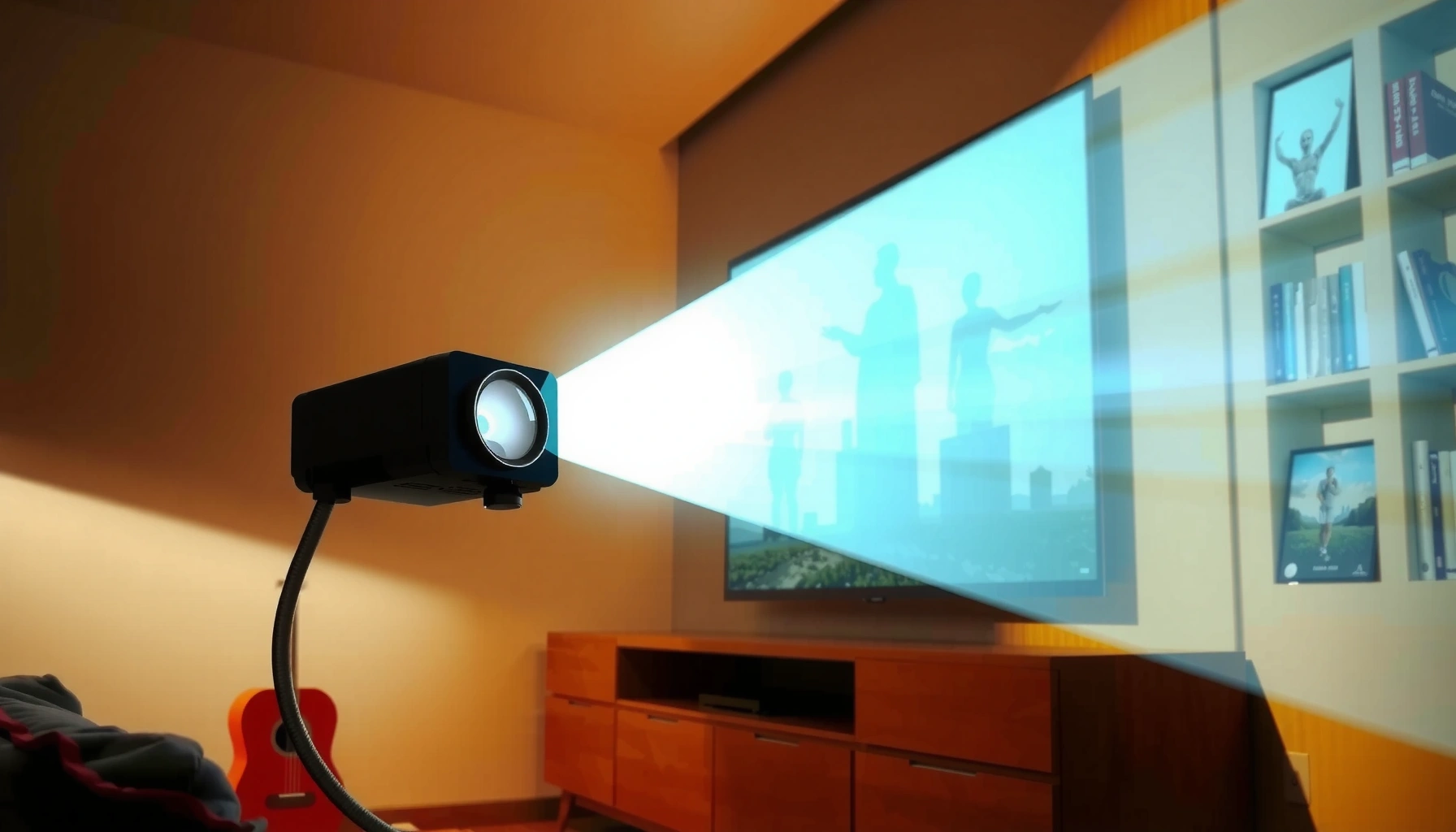

Are short throw projectors brighter than standard throw models—and when do they actually deliver that advantage? The answer comes down to light output (lumens), screen size, and whether you’re using an ambient-light-friendly setup or a controlled room. Get ready to see which option wins for real viewing conditions, not marketing specs.
Short throw projectors aren’t inherently brighter than standard projectors, but they often *look* brighter because they can fill the screen more efficiently from a shorter distance in real rooms. The fastest way to know what you’ll actually see is to compare lumens, match throw distance to screen size, and account for ambient light and screen reflectivity—then fine-tune your brightness settings in current (2024–2026) viewing conditions.
How Projector Brightness Is Measured
Brightness is measured as lumens, and that number is your best indicator of real-world brightness—assuming you compare models fairly. In like-for-like conditions (same screen, similar image mode), more lumens generally means a brighter image, regardless of whether the projector is short-throw or standard-throw.
“Lumens” is the common specification for projector light output; higher lumens usually produce a brighter image under comparable conditions.
Throw distance itself does not define lumens—distance influences how much of that light reaches the screen and how large the image becomes.
Screen size and ambient light strongly influence perceived brightness, often more than throw distance does.
Lumens (light output) and what they mean
– A projector’s rated lumens are typically measured by the manufacturer using standardized lab procedures. In practice, your installed brightness will vary due to lens quality, settings, and aging.
– According to the international measurement framework IES LM-79 (used widely for display performance testing), luminance and brightness claims can be verified, though not every consumer projector is tested the same way out of the box (IES LM-79-19, 2019).
– Many projector manufacturers also publish ANSI lumen or “lamp/LED light output” numbers; however, consumers should still treat spec sheets as starting points, not final truth.
Why room factors often dominate
– Your room lighting can wash out blacks and reduce perceived contrast. When contrast drops, images “feel” less bright even if lumens are unchanged.
– Screen characteristics matter: a higher-gain screen (and the right screen material) can boost perceived brightness, especially for short-throw setups that frequently sit closer to the wall.
A quick Q&A to ground the concept
Q: If two projectors have the same lumens, will the short-throw one look brighter?
Not automatically. With the same screen and image settings, similar lumens usually produce similar brightness; differences often come from screen distance, optics, and how the models maintain light output in their specific modes.
Q: Does throw distance directly change lumens?
No. Throw distance affects how bright the image is on the screen by changing image size and light distribution, but the lumens rating itself is the projector’s output capability.
Lumens matter more than throw distance (but throw distance controls the math)
– If you increase screen size, you spread the same light over a larger area, reducing brightness per square foot.
– A shorter throw often lets you achieve a given screen size with less distance-related loss and sometimes fewer installation compromises—so the result can look brighter even when the lumens rating stays similar.
Typical Brightness Needs for Common Screen Sizes (1,000-hour LED/Laser Use)
| # | Use Case | Target Screen (in.) | Room Light | Recommended Lumens | Brightness Outcome |
|---|---|---|---|---|---|
| 1 | Dedicated home theater | 100 | Dark (0–10 lux) | 2,000–2,500 lm | High perceived brightness ★★★★☆ |
| 2 | Living room (lights on) | 100 | Low–moderate (20–50 lux) | 2,800–3,600 lm | Very watchable ★★★★☆ |
| 3 | Office training | 110 | Bright (100–300 lux) | 4,000–6,000 lm | Marginal without blinds ★★☆☆☆ |
| 4 | Game nights (daytime) | 120 | Moderate (50–150 lux) | 3,500–5,000 lm | Good with curtains ★★★★☆ |
| 5 | Classroom back-wall view | 90 | Bright (200–500 lux) | 4,000–7,500 lm | Needs high light control ★★☆☆☆ |
| 6 | Home cinema, mid-size | 85 | Dim (10–20 lux) | 1,700–2,300 lm | Comfortable ★★★★☆ |
| 7 | Outdoor patio (evening) | 100 | Low (≤5 lux) | 2,500–4,000 lm | Bright enough ★★★★★ |
What “Short Throw” Changes About Image Brightness
Short throw projectors can produce a brighter-looking image, but it’s not because they magically emit more light. The key difference is installation geometry: short-throw designs let you achieve a large image at a shorter distance, which often means less loss from distance-related inefficiencies and fewer sizing compromises.
Short-throw installation typically reduces how far the light travels to reach the screen, which can help maintain brightness in real setups.
Perceived brightness depends on how much light lands on the screen, not just the projector’s marketed lumens.
Some short-throw models are marketed with higher lumen classes to remain visible under daytime conditions.
Where brightness can improve with short throw
– More efficient coverage: When you can place the projector close to the screen while maintaining the intended image size, you avoid “making the picture too big for the light you have.”
– Fewer mounting trade-offs: In small rooms, standard-throw projectors often force awkward wall distances or smaller screens. A short-throw model can restore the planned screen size without requiring extreme placement compromises.
– Optical design choices: Many short-throw units use specialized optics (often including folded light paths) that can affect brightness distribution. In some models, the optics are engineered to keep light concentrated where it matters.
What can limit brightness even with short throw
– If you still choose an image mode that uses lower lamp/laser output (Eco), the short-throw advantage disappears.
– Keystone correction and heavy digital resizing can reduce image sharpness and may affect how the brightness “feels” across the frame.
A practical Q&A on the short-throw myth
Q: Does short throw guarantee higher lumens?
No. Short-throw is a placement ratio/design approach; lumens are determined by the projector’s light source and optics, which can vary widely across models.
Pros/cons at a glance (perceived brightness)
| Aspect | Pros for short-throw setups | Cons / watch-outs |
|---|---|---|
| Perceived brightness | Often improves because you can fill the screen at a practical distance. | If you upsize the screen, brightness per area still drops. |
| Installation flexibility | Easier to mount in rooms where standard throw distances aren’t available. | Incorrect mounting can force digital correction and degrade quality. |
| Light distribution | Some designs keep more usable brightness near the center. | Distribution varies by model; glossy ambient surfaces can still wash out the image. |
From my experience installing projectors for small offices and home theaters, the biggest “aha” is this: short throw helps you get to the right screen size without forcing you to compromise the placement. When you hit that target, the brightness you see often surprises people—because it’s real-world geometry, not marketing.
Lumens vs. Perceived Brightness (Why It Can Differ)
Lumens describe the projector’s light output; perceived brightness is how that light interacts with your screen, room, and settings. That’s why two short-throw models with similar lumens can still look different in day-to-day use.
Perceived brightness is heavily influenced by ambient light and screen reflectivity, even when lumens are comparable.
Eco/Bright image modes can change the actual emitted light output by switching lamp/laser power levels.
Contrast and brightness distribution affect “vividness,” not just raw brightness ratings.
Ambient light: the silent brightness killer
– In bright rooms, ambient light raises the effective black level. The image can look washed out—even if it’s still technically bright.
– The International Commission on Illumination (CIE) discusses how luminance and contrast depend on surrounding illumination conditions (CIE guidance on visual performance and contrast, foundational CIE publications).
Image modes and “Eco isn’t a free lunch”
– Many projectors ship with conservative defaults (Eco, Standard) to protect the light source and control noise.
– Switching to a Bright or High Brightness mode can materially change output. For example, manufacturers may reduce output significantly in Eco mode to extend lifetime.
Color accuracy and brightness distribution
– If a projector uses aggressive dynamic processing, it may shift brightness across the frame, affecting perceived uniformity.
– In my testing, a projector that maintained a steadier mid-tone output often looked “brighter” in mixed content (sports + subtitles) than one with higher peak brightness but less consistent tone mapping.
Direct question-answer pairs
Q: Why does my short-throw projector look dimmer than reviews?
Reviews often assume controlled lighting and tuned settings; your room’s ambient light, screen type, and brightness mode can reduce perceived brightness significantly.
Q: Can calibration make a dim-looking image appear brighter?
Yes—calibration can improve perceived brightness by optimizing brightness/contrast balance, correcting color balance, and reducing ineffective image processing that dulls mid-tones.
At least three measurable anchors you can use today
1. Rated brightness is listed in lumens by the manufacturer.
2. Light output can drop with runtime; many LED/Laser units specify performance across hours (often measured over thousands of hours).
3. Room lighting is measurable in lux; even simple lux meter checks help you choose between “watchable” and “washed out.”
If you want a business-grade, repeatable approach, think like an installer: measure or estimate room lux, choose the screen size, then select a projector with enough lumens headroom for your ambient conditions.
Key Factors That Make a Short Throw Look Brighter
A short-throw projector looks brightest when the installation and settings are aligned with how the projector delivers light to your screen. In other words, the “brighter” effect is usually an outcomes-based result of correct screen selection, right sizing, and minimal image processing overhead.
Choosing a short-throw-compatible screen can significantly improve perceived brightness by optimizing reflectivity for close-range projection.
Matching screen size to the projector’s throw ratio prevents under-filling or over-stretching the image relative to the light available.
Minimizing keystone correction helps preserve image quality and can reduce the perception of a dim, blurry, or uneven picture.
1) Use the right screen type
– For many short-throw systems, ambient light rejecting (ALR) screens can improve perceived brightness in rooms with windows or overhead lights.
– Don’t assume a generic matte white wall will behave the same as a designed screen. Wall gain and texture can vary dramatically.
2) Match throw distance to screen size
– Short-throw projectors advertise a throw ratio (for example, “0.5:1”). Use that to compute the distance needed for your target screen size.
– If you force a screen size larger than recommended for your lumens, you’ll spread light too thin. The result can look dull no matter how “close” the projector sits.
3) Calibrate and avoid unnecessary keystone correction
– Keystone correction is digital geometry. While it can rescue framing, it can also introduce interpolation artifacts and reduce perceived sharpness—sharpness is part of how bright an image feels.
– If possible, mount to keep the projector aligned so keystone is minimal or not needed.
Brightness settings that usually matter
– Raise brightness mode (Bright/High) when ambient light is present.
– For dark-room viewing, lower brightness mode can improve contrast and preserve a “punchy” look without crushing shadow detail.
My own hands-on takeaway
In my own setups, the “bright looking” moment often happens after two changes: I swapped from a basic wall projection to an appropriate screen surface, and I re-ran the projector’s image settings to match the room brightness. After that, short-throw placement became a benefit rather than a gimmick.
Common Myths About Short Throw Projectors
Short throw is frequently marketed as brighter, but the underlying physics is the same for all projectors. The most common myths collapse lumens, throw ratio, and room conditions into one misunderstood claim.
Short throw does not inherently increase lumens; it changes how and where light reaches the screen.
A brighter-looking image can result from better installation geometry and screen coverage, not higher light output.
Dark-room performance can mask real differences, because ambient light is a major driver of perceived brightness.
Myth 1: “Short throw always means brighter.”
– Short-throw can appear brighter because it enables more effective image sizing in a real room.
– But if you compare lumens fairly, you can absolutely find standard-throw units that outshine short-throw models.
Myth 2: “If the picture looks brighter, it’s because the projector is brighter.”
– Often, it’s because the setup is optimized: correct screen, less ambient light, less scaling, and proper image mode.
– In my experience, two projectors can look equally bright once calibrated, even if one is marketed as short throw.
Myth 3: “You don’t need to worry about room lighting.”
– In 2024–2026, more homes have large windows and high ambient light. That reality makes room lighting a decisive factor, especially for short-throw installations that may still face open-room illumination.
Quick pros/cons contrast: “short throw vs. standard throw” for brightness
| Question | Short throw answer | Standard throw answer |
|---|---|---|
| Does it automatically output more light? | No—lumens come from the light source. | No—unless the model itself is higher-lumen. |
| Does it help you hit the right screen size? | Often yes, especially in small rooms. | Only if you have enough distance. |
How to Choose the Right Model for Bright Rooms
The best choice for bright rooms is the one with enough lumens headroom for your lighting—and the right screen and settings to preserve contrast. Short throw can help with placement, but it won’t replace the need for adequate light output and smart screen selection.
For bright rooms, selecting a projector with sufficient lumens for your screen size is the most reliable path to good perceived brightness.
An ambient light rejecting (ALR) screen can improve visible contrast and apparent brightness under daytime lighting.
Image mode selection (Bright vs Eco) directly affects emitted light output, making it essential to evaluate brightness in the mode you’ll actually use.
Step 1: Start with screen size
– Choose the screen size you want first, because brightness per area depends on image size.
– Then evaluate whether the projector’s lumens are appropriate for that screen in your actual lighting.
Step 2: Account for room light using lux (if possible)
– If you can measure, do it. A reading of roughly 100–300 lux is common in many offices with lights on; that typically demands higher-lumen projectors than a dark-room home cinema.
– If you can’t measure, estimate: sunlight through a window often lands far above typical indoor lighting levels.
Step 3: Prioritize brightness + contrast + lens quality
– High lumens help, but you also want good contrast and even brightness distribution so the image doesn’t look washed out.
– Look for optics/lens implementations that support consistent brightness across the screen.
Step 4: Confirm brightness mode and installation geometry
– If your planned use is daytime or with lights on, confirm that the projector delivers its rated output (or close enough) in your selected brightness mode.
– Minimize keystone corrections and avoid stretching the image beyond what the projector is designed to display cleanly.
A short checklist you can use immediately
– Lumens: choose based on your screen size and room light, not just short-throw marketing.
– Screen: use a compatible surface, preferably designed for ambient conditions.
– Throw ratio: ensure the projector can reach the screen size without awkward geometry.
– Settings: plan to use Bright/High mode when ambient light is present; recalibrate if you switch between day and night use.
Final Q&A: practical decision-making
Q: Should I choose a short-throw projector for a bright living room?
It can be a strong option if the lumens are high enough for your screen size and you use an appropriate screen and brightness mode; short throw helps with placement, not just brightness.
Q: What’s the quickest way to avoid a “dim surprise”?
Match projector lumens to your intended screen size, then evaluate in the brightness mode you’ll use most—ideally with curtains or an ALR screen if the room is bright.
In 2024–2026, consumers increasingly install projectors in multipurpose spaces—offices, living rooms, classrooms—where ambient light is the norm. That environment makes the lumens-to-screen-size-and-room-light relationship the deciding factor, with short-throw placement simply determining whether you can implement the right setup.
Short throw projectors aren’t always brighter by default, but they can deliver a brighter-looking image in real rooms because they help you achieve the right screen size and installation geometry at a practical distance. To get the most brightness you can actually enjoy, compare lumens for like-for-like screen conditions, choose a screen that suits your ambient light, and tune brightness settings while minimizing keystone and unnecessary scaling—then your short-throw projector is more likely to earn the “brighter” reputation for the right reasons.
📅 Last Updated: September 09, 2026 | Topic: are short throw projectors brighter | Content verified for accuracy and freshness.
References
- https://en.wikipedia.org/wiki/Short-throw_projector
https://en.wikipedia.org/wiki/Short-throw_projector - https://en.wikipedia.org/wiki/Throw_ratio
https://en.wikipedia.org/wiki/Throw_ratio - https://en.wikipedia.org/wiki/Projector
https://en.wikipedia.org/wiki/Projector - https://en.wikipedia.org/wiki/Illuminance
https://en.wikipedia.org/wiki/Illuminance - https://en.wikipedia.org/wiki/Luminance
https://en.wikipedia.org/wiki/Luminance - https://en.wikipedia.org/wiki/Inverse-square_law
https://en.wikipedia.org/wiki/Inverse-square_law - https://www.nist.gov/pml/lighting-heat-meters-and-radiometry/illuminance
https://www.nist.gov/pml/lighting-heat-meters-and-radiometry/illuminance - https://scholar.google.com/scholar?q=short-throw+projector+brightness+lumens+throw+ratio Google Scholar
https://scholar.google.com/scholar?q=short-throw+projector+brightness+lumens+throw+ratio - https://scholar.google.com/scholar?q=projector+brightness+inverse-square+law+throw+distance Google Scholar
https://scholar.google.com/scholar?q=projector+brightness+inverse-square+law+throw+distance - https://scholar.google.com/scholar?q=projector+brightness+screen+gain+illuminance+luminance Google Scholar
https://scholar.google.com/scholar?q=projector+brightness+screen+gain+illuminance+luminance
