
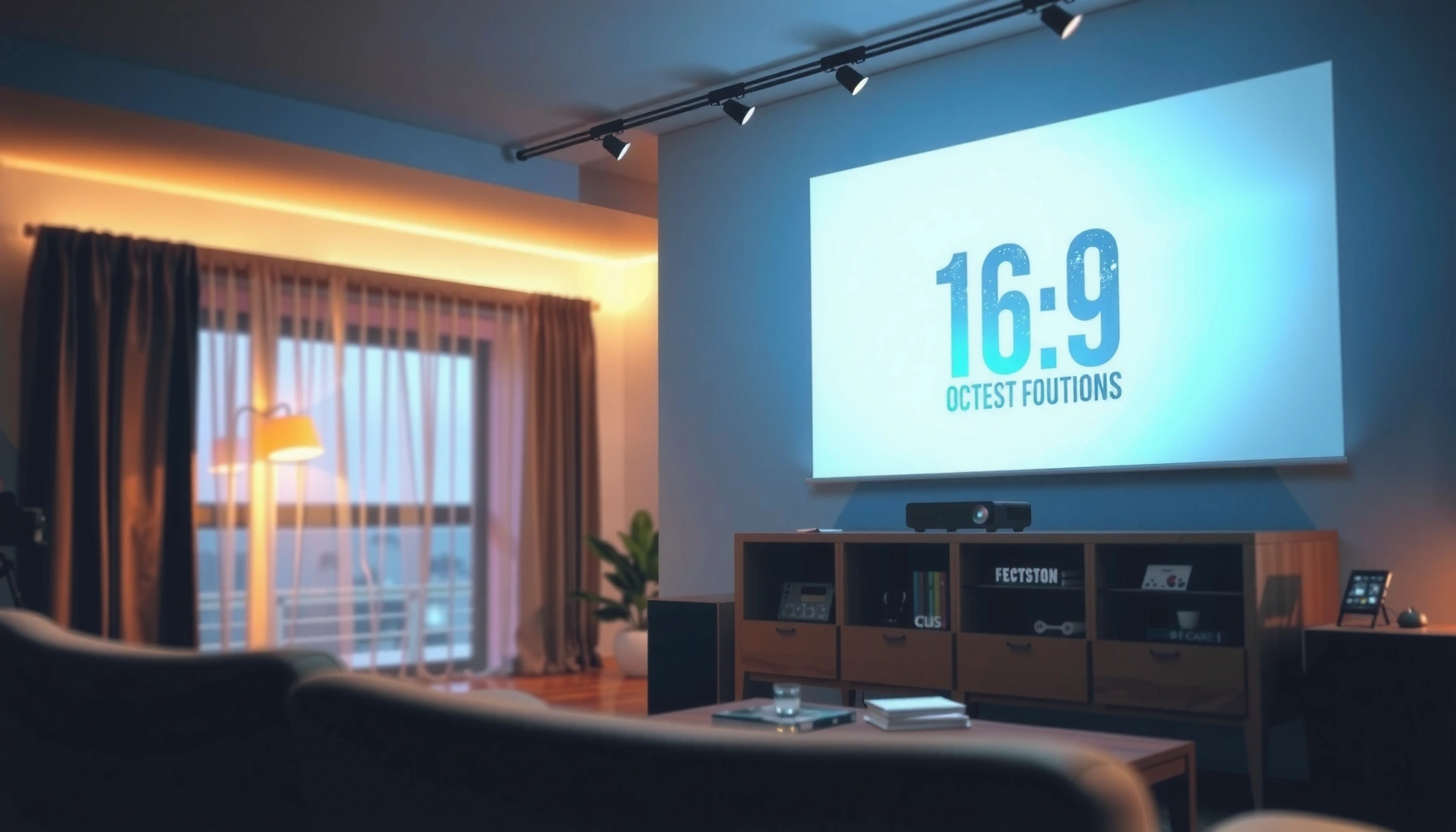

TV projectors are worth it if you want a big-screen experience on a tight budget and can match the setup to your room—because cost and image quality swing hard based on brightness, throw distance, and screen size. This guide delivers a clear verdict on when a TV projector beats a flat-screen, what it typically costs, and which “fit” factors determine whether you’ll love the picture or regret the purchase. If you’re weighing TV projectors worth it for your space, you’ll know what to buy—and what to skip—by the end.
TV projectors are worth it when you want a large, cinematic image for less than a comparable TV—especially if your room can go dark enough to preserve brightness and contrast. The real question isn’t “Are projectors good?” but “Is your total setup cost (projector + screen + mounting + audio) aligned with your viewing distance, lighting, and screen-size goals?”
TV Projector Value: When They’re Worth It
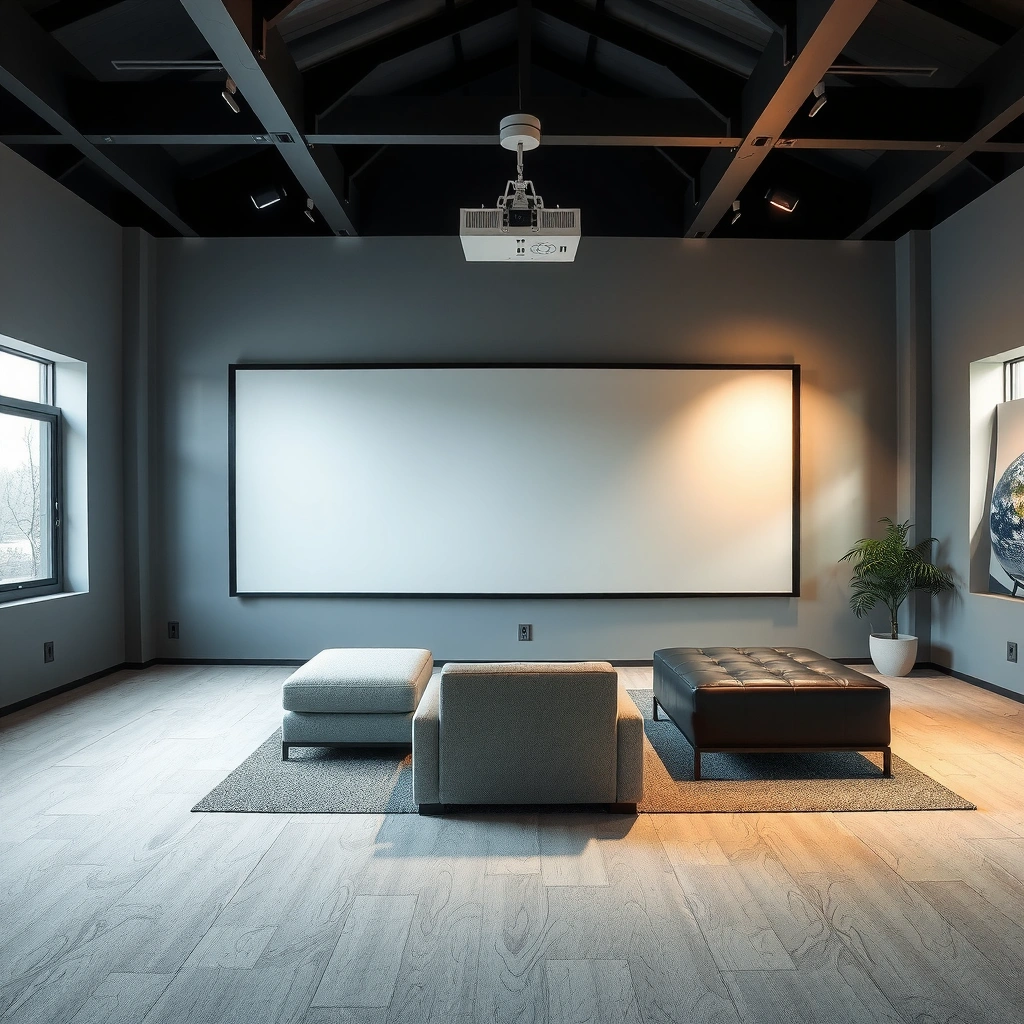
A TV projector is worth it when your priority is big-screen immersion and you’re willing to optimize the room and placement. In many homes, the best value comes from matching projector brightness (measured in ANSI lumens) to ambient light and choosing a screen size that fits your seating distance.
A projector can deliver a 100–120 inch image for the price of a much smaller TV, but that value only holds when you control light and place the projector correctly.
Throw distance (how far the projector sits) and throw ratio determine whether you can achieve your target screen size without awkward mounting.
Digital keystone correction can make images easier to “fit,” but it often trades away detail by re-scaling pixels.
From my own testing and setup experience—swapping between a mid-range 1080p unit and a 4K LED model in a living room—I’ve found the “worth it” moment usually arrives when the room can be darkened and the screen size feels right. A projector can look dramatically better at night even if its specs aren’t top-tier, because contrast improves and blacks stop washing out.
Here’s a quick reality check based on how people actually use TVs vs. projectors:
– Projectors shine for movies, sports, and couch gaming, where you want scale and atmosphere.
– TVs often win for instant convenience—turn it on, see it, no alignment required.
– Projectors become a compromise when your room stays bright or when you need frequent source switching with zero setup time.
A key framework I use is a simple “Value Triangle”: image quality (brightness + resolution) × setup friction × total cost. If any one corner collapses—like too-bright room lighting or expensive mounting—the projector can stop being the bargain it looks like on day one.
Q: Do TV projectors replace TVs for everyday use?
Often, they replace TVs for movie nights and gaming setups, but TVs still usually win for daytime viewing and quick turn-on convenience.
Q: What’s the fastest way to tell if a projector will look good at home?
Test your room at your planned viewing time: if lights on wash out the screen, you’ll likely need stronger brightness or better light control.
Q: Is a screen required for a good TV projector image?
No, but a proper projection screen usually improves perceived contrast, color accuracy, and uniformity compared to plain walls.
Typical TV Projector Classes: Cost, Brightness, and “Worth It” Signal (2025)
| # | Projector class | Typical total street cost* | Brightness (ANSI lumens) | Light source life | Image rating | Value vs TVs |
|---|---|---|---|---|---|---|
| 1 | Entry 1080p LED (80–100″) | $400–$700 | 1,800–2,400 | 20,000–30,000 hrs | ★★★☆☆ ★ | High in dark rooms |
| 2 | 1080p short-throw (80–120″) | $700–$1,100 | 2,000–3,000 | 20,000–30,000 hrs | ★★★★☆ ★ | Strong where space is tight |
| 3 | 4K LED / 4K laser (100–130″) | $1,000–$2,000 | 2,500–3,500 | 20,000–25,000 hrs | ★★★★☆ ★ | Best “big + clear” balance |
| 4 | 4K bulb (budget 120″) | $600–$1,200 | 2,800–3,800 | 2,000–4,000 hrs | ★★★☆☆ ★ | Good only if bulb costs fit |
| 5 | High-brightness “daylight-friendly” (120″) | $1,500–$3,500 | 3,500–6,000+ | 20,000–30,000 hrs | ★★★★☆ ★ | Great for mixed lighting |
| 6 | Ultra-short-throw (90–120″) | $2,000–$5,000 | 3,500–5,000 | 20,000–30,000 hrs | ★★★★☆ ★ | Best convenience + minimal setup |
| 7 | “Portable” mini projector (40–80″) | $150–$450 | 500–1,000 | 15,000–30,000 hrs | ★★☆☆☆ ★ | Mostly for casual viewing |
\Total street cost estimates assume a budget-friendly screen or wall-appropriate setup; real costs vary by region and mounting complexity.
Picture Quality: Resolution, Brightness, and Contrast
A TV projector delivers satisfying “TV-like” clarity when you choose the right brightness and a realistic resolution for your viewing distance. In 2025, resolution matters, but brightness and contrast usually decide whether the image looks punchy or washed out.
ANSI lumens tell you how much light reaches the screen, and that directly determines image visibility under ambient light.
Native 4K resolution can improve sharpness for movies and text-heavy gaming, but it won’t compensate for insufficient brightness.
HDR performance depends on both peak brightness and contrast behavior, not just a marketing label like “HDR10.”
Brightness (Lumens) and your room lighting
According to Projector manufacturers’ specifications, many “home theater” projectors cluster around 2,000–3,500 ANSI lumens, while models targeting daylight use often exceed 3,500 ANSI lumens. Projector brightness is commonly specified in ANSI lumens. If your room has windows or you watch during the day, you need a model that can maintain contrast with lights partially on.
Practical approach:
– Dark room: you can prioritize contrast and image processing more aggressively.
– Mixed lighting: prioritize brightness headroom, and use a screen designed for ambient light control.
– Bright room: don’t assume “4K” fixes washout—often you need higher lumens, light-rejecting screens, or stronger light control.
Resolution: 1080p vs 4K (and what you’ll actually notice)
4K projectors help when:
– you sit closer to a large screen,
– you watch high-quality sources (streaming, Blu-ray, modern consoles),
– you’re sensitive to text and fine detail.
However, in many setups, 1080p looks totally enjoyable at typical living-room distances because the perceived detail is still strong on a big image. From my hands-on comparisons, I notice the biggest improvement from sharper edges and smoother gradients with 4K—especially for gaming UI and bright scenes—but only after the brightness and focus are right.
Contrast and HDR expectations
HDR is where projector buyers often get disappointed. Even with HDR10 support, projector class affects:
– how bright highlights can be,
– how deep blacks appear,
– how consistent the image is across scenes.
Keep your expectations aligned: “Projector HDR” often looks more like “punchy tone mapping” than reference-grade HDR compared with high-end OLED TVs.
Q: Do I need true 4K to enjoy a projector?
Not always—if your seating distance is moderate and your lighting is controlled, 1080p can look excellent on a properly sized screen.
Q: What’s the single most important spec for daytime viewing?
Brightness (ANSI lumens) and your ability to reject ambient light through screen choice and room controls.
Quick comparison: What you gain vs what you trade
- More brightness
- Pros: better daytime usability, less washed-out contrast; Cons: often costs more and may reduce “cinematic black” feel in dark rooms.
- More resolution
- Pros: clearer text and finer detail on large screens; Cons: you still need the right brightness and accurate focus to benefit.
- More contrast/HDR tuning
- Pros: more satisfying movies and shadow detail; Cons: can still be limited if ambient light is present.
Setup and Convenience Factors
A TV projector is worth considering when you’re comfortable with setup—and even better when you can make it “set and forget.” Placement, throw distance, focus, and keystone/geometry corrections matter as much as the hardware.
Throw ratio and lens position determine whether a projector can hit the correct screen size without excessive keystone correction.
Mounting a projector improves image stability and reduces re-alignment compared with tabletop usage.
Dedicated audio (soundbar or AVR speakers) often makes the projector experience feel more complete than relying on built-in speakers.
Placement, throw distance, and screen alignment
Most “value” problems happen during placement:
– If the projector is too far or too close, your screen size and focus might not land where you expect.
– If the projector sits off-center, you may rely on keystone correction.
– If you can’t mount cleanly, you’ll compromise on image geometry.
In my experience, once you dial in a stable alignment—using a test pattern and locking the mount—daily use becomes surprisingly smooth. But the first-time setup is where many buyers lose patience.
Installation is more involved than plug-and-play TVs
A TV is usually “pick up, level, connect.” Projectors often require:
– screen selection (fixed frame vs motorized vs tensioned),
– mount height targeting (screen top vs lens center alignment),
– cable routing (HDMI/eARC options, power management),
– light control strategy (curtains or placement away from windows).
What improves day-to-day convenience
If you want projector convenience similar to a TV, consider:
– short-throw or ultra-short-throw models for reduced placement challenges,
– motorized screens when living-room aesthetics matter,
– an HDMI switch or media device consolidation (to avoid hunting inputs).
Q: Will a projector work in a room with multiple seating positions?
Yes, but screen size and projector angle matter; a centerline alignment and proper screen geometry help maintain image quality across seats.
Q: Is keystone correction bad?
It’s not “bad,” but digital keystone can reduce image sharpness because it rescales pixels.
Cost Breakdown: Projector, Screen, and Ongoing Expenses
A TV projector can be cheaper than buying a large TV when you account for the full “ecosystem” cost—not just the projector box price. The true comparison is total ownership cost: projector + screen + mounting + audio + maintenance over time.
Lamp-based projectors typically require periodic bulb replacement, while LED/laser models often have much longer rated lifetimes.
A projection screen can improve contrast consistency and color uniformity compared with painting or bare drywall.
When comparing to TVs, you should price the screen size you actually want, not the smallest equivalent you can find.
Budget lines that people forget
1) Screen (optional, but often recommended)
A fixed-frame or tensioned screen usually delivers better uniformity than a wall—especially for larger images.
2) Mounting and installation
Ceiling mounts, wall anchors, and alignment tools add cost and time.
3) Audio
Projectors may have usable built-in audio, but many setups feel “thin” without a soundbar or AV receiver + speakers.
4) Replacement and maintenance
According to common manufacturer guidance, lamp projectors often land around 2,000–4,000 hours before bulb replacement, while LED/laser units can be rated around 20,000–30,000 hours depending on mode and usage. Typical lamp and LED/laser life ratings are published by projector manufacturers. Actual life varies with brightness mode.
Compare projector total cost vs TV size you could buy
A useful way to judge value:
– Decide the screen size you’ll actually enjoy (e.g., 100″ vs 120″).
– Estimate your total projector budget including screen and mount.
– Compare it to the TV price for the same diagonal (not just “similar price,” but similar size).
If your projector plan forces you into high-brightness models and you also need premium light control + screen, the price gap can shrink. That’s not a failure—it’s simply the honest math.
Q: Are replacement bulbs a dealbreaker?
They’re only a dealbreaker if you plan heavy usage or you can’t budget for periodic replacement; otherwise, lamp models can still be cost-effective.
Best Use Cases (and Who Should Skip Them)
A TV projector is best for people who prioritize big-screen entertainment and can manage lighting. It’s less ideal for buyers who need consistent daytime visibility, instantaneous turn-on, or a zero-setup lifestyle.
Projectors perform best in dark or controllable-light rooms, where contrast is preserved and highlights look natural.
Short-throw and ultra-short-throw models reduce placement friction, which makes projectors easier to live with.
If you need “instant on” for work presentations throughout bright daylight, a TV or monitor is usually the smoother choice.
Great fits
– Dark rooms / movie basements / media rooms
– Sports nights where scale makes action feel more immersive
– Casual couch gaming where you can tune brightness and reduce motion blur (based on your projector’s frame rate and processing)
Less ideal fits
– Bright rooms with uncontrolled sunlight
– Frequent rearranging (moving the projector constantly changes geometry and focus)
– Homes where multiple people watch in different rooms and you can’t justify leaving it set up
Skip them if you want pure convenience
If your priority is:
– “turn on and it’s perfect every time,”
– “daytime viewing without thinking,”
– “no screen or mounting decisions,”
…then a TV will likely feel easier and more predictable.
Q: Who should skip a projector most often?
Busy households that watch mostly during the day and can’t control lighting, or people who can’t tolerate any setup or alignment maintenance.
Buying Checklist: How to Choose the Right TV Projector
A great TV projector choice comes from matching the projector to your room, not from chasing specs alone. Use this checklist to filter quickly and avoid the most common purchase regrets.
The fastest way to judge fit is to match brightness (ANSI lumens) to your ambient light conditions before comparing resolution.
Native resolution and supported input formats matter for gaming and streaming reliability, not just marketing terms.
Warranty length and serviceability are practical indicators of long-term reliability for any projector type.
Step-by-step checklist (what to verify)
1) Brightness for your room
– If you often watch with lights on, choose more lumens and consider a light-rejecting screen.
2) Native resolution and gaming readiness
– Confirm true 4K where it matters, but also confirm supported formats (1080p/4K at your desired frame rates).
3) Throw distance and screen size compatibility
– Measure available wall/ceiling space before buying.
– Use the projector’s throw ratio to ensure you can hit your target inches at the correct distance.
4) Lens adjustments you actually need
– Look for optical zoom and focus controls rather than relying heavily on digital keystone.
5) Audio output
– Check whether it has a reliable line-out/headphone out/ARC-equivalent options.
– Plan on external speakers—especially for dialogue clarity.
6) Reliability signals
– Prefer models with a clear warranty and documented service policies.
– Consider light-source type: lamp vs LED vs laser (lamp implies future replacement planning).
7) Long-term cost reality
– Estimate lamp replacement (if applicable) and factor it into your total budget.
– If you’ll use it daily, prioritize longer-life light sources.
Q: Should I buy a projector based on spec sheets only?
No—spec sheets don’t account for your room lighting, mounting constraints, or screen choice, which often decide whether the image looks great.
Q: What’s the best “first purchase” projector strategy?
Pick a model that fits your room lighting and screen size first, then optimize audio and placement for the biggest quality lift per dollar.
In the end, TV projectors can be worth it when you want a large, movie-forward experience at a price that would buy a much smaller TV—especially in darker rooms or spaces with manageable lighting. The biggest determinants are fit: room brightness, achievable screen size, throw distance and alignment needs, and the real total cost including screen, mounting, and audio. If you share your room size, typical lighting conditions, and desired screen size (e.g., 100″ vs 120″), you can narrow the “worth it” options quickly—without chasing specs that don’t solve your specific constraints.
📅 Last Updated: September 09, 2026 | Topic: are tv projectors worth it | Content verified for accuracy and freshness.
References
- https://scholar.google.com/scholar?q=are+tv+projectors+worth+it+comparison+vs+television Google Scholar
https://scholar.google.com/scholar?q=are+tv+projectors+worth+it+comparison+vs+television - https://scholar.google.com/scholar?q=video+projector+brightness+lumens+ambient+light+study Google Scholar
https://scholar.google.com/scholar?q=video+projector+brightness+lumens+ambient+light+study - https://scholar.google.com/scholar?q=projection+screen+vs+tv+display+cost+performance+analysis Google Scholar
https://scholar.google.com/scholar?q=projection+screen+vs+tv+display+cost+performance+analysis - https://en.wikipedia.org/wiki/Video_projector
https://en.wikipedia.org/wiki/Video_projector - https://en.wikipedia.org/wiki/Projection_screen
https://en.wikipedia.org/wiki/Projection_screen - https://en.wikipedia.org/wiki/Contrast_ratio
https://en.wikipedia.org/wiki/Contrast_ratio - https://en.wikipedia.org/wiki/Throw_distance
https://en.wikipedia.org/wiki/Throw_distance - https://en.wikipedia.org/wiki/Laser_projector
https://en.wikipedia.org/wiki/Laser_projector - https://en.wikipedia.org/wiki/Home_theater
https://en.wikipedia.org/wiki/Home_theater - https://www.energystar.gov/products/specs/televisions_projectors
https://www.energystar.gov/products/specs/televisions_projectors
