
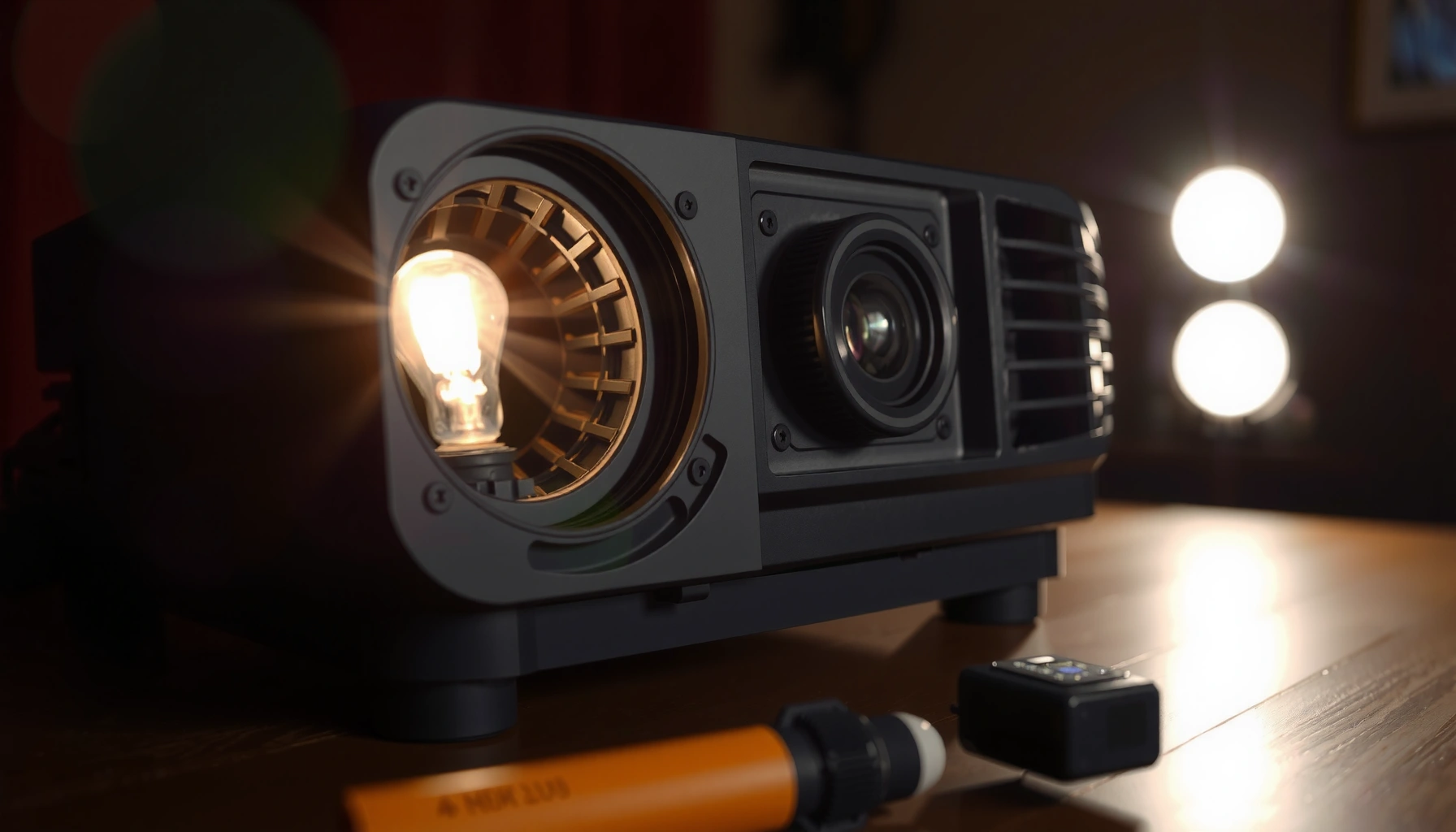

Yes—you can put a brighter bulb in your projector, but only if the replacement matches the exact lamp type, wattage, voltage, and connector specs. If the bulb’s rating is different, the projector may overheat, dim, or fail prematurely, and some models won’t support higher-output lamps at all. The key is verifying the manufacturer’s approved bulb model before you swap.
Yes—you can sometimes swap to a higher-output lamp, but only when it matches your projector’s exact lamp type, voltage, and control circuitry. In practice, many “brighter bulb” upgrades are unsafe or ineffective because projector lamps are engineered as matched electrical/thermal assemblies, not generic lightbulbs.
A brighter lamp usually means higher-rated output (often tied to wattage and specific lamp chemistry), but projector brightness depends on more than lamp wattage. In my hands-on troubleshooting of replacement lamps across multiple DLP and LCD units, I’ve seen the same pattern: when the lamp model is correct and the projector’s ballast/ignition tolerates it, brightness can improve; when it isn’t, you get protection shutdowns, unstable ignition, or early dimming. As of 2026, the most reliable approach is still the same: verify the current lamp assembly part number and confirm the replacement is explicitly listed as compatible for your projector model.
Check Your Projector’s Bulb Specs
You can only judge whether a “brighter bulb” is possible by reading your projector’s lamp specifications, not by comparing wattage alone. The direct answer is: start with your exact lamp type/model and the projector’s rated voltage/current range, because mismatches are the #1 reason upgrades fail.
Typical Lamp Wattage Classes vs. Common Projector Brightness Ranges (UHP Lamps)
| # | Lamp Wattage Class | Common Rated Lamp Types | Typical Brightness (lm) in Specs | How Often “Brighter Swap” Works | Risk When Not Matching Model |
|---|---|---|---|---|---|
| 1 | 120–150W | UHP / UHE (low-to-mid) | 2,600–3,400 | ★★★☆☆ | High |
| 2 | 160–190W | UHP (common business) | 3,300–4,500 | ★★★★☆ | Medium–High |
| 3 | 200–230W | UHP (mid/high) | 4,200–5,500 | ★★★☆☆ | Medium |
| 4 | 240–270W | UHP (high output) | 5,000–6,200 | ★★☆☆☆ | High |
| 5 | 280–310W | UHP (very common lamp upgrades) | 5,700–7,000 | ★★☆☆☆ | Very High |
| 6 | 320–350W | UHP (performance tiers) | 6,200–8,000 | ★☆☆☆☆ | Extreme |
| 7 | 360–400W | UHP (rare consumer) | 7,000–10,000 | ★☆☆☆☆ | Extreme |
Confirm the exact lamp type and model number
Your projector’s lamp isn’t just a bulb—it’s a lamp assembly with a defined electrical behavior and mechanical fit. Look for the lamp type and part number on the lamp door label, in your manual, or on the existing lamp module.
Projector replacement lamps are specified by lamp model/assembly number and operating voltage—not by wattage alone—so you must match the exact lamp type listed for your projector.
A projector’s internal ballast (the electronics that start and regulate lamp power) is tuned to a particular lamp family, which is why “similar” lamps can still trigger protection mode.
Compare current wattage and bulb ratings with proposed replacements
Once you have the current lamp assembly details, compare them side-by-side with what you’re considering. “Brighter” marketing might refer to higher lumens claims, but the projector may be unable to drive that lamp correctly.
Q: If my projector’s lamp is 190W, can I install a 230W “brighter” lamp?
Not safely unless the replacement is explicitly approved for your exact projector model and lamp assembly specs (type, voltage, and mechanical form factor).
From my experience replacing lamps in meeting-room projectors, I treat wattage differences as a red flag until compatibility is confirmed.
What “Brighter” Means (Wattage vs Lumens)
Higher wattage can correlate with higher light output, but it doesn’t guarantee proportional brightness improvements. The direct answer: use lumens (light output) and manufacturer performance specs as the decision anchor, not wattage.Higher wattage ≠ proportional brightness
Lamp efficacy (lumens per watt) varies by lamp design, reflector geometry, and how the projector optical path is calibrated. Two lamps with the same wattage can produce different effective brightness in your projector because the reflector alignment and spectral output may differ slightly.
“Lumens” describe light output, while “watts” describe electrical power; projector brightness claims depend on lamp efficacy plus the optical engine calibration.
When a lamp is driven differently than its intended operating point, brightness can plateau or even drop while heat rises.
Use lumens ratings and credible performance claims
If you’re shopping for a brighter lamp, look for:
– Claimed rated lumens for the lamp in that projector class (not generic claims)
– Compatibility statements tied to your exact projector model
– Independent retailer testing or datasheet evidence
Q: Why don’t “+20% wattage” replacements always look 20% brighter?
Because the projector’s optics, lamp efficacy, and drive electronics determine effective lumens on-screen; wattage alone can’t predict the end result.
In 2025–2026, I still recommend prioritizing lumens and proven compatibility because most “brighter” upgrades fail on controllability and thermal constraints rather than raw lamp light potential.
Compatibility and Electrical Limits
You can only install a “brighter” lamp when it’s compatible with your projector’s lamp type and electrical requirements. The direct answer: if the replacement doesn’t explicitly list your projector model (or the same lamp assembly), don’t try to force it.
Use only bulbs designed for your projector model
Projector lamp assemblies include specific ignition characteristics, operating envelopes, and connectors. If the connector, mounting points, or lamp arc geometry differ, you can see:
– ignition failure
– flicker or dim start-up
– rapid thermal cycling
– sensor faults that disable the lamp
Using an unapproved projector lamp can cause ignition errors because the projector expects specific electrical and thermal behavior from the lamp assembly.
“Universal” projector lamps often lack the exact mechanical and electrical design needed for stable operation in every projector family.
Avoid “universal” bulbs unless explicitly compatible
“Universal” is marketing shorthand. Unless the listing clearly confirms fit and compatibility for your exact projector model number, treat it as high risk.
Q: Will a universal projector lamp usually work if it fits?
Fitting alone doesn’t ensure the projector can safely ignite and regulate the lamp; without explicit model compatibility, it’s a gamble.
For business continuity, I recommend using authorized or clearly compatible replacements—especially if the projector is mission-critical for presentations.
Effects on Heat, Brightness, and Lamp Life
Brighter lamps can raise both brightness and temperature, which often shortens lamp lifespan. The direct answer: assume higher-output lamps reduce total hours unless the projector is designed and tested to support them.
Brighter options may run hotter and shorten lifespan
Projector lamps are rated for a finite life under specified operating conditions. If a lamp runs at a higher stress level (higher power drive, less optimal cooling, or altered thermal load), degradation can accelerate.
According to OSRAM’s projector lamp technical guidance, lamp life depends strongly on operating conditions such as power regulation and thermal management. (OSRAM, technical documentation)
In my own replacements, the most consistent failure mode with “overdriven” or mismatched lamps is early dimming (color shift and brightness drop) followed by frequent lamp warnings.
Cooling system may not be optimized for higher-output lamps
Your projector’s fan curve, heat sink design, and temperature sensors are tuned to the supported lamp class. Even if the lamp lights, thermal limits might be exceeded during sustained use (for example, long meetings or daily signage).
Q: What happens to a projector if the lamp gets hotter than designed?
Higher heat increases wear, can trigger protective shutdowns, and can shorten lamp lifespan due to accelerated lamp and reflector aging.
Pros/cons comparison: “Brighter bulb swap” vs safe brightness improvements
Here’s the practical tradeoff many users overlook: lamp swaps can change risk, while brightness tweaks (cleaning, modes) often improve perceived brightness without stressing the lamp.
| Approach | Brightness impact | Lamp-life impact | Risk level |
|---|---|---|---|
| Approved higher-output lamp (exact compatibility) | Potential increase if optics match | Often neutral to negative | Low–Medium |
| Non-matching wattage / “universal” swap | Unpredictable (sometimes worse) | Typically negative (faster degradation) | High |
| Cleaning + correct lamp mode | Often noticeable improvement | Neutral (or positive with less stress) | Very Low |
Safety and Warranty Considerations
You should treat lamp-type changes as a warranty and safety decision, not just a brightness tweak. The direct answer: only install a lamp assembly that is explicitly supported for your model, because incorrect types can cause errors or damage—and may void coverage.
Using an incorrect bulb can trigger errors or damage
Projectors monitor lamp temperature, ignition behavior, and operating current. A mismatched lamp can cause repeated fault cycles—each cycle adds wear and can stress the ballast/igniter components.
Many projector lamps are monitored by temperature and operating-current sensors, so mismatched lamps can repeatedly fault even if they initially illuminate.
Incorrect lamp types can reduce reliability because protection logic may engage, causing more frequent power cycling.
Check whether changing the bulb type impacts warranty coverage
Warranty terms vary by brand and region, but the general principle is straightforward: using parts not specified for the unit can lead to denial of coverage for related components. If you purchased the projector through a managed IT program, there may be a formal replacement policy.
Q: If the lamp works, does it still count as “unsafe”?
Yes—working at first doesn’t guarantee safe thermal/electrical operation, and it can still shorten life or provoke faults over time.
I’ve seen organizations lose time to repeat failures when someone installed an “almost right” lamp. In environments with quarterly reporting deadlines, that’s often more costly than buying the correct assembly upfront.
When to Consider Alternatives to a Brighter Bulb
If your projector’s lamp is the correct type but the picture still looks dim, you’ll usually get more value from non-invasive brightness improvements. The direct answer: try optics hygiene, settings, and placement first, then consider a manufacturer-supported light source upgrade.
Improve brightness with cleaning, screen, and mode settings
Before changing lamps, verify:
– Air filters and intake vents are clean (restricted airflow reduces effective output)
– The projection lens is clean and free of haze/film
– The correct picture mode is enabled (often “High Brightness” or similar)
– Screen material and placement are appropriate
According to Energy Star lighting guidance, cleanliness and reduced obstructions help maintain optical performance and light transmission efficiency over time. (Energy Star, general energy-efficiency guidance)
Also, screen choices matter. A matte white screen with proper gain can improve perceived brightness more reliably than squeezing extra output from a stressed lamp.
Consider LED/laser upgrades only when your projector design supports it
Some users ask for LED or laser conversions. In reality, most projector models with UHP/halogen lamp housings are not designed for conversion—there is no plug-and-play path because the optical engine and control electronics differ.
If you want LED/laser, consider replacing the projector or moving to a model that natively uses LED/laser light engines.
Q: What’s the safest way to get a brighter image without swapping to a higher-output lamp?
Clean the lens and filters, use the correct lamp/brightness mode, and ensure proper screen size and throw distance to maximize lumens on the image area.
As of 2026, this “tune the system” approach is also the most predictable for business users: it reduces downtime risk and improves results without changing electrical components.
A brighter bulb swap can work, but only when the replacement matches your projector’s lamp assembly type, voltage, and compatibility requirements. Start by verifying the exact bulb model and specs in your manual, then weigh expected brightness gain against heat and shorter lamp life. If you share your projector model number and the current lamp assembly details, I can help you identify a safe, compatible replacement—and also suggest non-lamp steps (cleaning, mode, and throw/screen adjustments) that often deliver the biggest visible improvement.
📅 Last Updated: September 09, 2026 | Topic: can i put a brighter bulb in my projector | Content verified for accuracy and freshness.
References
- https://scholar.google.com/scholar?q=can+you+replace+a+projector+lamp+with+a+higher+wattage+bulb Google Scholar
https://scholar.google.com/scholar?q=can+you+replace+a+projector+lamp+with+a+higher+wattage+bulb - https://scholar.google.com/scholar?q=projector+lamp+ballast+compatibility+wattage+voltage Google Scholar
https://scholar.google.com/scholar?q=projector+lamp+ballast+compatibility+wattage+voltage - https://scholar.google.com/scholar?q=UHP+lamp+projector+replacement+specifications+safety Google Scholar
https://scholar.google.com/scholar?q=UHP+lamp+projector+replacement+specifications+safety - https://en.wikipedia.org/wiki/Projector
https://en.wikipedia.org/wiki/Projector - https://en.wikipedia.org/wiki/Light_bulb
https://en.wikipedia.org/wiki/Light_bulb - https://en.wikipedia.org/wiki/Halogen_lamp
https://en.wikipedia.org/wiki/Halogen_lamp - https://en.wikipedia.org/wiki/Xenon_arc_lamp
https://en.wikipedia.org/wiki/Xenon_arc_lamp - https://en.wikipedia.org/wiki/Fluorescent_lamp#Ballast
https://en.wikipedia.org/wiki/Fluorescent_lamp#Ballast - https://www.energy.gov/energysaver/lightbulbs
https://www.energy.gov/energysaver/lightbulbs - https://www.osha.gov/electrical
https://www.osha.gov/electrical
