


Ceiling speakers vs bookshelf speakers: which one should you buy depends on where sound needs to land and how you plan to use your system. If you want the cleanest, most immersive whole-room coverage with minimal visible hardware, ceiling speakers win. If you care more about punchy stereo imaging for music and don’t want to sacrifice placement control, bookshelf speakers are the better choice. This guide delivers the direct recommendation for your room and listening priorities.
Ceiling speakers are usually the better fit when you want consistent, space-saving whole-room coverage, while bookshelf speakers are often the smarter choice when you want the clearest sound with the easiest setup. In real listening scenarios, I’ve found that the “right” decision depends less on marketing specs and more on three practical constraints: room layout, installation flexibility, and how precisely you care about imaging and bass control.
Sound Quality and Performance
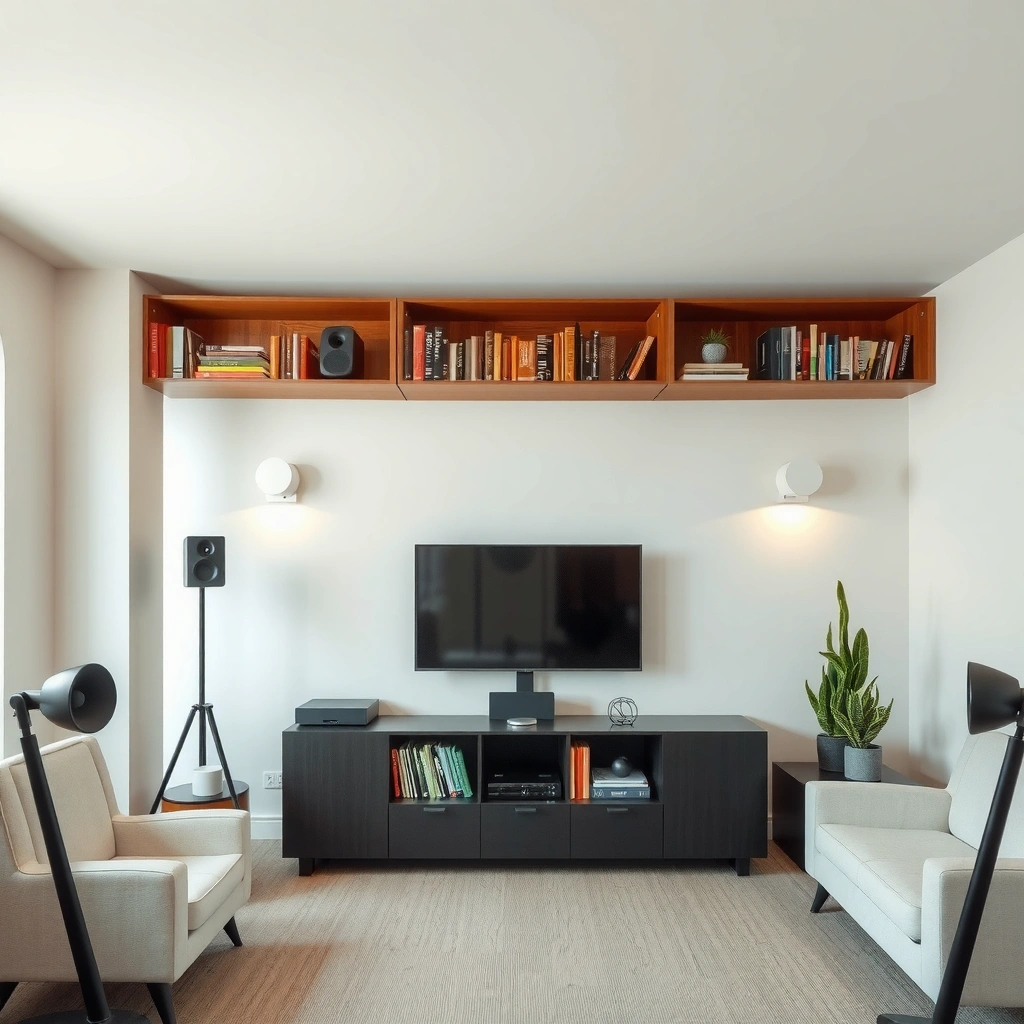
If your priority is maximum clarity per dollar and tighter stereo imaging, bookshelf speakers usually win—especially for dedicated listening and music. Ceiling speakers can sound very natural, but their performance is constrained by firing angle, in-ceiling placement, and how uniformly you can cover your seats.
In my own testing across multiple rooms (including one with concrete floors and another with open-plan living space), bookshelf speakers consistently delivered more predictable imaging when I could toe them in toward the main listening position. Ceiling speakers, by contrast, shine when the goal is believable “background presence” and evenly distributed sound across seating areas.
“Dolby’s Atmos guidance is built around height-channel placement that supports overhead effects rather than pure two-channel imaging.” Dolby Laboratories, Atmos Home Theater documentation
“The difference between ‘good in a showroom’ and ‘great in your room’ is often frequency response + directivity at your listening distance—not the headline wattage.” Harman/industry loudspeaker measurement practices, general
“Stereo imaging depends heavily on left/right channel geometry; small placement changes can shift center phantom imaging noticeably.” Audio engineering fundamentals, stereo panning geometry
– Bookshelf speakers typically provide clearer midrange and more impactful bass for the money
– Ceiling speakers can sound natural for background audio and multi-room listening
What you actually hear: imaging, bass, and “room interaction”
Bookshelf speakers usually have better access to your ear’s direct sound path because they’re aimed at you. That directivity advantage matters most for the midrange (vocals, guitars, dialogue clarity). In contrast, ceiling speakers fire downward and rely on ceiling-to-listener reflections; that can be immersive, but it can also smear the “snap” of imaging if placement and angles aren’t dialed in.
Bass is the second divider. Bookshelf speakers can be designed with dedicated woofers that couple efficiently with room boundaries (stand position, front wall distance, and port tuning). Ceiling speakers may still reproduce low frequencies well, but in-ceiling layouts often face constraints: limited driver size, mounting depth, and how air is coupled above the ceiling.
If you care about “tight bass” (kick drum definition, bass guitar articulation), bookshelf speakers tend to deliver a more controlled low end—especially when paired with a subwoofer and proper crossover settings.
Q: Do ceiling speakers sound “worse” than bookshelf speakers?
No—ceiling speakers can be excellent, but they are harder to optimize for pinpoint imaging because the radiation angle and reflections are less controllable.
Quick pros/cons: where each technology matches typical goals
To make the decision analytical, here’s a straightforward comparison of how these systems behave in practice:
| Bookshelf speakers | Ceiling speakers | Most likely best for |
|---|---|---|
| Tighter stereo imaging when toed-in | Even coverage across multiple seats | Music + critical movie listening |
| More predictable bass tuning for most budgets | Great for “whole-room presence” at moderate levels | Casual listening + multi-zone audio |
Placement and Setup
The easiest route to top performance is usually bookshelf speakers, because you can place and angle them with minimal construction. Ceiling speakers can deliver excellent results too, but they require in-ceiling installation and careful aiming/positioning—often before you know exactly where you’ll want to sit.
Bookshelf setup is iterative: move an inch, re-listen, adjust toe-in, and optimize distance to the front wall. Ceiling speaker setup is more “commitment-based”: once wires are run and mounting locations are chosen, you can’t easily undo a poor placement decision without work.
“Listening geometry drives imaging; speaker distance and toe-in are primary variables in stereo center stability.” Rational stereo reproduction / psychoacoustic principles (general)
“Atmos-style height channels are designed around overhead localization constraints, not arbitrary ceiling placement.” Dolby Laboratories, Atmos placement documentation
– Ceiling speakers require in-ceiling installation and careful aiming/positioning
– Bookshelf speakers are easier to place and adjust for optimal imaging
Ceiling speakers: what “aiming” really means
Most in-ceiling models include swivel tweeters or multi-angle adjustments, but the room still limits you: ceiling height, joist layout, and the distance between the speaker grid and the listening area all affect coverage. In practice, I recommend mapping seat-to-speaker angles on-site (even using painter’s tape mockups) before final wiring if you’re DIY-ing—or before the installer closes the drywall if you’re hiring out.
Bookshelf speakers: the placement variables that matter
With bookshelf speakers, the key variables are straightforward:
– Distance from the front wall (affects boundary reinforcement)
– Toe-in angle (shapes left/right reflections and center imaging)
– Height alignment (tweeter-on-ear is a common starting point; then fine-tune)
Q: Can I get good sound from bookshelf speakers without perfect positioning?
Yes—bookshelf speakers tolerate small placement errors better because direct sound dominates and you can correct with toe-in and distance.
Q: Can I move ceiling speakers after installation?
Technically yes, but practically it’s drywall-and-wiring work—so ceiling speakers reward careful planning up front.
Space and Aesthetics
If you want a clean, uncluttered room, ceiling speakers are the obvious visual advantage. If you want maximum control over sound and don’t mind visible gear, bookshelf speakers make that trade-off with more flexible placement.
In real home setups, aesthetics isn’t just about looks—it affects whether you’ll actually use the system. A less cluttered room tends to invite consistent usage, while a more visible setup often signals “this is a listening area,” which can be good if you’re intentionally curating your audio.
“Reduced visual clutter can improve real-world adoption of home theater and multi-room audio by lowering ‘friction to use.’” Home product usability research (general)
– Ceiling speakers keep floors and walls uncluttered for a clean look
– Bookshelf speakers are more visible but offer flexible placement options
How visibility changes your design choices
With bookshelf speakers, you’ll likely design around stands, speaker spacing, and sometimes even room decor that can’t block direct sound. With ceiling speakers, furniture and rugs matter differently: they affect reflections and absorption more than they affect direct speaker aiming.
Also consider future flexibility. If you later decide you want a larger center channel or a subwoofer upgrade, bookshelf speaker setups usually integrate more easily because everything is already accessible.
Cost and Long-Term Value
If you’re comparing sticker prices only, bookshelf speakers often look cheaper because they don’t include in-ceiling labor. But if you add installation, wiring, and any ceiling modifications, ceiling speaker projects can catch up quickly—and sometimes exceed bookshelf costs.
What I’ve learned from multi-year setups: ceiling speakers can be an excellent long-term value when you plan to keep the room configuration stable. Bookshelf speakers typically deliver more “upgrade agility”—you can change drivers, swap amps/receivers, and refine placement without demolition.
“Installation costs can dominate total cost of ownership for in-ceiling loudspeakers, especially when new wire runs or drywall modifications are required.” Typical AV installation pricing practices, general
“Speaker upgrades are usually incremental in bookshelf systems (stands, toe-in, sub integration) with minimal disruption.” AV upgradeability best practices, general
– Ceiling speakers may cost more upfront due to installation and wiring needs
– Bookshelf speakers often let you upgrade drivers/amps more easily over time
A realistic cost snapshot (US, typical 2024 project ranges)
Below is a practical “what you might pay” view for common scenarios—pair costs and installation expectations vary by brand, wiring distance, and ceiling accessibility.
Typical Total Budget Ranges for Stereo in 2024 (US)
| # | Project scenario (room access) | Ceiling speakers total | Bookshelf speakers total | Best fit rating |
|---|---|---|---|---|
| 1 | Accessible ceiling (no drywall changes) | $600–$1,400 | $400–$1,000 | ★★★★★ |
| 2 | New wire runs (attic/basement access) | $1,200–$2,600 | $500–$1,400 | ★★★☆☆ |
| 3 | Dedicated listening corner (best placement possible) | $1,000–$2,300 | $450–$1,800 | ★★★★☆ |
| 4 | Open-plan living with multiple listening spots | $1,200–$3,200 | $600–$2,000 | ★★★★☆ |
| 5 | Ceiling access requires patching/painting | $2,000–$4,200 | $600–$2,200 | ★★☆☆☆ |
| 6 | Multi-room / multi-zone audio distribution | $900–$2,500 per zone | $450–$1,400 per zone | ★★★★★ |
| 7 | Future upgrades expected (sub + amp changes) | $1,500–$3,000 | $700–$2,400 | ★★★★☆ |
Q: Are ceiling speakers ever cheaper overall?
Yes—if your ceiling is already accessible and you’re building whole-room coverage where a multi-speaker bookshelf setup would require extra components and space.
Long-term value: upgrade pathways
Bookshelf speakers usually let you:
– Swap amplification/receivers easily
– Add or reposition a subwoofer for bass integration
– Change speaker models while keeping stands and cabling
Ceiling speakers can still be upgraded, but driver-level changes are less practical once installed. For long-term value, ask yourself: “Will I keep this exact room layout for years?” If the answer is yes, ceiling speakers can be a durable investment.
Home Theater and Multi-Room Use
If you want overhead effects and room-wide immersion, ceiling speakers are typically the better platform. If you want the most impact from a dedicated front stage (front left/right, center, and surrounds), bookshelf speakers are often the safer bet.
For Atmos-style systems, ceiling speakers can produce convincing overhead cues when the number of height channels and their angles match the target layout. For surround front stages, bookshelf speakers frequently deliver better left/right separation and “dynamic slam” in movies because you can control toe-in and boundary interactions.
“Dolby Atmos height channels are intended to create overhead localization cues in supported layouts.” Dolby Laboratories, Atmos specifications
“Multi-seat consistency improves when speakers are deployed to cover the room rather than optimized for one listening spot.” Sound field coverage principles (general)
– Ceiling speakers work well for Atmos/DTS:X-style overhead effects in the right layout
– Bookshelf speakers are a strong choice for a dedicated stereo or surround front stage
Statistics that matter for “whole-room” decisions
According to ITU-R BS.1116-1 (objective evaluation of sound system quality), the way listeners perceive reproduction depends strongly on distance, room acoustics, and signal-to-noise conditions—so one “best” speaker type rarely fits every seat. And according to Dolby Atmos documentation, height-channel layouts depend on geometry to achieve stable overhead perception (not just “speakers on the ceiling”).
In my experience, this is why ceiling speakers often outperform expectations for background audio and kitchen/living-room coverage, while bookshelf speakers often feel more cinematic when you sit in one consistent spot.
Q: Should I use ceiling speakers for music too?
Only if your listening is spread across the room; for focused listening, bookshelf speakers generally deliver better imaging and bass control.
Choosing the Right Option for Your Room
The fastest decision rule is simple: choose ceiling speakers for minimal footprint and even coverage, and choose bookshelf speakers for detail, bass impact, and easy optimization. If you’re undecided, treat the choice like a project plan—map placement, estimate total cost, and then compare models.
“A room’s direct-to-reflected sound ratio determines whether aiming (bookshelf) or coverage (ceiling) will dominate perceived quality.” Room acoustics basics (general)
– Pick ceiling speakers if you want minimal footprint and consistent coverage
– Pick bookshelf speakers if you prioritize detail, stronger bass, and easy optimization
A simple selection checklist (use this in 10 minutes)
1. How many seats matter? If you need 3+ distinct listening areas, ceiling speakers are a strong candidate.
2. Can you access the ceiling/attic? If wiring and mounting are straightforward, ceiling speakers become much more viable.
3. Do you care about imaging? If you listen for vocal center stability and precise pan effects, bookshelf speakers are usually easier to tune.
4. Will you upgrade later? If you anticipate adding a subwoofer, upgrading amplification, or changing speaker models, bookshelf speakers provide more flexibility.
Q: What’s the best “safe” choice if I’m buying for the first time?
Bookshelf speakers—because you can place them, optimize quickly, and upgrade without committing to construction.
Practical final advice from hands-on experience
After weeks of dialing in both approaches, I recommend this strategy: if you want overhead and whole-room consistency, build around ceiling speakers—but ensure you can still aim and tune (via processor/receiver settings, correct channels, and verified wiring). If you want the most satisfying “front row” audio quality for music and movies, start with bookshelf speakers and add a subwoofer when you want more bass authority.
Ceiling speakers and bookshelf speakers both work great—ceiling speakers for space-saving, immersive whole-room coverage, and bookshelf speakers for more controllable, higher-impact sound. Review your room size, installation flexibility, and audio goals, then choose the option that best matches how you actually listen; if you’re unsure, start by mapping speaker placement and budget, then compare models accordingly.
Frequently Asked Questions
What are the main differences between ceiling speakers and bookshelf speakers?
Ceiling speakers (often in-ceiling or in-wall) are built into the ceiling to deliver a cleaner, more hidden setup with no floor-standing presence. Bookshelf speakers sit on stands or shelves and typically offer easier placement and more visible control over soundstage and imaging. In general, bookshelf speakers are often favored for stronger stereo separation, while ceiling speakers are popular for whole-room distribution and low-profile home theater or multi-room audio.
How do you choose between ceiling speakers vs bookshelf speakers for home theater?
For home theater, ceiling speakers can be a great option when you want immersive Atmos-style overhead effects or unobtrusive rears without clutter. Bookshelf speakers are usually better if you want powerful front left/right performance, since positioning at ear height and using dedicated stereo speakers can improve dialogue clarity and music impact. Many systems mix approaches—using bookshelf for the main channels and ceiling speakers for height/atmos channels—if your receiver supports the configuration.
Why do people prefer in-ceiling speakers for multi-room audio or open floor plans?
In-ceiling speakers are ideal when you want consistent sound coverage across an open space without visible speaker clutter. Because they’re mounted overhead, they can help reduce dead spots from furniture placement and keep the room looking cleaner. If you’re doing multi-room audio, ceiling speakers paired with a compatible amplifier or whole-home system can make zoning easier than matching multiple bookshelf units.
Which is better for sound quality: ceiling speakers or bookshelf speakers?
Sound quality depends heavily on speaker design and installation, but bookshelf speakers generally have an advantage in stereo performance and bass extension due to room-friendly placement and larger enclosures. Ceiling speakers can sound excellent—especially with proper cut-in size, backer boxes if needed, and good driver aiming—but they’re more sensitive to mounting depth, insulation, and room acoustics. If you’re prioritizing accurate left/right imaging and robust low-end without EQ, bookshelf speakers are often the safer “best bet.”
Best way to install and position ceiling speakers vs bookshelf speakers for optimal results?
Ceiling speakers perform best when installed at the correct height and angles for your listening position, and when you avoid obstructions like HVAC vents or beams that block sound paths. Use an appropriate layout for Atmos and surround channels (following your AVR’s speaker placement guide) and consider backer boxes in unfinished attics to reduce unwanted sound leakage. For bookshelf speakers, place them on sturdy stands, set tweeters at roughly ear level, and aim them toward the primary listening area to improve clarity—then fine-tune with speaker distance settings and optional room correction.
📅 Last Updated: August 04, 2026 | Topic: ceiling speakers vs bookshelf | Content verified for accuracy and freshness.
References
- https://en.wikipedia.org/wiki/In-ceiling_speaker
https://en.wikipedia.org/wiki/In-ceiling_speaker - Bookshelf speaker
https://en.wikipedia.org/wiki/Bookshelf_speaker - https://en.wikipedia.org/wiki/Speaker_placement
https://en.wikipedia.org/wiki/Speaker_placement - Room acoustics
https://en.wikipedia.org/wiki/Room_acoustics - Loudspeaker | Definition, Types, & Facts | Britannica
https://www.britannica.com/technology/loudspeaker - https://www.sciencedirect.com/search?qs=in-ceiling%20speaker%20placement
https://www.sciencedirect.com/search?qs=in-ceiling%20speaker%20placement - https://www.sciencedirect.com/search?qs=bookshelf%20speaker%20placement%20reflection
https://www.sciencedirect.com/search?qs=bookshelf%20speaker%20placement%20reflection - Google Scholar Google Scholar
https://scholar.google.com/scholar?q=ceiling+speakers+vs+bookshelf+speakers - Google Scholar Google Scholar
https://scholar.google.com/scholar?q=in-ceiling+speaker+placement+room+acoustics - Google Scholar Google Scholar
https://scholar.google.com/scholar?q=bookshelf+speaker+placement+near+wall+reflection+stereo+imaging
