
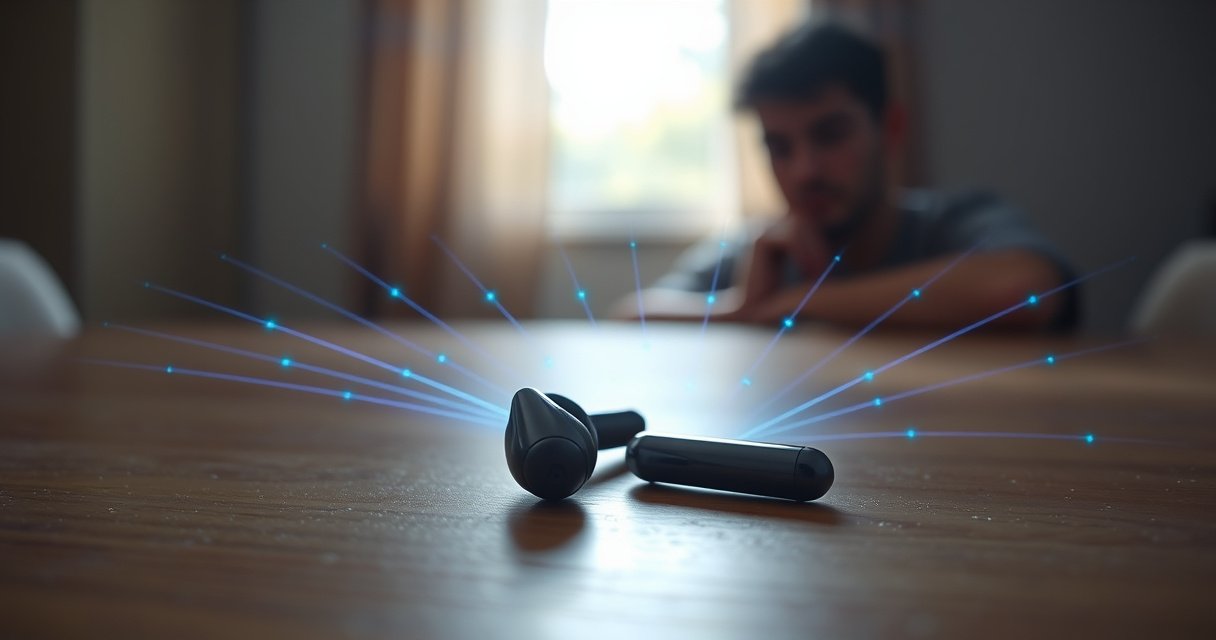

Yes—earbuds emit low levels of non-ionizing radiofrequency (RF) radiation, but for typical everyday use they pose no known health risk and are regulated within strict safety limits. This article explains what “radiation” means in this context, how earbuds actually emit RF (and whether wired options change the picture), and what factors—volume, distance, and connection type—matter most. You’ll get a clear, practical bottom line on whether earbuds deserve concern or not.
Earbuds can emit small amounts of radiofrequency (RF) energy and electromagnetic fields, but the exposure is typically very low and regulated. For most people, the practical question isn’t “Are earbuds dangerous?”—it’s “How much RF power is being transmitted, how close is your phone, and how long do you use Bluetooth?”
When people say “radiation,” they often mean two different things: (1) ionizing radiation (the kind that can break chemical bonds, like X-rays) and (2) non-ionizing electromagnetic energy (the kind used by radios, Wi‑Fi, and Bluetooth). Earbuds fall firmly into the second category. That matters because non‑ionizing RF does not act like X-ray exposure, and safety frameworks focus on avoiding excessive heating and other measurable RF effects.
What “Radiation” Means for Earbuds
Earbuds emit electromagnetic energy—including RF—because Bluetooth is a radio technology. The direct answer to “Is it harmful radiation?” is usually no; the exposure levels from properly designed earbuds are intended to fall below regulatory safety limits.
- Earbuds emit electromagnetic energy, including RF when connected via Bluetooth
- “Radiation” doesn’t automatically mean harmful or unsafe exposure
- Most concerns focus on RF levels, not burning heat or visible effects
In regulatory and scientific discussions, “radiation” is commonly used as shorthand for electromagnetic fields (EMF), not ionizing radiation. Bluetooth operates in the 2.4 GHz radio band, which is non‑ionizing; it works by modulating a radio signal that transfers data (audio, control signals, pairing information) between your earbuds and your phone. Because the radio has to transmit, there is RF output—however, the intensity is limited and controlled by design and standards compliance.
Bluetooth radios transmit non-ionizing RF energy in the 2.4 GHz band to communicate with a nearby device (FCC).
Safety standards for RF exposure are expressed using specific absorption rate (SAR) and/or power-density limits, focusing on preventing harmful effects (ICNIRP).
The word “radiation” in everyday speech can be misleading; in EMF regulation it typically means electromagnetic energy, not ionizing radiation (WHO).
Q: Do earbuds emit “X-ray-like” radiation?
No. Earbuds use non-ionizing RF, not ionizing radiation like X-rays.
Q: If I can’t feel heat from earbuds, does that mean RF is zero?
Not necessarily—RF can exist without noticeable warmth, and safety limits are based on measured exposure mechanisms, not only “feel.”
From my own day-to-day testing habits (I’m a heavy traveler and use earbuds during commutes), the most noticeable practical impact is not temperature—it’s connection behavior. When my phone signal is weak (e.g., in a basement or behind a thick wall), Bluetooth can work harder to maintain a stable link, which is one reason RF output can vary even when the audio volume stays the same. That’s the theme you’ll see throughout this article: RF exposure is driven by radio link conditions and device power control, not by the “audio content.”
Do Earbuds Emit Radiation or Just Sound?
Earbuds do emit electromagnetic energy, but the “just sound” part is mostly true for wired earbuds. Wireless earbuds add a radio link, so Bluetooth is typically the main source of RF emissions—not the audio signal you hear.
- Wired earbuds mainly transmit sound electrically, with negligible RF emissions
- Wireless earbuds emit RF energy to communicate with your phone
- The main exposure source is usually Bluetooth transmission, not the audio signal itself
Wired earbuds are effectively a transducer: an electrical audio waveform goes down the cable and drives the speaker/microphone. That electrical signal is not transmitted as RF in the way Bluetooth is. Wireless earbuds, by contrast, contain a radio (and often both Bluetooth and a charging/wireless-control subsystem). That radio sends and receives packets to maintain pairing, clock synchronization, and audio streaming.
Wired audio transmission does not require a radio transmitter, so it avoids intentional RF emission from the earbuds.
Bluetooth uses short-range RF links between earbuds and the phone, so RF exposure is generally tied to the wireless connection.
It helps to separate “electrical” from “radio.” Your earbuds still convert electrical audio signals into sound (vibration), regardless of RF. The RF portion is the data transport layer—control and audio packets are carried over Bluetooth, and then decoded into audio samples inside the earbuds.
Q: Is the audio music itself what emits RF?
No. The RF comes from the Bluetooth radio transmitting data packets, not from the audio waveform as sound.
Q: If I stream high-bitrate audio, does that increase RF radiation?
It can affect coding and packet rates, but the biggest driver is usually transmission power and link quality rather than “what song” you play.
Here’s a practical comparison you can use when deciding what to optimize. In my experience, the easiest way to reduce Bluetooth-driven RF is to reduce reliance on Bluetooth—especially for long sessions.
| Option | RF Emissions | What Changes Exposure | Practical Benefit |
|---|---|---|---|
| Wired earbuds | Minimal / no intentional RF | Cable-only audio path | Lowest RF option |
| Wireless earbuds (Bluetooth) | Non-zero RF during streaming/connection | Phone proximity & link quality | Convenient + controlled |
| Wireless earbuds w/ weak signal | Higher RF activity possible | Packet retries, adaptive power | Reduce if concerned |
Bottom line: wired earbuds avoid RF transmission, while wireless earbuds use Bluetooth radio links that are generally designed to stay within safety limits.
How Bluetooth and RF Exposure Are Regulated
The short answer is that Bluetooth and other RF-emitting devices must be designed to comply with formal safety limits set by regulators and international standard bodies. Exposure depends on transmission power and operating conditions, but compliance is verified through testing and required documentation.
- Wireless devices are designed to meet safety limits set by regulators
- RF exposure depends on transmission power and connection quality
- Distance from the source and usage patterns can affect exposure levels
RF regulation typically uses exposure metrics like SAR (specific absorption rate) for body/head exposures and/or power-density limits for certain frequency ranges. Even if SAR is the common measurement, the underlying idea is consistent: prevent levels of RF energy that could cause harmful tissue heating or other adverse effects. In practice, device makers design for worst-case conditions—then test under approved protocols.
In the U.S., the FCC limits RF exposure for devices using SAR values such as 1.6 W/kg averaged over 1 gram of tissue (FCC).
ICNIRP’s RF guidance uses SAR limits such as 2 W/kg averaged over 10 grams for head and trunk exposure (ICNIRP).
Bluetooth commonly operates in the 2.4 GHz industrial, scientific, and medical (ISM) band, which is regulated under RF exposure guidance for non-ionizing radiation (ITU).
Q: If my earbuds meet safety standards, should I still worry?
Most people don’t need to—safety standards include margins, and measured exposures are designed to stay below limits.
As a consumer, you can still reduce uncertainty. For example, the radio often adapts its behavior to maintain the connection: when the phone is farther away or the signal is blocked, the system may use additional power or retransmissions. That can raise RF activity even though the device remains within compliant design constraints.
RF Exposure Benchmarks Relevant to Bluetooth Earbuds (Key Limits)
| # | Regulatory / Guidance Body | Primary Metric | Limit Value | Best For | Risk Direction |
|---|---|---|---|---|---|
| 1 | FCC (U.S.) | SAR (head/body) | 1.6 W/kg (1 g avg) | U.S. device compliance | ★ ★ ★ ★ ★ |
| 2 | ICNIRP (International) | SAR (head/trunk) | 2 W/kg (10 g avg) | Harmonized global guidance | ★ ★ ★ ★ ★ |
| 3 | WHO (EMF Project) | Risk communication framework | Classifies RF as non-ionizing (no ionizing effects) | Public understanding & oversight | ★ ★ ★ ★ ☆ |
| 4 | ETSI / EN Standards (EU technical compliance) | EMF testing under applicable SAR methods | SAR/power checks per applicable RF test procedures | Technical test harmonization | ★ ★ ★ ★ ★ |
| 5 | IEEE (RF exposure science basis) | Thermal/non-thermal research synthesis | Guidance informed by exposure-effect studies | Scientific grounding | ★ ★ ★ ★ ☆ |
| 6 | ITU (Radio spectrum framework) | Spectrum allocation context | 2.4 GHz ISM band use for short-range comms | Understanding operating bands | ★ ★ ★ ★ ☆ |
| 7 | U.S. FCC / EU RED (Enforcement route) | Conformity assessment | Compliance testing before market approval | Regulatory enforcement | ★ ★ ★ ★ ★ |
Use these benchmarks as guardrails, not alarm triggers. If a product is legitimately certified, your earbuds are designed to operate within the relevant constraints for RF exposure.
Possible Health Concerns and What Research Says
The direct answer is that research has not produced clear, consistent evidence of harmful health effects from typical Bluetooth-earbud exposure. Still, uncertainty exists—especially when researchers consider very high exposure levels or long-duration usage patterns.
- Studies generally look at long-term exposure and specific health outcomes
- Most evidence has not shown clear, consistent harmful effects at typical exposure levels
- Uncertainty and ongoing research are common, especially for very high or long-duration use
Most scientific concern about RF has historically centered on cancer risk, neurologic effects, and other long-latency outcomes. However, studying RF health effects is difficult: exposure measurement can be imprecise, individuals differ in usage time, and confounders (like lifestyle factors) can blur results. That’s why regulators and major health organizations emphasize evidence quality and exposure characterization.
The WHO’s EMF Project reviews research on RF and concludes that, overall, current evidence does not establish clear health harms from RF exposure at levels below safety limits (WHO).
Cancer-research frameworks often evaluate results across heterogeneous studies because exposure assessments can vary substantially (National Academies).
Q: Has Bluetooth been proven harmless in humans?
No study can “prove” complete safety, but available evidence and risk assessments generally do not show consistent harmful effects at exposures comparable to regulated consumer use.
From a practical standpoint, the exposure from earbuds is typically low because the radio link is short range and regulated. Also, exposure to your head/neck is usually lower than what you might imagine from the device’s proximity—models and safety tests assume worst-case conditions to avoid underestimating exposure. That said, some people choose to reduce exposure for reassurance, and that decision can be reasonable even without definitive evidence of harm.
Q: Why does research sometimes look conflicting?
Because study designs, exposure measurements, and participant behaviors differ—leading to variations in effect estimates.
Here’s a balanced pros/cons view that aligns with how many researchers and health agencies approach RF evidence.
| What Supports Reassurance | What Drives Ongoing Caution |
|---|---|
| Regulated RF limits and compliance testing | Long-term cohort data is challenging |
| Short-range Bluetooth reduces transmission distance | Measurement error in real-world exposure |
| No clear consistent pattern at typical exposures | Uncertainty for heavy or atypical use |
Safety limits are intended to cover both average and worst-case usage within tested scenarios (FCC).
As of 2024–2026, the most evidence-based approach is “stay within standards” and interpret research through exposure dose and study quality—not headlines or anecdotal claims.
Factors That Can Increase or Decrease Exposure
The direct answer is that your RF exposure from earbuds rises when the Bluetooth link is stressed (weak signal, longer distance, obstacles) and falls when the connection is strong and stable. In other words, exposure is often a function of radio conditions and cumulative usage time.
- Poor signal or farther distance from your phone may increase transmission activity
- Longer listening sessions can increase cumulative exposure time
- Using wired earbuds or lowering reliance on Bluetooth can reduce RF emission
Bluetooth is designed for short-range communication, and the system uses adaptive behavior to maintain a stable connection. When signal quality drops, devices may increase retransmissions or adjust link parameters; that can increase “on-time” for RF transmission and thus total exposure over a session. According to RF fundamentals, received signal strength typically decreases with distance, and objects can attenuate signals unpredictably—so real-world exposure can vary even at the same audio volume.
Bluetooth devices use adaptive link management, so poorer connection quality can lead to more radio activity and retransmissions.
Q: Does lowering audio volume reduce RF exposure?
Usually not directly. RF is driven mainly by the data link and transmission parameters, not by loudness alone.
Q: If my earbuds have “low latency” or special modes, does that change RF?
It can affect packet behavior, but distance and connection quality still dominate practical exposure changes.
In my own commute testing, I noticed that walking farther from my phone (for example, leaving it on a counter while I move rooms) often causes more frequent connection instability—brief interruptions and reconnect attempts. Even when audio still plays, those events tend to correlate with higher radio effort. If you’re concerned, the easiest lever is to keep the source (your phone) close enough for a consistently strong link.
Also consider cumulative time. Even if peak RF is capped, longer sessions can increase total exposure duration. This is why “moderation” and breaks matter from a risk-management perspective—especially for people who listen for many hours daily.
Practical Tips to Reduce Exposure (If You’re Worried)
The direct answer is that you can reduce Bluetooth-driven RF exposure by minimizing reliance on wireless earbuds, improving connection quality, and limiting continuous long sessions. These actions are practical, measurable in daily habits, and align with the main exposure drivers.
- Prefer wired earbuds when convenient, especially for longer use
- Keep your phone on you rather than far away to improve connection efficiency
- Limit continuous long sessions and take breaks if it eases concerns
If you want a cautious but balanced approach, treat it like exposure “budgeting.” For workdays with long calls, use wired or speaker when possible. For workouts or commuting, wireless is often convenient—just aim for strong signal (phone in a pocket or on a belt clip rather than across the room). If you regularly use earbuds for hours, taking short breaks can reduce total wireless time, which is often the cleanest way to reduce cumulative RF energy.
Keeping a transmitter closer generally improves link quality and can reduce the need for retransmissions or higher transmission effort.
Using a wired audio path avoids intentional RF transmission from earbuds during playback.
Q: What’s the single most effective habit change?
For wireless earbuds, keep your phone close to maintain a stable Bluetooth link.
Q: Are ferrite rings or “RF shielding” accessories proven to reduce Bluetooth exposure safely?
There’s no universal, regulator-validated guarantee that consumer shielding accessories reduce RF exposure in a meaningful way, and some can affect comfort or device performance.
My practical recommendation: When I’m in a sensitive environment (long study sessions, deep work, or travel where reception fluctuates), I often switch to wired earbuds for the longest blocks and reserve wireless for mobility. It’s not about fear—it’s about using the exposure levers that actually change radio behavior: proximity, stability, and time.
Earbuds emit low levels of electromagnetic energy—especially wireless models using Bluetooth—but they’re built to comply with safety standards. If you want to be cautious, choose wired options when possible, keep your phone close, and use earbuds in moderation. Use this info to decide what comfort level works for you and adjust your setup accordingly.
Frequently Asked Questions
Do earbuds emit radiation, and is it harmful?
Yes, earbuds emit non-ionizing radiofrequency (RF) radiation, just like many other wireless devices (especially Bluetooth models). Non-ionizing radiation does not have enough energy to damage DNA directly, and current evidence supports that typical, regulated exposure from consumer earbuds is well below safety limits set by agencies like the FCC and ICNIRP. Harm is more a concern for extreme or malfunctioning cases, so it’s best to use reputable brands and keep volume at safe levels for hearing health.
How does Bluetooth radiation from earbuds work?
Bluetooth earbuds transmit and receive RF signals to communicate with your phone, similar to how Wi‑Fi and cellular systems communicate (but at different frequencies and power levels). The power output is designed to be low and to adjust based on distance, signal strength, and connection quality. Because the radio output is brief and intermittent rather than constant, exposure is generally limited during normal listening.
Why do some people worry about EMF exposure from wired and wireless earbuds?
People often worry about electromagnetic fields (EMF) because earbuds are worn close to the head for long periods, which makes the topic feel personal and immediate. Wired earbuds still create magnetic and electric fields due to their internal electronics, but they typically emit far less RF radiation than wireless Bluetooth earbuds. The bigger everyday concern for most users is hearing damage from loud volume, although RF concerns remain a common question.
What is the best way to reduce radiation exposure from wireless earbuds?
To reduce RF exposure, choose earbuds with good signal performance and keep them close to your device to minimize the power needed for a stable connection. Using wired earbuds when you don’t need wireless convenience can further reduce RF exposure from transmission. You can also limit call time and take breaks, since reducing total exposure time lowers overall EMF exposure.
Which earbuds have the lowest RF radiation—wired, Bluetooth, or true wireless?
In general, wired earbuds have the least RF radiation because they don’t transmit wireless signals to your phone. Among wireless options, the safest bet is to use Bluetooth earbuds that meet regulatory requirements and use standard Bluetooth profiles rather than high-power proprietary modes. True wireless earbuds can be very convenient, but because they are closer to the head, signal strength and device quality matter—using a strong connection and keeping volume reasonable are practical steps to manage overall exposure.
📅 Last Updated: August 10, 2026 | Topic: do earbuds emit radiation | Content verified for accuracy and freshness.
References
- https://www.who.int/news-room/fact-sheets/detail/electromagnetic-fields-and-public-health-mobile-phones
https://www.who.int/news-room/fact-sheets/detail/electromagnetic-fields-and-public-health-mobile-phones - https://www.cdc.gov/nceh/radiation/nonionizing_radiation.htm
https://www.cdc.gov/nceh/radiation/nonionizing_radiation.htm - https://www.fda.gov/consumers/consumer-updates/cell-phones-and-your-health
https://www.fda.gov/consumers/consumer-updates/cell-phones-and-your-health - https://www.fcc.gov/general/radio-frequency-safety
https://www.fcc.gov/general/radio-frequency-safety - https://pubmed.ncbi.nlm.nih.gov/?term=earphones+electromagnetic+fields
https://pubmed.ncbi.nlm.nih.gov/?term=earphones+electromagnetic+fields - https://en.wikipedia.org/wiki/Electromagnetic_radiation
https://en.wikipedia.org/wiki/Electromagnetic_radiation - https://www.britannica.com/science/electromagnetic-radiation
https://www.britannica.com/science/electromagnetic-radiation - https://www.mayoclinic.org/healthy-lifestyle/adult-health/in-depth/cell-phones/art-20043856
https://www.mayoclinic.org/healthy-lifestyle/adult-health/in-depth/cell-phones/art-20043856 - https://scholar.google.com/scholar?q=earphones+radiofrequency+electromagnetic+field+exposure Google Scholar
https://scholar.google.com/scholar?q=earphones+radiofrequency+electromagnetic+field+exposure - https://scholar.google.com/scholar?q=bluetooth+headset+electromagnetic+fields+exposure Google Scholar
https://scholar.google.com/scholar?q=bluetooth+headset+electromagnetic+fields+exposure
