


To wall mount speakers effectively, you need to choose the right location, gather the necessary tools, and follow a systematic installation process. This guide will walk you through each step to ensure optimal sound quality and secure placement. Properly mounting your speakers not only enhances your audio experience but also frees up valuable floor space, making your room look more organized and aesthetically pleasing.
Choosing the Right Location
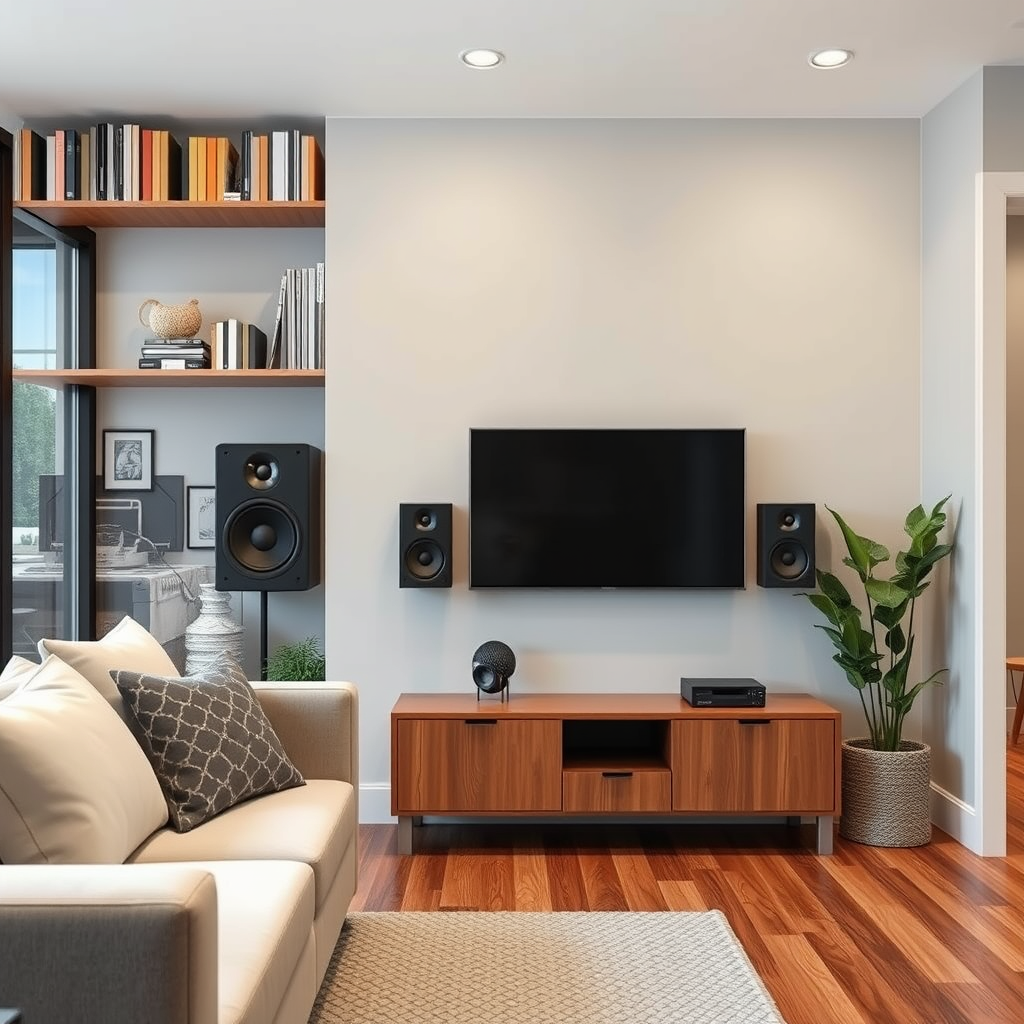
Selecting the ideal location for your speakers is crucial for achieving the best sound quality. Begin by considering the room layout and acoustics; an open space with high ceilings often offers better sound dispersion than a cluttered room. Ideally, speakers should be positioned at ear level when seated, typically between 36 to 48 inches off the ground. Additionally, consider the distance between the speakers and the listening area. A general guideline is to place the speakers at least 2 to 3 feet away from walls to minimize reflections and improve sound clarity. Pay attention to potential obstructions, such as furniture or curtains, that could dampen the audio experience.
Gathering the Necessary Tools
Before embarking on the installation, ensure you have all the necessary tools at your disposal. The fundamental tools required include:
– Drill: A power drill is essential for making holes in the wall for the brackets.
– Stud Finder: This tool will help you locate wooden or metal studs behind the drywall for secure mounting.
– Level: A leveling tool ensures that your speakers are perfectly aligned horizontally.
– Screwdriver: A Phillips or flathead screwdriver will be needed to tighten screws during installation.
– Measuring Tape: Accurate measurements are crucial for proper placement of the speakers.
– Pencil: For marking the wall at the desired mounting points.
Additionally, check if you need specific mounting hardware, such as speaker brackets and appropriate screws, which typically come with the speakers or can be purchased separately.
Preparing the Wall for Installation
Careful preparation of the wall is vital to ensure a secure and safe installation. Start by using a stud finder to locate the wall studs, which are generally spaced either 16 or 24 inches apart. Mark these locations lightly with a pencil. The studs provide the necessary support for heavier speakers, preventing them from falling.
Once you have located the studs, determine the ideal mounting points for your speakers by considering their size and weight. Mark the mounting points clearly on the wall, ensuring they are aligned with the studs. Use your measuring tape to confirm that the distance between the mounting points is consistent with the width of your speakers.
Top 7 Speaker Brands for Wall Mounting (2024)
| # | Brand | Model | Weight (lbs) | Price ($) | Rating |
|---|---|---|---|---|---|
| 1 | Sonos | One SL | 4.08 | 199 | ★★★★☆ |
| 2 | Bose | SoundTouch 10 | 2.4 | 199 | ★★★★★ |
| 3 | JBL | Control 1 Pro | 4.5 | 149 | ★★★★☆ |
| 4 | Klipsch | R-41M | 5.5 | 249 | ★★★★☆ |
| 5 | Sony | SSCS5 | 6.6 | 198 | ★★★★☆ |
| 6 | Polk Audio | T15 | 5.1 | 99 | ★★★★☆ |
| 7 | KEF | Q50a | 8.4 | 599 | ★★★★★ |
Installing the Speaker Brackets
With the wall prepared, it’s time to install the speaker brackets. Begin by following the manufacturer’s instructions for the specific brackets you have chosen. It’s essential to align the brackets with the marks you made earlier, ensuring they align with the studs for secure installation. Use your level to confirm that the brackets are straight before securing them to the wall.
Typically, you will need to drill pilot holes for the screws. Make sure to use screws that are suitable for the weight and type of the brackets. Once the brackets are firmly attached, check their stability by gently tugging on them. If they feel secure, you can proceed to the next step.
Attaching Speakers to the Brackets
Now it’s time to attach the speakers to the installed brackets. Carefully lift the speakers and align them with the brackets. Most modern brackets come with a locking mechanism to secure the speakers in place. Ensure the speakers are properly seated and locked into the brackets according to the manufacturer’s instructions.
After the speakers are attached, double-check their stability. Gently push and pull the speakers to make sure they are firmly attached and will not fall. It’s crucial to ensure that they are secure before proceeding to connect the wiring.
Connecting the Speakers
With the speakers securely mounted, the next step is connecting them to your audio system. Use speaker wire that is appropriate for the distance between the speakers and your audio source. If you want a clean look, consider using wire concealment solutions such as raceways or in-wall wiring options to keep the cables neat and hidden.
Once the wires are in place, connect them to both the speakers and your audio receiver, ensuring that the positive and negative terminals are correctly matched. After completing the connections, power on your audio system and test the sound quality. Listen for clarity, volume, and any distortions that may indicate incorrect wiring or placement.
Adjusting for Optimal Sound
After installation, you may need to adjust the speaker angles and positions slightly to achieve the best audio experience. Experiment with the direction of the speakers; they should ideally be aimed toward the primary listening area. Consider the room’s acoustics—if the sound feels too harsh or muted, slight adjustments can make a significant difference.
It may also be helpful to use an audio calibration tool, if available, to fine-tune your setup. Evaluating the sound from different listening positions can help you identify the best configuration for your speakers, ensuring a rich and immersive audio experience.
In summary, wall mounting speakers is a straightforward process that can significantly enhance your listening experience. By following the steps outlined in this guide—choosing the right location, gathering the necessary tools, preparing the wall, installing brackets, attaching speakers, connecting them, and optimizing sound—you can achieve a professional-quality setup in your home.
Feel free to share your results or reach out with any questions as you embark on your speaker mounting journey. An enhanced audio experience awaits!
Frequently Asked Questions
What tools do I need to wall mount speakers?
To wall mount speakers, you’ll typically need a drill, drill bits, a stud finder, a level, a screwdriver, and mounting brackets specific to your speakers. Having these tools on hand ensures that you can securely and accurately install your speakers while minimizing the risk of damage to your walls.
How do I choose the right height to wall mount my speakers?
The ideal height for wall-mounting speakers generally ranges from ear level to slightly above when seated. This height allows for optimal sound distribution and listening experience. Additionally, consider the type of speakers and their intended use, as surround speakers may require different placement than front speakers.
Why is it important to use a stud finder when wall mounting speakers?
Using a stud finder is crucial when wall mounting speakers because it helps you locate the wooden studs behind your drywall, which provide the necessary support for heavy speakers. Mounting directly into drywall can lead to damage and unsafe conditions, so securing your speakers to studs ensures stability and safety in your setup.
What are the best mounting brackets for wall-mounted speakers?
The best mounting brackets for wall-mounted speakers depend on your specific speaker model and weight. Look for brackets that are adjustable, sturdy, and compatible with your speakers, ensuring they can hold the weight securely. Brands like Sanus and Vogel’s offer high-quality options that provide flexibility and durability for various speaker types.
Which wall mounting method is suitable for different types of speakers?
The wall mounting method varies based on speaker type; for bookshelf speakers, adjustable brackets are often recommended for optimal angle adjustment. In contrast, satellite speakers might benefit from fixed brackets that allow for a flush mount. Always check the manufacturer’s guidelines for recommended mounting methods to ensure compatibility and safety.
References
- https://en.wikipedia.org/wiki/Speaker_(audio
https://en.wikipedia.org/wiki/Speaker_(audio - Loudspeaker | Definition, Types, & Facts | Britannica
https://www.britannica.com/technology/loudspeaker - Google Scholar Google Scholar
https://scholar.google.com/scholar?q=how+to+wall+mount+speakers - Google Scholar Google Scholar
https://scholar.google.com/scholar?q=speaker+mounting+techniques - https://www.sciencedirect.com/topics/engineering/loudspeakers
https://www.sciencedirect.com/topics/engineering/loudspeakers - https://www.nature.com/articles/s41598-019-51162-2
https://www.nature.com/articles/s41598-019-51162-2 - https://www.ncbi.nlm.nih.gov/pmc/articles/PMC8033040/
https://www.ncbi.nlm.nih.gov/pmc/articles/PMC8033040/ - https://www.aaas.org/resources/loudspeakers-and-their-uses
https://www.aaas.org/resources/loudspeakers-and-their-uses - https://www.cdc.gov/nceh/lead/prevention/sources.htm
https://www.cdc.gov/nceh/lead/prevention/sources.htm - https://www.bbc.com/future/article/20200701-how-to-make-your-own-speakers
https://www.bbc.com/future/article/20200701-how-to-make-your-own-speakers
