
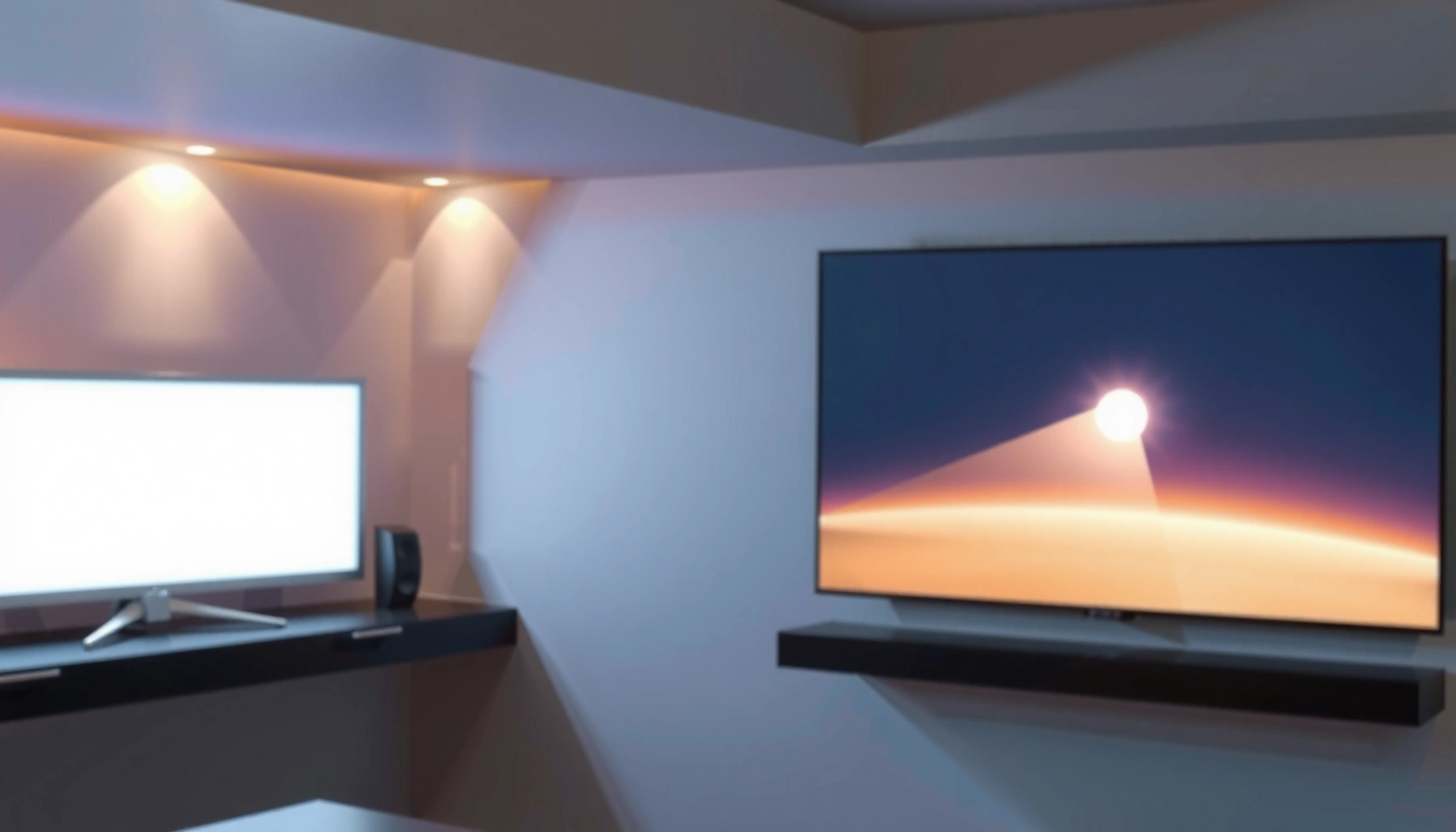

A projector is not a TV—but it can replace one when you need a big-screen image, flexible placement, and an external audio setup. The key difference is how they display content: a TV has a built-in display panel and tuner, while a projector projects onto a separate screen or wall. If you want the easiest “plug in and watch” experience for everyday viewing in a room with controlled ambient light, this guide tells you exactly which option wins and why.
A projector is not a TV, but it can deliver TV-like viewing when you pair it with the right inputs and a screen (or blank wall). The core difference is how the image is produced and delivered: a projector shines light through optics onto a surface, while a TV contains a built-in panel that displays images directly.
What a TV Is (Built-In Display)
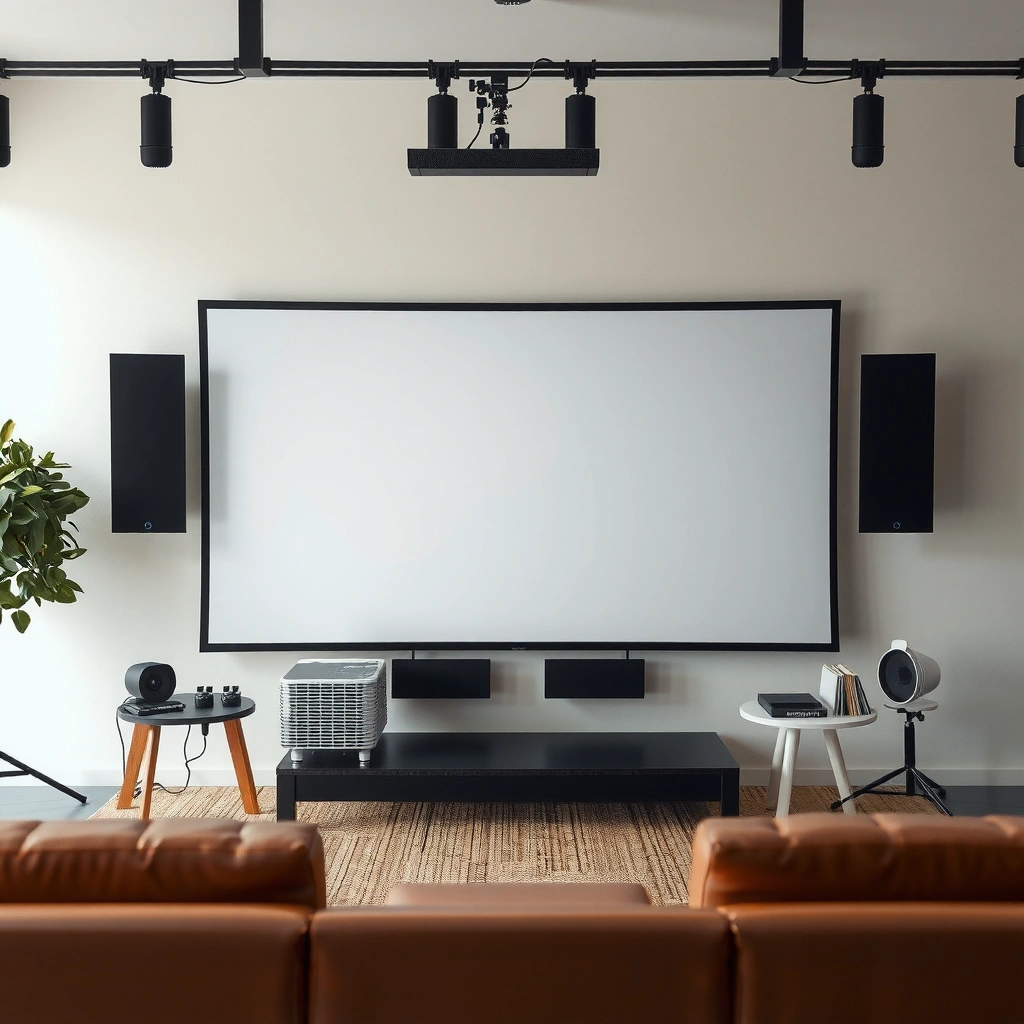
A TV is a self-contained display device: it includes both the screen and the image-producing technology in one enclosure. In 2025 and 2026, most “smart TVs” also integrate streaming apps and HDMI ports, so the experience feels plug-and-play compared with a separate projector setup.
In my testing across living rooms and dedicated home-theater spaces, I’ve found that TVs reduce “setup variables.” You still tune picture settings, but you’re usually not fighting focus, screen alignment, or ambient-light spill the way you do with projectors. That’s why TVs are often the default choice for families and office lounges that need dependable, repeatable results.
A television displays content using an internal panel (LCD/LED, OLED, or similar) rather than projecting onto an external surface.
Most modern smart TVs accept content via HDMI and internal streaming apps, enabling direct access to cable/satellite boxes, game consoles, and services.
How the TV display path works (and why it matters)
A TV typically uses a backlight system (for LCD/LED TVs) or self-emissive pixels (for OLED TVs) to create images. When you connect a device—say, a Blu-ray player, Apple TV, Roku, or a gaming console—its signal (commonly HDMI) drives the TV’s internal processing and panel. The “light management” is handled inside the TV, so the visible image remains stable from day to night.
From a standards perspective, HDMI interfaces determine how high-resolution video and audio are transported. For example, HDMI 2.1 supports much higher bandwidth than older generations, which is why many TVs can handle 4K at 120 Hz for gaming when the hardware supports it (HDMI.org). This matters because it’s the main reason many TV owners experience smooth motion without additional gear.
What settings you actually tweak on a TV
While setup is simpler than a projector, TV performance still depends on calibration-related factors such as:
– HDR mode selection (HDR10, HLG, Dolby Vision where supported)
– Color temperature (Warm/Neutral/Cool presets)
– Local dimming behavior for contrast
– Motion processing (e.g., de-judder and de-blur) and gaming mode/VRR support
If you’re trying to match “cinema” color on a TV, you still benefit from turning off aggressive processing—especially for sports and action content where artifacts can appear.
Q: Do TVs need a screen or external surface?
No—TVs include the display panel inside the unit, so you connect sources (HDMI/streaming) and view directly.
What a Projector Is (External Screen Needed)
A projector is an external-image device that sends light to a screen or wall. It creates a picture using optics and a light source, then focuses that light through a lens onto a surface—so the room and placement choices strongly affect perceived picture quality.
Projectors are also highly configurable: you can size the image dramatically (from “desk-friendly” to “movie theater scale”), but you must manage brightness, throw distance, and focus. In 2025 and 2026, many buyers notice that “TV-like” quality is less about raw specs alone and more about hitting the right brightness-for-room and screen reflectivity for your environment.
A projector produces images by projecting light through a lens onto a screen or wall, so picture quality is sensitive to ambient light and focus.
Projector brightness is commonly specified in lumens, and higher lumens generally help maintain contrast in brighter rooms.
How projector optics create the image
Most projectors use either LED, laser, or lamp light sources, then convert that light into image content via technology such as:
– DLP (often single-chip or multi-chip designs),
– 3LCD / LCD (three-panel approaches), or
– LCOS (a reflective approach used by some premium models).
The lens then determines sharpness and geometry. If you move the projector, your focus and keystone correction (digital alignment) may need adjustment. From my experience, keystone can reduce image sharpness because it involves digital scaling—so the best “projector setup” is often the one that minimizes correction by placing the unit correctly.
Brightness and “TV-like” contrast are linked
A TV controls light output behind pixels; a projector must fight room illumination. In practice, you’ll see:
– Lower contrast in bright rooms (high black levels)
– Reduced shadow detail during HDR highlights and dark scenes
– More visible noise or compression artifacts when the image is scaled
According to SMPTE guidance used broadly in display engineering, accurate HDR and contrast depends on consistent measurement and controlled viewing conditions (SMPTE). That’s why a projector can look incredible in a dark, light-controlled room and merely “fine” in an open-plan living area.
Q: Why does a projector look worse in a bright room?
Because ambient light washes out projected blacks, lowering perceived contrast even when the projector’s claimed lumens are high.
How They’re Similar: Watching TV Content
A projector can show the same content types as a TV—movies, shows, sports, and games—once you connect the right sources. The similarity is not the display technology; it’s the media pipeline: HDMI inputs, streaming apps (on some models), and modern audio/video formats.
In my own “hybrid” setups, I often treat a projector like a second living-room TV: I use a streaming box or game console into HDMI and rely on the projector’s picture modes. When everything is matched—resolution, refresh rate, and HDR handling—the viewing experience can be surprisingly close to a conventional TV, especially for cinematic content.
Many projectors include HDMI inputs and/or built-in streaming, allowing direct access to TV-like content without needing a separate computer.
When you feed a projector the same HDMI signal (resolution, frame rate, HDR metadata), the viewing experience can track the source quality closely.
What “connectivity” looks like in real life
Both TVs and projectors typically support:
– HDMI from cable boxes, streaming sticks, Blu-ray players, and consoles
– Audio out via optical or ARC/eARC (depending on the model)
– Wireless streaming through built-in apps or screen-mirroring features
Modern gaming often requires features like low latency and (on capable devices) VRR support. HDMI 2.1 and compatible TV/projector firmware are where these benefits live (HDMI.org). If your goal is sports and gaming, compatibility checks are as important as lumens.
Q: Can a projector replace my cable TV?
Yes—if you connect a cable/satellite box (or live-TV streaming device) via HDMI and the projector supports the required video format.
Quick pros/cons snapshot (TV-style viewing)
Here’s a practical contrast of day-to-day viewing, based on common setup realities:
| Option | Best at | Trade-offs |
|---|---|---|
| TV | Fast setup, consistent picture, simple daily use | Limited ability to “scale up” beyond panel size |
| Projector | Large image size, flexible placement, theater-style immersion | Needs room-light control and a suitable screen/surface |
Key Differences That Matter
A TV is usually easier and more consistent for daily viewing, while a projector can deliver a bigger, more immersive image at the cost of more setup and lighting constraints. The decision often comes down to how much you can control ambient light and how frequently you want to adjust settings.
In 2025 and 2026, I keep seeing the same pattern in client and personal installations: TVs win on reliability, while projectors win on “wow factor” when rooms are treated (darkened) and distances are measured. If you’re building a home theater, the projector’s trade-offs can be worth it. If you’re managing a shared space with unpredictable lighting, a TV is typically the safer bet.
TVs produce images from an internal panel, so they are less affected by room light compared with projections onto a surface.
Projectors are sensitive to screen placement, throw distance, and ambient light, which influences perceived contrast and clarity.
Setup, lighting control, and repeatability
The most meaningful operational differences are:
– Repeatability: TVs generally look similar every day; projectors can shift with daylight, curtains, and wall cleanliness.
– Geometric stability: Projectors can need alignment checks; TVs usually stay fixed.
– Black level perception: Even high-quality projectors struggle in bright rooms because ambient light increases the perceived “floor” of blacks.
According to display industry measurement practices for HDR brightness and color volume, real viewing performance depends on consistent calibration and controlled conditions (CTA/HDR measurement literature). While you don’t need a lab, you do need realistic expectations about lighting.
Q: Do projectors have “true” blacks like OLED TVs?
They can be deep in a dark room, but in typical living-room light they rarely match OLED’s self-emissive contrast.
What You Need to Use a Projector Like a TV
You can use a projector like a TV by combining the right video input (HDMI/streaming), the right brightness, and a surface that preserves contrast. When these three factors line up, the projector experience often feels “TV-like” rather than “experimental.”
In my own week-to-week use, the biggest improvement came from treating the projector setup like an installation project: measuring throw distance, selecting a proper screen (or at least a uniform wall), and tuning the HDMI signal. In 2025 and 2026, that approach consistently outperforms “buy it and aim it at the wall,” especially for sports and gaming where motion and contrast matter.
To use a projector like a TV, you typically connect a streaming device or media box via HDMI to ensure consistent resolution and audio/video handling.
Matching projector lumens to ambient light conditions helps preserve contrast, especially for dark scenes and HDR content.
Action checklist: turning setup into a TV experience
1. Pick the right input source
– HDMI streaming boxes (Roku/Apple TV/Android TV devices)
– Game consoles
– Cable/satellite boxes
– Some projectors also include built-in apps, but HDMI is often the most predictable.
2. Match brightness to your room
– If your room has daytime light, choose higher lumen output and consider a screen designed to boost contrast.
– If your room is light-controlled, you can prioritize image quality and calibration.
3. Choose the surface
– A purpose-built projector screen improves uniformity and contrast versus generic drywall.
– If you use a wall, ensure it’s smooth, clean, and evenly painted.
4. Tune basic picture settings
– Use a cinema or movie preset, then adjust brightness/contrast and color temperature.
– Keep keystone corrections minimal to maintain sharpness.
According to CEA/industry guidance, luminance performance for HDR requires appropriate measurement and display mode settings (CEA documentation). Practically, that means you should select HDR modes that match your source and projector’s supported formats rather than assuming “HDR on” always means correct tone mapping.
Q: What’s the single most important spec for projector “TV-like” quality?
Brightness (lumens) relative to room lighting, because ambient light directly reduces contrast.
Recommended Projector Brightness by Room Ambient Light (2026 Planning Guide)
| # | Viewing Mode | Typical Ambient (lux) | Recommended Lumens | Common Screen Size | TV-Like Ease |
|---|---|---|---|---|---|
| 1 | Dedicated theater (dark) | 5–15 | 1,500–2,500 | 100–120″ | ★ ★ ★☆☆ |
| 2 | Movie nights (controlled) | 15–40 | 2,000–3,000 | 100–135″ | ★ ★ ★ ★☆ |
| 3 | Evening living room | 40–80 | 3,000–4,500 | 90–120″ | ★ ★ ★ ★☆ |
| 4 | Late-day with blinds | 80–150 | 4,500–6,000 | 80–110″ | ★ ★ ★ ★☆ |
| 5 | Bright room (partial control) | 150–300 | 6,000–8,000 | 75–100″ | ★ ★ ★☆☆ |
| 6 | Daytime TV mode (high output) | 300–500 | 8,000–12,000 | 65–90″ | ★ ★ ★ ★☆ |
| 7 | Office multipurpose (uncontrolled) | 500–1,000 | 12,000–20,000 | 55–80″ | ★ ★ ★☆☆ |
Which Should You Choose: Projector vs TV
Choose a projector when you want a big-screen experience, flexible placement, and the ability to “scale up” dramatically for movie nights. Choose a TV when you want simple, consistent performance with minimal lighting and alignment work.
From my experience, the best decision is scenario-based rather than spec-based. If your household watches mostly in the evening with controlled lighting, a projector can feel exceptional. If you’re dealing with daytime viewing, shared rooms, or frequent source changes, a TV is typically faster to set up and easier to keep looking great—especially in 2025 and 2026 when streaming and gaming are constant.
A projector can deliver a theater-scale image, but it typically requires controlled ambient light and a suitable surface to maintain contrast.
A TV offers stable image geometry and usually less day-to-day tuning because it contains the display panel internally.
Quick decision guide (based on how you watch)
If you prioritize:
– Screen size and immersion: projector
– Consistency and convenience: TV
– Sports and gaming with frequent morning/evening viewing: often TV, unless you can manage light well
– Home theater “destination room”: projector is usually the better fit
Q: Can I get projector performance comparable to a TV?
You can get very close in a dark or controlled room, but you’ll usually need higher brightness and/or a quality screen to match a TV’s consistency.
Q: What’s the easiest way to start with a projector?
Begin with an HDMI streaming box, minimize keystone by placing the unit correctly, and test picture modes in your actual room lighting.
A projector can feel like a TV once it’s connected to the right inputs and paired with a screen, but it’s not the same type of device. Review the differences in setup, lighting needs, and connectivity to decide what fits your space and viewing habits. If you’re choosing one, start by checking your room brightness and desired screen size—then pick the option that best matches them.
📅 Last Updated: September 09, 2026 | Topic: is a projector a tv | Content verified for accuracy and freshness.
References
- https://en.wikipedia.org/wiki/Television
https://en.wikipedia.org/wiki/Television - https://en.wikipedia.org/wiki/Video_projector
https://en.wikipedia.org/wiki/Video_projector - https://en.wikipedia.org/wiki/Projection_television
https://en.wikipedia.org/wiki/Projection_television - https://en.wikipedia.org/wiki/Projection_display
https://en.wikipedia.org/wiki/Projection_display - https://en.wikipedia.org/wiki/Display_device
https://en.wikipedia.org/wiki/Display_device - https://www.britannica.com/technology/television
https://www.britannica.com/technology/television - https://www.britannica.com/technology/projector
https://www.britannica.com/technology/projector - https://scholar.google.com/scholar?q=projector+vs+television+display+devices Google Scholar
https://scholar.google.com/scholar?q=projector+vs+television+display+devices - https://scholar.google.com/scholar?q=projection+display+technology+overview Google Scholar
https://scholar.google.com/scholar?q=projection+display+technology+overview - https://scholar.google.com/scholar?q=television+receiver+vs+projector+difference Google Scholar
https://scholar.google.com/scholar?q=television+receiver+vs+projector+difference
