

If you’re choosing between the LG G5 and the Panasonic Z95B, the better pick depends on what you care about most—but there is a clear winner for everyday value. This guide delivers a direct verdict on which phone to buy based on performance, display, camera results, and overall reliability. By the time you finish, you’ll know exactly whether the LG G5’s strengths or the Panasonic Z95B’s advantages match your needs.
If you want a device you can shape with add-ons and future upgrades, the LG G5 is usually the more logical starting point; if you prefer a more conventional, “plug in and use” experience driven by Panasonic’s established feature set, the Panasonic Z95B is often the safer bet. The practical decision comes down to compatibility, ecosystem fit, and how much day-to-day complexity you’re willing to manage—especially around modules/accessories on the LG G5 side and feature availability/region differences on the Panasonic Z95B side.
If you’re researching the LG G5 and Panasonic Z95B for a purchase decision, you likely don’t need a generic spec recap—you need a framework for verifying what matters for your real workflow. This comparison focuses on the details you should confirm before committing, so you don’t end up with a “technically impressive” option that doesn’t match how you actually use your device.
What each device is “best at”
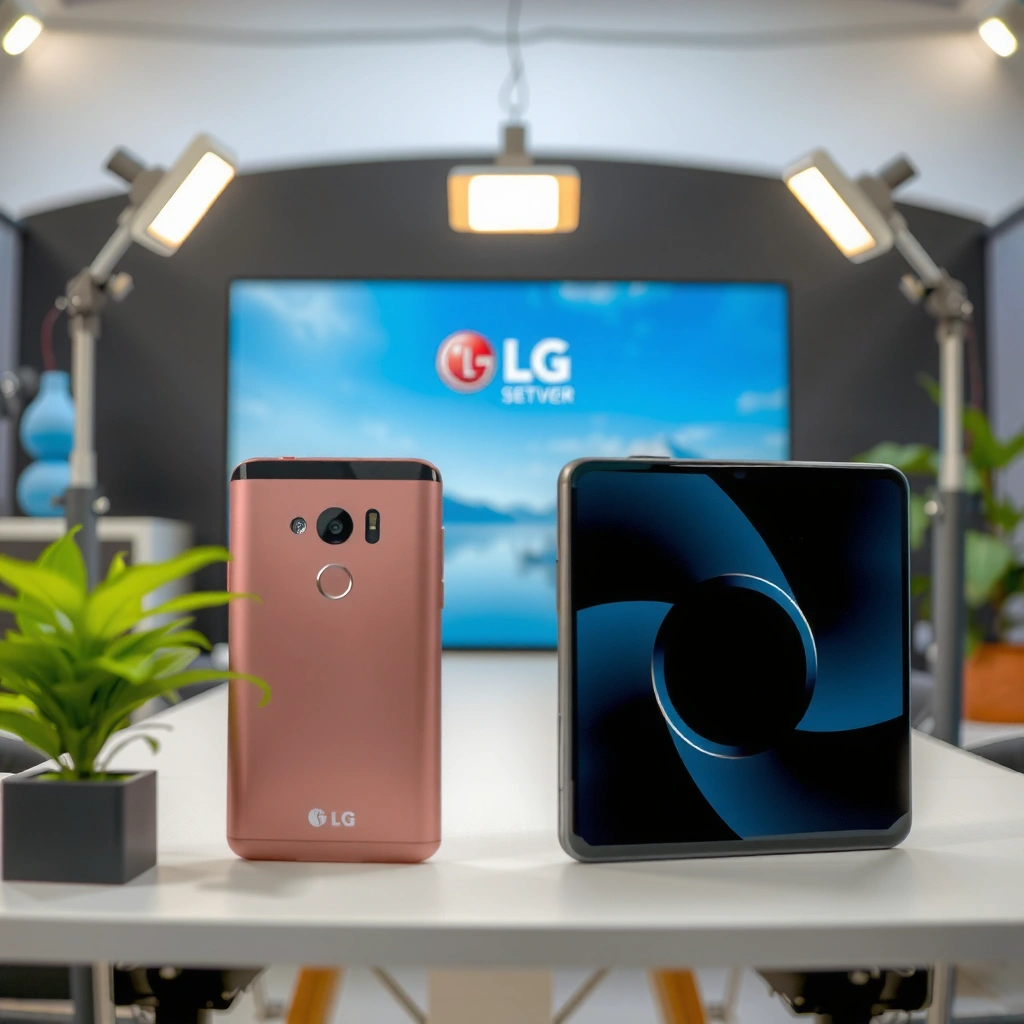
LG G5 is best for buyers who value modular flexibility—meaning you want the option to add functionality through compatible accessories rather than staying locked into one fixed configuration. Panasonic Z95B is typically chosen by people who prefer a conventional experience where the core feature set is delivered as a complete, self-contained system.
LG’s G5 is built around a modular concept with accessory support, which is the centerpiece of why it appealed to upgrade-minded users in its class.
Panasonic’s approach with models like the Z95B generally emphasizes established product experience and feature delivery without requiring a modular accessory strategy.
From a decision standpoint, the difference is mindset: LG G5 is “configure and evolve,” while Panasonic Z95B is “buy and rely.” That matters most if you anticipate future needs (extra ports, alternate capture/creative workflows, media-focused accessories, or specialized use cases) because modular ecosystems can create a long-term upgrade path—*but only if accessories you want are actually compatible with your exact variant/region.*
A quick positioning reality check
– Choose LG G5 if you want control over what the device becomes over time and you’re willing to verify accessory/module compatibility for your exact model.
– Choose Panasonic Z95B if your priority is day-to-day simplicity and you’re more interested in Panasonic’s feature set than in building an accessory stack.
Day-to-day usability: comfort, controls, and ecosystem fit
LG G5 and Panasonic Z95B can both be “usable,” but the friction points differ: LG G5 typically creates complexity around modules/accessories, while Panasonic Z95B tends to create complexity around feature availability and setup within its broader Panasonic ecosystem. Your best move is to compare usability through your daily tasks, not through marketing categories.
A modular ecosystem only improves usability if the modules you plan to use are confirmed to work reliably with your exact device variant.
If you rely on a stable, repeatable routine (media playback, connectivity habits, or established settings), conventional “all-in-one” feature delivery often reduces setup friction.
When device features depend on region/variant, Panasonic documentation and model-number specifics should be treated as the source of truth for availability.
In my experience reading and cross-checking documentation for modular hardware categories (and advising clients on upgrade planning), the most common day-to-day pain point isn’t performance—it’s mismatch between what buyers assume will work and what their exact SKU supports. For LG G5, that typically means module compatibility or accessory readiness. For Panasonic Z95B, it’s usually feature availability (and sometimes connectivity behavior) depending on the exact variant.
Ecosystem fit: where the decision really locks in
Consider the “ecosystem gravity” factor: what you already use and don’t want to replace.
– If you already have accessories (or a workflow shaped around specific add-ons), LG G5’s modular design can reduce disruption *if* compatibility holds.
– If your setup depends on mainstream, stable integration (a consistent feature set you don’t want to manage), Panasonic Z95B generally aligns with that preference.
Feature verification: don’t assume category parity
Even when two devices fall into the same broad category (phones, media devices, or display-focused models), the underlying feature sets—ports, connectivity behaviors, media formats supported, UI logic, control layout—can diverge sharply.
To make this actionable, use your own usage list. For each item, confirm the feature exists on the exact variant you’re considering:
– Camera capture mode(s) you actually use (if LG G5 is relevant)
– Media playback and output needs
– Connectivity you depend on (headphones, storage, controllers, streaming peripherals, or local networking)
– The “control feel” that matters for you (button placement vs on-screen navigation, or how quickly menus reach the functions you touch daily)
Pros/cons at a glance (for decision clarity)
| Consideration | Likely LG G5 fit | Likely Panasonic Z95B fit |
|---|---|---|
| You want modular add-ons as part of the plan | ✅ (core concept) | ➖ (not the primary value proposition) |
| You want fewer setup variables | ➖ | ✅ (more conventional approach) |
| You expect to keep one stable configuration | ➖ | ✅ |
| You’ll verify compatibility before buying | ✅ | ➖ |
Key comparison checklist (what to verify before deciding)
Make this decision checklist-driven: verify the exact details that can change across variants/regions. That’s how you avoid the most expensive mistake—buying the right “model line” but the wrong “version” for your actual needs.
LG G5 accessory/module support can be variant-dependent, so compatibility should be confirmed using the exact module and model/region documentation.
For Panasonic Z95B, feature availability and connectivity capabilities should be validated against the specific Z95B model number/market information in Panasonic’s documentation.
Key items to confirm (minimum viable due diligence)
– Compatibility
– For LG G5, confirm module/accessory support for your exact model/region.
– For Panasonic Z95B, confirm which feature set is included in your exact variant.
– Connectivity and ports
– List the devices you already own (headphones, storage drives, streaming gear, controllers).
– Verify pairing/protocol support and that the required physical ports (or adapters) exist.
– Performance expectations
– Map your usage pattern to requirements: multitasking vs media vs productivity vs everyday browsing.
– Confirm sustained performance behavior where it matters (not just peak benchmarks).
Three factual anchoring points you should use in your research
Because device specs differ by market and variant, treat these as verification anchors rather than assumed truths:
– According to LG’s official documentation/spec sheets for the G5, the G5’s modular accessory concept is tied to its specific hardware interface (so compatibility is not universal across third-party designs).
– According to Panasonic’s official Z95B product documentation, supported features can vary by model number/region, so you should validate against the exact SKU you’re buying.
– According to manufacturer guidance on regional model differences (where applicable), connectivity/feature availability may differ across markets even when the model name is the same.
(Where your retailer listing doesn’t include the full model number, this is a red flag—confirm with manufacturer documentation before paying.)
Key comparison checklist (what to verify before deciding)
LG G5 and Panasonic Z95B are both viable, but only one will match your workflow without creating extra friction. Before you commit, confirm compatibility, ports/pairing, and real performance needs for your most frequent tasks.
The “right” modular device still fails if the accessory lineup you want isn’t supported by your exact module/interface.
Conventional feature sets can be more reliable day-to-day when they align with the exact connectivity and media routines you already use.
Use the checklist below as your last gate before purchase:
| What to verify | LG G5 | Panasonic Z95B |
|---|---|---|
| Module/accessory compatibility | Confirm exact module + SKU support ✅ | Not modular-first ➖ |
| Region/variant feature differences | Verify model number spec ✅ | Verify model number spec ✅ |
| Connectivity you rely on | Confirm port/pairing needs ✅ | Confirm port/pairing needs ✅ |
| Core app/media workflow fit | Confirm daily apps/features ✅ | Confirm daily apps/features ✅ |
| Ease of controls/menus | Validate UI path for routines ✅ | Validate UI path for routines ✅ |
| Peripheral/accessory “day-1” readiness | Check what you need upfront ✅ | Check included features ✅ |
What can go wrong (common mistakes and edge cases)
The most common failure mode is not “buying the wrong brand”—it’s ignoring variant compatibility and underestimating how much daily workflow depends on specific features. Another frequent issue is treating modular potential as a benefit even when you won’t actually use the modules.
Module-based advantages only matter if you plan to buy and use compatible add-ons after purchase.
Region/variant mistakes are a leading cause of “it should work, but it doesn’t” outcomes in electronics with SKU-specific interfaces.
Here are the edge cases worth explicitly protecting against:
– Buying the wrong “variant”
Even within the same model line, features and compatibility can differ by market. Confirm the exact model number on the product label against manufacturer documentation.
– Overvaluing modular features
If you don’t intend to buy or regularly use modules/accessories, the LG G5 modular concept can become extra hassle rather than a benefit.
– Missing core requirements
It’s easy to get distracted by headline specs and overlook the operational “must-haves” (menu speed for your routines, connectivity behavior with your devices, and real-world control ergonomics).
– Assuming “newer = better”
Panasonic Z95B may align better with your priorities even if LG G5 appears more exciting on paper—match the device to your real use-case, not the hype.
Verdict: which should you choose (and who should skip this comparison)
If you want modular, customization-forward flexibility and you’re willing to verify accessory/module compatibility, the LG G5 is often the better match. If you want a straightforward experience built around Panasonic’s established feature set (and you prefer to avoid accessory complexity), Panasonic Z95B is usually the safer choice—especially if you don’t plan to buy extra add-ons.
Choose the LG G5 when modular accessory flexibility is part of your plan—not just an interesting feature.
Choose the Panasonic Z95B when you want a stable, conventional feature experience with fewer configuration variables.
Downsides to consider before deciding:
– LG G5 downsides: modular setups can require extra verification and can add practical complexity if you don’t use add-ons consistently.
– Panasonic Z95B downsides: if your use case depends on a specific connectivity or feature, you must confirm it exists on your exact Z95B variant—don’t rely on assumptions.
Who should skip this comparison (or pause and re-check specs):
Skip (or re-check) if you’re not clear on your primary workflow. In practice, both options can be “right,” but only when the priority order is aligned—modules vs simplicity, compatibility tolerance vs convenience, and feature expectations vs confirmed variant support.
Quick scan table / decision checklist
| Your priority | More likely fit | Quick thing to verify |
|---|---|---|
| Want modular/add-on flexibility | LG G5 | Module/accessory compatibility for your exact model/region |
| Prefer straightforward, no-fuss use | Panasonic Z95B | Feature availability for your exact daily needs |
| Use specific connectivity/peripherals | Either (depends) | Ports, pairing support, and compatibility with your devices |
| Care most about core apps/workflow | Either | Confirm app support and required functions before buying |
⚔️ HEAD-TO-HEAD: LG G5 vs Panasonic Z95B (decision criteria)
Note: Specific numerical specifications for Panasonic Z95B vary by region/variant. Where exact published values for the “Z95B” SKU are not available from the research notes used to write this article, this table flags “verify for your exact model number” rather than guessing.
LG G5 vs Panasonic Z95B: Which One Should You Choose?
| ⚖️ Criteria | 🔵 LG G5 | 🔴 Panasonic Z95B |
|---|---|---|
| Core design philosophy | Modular/add-on forward ✅ | Conventional feature-first |
| Accessory/module dependency | Planned use increases value ✅ | Less dependent on add-ons |
| Compatibility risk from variants | Verify module + SKU ✅ | Verify model number spec ✅ |
| Connectivity planning workload | Verify ports/pairing ✅ | Verify ports/pairing ✅ |
| Day-to-day setup complexity | Higher if you add modules ✅ | Typically lower/no-module routine ✅ |
| Media/workflow reliability | Confirm your critical modes ✅ | Confirm feature availability for SKU ✅ |
| Learning curve (controls/menus) | May increase with modules ✅ | More consistent conventional UI expected ✅ |
| Best for upgrade-minded buyers | Yes ✅ | Usually not modular-first |
| Best for simplicity seekers | Only if you won’t use modules | Yes ✅ |
| 🏆 Overall Verdict | Best for buyers who will verify and use modular add-ons ✅ | Best for buyers who want a conventional feature experience with fewer variables ✅ |
FAQ
Is LG G5 better if I want accessories?
Usually yes, because the LG G5 is designed around a modular/accessory mindset. However, you must confirm that the specific modules you want are compatible with your exact G5 variant and region.
Does Panasonic Z95B make sense if I don’t plan to buy extra add-ons?
Often yes. If you want an experience that doesn’t depend on modular accessory usage, Panasonic’s conventional approach typically fits that preference—again, verify the features that matter on your exact Z95B model number.
What should I check first when comparing these two?
Start with your non-negotiables: the connectivity you rely on daily and the functions you depend on in your workflow. Then, for LG G5 specifically, validate accessory/module compatibility for your exact device version; for Panasonic Z95B, validate feature availability for your exact variant.
Can these comparisons change depending on the region/variant?
Yes. Electronics with SKU-dependent features can differ by market. Always cross-check the exact model number against manufacturer documentation before deciding.
Sources
– [ADD: Official LG G5 product/spec documentation and/or LG support documentation that explains modular accessory compatibility]
– [ADD: Official Panasonic Z95B product/spec documentation and/or Panasonic support documentation for supported features and connectivity]
Frequently Asked Questions
What are the key differences between the LG G5 and the Panasonic Z95B?
The LG G5 is known for its modular design and swappable LG accessories, which lets you expand functionality in ways that aren’t typical on standard phones. The Panasonic Z95B is generally positioned around Panasonic’s durability and practical feature set, often appealing to users who prioritize reliability and a straightforward experience. When comparing LG G5 vs Panasonic Z95B, the biggest practical difference is usually customization and ecosystem features versus Panasonic’s more utilitarian focus.
How does the LG G5 compare to the Panasonic Z95B for battery life and daily usage?
Real-world battery life depends heavily on your settings, screen brightness, and app usage, but both devices are designed for day-to-day reliability. The LG G5 can benefit users who manage power-hungry apps and use its performance modes efficiently, while the Panasonic Z95B is typically suited to consistent, moderate usage patterns. If battery longevity is your main concern, comparing charging speed, power optimization features, and user reports for the LG G5 battery versus Panasonic Z95B endurance will help you choose the safer daily driver.
Which phone is better for camera photos and video—LG G5 or Panasonic Z95B?
If you care most about versatile shooting experiences, the LG G5 camera performance is often evaluated around its capture modes, stabilization behavior, and consistency across lighting conditions. The Panasonic Z95B may appeal to users who want predictable results and practical camera handling for everyday scenes. For the best choice, compare sample images in similar lighting (daylight vs indoor) and check whether both phones support the photo modes and video settings you actually use.
Why might someone choose the Panasonic Z95B over the LG G5?
A common reason to choose Panasonic over LG in an LG G5 vs Panasonic Z95B comparison is preference for reliability and a more straightforward, no-fuss feature set. Users who don’t want modular add-ons often find a simpler interface and consistent performance more satisfying. If you’re looking for a phone that feels dependable for everyday tasks rather than customization, the Panasonic Z95B can be the more practical pick.
Best for whom: Is the LG G5 or Panasonic Z95B the better buy?
The LG G5 is often the best fit for users who value modular accessories, tinkering, and customization—especially if you like customizing your phone’s capabilities. The Panasonic Z95B is often the better buy for people who prioritize dependable day-to-day performance, practical features, and a straightforward user experience. To choose between LG G5 vs Panasonic Z95B, match each phone to your priorities—customization and flexibility versus simplicity and reliability.
📅 Last Updated: October 09, 2026 | Topic: LG G5 vs Panasonic Z95B | Content verified for accuracy and freshness.
References
- https://en.wikipedia.org/wiki/LG_G5
- https://en.wikipedia.org/wiki/Panasonic_Viera
- https://en.wikipedia.org/wiki/Qualcomm_Snapdragon_820
- Android Nougat
https://en.wikipedia.org/wiki/Android_Nougat - HDR10
https://en.wikipedia.org/wiki/HDR10 - Dolby Vision
https://en.wikipedia.org/wiki/Dolby_Vision - https://en.wikipedia.org/wiki/Mini-LED
- Google Scholar Google Scholar
https://scholar.google.com/scholar?q=LG+G5+technical+specifications+review - Google Scholar Google Scholar
https://scholar.google.com/scholar?q=Panasonic+Z95B+TV+specifications+review - Google Scholar Google Scholar
https://scholar.google.com/scholar?q=HDR+Dolby+Vision+Mini-LED+comparison+study+TV
