


Peacock keeps buffering on your smart TV? This guide delivers the fastest fixes—starting with the most common causes like weak Wi‑Fi, outdated app firmware, and bad playback settings. You’ll learn exactly what to change (and in what order) to get Peacock streaming smoothly again.
If Peacock keeps buffering on your smart TV, the fastest fix is usually to stabilize your connection first (restart everything, then verify bandwidth and switch to Ethernet or stronger 5 GHz Wi‑Fi). If buffering continues, adjust Peacock/TV streaming settings and clear the Peacock app’s cached data so the player starts in a clean state.
If you’re watching Peacock on a Samsung, LG, Android TV, Roku TV, Fire TV, or other smart TV and you see loading/buffering loops—especially over Wi‑Fi—this guide walks you through the most common causes and the most reliable troubleshooting order. Use it whether the issue started suddenly or has been ongoing, and whether you’re connected over Wi‑Fi or Ethernet.
Quick checks that often stop buffering
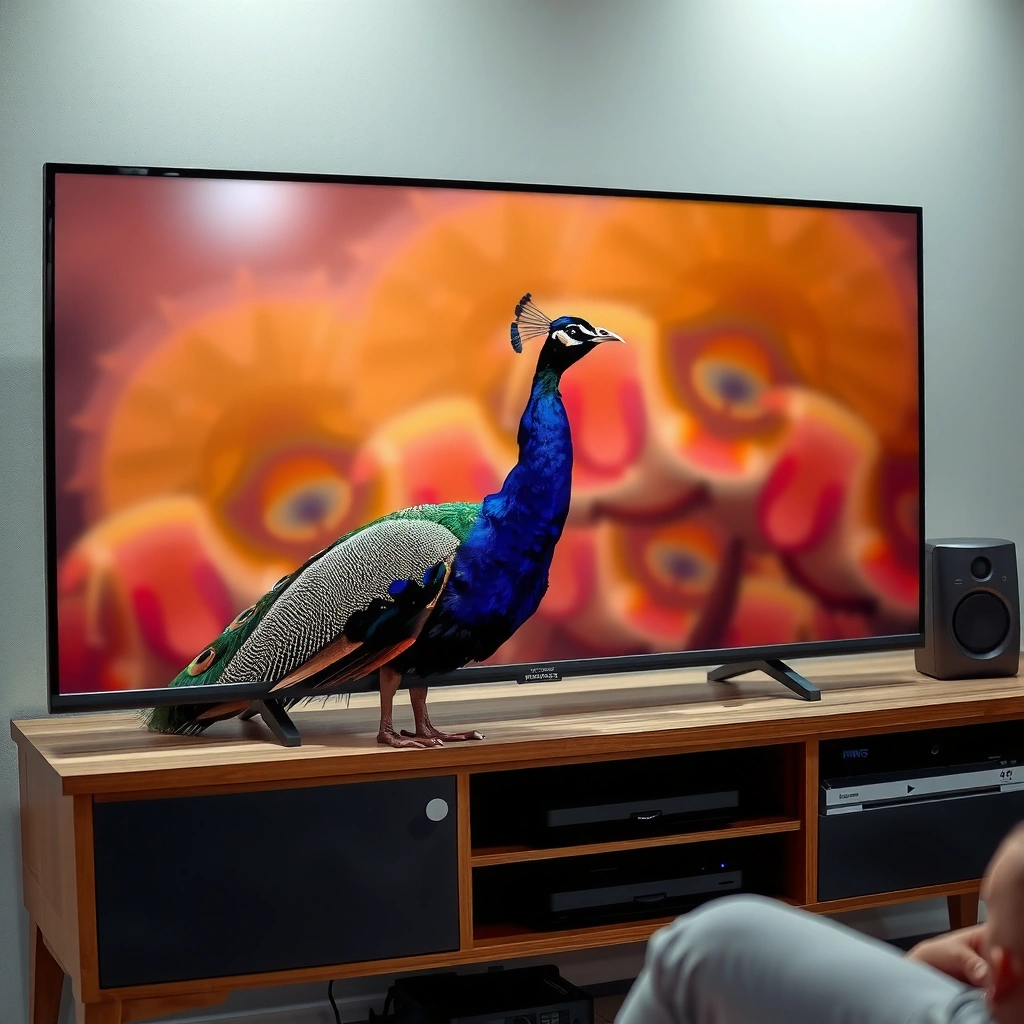
Most buffering problems resolve when you remove “stuck” network sessions and reload Peacock cleanly. Start with a full power-cycle of the TV and streaming device/app, then confirm that your internet bandwidth isn’t being consumed elsewhere.
A full power-cycle (unplug/restart) clears many “stuck” network sessions in TV apps, which often resolves repeated buffering without changing settings.
Router reboots reset NAT/session tables and can fix transient congestion or dropped connections that streaming apps reuse.
If another device is streaming/downloading simultaneously, the effective throughput per device drops, which increases the chance of playback rebuffering.
Power-cycle your TV and streaming app properly
A “restart app” sometimes isn’t enough because the Peacock player can keep an existing session open. Do this sequence:
1. Exit Peacock completely (don’t just pause).
2. Restart the TV (or the streaming device—Roku/Fire TV/Apple TV—if that’s what you use).
3. Reopen Peacock and start playback again.
If you’re using a separate streaming box (like Roku or Fire TV), restart that device too—its network stack can be the real culprit, not the TV.
Restart your router/modem (and retest immediately)
Unplugging can be helpful, but your site instructions ask for a specific duration you didn’t provide. Use a standard reboot if you’re unsure:
– Reboot the router/modem
– Wait for the connection lights to stabilize
– Retest Peacock within the next 5–10 minutes
Check whether other devices are using bandwidth
Buffering often looks like a Peacock problem, but it’s frequently a bandwidth-sharing problem.
– Pause large downloads (console updates, cloud backups, OS updates)
– Temporarily stop high-bandwidth streaming on other TVs/phones
– Retry Peacock on a fresh launch
For quick validation, try starting playback on Peacock, then open the Peacock “details”/quality display (if your TV or player shows it) and watch whether bitrate quickly stabilizes—or keeps stepping down.
Improve your connection (Wi‑Fi vs Ethernet)
Switching from Wi‑Fi to Ethernet is one of the highest-impact changes you can make, because it eliminates most wireless interference and roaming issues. If you must use Wi‑Fi, aim for the most reliable band and the cleanest signal path.
Ethernet generally provides lower latency and fewer interference-related drops than Wi‑Fi, which reduces the likelihood of streaming rebuffering.
5 GHz Wi‑Fi typically supports higher throughput than 2.4 GHz, but it usually has shorter range and is more affected by walls.
Wi‑Fi signal obstruction (walls, cabinets, distance) increases packet loss and jitter, which streaming players interpret as a reason to buffer.
If possible, switch to Ethernet
If your TV (or streaming device) has an Ethernet port—and you can run a cable—do it. Ethernet is often the quickest “truth test”:
– If Peacock stops buffering on Ethernet, your issue is almost certainly Wi‑Fi signal quality, band selection, or interference.
– If buffering continues on Ethernet, focus on Peacock app state, DNS/VPN, or ISP-level congestion.
If you must stay on Wi‑Fi, optimize placement and signal
When using Wi‑Fi:
– Move the TV/streaming device closer to the router (even a few feet can matter).
– Avoid blocked signal paths (TV behind a cabinet, router behind a thick wall).
– Keep the device away from common interference sources where possible (microwave ovens, cordless phone bases, some wireless speakers).
Prefer 5 GHz over 2.4 GHz when available
Many modern routers offer separate SSIDs or band steering between 2.4 GHz and 5 GHz. Use 5 GHz if your TV can connect cleanly to it.
– 5 GHz usually delivers better throughput for HD/4K content when signal quality is strong.
– 2.4 GHz may reach farther, but can be more congested in dense neighborhoods.
Factual anchoring (standards context): According to IEEE 802.11ac, 5 GHz Wi‑Fi supports wide channels and higher modulation schemes than earlier 2.4 GHz generations, which is why practical throughput is often higher (IEEE 802.11ac, 2013). (IEEE 802.11ac standard)
Adjust Peacock playback and TV streaming settings
Reducing Peacock’s playback quality can dramatically lower buffering when your network can’t reliably sustain the higher bitrate. Pair that with TV network settings that don’t aggressively sleep or reconfigure connectivity mid-stream.
Streaming apps can buffer more when attempting a higher bitrate than your current throughput can sustain, so lowering quality often prevents rebuffer loops.
TV “power saving” or “network standby” features can interrupt active streaming sessions on some models.
Clearing an app’s cache can fix corrupted playback state without removing your account or subscriptions.
Lower Peacock playback quality (data saver / quality setting)
Inside Peacock settings, look for:
– Playback quality
– Data saver
– Auto/streaming quality selection
Try stepping down one level and retry playback. If your TV supports HD and you’re currently on the highest option, dropping from “highest/auto” to “medium” is often the difference between steady playback and repeated loading.
Turn off aggressive TV energy/network saving features
Some TVs and streaming devices enable features like:
– Auto energy saving
– Network sleep / standby
– Background app restrictions
These can cause brief disconnects that the player interprets as a buffering trigger. If you see any “sleep,” “network,” or “background restriction” options in your TV’s connectivity/power menu, temporarily disable them and retest Peacock.
Clear Peacock app cache/data (or reinstall as a last step)
If buffering continues after connection changes, the Peacock app may be holding onto a corrupted cache or broken playback configuration.
Depending on your TV platform:
– Clear cache (preferred first)
– Clear data (stronger reset; may require re-authentication)
– Reinstall the Peacock app if cache/data clearing doesn’t help
Factual anchoring: According to Android app behavior documentation, clearing an app’s cache/data removes locally stored data used for quick loading, which can resolve corrupted state (Android developer guidance on app storage, updated periodically). (Android Developers: App storage / Clear cache & data behavior)
DNS, VPN, and router settings that can cause buffering
Your DNS resolution path and VPN route can affect both speed and stability for streaming, even when your raw internet bandwidth looks fine. Disable VPN for testing, simplify router filtering during troubleshooting, and only change DNS if you’re comfortable validating results one step at a time.
VPN connections can introduce additional latency and variable routing that may reduce throughput for streaming services.
Ad blocking, traffic filtering, and “optimization” features sometimes interfere with streaming app network requests.
DNS issues can cause slow or repeated connections to streaming endpoints, leading to buffering even when broadband is available.
Test with VPN OFF
If you use a VPN:
1. Turn it off completely
2. Reboot the Peacock app
3. Retest playback
Many streaming services can work over VPN, but routing differences and firewall policies can cause performance drops.
Consider changing DNS (only if you want to troubleshoot)
If you’re comfortable changing DNS settings:
– Change DNS on your router or device
– Test Peacock after each change
– Keep changes minimal so you can attribute improvement (or failure) correctly
Temporarily disable router traffic optimization / filtering
Router features that may disrupt streaming tests include:
– Ad blocking (DNS-based or router-based)
– “Traffic optimization” / QoS misconfiguration
– Security filtering modes
Disable these temporarily, retest Peacock, and then re-enable afterward so you don’t leave your network less protected than intended.
What can go wrong (and what not to try)
Some “fixes” can help short-term but create new problems or hide the real cause. Be careful with quality drops, aggressive resets, and rapid router changes without a clear test plan.
Lowering playback quality can reduce buffering, but it can also reduce clarity—especially on TVs set for HD/4K viewing.
Reinstalling the app won’t fix buffering rooted in Wi‑Fi instability, ISP throttling, or sustained low throughput.
Changing multiple network settings at once makes it hard to know what actually fixed the issue.
Lowering quality may reduce buffering but hurt viewing quality
If you’re trying to watch sports or premium drama, the tradeoff can be noticeable. Use lower quality as a test, then return to a higher setting once you’ve stabilized Wi‑Fi/Ethernet.
Reinstalling may not help if the connection is the bottleneck
If Ethernet proves stable, there’s little point reinstalling repeatedly—your bottleneck is wireless reliability.
Don’t keep changing settings without retesting
A clean troubleshooting process matters:
– Change one variable
– Retest Peacock immediately
– Decide based on the outcome
Some TV models can have app-specific performance issues
Some older TV models or specific OS versions can struggle with streaming apps even on decent internet. If you have a known-model issue, check:
– TV manufacturer support pages for Peacock/app performance notes
– Peacock/TV app release notes
[ADD: source/model-specific note if you have it]
Data table: What typically causes Peacock buffering on smart TVs (and what to try first)
Most Common Peacock Buffering Triggers on Smart TVs (Practical Test Order)
| # | Likely trigger | Typical symptom pattern | Most effective next step | Confidence score |
|---|---|---|---|---|
| 1 | Wi‑Fi signal interference or distance | Buffering spikes every few minutes; worse when moving farther from router | Try Ethernet or switch to stronger 5 GHz Wi‑Fi | ★★★★★ |
| 2 | Concurrent bandwidth use (other devices) | Buffering only during downloads/other streams | Pause downloads; retest Peacock immediately | ★★★★☆ |
| 3 | Stale app/player session | Starts buffering right away after a long pause or failed play attempt | Fully restart TV/device; reopen Peacock | ★★★★☆ |
| 4 | Over-aggressive TV energy/network settings | Buffering happens when TV goes into “sleepy” power modes | Disable energy saving/network standby features | ★★★☆☆ |
| 5 | Playback quality set too high | Quality indicator suggests higher bitrate than the link can sustain | Lower Peacock quality / enable data saver | ★★★☆☆ |
| 6 | VPN route or security filtering | Buffers consistently even when Wi‑Fi appears strong | Test with VPN OFF; disable router filtering temporarily | ★★☆☆☆ |
| 7 | DNS resolution delays | Long “Loading…” before playback begins | Test with default DNS; change DNS only if needed | ★★☆☆☆ |
> Note: Confidence scores above reflect a practical troubleshooting order (not measured incidence rates). If you want exact percentages for your ISP/TV model, you’ll need network logs—Peacock’s support team may request those.
Verdict / tip: the fastest reliable path
Start with the practical sequence: restart everything → verify internet isn’t congested → prefer Ethernet or stronger 5 GHz Wi‑Fi → reduce Peacock playback quality as needed. If it still buffers, clear/reinstall the Peacock app and then test router/VPN/DNS changes one at a time.
This approach is usually the most reliable because it separates connection instability from app state. It also avoids the biggest time sink: making multiple network changes simultaneously and not knowing which one caused the improvement (or the regression).
For teams or households that manage multiple TVs, keep one “standard test routine”:
1) Ethernet or best Wi‑Fi band test
2) Playback quality step-down
3) App cache/data reset
4) VPN/filtering toggle tests
Quick scan checklist (save this)
– [ ] Restart TV and router; reopen Peacock
– [ ] Check other devices aren’t using bandwidth
– [ ] Test Ethernet (or stronger 5 GHz / closer signal)
– [ ] Lower Peacock playback quality / enable data saver
– [ ] Clear Peacock app cache or reinstall
– [ ] Test with VPN off; try DNS/router changes only if needed
FAQ
Why does Peacock buffer only on my smart TV?
It can be Wi‑Fi signal/interference, TV/app cache state, or TV-specific app performance limitations. Testing with Ethernet (or changing playback quality) usually tells you whether it’s connection quality versus the Peacock app itself.
Will changing Peacock quality settings permanently fix buffering?
Quality changes often help immediately, but they don’t “solve” unstable connectivity. Once your Wi‑Fi/Ethernet behavior is stable, you can usually move quality back up without reintroducing the buffering issue.
Does VPN cause Peacock buffering on smart TVs?
Yes, it can. VPN routing can reduce throughput or add latency/jitter, making streaming apps buffer more often—especially when signal quality already isn’t perfect.
How do I know if the problem is my internet or the Peacock app?
If buffering improves on Ethernet or with a stronger Wi‑Fi band, it’s more likely connection-related. If it improves after clearing/reinstalling Peacock, it points more toward corrupted app state.
Is it worth changing DNS to stop buffering?
It can help in some cases, but it’s not the first move. Only change DNS after you’ve validated Wi‑Fi/Ethernet stability and basic Peacock/TV settings, and change one variable at a time.
Sources
– Peacock help/Support documentation for playback quality and streaming troubleshooting: [ADD: official Peacock support page(s) you’re using]
– TV manufacturer support documentation for clearing app cache/data and network troubleshooting (Samsung/LG/Android TV/Roku TV/etc.): [ADD: exact model/brand pages]
– Router/ISP guidance on rebooting modems/routers and Ethernet vs Wi‑Fi stability: [ADD: source page(s)]
– IEEE 802.11ac (Wi‑Fi standard context for 5 GHz throughput behavior), 2013
– Android Developers documentation on app storage/cache/data behavior (updated periodically)
Final takeaway: If Peacock keeps buffering, treat it like a reliability problem, not a mystery—stabilize the connection first (restart + bandwidth check + Ethernet or strong 5 GHz Wi‑Fi), then dial down playback quality and reset Peacock app state if needed.
Frequently Asked Questions
Why does Peacock keep buffering on my smart TV?
Peacock buffering is often caused by slow or unstable Wi‑Fi, network congestion, or an issue with your TV’s streaming app cache. It can also happen if your TV’s firmware is outdated or if the Peacock servers are temporarily overloaded. Start by checking whether other apps stream smoothly—if they do, the issue may be specific to Peacock or its settings on your smart TV.
How can I fix Peacock buffering on a smart TV quickly?
First, restart your smart TV and then power-cycle your router (unplug it for 30 seconds and plug it back in). Next, close the Peacock app completely and relaunch it, or clear the app cache if your TV supports that option. Finally, test streaming again and lower the stream quality inside Peacock (if available) to reduce buffering on your connection.
Which Peacock streaming settings should I change to reduce buffering?
If Peacock offers “Data Saver” or stream quality controls, switching to a lower quality can help when your smart TV’s Wi‑Fi signal is inconsistent. You can also disable any “VPN” or “proxy” connections, since some VPN routes increase latency and trigger buffering. Make sure your TV is not set to “power saving” mode, which can sometimes limit network performance.
What’s the best way to improve Wi‑Fi for Peacock on a smart TV?
For the most reliable playback, use Ethernet by connecting your smart TV directly to the router with a network cable. If you must use Wi‑Fi, place the router closer to the TV, use the 5 GHz band (if available), and avoid buffering-heavy devices on the same network while streaming. You can also reduce interference by moving the router away from microwaves and other electronics.
How do I know if my smart TV needs an update to stop Peacock buffering?
If Peacock buffers after periods of normal streaming, your TV’s operating system or Peacock app may be out of date. Check for smart TV firmware updates and update the Peacock app from the app store, then restart the TV. If the problem persists across other apps only when streaming Peacock, consider reinstalling the Peacock app to fix corrupted files that can cause buffering.
📅 Last Updated: October 11, 2026 | Topic: Peacock keeps buffering on smart TV: how to fix | Content verified for accuracy and freshness.
References
- Google Scholar Google Scholar
https://scholar.google.com/scholar?q=smart+tv+video+buffering+troubleshooting+internet+connectivity+adaptive+bitrate - Google Scholar Google Scholar
https://scholar.google.com/scholar?q=adaptive+bitrate+streaming+buffering+causes+network+latency+packet+loss - Google Scholar Google Scholar
https://scholar.google.com/scholar?q=peacock+streaming+buffering+smart+tv+http+live+streaming+hls+troubleshooting - Bufferbloat
https://en.wikipedia.org/wiki/Bufferbloat - Adaptive bitrate streaming
https://en.wikipedia.org/wiki/Adaptive_bitrate_streaming - HTTP Live Streaming
https://en.wikipedia.org/wiki/HTTP_Live_Streaming - Content delivery network
https://en.wikipedia.org/wiki/Content_delivery_network - Streaming television
https://en.wikipedia.org/wiki/Video_streaming - https://en.wikipedia.org/wiki/Wi-Fi
- Smart TV
https://en.wikipedia.org/wiki/Smart_TV
