
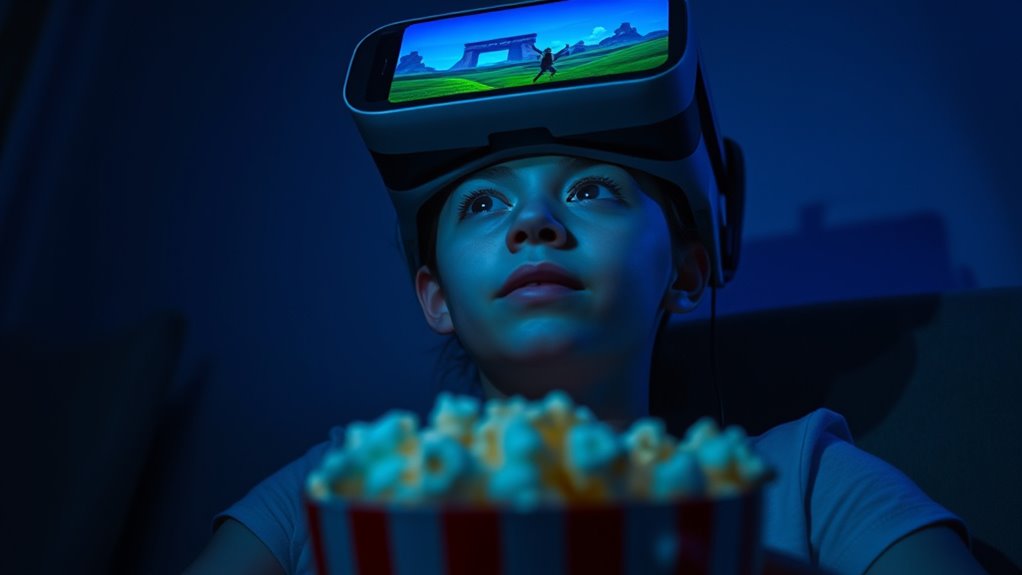

When you watch normal movies on a VR headset, your experience shifts considerably. The immersive environment can enhance your connection to the story and characters, creating a sense of presence. However, you might face visual quality issues, discomfort, and limitations in screen size. The fixed perspectives of traditional films can also limit the immersive potential. Yet, this unique viewing method opens up new storytelling dimensions and interactivity, offering you an unforgettable experience that pushes cinematic boundaries. Discover more about how VR transforms film.
Understanding Virtual Reality and Cinema
As you immerse yourself in the world of virtual reality (VR) and cinema, it’s essential to recognize how these two mediums intersect and transform one another. Virtual reality offers a unique platform that enhances traditional cinematic storytelling by placing you directly within the narrative. This shift from passive viewing to active participation allows you to engage emotionally and physically with the story. You’re not just watching characters; you’re standing beside them, experiencing their journeys firsthand. The immersive nature of VR invites filmmakers to explore new dimensions of storytelling, breaking conventional boundaries and creating richer narratives. In this way, the fusion of VR and cinema not only redefines how stories are told but also how you experience them, offering a deeper sense of freedom within the narrative landscape.
The Immersive Experience of VR Headsets
The immersive experience of VR headsets takes the engagement with cinematic storytelling to unprecedented levels. When you slip on a VR headset, you’re not just watching a movie; you’re stepping into a different dimension. This virtual reality transforms traditional films into an environment where you feel present, as if you’re part of the narrative unfolding around you. The ability to look around and explore your surroundings enhances the sense of cinematic immersion, allowing you to connect emotionally with characters and settings like never before. You can experience the grandeur of a blockbuster or the intimacy of an indie film in ways that traditional screens can’t match. In this new domain, storytelling becomes a shared journey, inviting you to engage actively rather than passively.
Enhanced Visuals and Audio Quality
When you watch movies on a VR headset, the enhanced visuals create an immersive 3D experience that pulls you into the story like never before. Coupled with surround sound enhancement, every whisper, explosion, and note resonates around you, making it feel as if you’re part of the action. This combination transforms standard films into enthralling adventures that engage your senses in a whole new way.
Immersive 3D Experience
While you may be accustomed to watching movies on a flat screen, experiencing them through a VR headset transforms the way you perceive visuals and sound. With virtual reality, you enter a domain of cinematic immersion where every detail feels more vivid and engaging. The enhanced 3D experience allows you to feel as if you’re part of the action, rather than a mere observer.
Here’s a quick comparison of viewing experiences:
| Aspect | Flat Screen |
|---|---|
| Depth Perception | Limited |
| Visual Detail | Standard Definition |
| Engagement Level | Passive |
Switching to VR, you’ll find yourself surrounded by stunning visuals and nuanced audio that draw you deeper into the film’s narrative. It’s a freedom to perceive stories like never before.
Surround Sound Enhancement
Surround sound in a VR environment elevates your movie-watching experience by enveloping you in a rich tapestry of audio. When you slip on your VR headset, the audio immersion transports you into the film’s world, making each sound effect feel like it’s coming from all around you. This multi-dimensional audio enhances your perception of space and depth, allowing you to hear whispers behind you or footsteps approaching from the side. Unlike traditional setups, VR surround sound adapts to your head movements, creating a dynamic experience that pulls you deeper into the narrative. With this level of auditory engagement, you’re not just watching a movie—you’re living it, enjoying a freedom that traditional screens simply can’t offer.
The Sensation of Presence in Film
As you slip on a VR headset, the boundary between reality and the cinematic world blurs, creating an immersive sensation of presence that traditional film formats struggle to achieve. This technology amplifies sensory engagement, allowing you to feel the emotional impact of scenes more profoundly. You’re not just a viewer; you’re a participant in the narrative.
- Experience the thrill of a chase.
- Feel the tension in a dramatic confrontation.
- Sense the warmth of a sunlit landscape.
- Immerse yourself in the laughter of joyful moments.
- Connect deeply with characters’ journeys.
This level of presence can evoke powerful emotions, transforming your relationship with storytelling and drawing you into an arena where you can explore the freedom of cinematic experiences like never before.
Interactivity: A New Dimension in Storytelling
Interactivity in VR film experiences redefines storytelling by allowing you to engage with the narrative in ways that traditional cinema simply cannot. In this immersive environment, you’re not just a passive observer; you become part of the story through interactive storytelling elements. This level of viewer engagement invites you to make choices, explore environments, and even influence character decisions, creating a unique and personalized experience. You can investigate deeper into plotlines or interact with characters, transforming how stories unfold. Unlike conventional films, where the narrative is fixed, VR offers a dynamic landscape where your actions shape outcomes. This newfound freedom elevates the experience, making it more compelling and memorable, ultimately bridging the gap between audience and narrative in revolutionary ways.
Limitations of Watching Normal Movies in VR
While watching movies in VR can be exciting, there are notable limitations you should consider. You might encounter visual quality issues that detract from the cinematic experience, as well as immersive elements that don’t quite match the expectations set by interactive content. Additionally, comfort factors can vary greatly, leading to potential discomfort during prolonged viewing sessions.
Visual Quality Issues
Although watching normal movies on a VR headset can be an immersive experience, it often comes with significant visual quality issues that can detract from the viewing pleasure. You might find yourself grappling with:
- Low visual fidelity that diminishes the movie’s aesthetics
- Noticeable pixelation issues that disrupt your focus
- Blurry images that pull you out of the narrative
- A limited field of view that restricts the cinematic experience
- Color distortions that alter the intended mood
These visual setbacks can hinder your ability to fully engage with the story, leaving you feeling frustrated. While VR has the potential to enhance viewing, the quality limitations of standard films can remind you that not all experiences translate seamlessly into this new technology.
Immersive Experience Limitations
Watching normal movies in VR can be enthralling, yet it often falls short of delivering a truly immersive experience. One major limitation is the viewing angle; while VR aims to envelop you, traditional films are shot with fixed perspectives that can feel restricted in this medium. You might find yourself straining to catch every detail, as the framing doesn’t adapt to a 360-degree environment. Additionally, the screen size in VR headsets can’t match the expansive feel of a cinema. Even if the visuals are sharp, the confined experience can diminish the grandiosity of the film. Ultimately, while VR offers a novel way to watch, the limitations in viewing angles and screen size can hinder the full immersion you might crave.
Comfort and Discomfort Factors
The limitations of viewing angles and screen size in VR can also lead to comfort and discomfort issues. Your comfort levels might fluctuate due to several discomfort triggers, making the experience less enjoyable. Here are some factors to evaluate:
- Eye strain from prolonged use
- Motion sickness caused by lag or poor tracking
- Fatigue from wearing the headset for too long
- Disorientation from an immersive environment that feels too real
- Physical discomfort from headset weight or fit
These discomfort triggers can detract from the freedom you seek in a cinematic experience. While the allure of VR is undeniable, understanding these limitations can help you make informed choices about when and how to engage with normal movies in this innovative medium.
Comparing Traditional and VR Movie Experiences
While traditional movie experiences have long been rooted in the passive act of watching on a flat screen, VR technology transforms that dynamic into an immersive journey. In a traditional setting, your audience engagement is limited; you’re merely a spectator. However, with VR, you’re placed directly into the story, where storytelling techniques evolve to captivate you in unprecedented ways. You’re not just watching a character, but rather standing beside them, feeling the environment around you. This active participation enhances emotional connections and heightens the narrative’s impact. Ultimately, VR offers a sense of agency and freedom, allowing you to explore scenes at your own pace, making every viewing uniquely personal. This redefined experience invites you to engage in storytelling like never before.
Popular Platforms for VR Movie Viewing
Virtual reality has opened up a plethora of platforms that cater to movie enthusiasts seeking immersive experiences. You’ll find that various streaming services offer unique features tailored for VR viewers. Here are some popular platforms:
- Oculus TV: Seamlessly integrates with your Oculus headset for a rich viewing experience.
- Bigscreen: A social platform that lets you watch movies with friends in a virtual theater.
- Viveport: Offers a diverse range of VR content, including films and documentaries.
- YouTube VR: Access 360-degree videos and a vast library of content.
- Netflix VR: Enjoy your favorite shows and movies in a virtual environment, though check for platform compatibility.
These platforms enhance your freedom to explore film in ways you never imagined possible.
Future Trends in Virtual Reality and Film
As technology continues to evolve, filmmakers and viewers alike are poised to experience a transformative shift in how stories are told and consumed through virtual reality. Virtual reality advancements are paving the way for immersive storytelling, allowing you to step inside narratives rather than just observe them. Cinematic innovations, such as interactive plots and 360-degree environments, will redefine the viewer’s role, making you an active participant in the experience. Imagine exploring diverse worlds and connecting with characters on a deeper level, all from the comfort of your own home. As VR technology becomes more accessible, expect a surge in content that embraces these possibilities, offering unique narratives that engage your senses and imagination like never before. The future of storytelling is boundless.
Recommendations for Optimal VR Movie Watching
With the rise of immersive storytelling, the experience of watching movies in virtual reality can be both exhilarating and overwhelming. To enhance your VR movie experience, consider these recommendations:
The excitement of virtual reality movies offers a unique storytelling journey that can captivate and immerse you fully.
- Choose the right headset: Verify headset compatibility for ideal viewing.
- Explore diverse movie genres: Different genres utilize cinematic techniques uniquely in VR.
- Tailor viewing environments: Create comfortable spaces that enhance immersion.
- Prioritize content accessibility: Select platforms that offer a wide range of VR-compatible films.
- Engage in social experiences: Watch with friends for a shared emotional journey.
Frequently Asked Questions
Can VR Headsets Cause Eye Strain When Watching Regular Movies?
Yes, VR headsets can cause eye strain when watching regular movies. You may experience eye fatigue and visual discomfort due to prolonged use and the headset’s immersive environment, disrupting your natural visual habits and comfort levels.
Does Watching Movies in VR Affect My Physical Comfort Level?
Yes, watching movies in VR can affect your physical comfort. The headset’s weight may cause discomfort over time, and the immersive experience might induce motion sickness, especially if you’re not accustomed to virtual environments.
Are There Specific VR Headsets Better for Watching Movies?
For watching movies, headsets like the Oculus Quest 2 and Valve Index stand out due to their superior display quality and comfort. You’ll enjoy a more immersive experience, enhancing your viewing pleasure without physical strain.
Can I Watch 3D Movies on a VR Headset?
Yes, you can watch 3D movies on a VR headset. Many support various 3D formats, enhancing your experience in virtual cinemas, where you’re immersed in enchanting environments, making movie-watching feel more dynamic and engaging.
Is It Possible to Adjust the Screen Size in VR?
Yes, you can adjust the screen size in VR through screen scaling settings. This enhances your immersive experience, allowing you to customize how you view content, making it more engaging and tailored to your preferences.
