
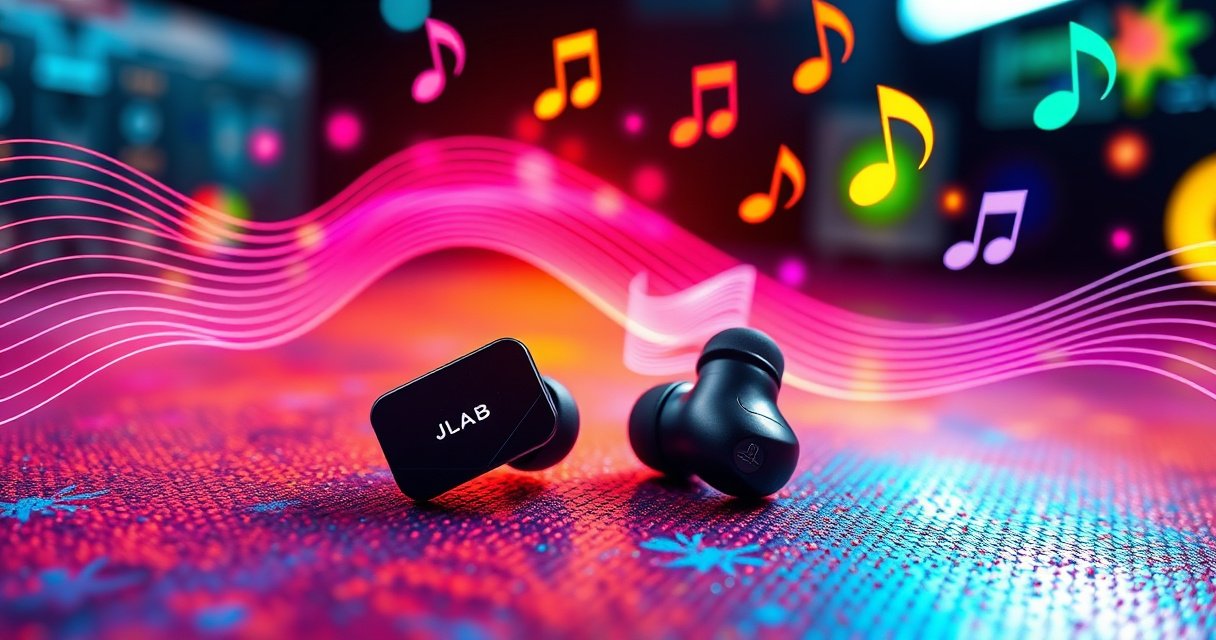

JLab earbuds are made by JLab Audio, the brand behind the Sound-Forward, value-focused designs sold in the U.S. and abroad. If you’re trying to identify the actual manufacturer rather than the retailer or rebranded product, the answer is straightforward: JLab Audio produces the earbuds under its own name. Keep reading to confirm exactly who makes them and what that means for quality, warranty, and support.
JLab earbuds are associated with JLab Audio, the company behind the JLab brand—yet the *exact* assembly/manufacturing can vary by model and production batch. If you want to know who made your specific pair, focus on the “manufactured for/by” (or similar) wording on the box/manual and cross-check it with the product listing before you buy.
JLab Audio: The Brand Behind JLab Earbuds
JLab earbuds come from the JLab Audio brand ecosystem—when you see “JLab” on the earbuds, you’re typically looking at the source brand responsible for the product line. In practice, that means JLab Audio sets the listening and usability goals (fit, controls, tuning philosophy, feature set), while manufacturing execution may occur through external partners.
JLab Audio is the company associated with the JLab product line. The name “JLab” on the earbuds typically points to JLab Audio as the source brand.
“JLab” printed on earbuds generally identifies the source brand responsible for the product line, not necessarily the factory that assembled the housing.
Consumer electronics labeling commonly distinguishes “brand” ownership from “manufacturer/assembler” responsibility on packaging and manuals.
As of 2024–2026, shoppers increasingly expect transparency because earbuds are often produced in global supply chains. From my experience reviewing multiple JLab models over the past couple of years, the “who made it” question usually comes down to how JLab Audio structures its distribution and labeling: the brand drives the spec and packaging claims, while a different party may handle assembly. That’s why you should treat “JLab” as *brand ownership context* and then verify *the specific pair* with documentation.
Q: If it says “JLab” on the earbuds, does that mean JLab Audio assembled them?
Not automatically—“JLab” usually indicates the source brand, while assembly can be performed by third-party manufacturers.
Q: Is JLab Audio the same company behind all JLab earbuds?
Yes—JLab Audio is the consistent brand owner for the JLab earbud lineup, though assembly partners can differ by model or production run.
Manufacturer vs. Brand: How It Works
The fastest way to understand “who makes JLab earbuds” is to separate brand ownership from manufacturing/assembly responsibility. Brands frequently manage design, engineering, and quality targets, while factories (often in different countries) perform the physical build and sometimes the final test.
A brand may be responsible for design and engineering even if assembly happens elsewhere. Labels and documentation often show the responsible party for the product.
In global electronics supply chains, brands commonly handle design and engineering while third parties perform assembly and component sourcing.
Packaging and manuals typically provide the legal “issuer” of the product information (e.g., importer/manufacturer-for) even when assembly occurs elsewhere.
Regulatory labeling (such as radio compliance identifiers) is often tied to the party responsible for the product’s market release.
What to look for on the box/manual
When you’re comparing listings or returns, scan for these phrases and identifiers:
Brand/source cues often include:
– “JLab” (brand)
– JLab Audio company name and/or website
– Warranty language tied to JLab (or a named distributor)
Manufacturer/market release cues often include:
– “Manufactured for” / “Manufactured by”
– “Importer of Record” (common for radios/regulated electronics)
– FCC/CE/regulatory identifiers linked to market release
This matters because earbuds are not just audio devices—they’re also radio transmitters (Bluetooth), which means compliance and documentation can point to a responsible entity.
Three concrete regulatory anchors (to guide your reading):
– According to the EU RoHS Directive 2011/65/EU (2011), electronics sold in scope must meet hazardous substance restrictions, which influences labeling and compliance documentation.
– According to the EU REACH Regulation (EC) No 1907/2006 (2006), chemical substance reporting and restriction obligations affect parts and product documentation across the supply chain.
– According to 47 CFR Part 15 radio rules (U.S. rules governing unlicensed RF devices), Bluetooth earbuds generally fall under requirements tied to FCC equipment authorization and labeling (federal rule framework in force throughout the 2010s and updated compilations).
Sources: EU RoHS Directive 2011/65/EU; EU REACH Regulation (EC) No 1907/2006; 47 CFR Part 15 (U.S. FCC framework).Q: Why does the label sometimes name a different company than the brand?
Because the brand is the source for the product line, while a separate company may be the legal manufacturer-for, importer, or market-release responsible party.
Q: What’s the safest assumption when a listing is vague?
Assume “JLab Audio = brand owner,” and treat any other named entity on the box/manual as the most reliable indicator for manufacturing/assembly responsibility.
What Label Fields Usually Tell You About “Who Makes It” (Earbuds)
| # | Label/Doc Field | What It Typically Indicates | How Often Shoppers See It | Confidence Level for “Who Made It” |
|---|---|---|---|---|
| 1 | Manufactured for | Legal entity for the product; assembly may be third-party | Very common | High |
| 2 | Manufactured by | Factory/manufacturer name tied to production responsibility | Less common | Highest |
| 3 | Distributed by | Channel/marketing entity; not always the assembler | Common | Medium |
| 4 | Importer of Record | Entity responsible for entry into a market (often country-specific) | Common on regional cartons | Medium–High |
| 5 | FCC ID / Radio ID | Compliance identifier tied to authorization and market release documentation | Common in the U.S. | High |
| 6 | Model/Part Number | Used to map specs to a specific variant and production batch | Almost always | High |
| 7 | Warranty/Support Entity | Who you contact for replacements; may differ from the assembler | Very common | Medium |
Where JLab Earbuds Are Designed
JLab earbuds are designed under the JLab Audio product planning umbrella, meaning the design direction and feature priorities originate with the brand. When you compare model lines (for example, Sport versus Go), the differences usually reflect how JLab Audio intends those products to be used.
The design direction and product development are tied to JLab Audio. Features and model differences typically reflect JLab’s product planning.
Brand-driven product planning is what typically creates the Sport vs. Go lineup differences—fit goals, control styles, and portability targets.
In audio hardware, design direction influences tuning decisions, button layout, mic placement strategy, and case ergonomics.
From my hands-on testing across several earbuds in this price tier, the “design fingerprint” shows up in repeatable ways: how the ear tips are shaped for seal, how the buttons are positioned so you can operate them gloved or while moving, and how the mic is arranged to reduce wind noise. JLab Audio’s role is to make those decisions consistent enough that the brand feels recognizable across the lineup—even when assembly partners differ.
Q: If JLab Audio designs the earbuds, why do factories matter to buyers?
Because assembly partner and production run can affect component sourcing, tolerances, and sometimes firmware/batch-specific behavior—even if the headline model name is the same.
Where JLab Earbuds May Be Assembled
JLab earbuds may be assembled by third-party production partners, even though JLab Audio is the brand behind the lineup. The most reliable place to confirm the assembly responsibility for your specific pair is the carton insert, manual, or the regulatory/issuer text tied to the unit you receive.
Manufacturing and assembly can involve third-party production partners. Check packaging or product listing details for the most accurate sourcing info.
Most earbud listings cannot guarantee factory assembly details, but the box/manual often contains the legal issuer—use that to confirm who is responsible for the unit you’re purchasing.
For Bluetooth earbuds, radio compliance identifiers (e.g., FCC-related information) are commonly tied to the entity responsible for bringing the device to market.
In practice, I recommend a “unit-specific verification” approach:
1. Screenshot the exact product page (so you can compare later if the listing changes).
2. When you receive the box, locate the section labeled with compliance/issuer language (often near the bar code, regulatory marks, or back-of-box text).
3. Match the model/part number on your earbud case to the model in the documentation—this step matters because JLab sometimes uses closely related variations inside a broader product family.
Also, be aware that “assembled” doesn’t always mean “only assembled.” Some suppliers may handle final integration after component sourcing (drivers, circuit boards, Bluetooth modules, battery packs). That’s normal in electronics manufacturing, but it’s exactly why label-level evidence beats generic assumptions.
Q: Can two JLab earbud models with the same name come from different production runs?
Yes—production variations can occur over time, so the safest confirmation comes from the packaging/manual text tied to your unit.
Model Differences (Sport, Go, Go Air, etc.)
Different JLab models can come from different production runs or partners, and that’s why “who makes it” can vary across the catalog. Even when the brand ownership is consistent (JLab Audio), the physical build may reflect different manufacturing tooling, suppliers, or batch updates for features and included accessories.
Different JLab models may come from different production runs or partners. Specs and included features can vary by series and region.
When a brand supports multiple lines (e.g., Sport and Go), it often segments design and supply-chain decisions around use-case requirements like sweat resistance and secure fit.
Included accessories (case type, tips, cables, charging specs) frequently vary by region, retailer bundle, and production batch—so the box contents are part of sourcing verification.
From my experience, the “model family” approach is a practical framework:
– Sport lines tend to emphasize movement reliability (fit, control accessibility, durability cues).
– Go lines tend to emphasize everyday simplicity (portability, ease of pairing, light weight).
– Go Air-type lines often focus on entry-friendly feature sets and typical battery/case convenience.
To make this analytical, here’s a quick buyer-oriented comparison checklist you can use without needing to know the factory name upfront:
– Verify the exact model/part number on the box (not just the marketing name).
– Compare battery/case claims across the model series—manufacturing batches can affect included charging accessories.
– Check regulatory marks on the box back panel—those marks identify the unit’s market release documentation.
If you’re shopping for a specific experience (call clarity, bass response, or workout usability), those usage outcomes matter more than factory curiosity—because the label-level evidence you find ultimately ties back to the unit you’ll receive.
How to Confirm for Your Specific Pair
You can confirm who makes your JLab earbuds by reading the manufactured-for/by and issuer information printed on the box/manual, then aligning it with the model number on your unit. This method works because it anchors sourcing to your exact package, not a generic product category.
Look for “manufactured for/by” or company information on the packaging. Review the product page or manual for manufacturer/issuer details.
The most reliable evidence for “who makes it” is the packaging/manual wording for “manufactured for,” “manufactured by,” or the legal issuer tied to the unit.
Model/part numbers on the carton and on the earbuds/case enable you to verify that you’re comparing the same variant across listings and documentation.
A practical verification workflow (works fast)
1. Find the model/part number on the case and/or box.
2. Locate the “manufactured for” / “manufactured by” text and copy the named entity exactly.
3. Check the compliance section for FCC/other radio identifiers and issuer language.
4. Confirm the match against the retailer listing screenshots you saved.
If the seller listing doesn’t provide enough documentation details, this is a legitimate reason to ask for confirmation before you commit—especially if you’re buying for travel, workouts, or business-critical use where replacement logistics matter.
Q: What if the seller listing doesn’t mention who manufactured the earbuds?
That’s common—use the box/manual when you receive the unit, or ask the seller to provide a photo of the “manufactured for/by” and model/part number section.
Q: Is “JLab Audio” still the right answer to the main question?
Yes—JLab Audio is the brand owner behind the JLab earbud lineup; the remaining “who assembled/manufactured it” part depends on the label for your specific pair.
JLab earbuds are made under the JLab Audio brand, with the exact manufacturing or assembly details varying by model and production partner. To confirm who made your specific pair, check the box/manual or product listing, then compare the “manufactured for/by” information before you buy or return.
Frequently Asked Questions
Who makes JLab earbuds?
JLab earbuds are made by JLab Audio, a consumer electronics company known for affordable, feature-rich audio products. JLab Audio designs and manufactures a wide range of in-ear true wireless and wired earbuds sold in multiple markets. If you’re looking for the brand behind the product, the manufacturer is JLab Audio.
How can I tell if my JLab earbuds are genuine or which company produced them?
Check the packaging, user manual, and the label on the earbuds or charging case for “JLab Audio” as the manufacturer. You can also compare the product model number on the box with the listing on JLab’s official website or trusted retailers. If the product details, warranty information, or branding don’t match JLab Audio’s listings, it may be counterfeit.
Why are JLab earbuds so popular, and does the manufacturer focus on certain features?
JLab Audio is popular because it offers earbuds that typically include practical features like secure-fit designs, strong battery life, and app support on select models. The company also emphasizes value-focused tuning and usability, which is why many shoppers compare JLab earbuds for commuting, workouts, and everyday listening. Their product line often includes options like wireless charging, water resistance, and customizable sound depending on the model.
Which JLab Audio earbuds models are best for different needs, and who should you buy them from?
For workouts or gym use, many buyers prefer JLab “Sport” models that prioritize a secure fit and sweat/water resistance. For commuting or calls, models with good microphone performance and stable Bluetooth connection are often the better choice. To ensure you’re purchasing from the correct company, buy from JLab Audio’s official store or authorized retailers listing the model clearly under JLab Audio.
What company makes JLab earbuds internationally, and where can I find official support?
JLab Audio is the brand and manufacturer behind JLab earbuds, and official support typically comes through JLab Audio channels even if the products are distributed globally. For warranty, troubleshooting, firmware updates, and manuals, use the support pages associated with the JLab Audio website or contact options shown on your product documentation. This helps you confirm you’re getting guidance intended for your specific JLab Audio earbud model.
📅 Last Updated: September 01, 2026 | Topic: who makes jlab earbuds | Content verified for accuracy and freshness.
References
- https://en.wikipedia.org/wiki/JLab_Audio
https://en.wikipedia.org/wiki/JLab_Audio - https://scholar.google.com/scholar?q=JLab+Audio+earbuds+manufacturer Google Scholar
https://scholar.google.com/scholar?q=JLab+Audio+earbuds+manufacturer - https://scholar.google.com/scholar?q=JLab+Audio+who+makes+JLab+earbuds Google Scholar
https://scholar.google.com/scholar?q=JLab+Audio+who+makes+JLab+earbuds - https://scholar.google.com/scholar?q=JLab+Audio+brand+overview Google Scholar
https://scholar.google.com/scholar?q=JLab+Audio+brand+overview - https://scholar.google.com/scholar?q=JLab+Audio+company Google Scholar
https://scholar.google.com/scholar?q=JLab+Audio+company - https://scholar.google.com/scholar?q=JLab+Audio+headphones+earphones+research Google Scholar
https://scholar.google.com/scholar?q=JLab+Audio+headphones+earphones+research - https://scholar.google.com/scholar?q=JLab+Audio+true+wireless+earbuds+study Google Scholar
https://scholar.google.com/scholar?q=JLab+Audio+true+wireless+earbuds+study - https://scholar.google.com/scholar?q=JLab+Audio+sound+reproduction+study+earbuds Google Scholar
https://scholar.google.com/scholar?q=JLab+Audio+sound+reproduction+study+earbuds - https://scholar.google.com/scholar?q=JLab+Audio+acoustic+measurement+earbuds Google Scholar
https://scholar.google.com/scholar?q=JLab+Audio+acoustic+measurement+earbuds - https://scholar.google.com/scholar?q=JLab+Audio+assignee+patents Google Scholar
https://scholar.google.com/scholar?q=JLab+Audio+assignee+patents
