
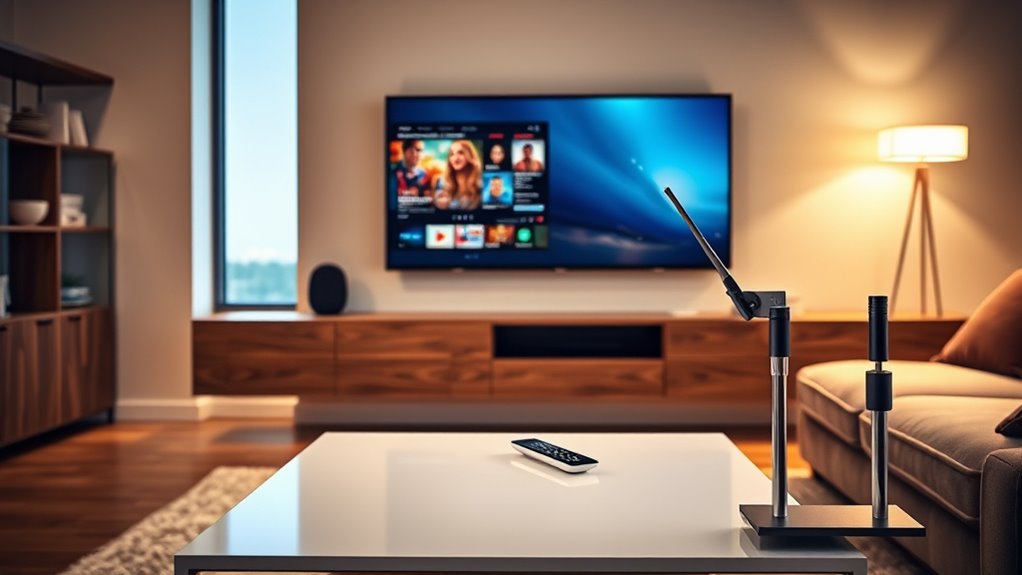

Using a Smart TV doesn’t mean you won’t need an antenna. While Smart TVs offer streaming options, an antenna adds value by allowing access to over-the-air channels, including local broadcasts and live events, without monthly fees. This combination enhances your viewing experience by providing diverse content options. Consider the benefits and installation tips for antennas to maximize your Smart TV’s potential. Discovering more about choosing the right antenna can help elevate your entertainment choices.
Understanding Smart TVs and Their Capabilities
As you explore the world of smart TVs, it’s essential to understand their unique capabilities. Smart TVs come packed with features that extend beyond traditional television viewing. One of the standout attributes is their internet connectivity, allowing seamless access to streaming services, apps, and online content. This connectivity liberates you from conventional cable subscriptions, offering a wealth of entertainment options at your fingertips.
Moreover, smart TV features like voice control, screen mirroring, and personalized recommendations enhance your viewing experience, making it more interactive and tailored to your preferences. With built-in browsers, you can even surf the web or connect to social media directly from your TV. Understanding these capabilities is vital for maximizing the potential of your smart TV.
The Role of Antennas in Television Viewing
Antennas play an essential role in your television viewing experience, particularly for accessing over-the-air broadcasts. While streaming services offer a convenient alternative, they often lack the signal quality and local programming that antennas provide. Understanding how antennas fit into your viewing options can help you make an informed decision about your entertainment setup.
Over-the-Air Broadcasts
While modern smart TVs offer a range of streaming options, many viewers may still wonder about the value of over-the-air broadcasts, which rely on antennas for transmission. Over-the-air technology provides a direct connection to local channels, ensuring broadcast accessibility without the need for subscription fees. With an antenna, you can access high-definition signals from networks like ABC, CBS, and NBC, which are often unavailable through streaming services. This gives you the freedom to enjoy live events, news, and sports without buffering or internet dependency. Plus, it’s an eco-friendly choice, reducing your reliance on expensive cable packages. So, if you’re looking to enhance your viewing experience, incorporating an antenna might just be the ideal solution.
Streaming Services Alternatives
Many viewers are now exploring alternatives to traditional cable, with streaming services leading the charge. As streaming trends continue to rise, many are embracing cord cutting, opting for platforms like Netflix, Hulu, and Amazon Prime. These services offer a vast library of content without the constraints of cable contracts. You can enjoy on-demand viewing tailored to your preferences, giving you greater control over what you watch. While antennas can provide access to local channels, streaming services fill the gap for those who want a more flexible viewing experience. By combining both options, you can maximize your entertainment choices and fully embrace the freedom that modern technology offers. The future of television is here, and it’s yours to shape.
Signal Quality Considerations
When considering how to enhance your television viewing experience, understanding signal quality is essential, especially if you’re thinking about using an antenna. The role of signal strength can’t be overstated; it directly impacts picture clarity. A strong signal guarantees that your TV receives a clear, uninterrupted feed, allowing you to enjoy your favorite shows without pixelation or lag. However, various factors, including location and antenna placement, can affect this strength. If you’re in a densely built area or far from broadcast towers, you may need a more powerful antenna to boost that signal. Ultimately, investing time in optimizing your antenna setup can greatly enhance your viewing pleasure, giving you the freedom to enjoy high-quality content.
Accessing Local Channels With an Antenna
How can you enjoy local channels without a cable subscription? Using an antenna is a cost-effective solution. There are various antenna types, including indoor and outdoor options, allowing you to choose based on your living situation and channel availability. Indoor antennas are typically easier to install but may have limited range, while outdoor antennas can capture signals from further away, resulting in better reception. You’ll find that many local channels, including ABC, NBC, and CBS, broadcast over-the-air, providing you with essential news and entertainment without monthly fees. Before purchasing, check your area’s signal strength to verify you select the right antenna type for peak performance. This way, you can reclaim your viewing freedom and access local programming effortlessly.
Comparing Streaming Services and Antenna Content
When you compare streaming services to antenna content, it’s essential to contemplate the variety and quality of channels each option offers. Streaming platforms provide a vast selection of on-demand titles, while antennas give you access to local broadcasts. Additionally, evaluating the costs associated with both can help you determine which option best fits your viewing preferences and budget.
Streaming Services Overview
What’s the best way to access your favorite shows and movies—streaming services or an antenna? When considering a streaming platforms comparison, you’ll find that various services like Netflix, Hulu, and Amazon Prime offer extensive libraries, catering to diverse tastes. However, these platforms come with subscription pricing analysis that can quickly add up, especially if you subscribe to multiple services.
On the other hand, an antenna provides free access to local channels, including major networks. While streaming services deliver on-demand content, antennas excel in offering live broadcasts without monthly fees. Ultimately, your choice hinges on whether you prefer a broader, paid selection or the freedom of free, live television, enabling you to tailor your viewing experience according to your budget and preferences.
Antenna Channel Selection
While streaming services offer a vast range of on-demand content, the choice of channels available through an antenna can greatly impact your viewing experience. The right antenna type can enhance your access to local broadcasts, which often include news, sports, and other live events.
Here’s a comparison of antenna channel selection versus streaming services:
| Antenna Channels | Streaming Services |
|---|---|
| Local News | On-Demand Movies |
| Sports Events | Original Series |
| Weather Updates | Documentaries |
| Network Shows | Exclusive Content |
Understanding these differences allows you to make an informed decision about how to supplement your streaming with an antenna. Balancing both can give you the freedom to enjoy a wider variety of content.
Cost Comparison Analysis
Although streaming services provide a wealth of content, the costs associated with them can quickly add up, making it essential to compare these expenses with the relatively low investment needed for an antenna. When you assess your options, consider the monthly fees for popular platforms, which can range from $10 to $20 or more. In contrast, a one-time purchase of an antenna typically costs under $100. This stark difference highlights the cost efficiency of choosing an antenna for accessing local channels. Additionally, if you’re mindful of budget considerations, an antenna can greatly reduce your monthly expenses, allowing you the freedom to enjoy quality programming without recurring costs. Ultimately, the decision hinges on your viewing habits and financial priorities.
Benefits of Having Both an Antenna and a Smart TV
Having both an antenna and a smart TV can greatly enhance your viewing experience, as each offers unique advantages that complement one another. By using various antenna types, you can access free over-the-air channels, providing local news, sports, and live events without monthly fees. This freedom from subscriptions can be liberating. Meanwhile, smart TV features allow you to stream content from platforms like Netflix and Hulu, giving you a vast library of entertainment options. The combination lets you choose between live broadcasts and on-demand content, catering to diverse viewing preferences. Ultimately, having both an antenna and a smart TV maximizes your entertainment choices, ensuring you enjoy the best of both worlds without being tied down to one source.
Factors to Consider When Choosing an Antenna
When deciding to incorporate an antenna into your smart TV setup, understanding the factors that influence your choice is key. First, consider the antenna types available, as they can vary greatly in performance and range. You’ll want to evaluate your location and the distance to broadcast towers, since some antennas perform better at longer ranges. Next, think about installation options—do you prefer an indoor antenna, which is easier to set up, or an outdoor one for better reception? Also, assess your budget, as prices can differ widely. Finally, consider potential interference from buildings or trees, which can impact signal quality. Balancing these factors will help you find the ideal antenna for your needs.
Types of Antennas Available for Smart TVs
When considering antennas for your smart TV, you’ll find two main types: indoor and outdoor antennas. Indoor antennas are compact and easy to set up, making them ideal for urban areas with strong signals. On the other hand, outdoor antennas can provide better reception, especially in rural locations where signals might be weaker.
Indoor Antennas Overview
Indoor antennas are essential tools for maximizing your smart TV’s capabilities, especially if you’re looking to access over-the-air broadcasts without a hefty cable bill. There are several indoor antenna types available, including flat panel, rabbit ears, and amplified antennas. Flat panel antennas are sleek and can be mounted on walls, while rabbit ears offer versatility and adjustability. Amplified antennas increase antenna signal range, making them ideal for those living farther from broadcast towers. When choosing an antenna, consider your location and the channels you want to receive. By selecting the right indoor antenna type, you’ll enhance your viewing experience and enjoy the freedom of accessing content without ongoing subscription fees.
Outdoor Antennas Benefits
While indoor antennas can effectively capture local broadcasts, outdoor antennas offer distinct advantages that can greatly enhance your smart TV experience. One of the primary outdoor antenna advantages is their ability to considerably improve signal reception, especially in rural or suburban areas. Positioned high above obstructions, these antennas can pick up signals from greater distances, providing access to more channels and higher-quality broadcasts. Additionally, outdoor antennas are generally more durable, standing up to various weather conditions, ensuring consistent performance over time. If you’re looking for freedom in your viewing options, investing in an outdoor antenna could be a game-changer, helping you cut the cord while still enjoying a diverse array of programming on your smart TV.
Installation Tips for Your Antenna
Installing an antenna can greatly enhance your smart TV experience, but getting it right requires some attention to detail. Here are some essential tips to guarantee ideal antenna placement and signal amplification:
Enhancing your smart TV experience with an antenna involves careful placement and attention to signal quality.
- Choose the Right Location: Place your antenna near a window or high point for better reception.
- Avoid Obstacles: Keep it away from metal objects and electronic devices that can interfere with the signal.
- Experiment with Angles: Adjust the antenna’s position to find the best reception quality.
- Secure It Properly: Use mounts or stands to keep it steady and prevent movement.
- Check Signal Strength: Use your TV’s signal meter to gauge performance after installation.
Troubleshooting Common Antenna Issues
Even with the best installation practices, you might encounter issues with your antenna that can affect your smart TV’s performance. One common problem is signal interference, which can arise from nearby electronic devices or physical obstructions like buildings and trees. If you’re experiencing poor reception, try adjusting your antenna positioning. Moving it closer to a window or higher up can often improve signal strength. Additionally, verify that cables are securely connected and not damaged. You may also want to scan for channels again after repositioning. If problems persist, consider using a signal amplifier to enhance reception. With these troubleshooting steps, you can regain control over your viewing experience and enjoy your smart TV to the fullest.
Making the Most of Your Smart TV Experience
To truly enhance your smart TV experience, you should explore the full range of features and capabilities it offers. Understanding the user interface and utilizing various smart TV features will maximize your enjoyment. Here are some ways to make the most of your setup:
- Customize your home screen for easy access to favorite apps
- Utilize voice control for hands-free navigation
- Connect your smart devices for seamless integration
- Explore streaming services for diverse content options
- Regularly update your TV’s software for improved performance
Frequently Asked Questions
Can I Use an Antenna With Any Smart TV Model?
Yes, you can use an antenna with most smart TV models, provided they have the necessary ports. Check your TV’s specifications for antenna compatibility to maximize its smart TV features and enhance your viewing experience.
How Do I Know if I Need an Antenna?
If you’re in a remote area, you might need an antenna for better signal strength and channel availability. Check local broadcasts; if you find limited options, an antenna could enhance your viewing experience considerably.
Are There Any Monthly Fees for Using an Antenna?
No, there aren’t monthly fees for using an antenna. Once you’ve installed it, you’ll enjoy antenna benefits like free channels and no subscription costs, giving you more freedom in your entertainment choices.
Will an Antenna Improve My Streaming Quality?
An antenna’s like a lifeline for your streaming quality; it can enhance reliability by providing clearer signals. While it won’t directly improve streaming, the added channels and content diversity are significant antenna benefits.
Can I Use Both Streaming and Antenna Simultaneously?
Yes, you can use both streaming options and an antenna simultaneously. Most smart TVs offer antenna compatibility, allowing you to switch between live broadcast channels and streaming services for a versatile viewing experience.
