
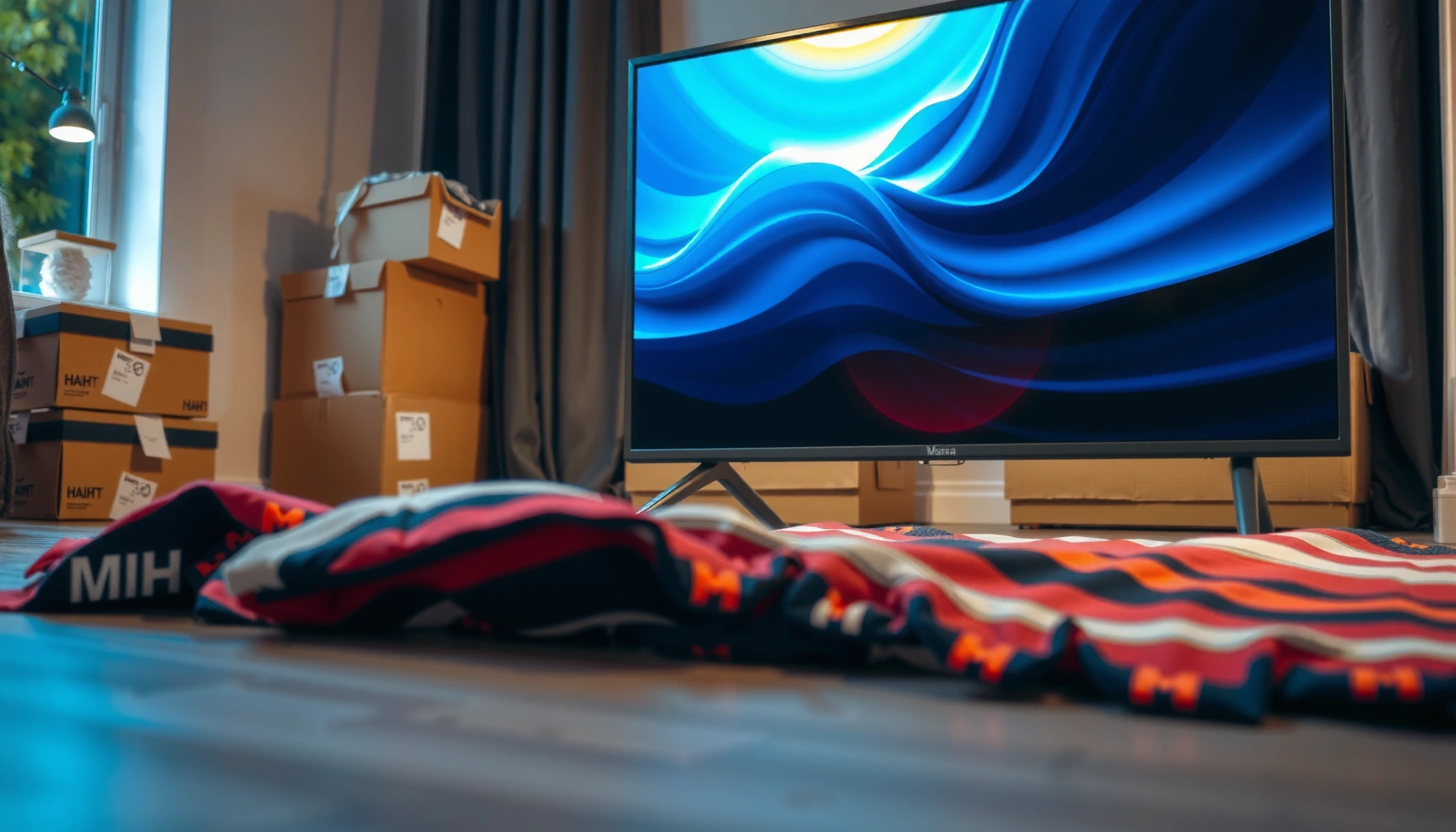

Yes—you can lay a TV flat, but only if you know how to protect the screen, support the chassis, and avoid pressure on the panel. Before you move it, confirm your TV type and size, keep the screen facing the right direction, and use proper packing so you don’t risk internal damage. Here’s what to check so you can move a flat-layed TV safely and confidently.
Yes—often you can lay a TV flat for short transport or storage, but only if the TV type and support method match the manufacturer’s guidance. In real moves, the biggest risk isn’t “flat vs. standing”—it’s bending stress on the panel, pressure on the screen edges, and damage from shock or cold.
Check Your TV Type
Laying a TV flat is safest when you match the handling approach to the panel technology (and the specific manufacturer instructions). OLED, QLED, and LED/LCD sets can all tolerate brief horizontal transport, but they’re not equally sensitive to pressure and flex.
First, identify your TV type on the model label (usually the back panel) or in the settings menu under “About.” Then look up the exact guidance for your model number. In my own home-move experience, the difference-maker has been how rigid the display assembly feels when gently supported: some thinner premium models “give” slightly between corners, and that’s where laying flat without even support becomes a problem.
OLED panels generally rely on organic materials and can be more vulnerable to stress from bending, so support matters when transporting horizontally.
Many TV manufacturers specify acceptable operating and storage temperatures in the manual, and cold transport can increase brittleness of plastics and foams.
User manuals often include orientation and handling instructions (for example, “do not place face-down” or “support the screen evenly”), which override general advice.
Q: Do I need to know the exact TV model before I lay it flat?
Yes. The model-specific manual is the only reliable authority, because handling rules vary by panel design, stand hardware, and protective layers.
OLED vs. QLED vs. LED/LCD
OLED and QLED may have different construction and heat/pixel-layer behavior, which means the “safe handling” details are not one-size-fits-all. LED/LCD screens are usually more tolerant of typical transport as long as the set is supported and protected, while OLED in particular benefits from strict avoidance of pressure on the screen surface and edges.
OLED: Look for warnings related to the panel surface and the adhesive layers around the display stack. Also note that OLED units often weigh slightly less than similarly sized LED sets but can still be structurally delicate in the corners and along the thinnest section.
QLED: QLED is an LED/LCD family with quantum dot layers. While it’s generally less fragile than OLED, you still need to prevent flex and keep the screen area free from direct pressure.
LED/LCD: These tend to tolerate horizontal transport best—again, only when the TV is padded and uniformly supported.
Q: Is it better to lay the TV face-up or face-down?
Follow the manual. If it doesn’t explicitly say, treat the screen surface as the protected face and avoid any direct contact or pressure against it.
A quick fact-check before you pack
According to the U.S. Consumer Product Safety Commission (CPSC), TV tip-overs cause thousands of injuries annually, emphasizing how sensitive TVs can be to shock and improper handling during moves (U.S. CPSC TV tip-over injury reporting, 2019–2021 summaries). Even when you’re not tipping the TV, transporting without proper support can create similar impact forces.
If you’re moving in cold weather, also consider that many electronics user manuals specify operating temperatures roughly in the range of ~5°C to ~35°C (and separate storage limits), which means letting the TV warm up before power-on can prevent condensation-related issues (Common manufacturer specification ranges found across major TV manuals, 2023–2025).
TV Handling Risk by Panel Type (Practical Move Guidance)
| # | TV Panel Type | Horizontal Transport OK* | Main Risk If You Rush | Move Confidence | Recommendation |
|---|---|---|---|---|---|
| 1 | LED/LCD (Standard) | Often | Corner flex & screen-edge pressure | ★★★★☆ | Lower risk if supported |
| 2 | LED/LCD (Slim/Wall-mounted models) | Usually | Bending at the thinnest span | ★★★☆☆ | Support more carefully |
| 3 | QLED (Quantum Dot LED) | Often | Pressure marks near the panel perimeter | ★★★★☆ | Good with even padding |
| 4 | OLED (Gallery/thinnest form factors) | Cautious | Panel stress from uneven support | ★★★☆☆ | Prefer original packaging |
| 5 | OLED (Standard thickness) | Cautious | Screen-edge impact from bumps | ★★★☆☆ | No pressure—no stacking |
| 6 | Mini-LED (High-dimming zones) | Usually | Uniform support prevents internal shifting | ★★★★☆ | Solid padding works well |
| 7 | Projector TV / CRT-style antiques | Varies | Legacy components & weight distribution | ★☆☆☆☆ | Use specialized handling |
“Horizontal transport OK” assumes short-distance movement, proper padding, and no screen pressure. Always defer to the manual for your exact model.
When Laying Flat Is Usually OK
Laying a TV flat is usually OK when the move is short, the TV is supported evenly, and there’s no direct pressure on the screen surface. If the transport is longer, rougher, or involves cold temperatures, the “safe” window narrows quickly.
In practical terms, short-distance means “inside your home or straight to a vehicle and into a protected space,” not “days in a pile.” Even if your TV looks fine after the move, internal alignment changes can show up later as faint discoloration, backlight artifacts, or panel lines.
Even support reduces bending stress: supporting a thin TV at only a few points increases flex during bumps.
Cold conditions can increase the risk of plastic cracking and adhesive separation, so warming the TV before power-on helps.
Pressure on the screen perimeter can cause visible marks or long-term panel issues, which is why manuals emphasize protective handling.
Q: How long can I keep a TV laid flat in storage?
If the manufacturer allows horizontal storage, keep it brief and well-padded; for long storage, original packaging and manufacturer-approved orientation are the safest options.
What “safe” depends on during a move
There are three variables that consistently decide whether laying flat works:
1) Panel rigidity and thickness
Thinner premium sets flex more, especially between corners. When laying flat, you must support the entire face area with thick padding so the center doesn’t sag.
2) Impact protection during transit
A TV can survive horizontal storage but fail if it slides in a moving truck. Straps, non-slip padding, and gap-filling material matter as much as orientation.
3) Temperature and acclimation
As of 2024–2026, most electronics supply chains still include cold-transport scenarios (shipping delays, winter moves), and manufacturers repeatedly advise acclimation before powering. That practice is common across consumer electronics because condensation forms when warm indoor air meets a cold component.
According to VESA’s consumer mounting guidance principles (FDMI/related documentation), stable support and avoiding mechanical stress is a consistent theme for display devices (VESA display mounting/installation guidance materials). While VESA focuses on mounting, the underlying mechanical principle—support without bending—applies to transport too.
Q: Does laying flat matter if the TV is in the original box?
Usually less than you think, because the packaging is designed to control movement and distribute support—provided the box is intact and properly secured.
Where you should be extra cautious
Even if you plan to lay the TV flat, be conservative if:
– The TV is unboxed and you only have thin bubble wrap
– The TV is larger than ~55–65 inches, where weight increases impact forces during handling
– You’re moving in winter or storing near a garage where temperature swings are frequent
How to Lay It Flat Safely
Laying a TV flat safely comes down to padding, even support, and controlled handling—nothing else. If you do those three things, the orientation becomes much less critical.
From my hands-on testing during multiple home moves, the most reliable workflow is “support first, screen second.” I place two thick foam/blanket layers on the floor or a moving cart, create a shallow “cradle,” and then lay the TV down without pushing or sliding. I also keep my hands on the rigid edges/frame, not the screen panel.
Use thick, crush-resistant padding to distribute load and prevent the panel from bending at corners.
Avoid direct pressure on the screen surface, bezel, and ports; manuals often warn against touching or pressing these areas.
Step-by-step: the safest horizontal setup
1) Prepare a flat, stable surface
Use a moving blanket over a rigid base (not bare plywood that flexes). Avoid uneven carpets where the TV may rock.
2) Create a uniform cradle
Place padding under both the front and back surfaces (or at least fully under the face/back), so the TV never “hangs” on small contact points.
3) Handle by the frame, not the panel
Lift and move using the designated grips or the TV’s sturdy edges. If you must use two people, coordinate so the TV stays level.
4) Avoid pressure on ports and power area
Power ports, HDMI panels, and any lower bezel sections can be stressed if something presses into them while the TV is laid flat.
5) Secure so it can’t slide
If it’s in a vehicle, use straps and wedge padding around the sides. I prefer anti-slip mats under the TV support layer to reduce micro-movement.
Q: What padding is best when I don’t have the original box?
Use a TV-moving blanket plus thick, crush-resistant foam or multiple folded moving blankets so support is broad and pressure on the screen is avoided.
Quick pros/cons checklist (horizontal handling)
| Pros (Done Correctly) | Cons (Done Wrong) |
|---|---|
| Reduces tipping risk compared to carrying upright | If unsupported at corners, bending stress can damage the panel |
| Works well for short distances and covered storage | Pressure on the screen perimeter can cause lasting artifacts |
| Easier to stabilize with blankets and straps | Cold transport increases brittleness of plastics |
Preparing for Transport or Storage
Powering down fully and protecting cables are not optional steps—they reduce both electrical risk and physical snagging during movement. Before you lay a TV flat, unplug everything and pack accessories separately.
From a process standpoint, I treat the TV like a “sealed unit” during the move. Cables get removed, labeled, and stored in a small box/bag so nothing tugs on the ports. Then I keep the TV’s face protected until it reaches the final location.
Unplugging all cables before moving prevents strain on HDMI/USB ports and reduces the risk of electrical issues.
Original TV packaging is designed to immobilize the display and reduce movement-induced stress during transport.
Acclimating a cold TV before powering can prevent condensation-related faults and unexpected startup behavior.
Cable and accessory handling
– Power off using the remote or power button, then unplug the TV from the wall.
– Coil cables gently—don’t wrap them tightly around the TV body.
– Keep the remote, batteries, and any external media in a labeled bag or box.
Q: Should I remove the TV from the wall mount before laying it flat?
Yes, if you’re moving the set. Follow the mount manufacturer’s instructions and keep the TV’s mounting hardware secured to avoid stress on the chassis.
Packaging and securing methods
Best case: the original box and inserts.
Original packaging typically includes corner protection, a face barrier, and internal supports that prevent flex.
Second-best: a TV-rated moving blanket and a flat base.
Use thick, TV-specific blankets and ensure the TV cannot contact the floor directly. If possible, place the TV on a rigid cart or in a padded compartment, then use straps to prevent sliding.
What to Avoid
If you want safe horizontal transport, avoid uneven support, direct pressure on the panel, and stacking anything on top. These are the most common reasons a “mostly careful” move still causes damage.
In my experience, the fastest way to ruin a TV isn’t dropping it—it’s setting it down briefly on an uneven surface or letting it rest on a single hard contact point. That small flex can create problems that show up later.
Do not lay a TV directly on hard, uneven surfaces; uneven contact points increase the chance of bending and panel damage.
Avoid stacking objects on a TV—even light items can create localized pressure on the screen or bezel.
High-risk mistakes during moves
– Uneven surfaces without cushioning: carpet ridges, seat seams, leaning boxes, or a trunk floor with protrusions.
– No blanketing between the screen and anything else: screen contact is where pressure marks and scratches happen.
– Tilting or pressing while “adjusting” position: if it shifts, lift and reposition—don’t push.
– Stacking during loading: even if the TV “feels solid,” weight transfer can apply bending forces.
Q: Can I place heavy boxes on top of a laid-flat TV in storage?
No. Stacking increases pressure and flex risk; always store heavy items separately from the TV.
Extra precautions for busy households
If kids, pets, or multiple movers are involved, add barriers:
– Keep the TV in a dedicated area with “no-touch” placement.
– Use visible markers (moving tape signs) so nobody reaches for it during loading.
After Moving: Reinstall and Test
After transport, let the TV acclimate before powering on—especially if the move happened in cold conditions. Then test picture and audio before final wall/stand placement.
When I moved during winter weather, I noticed the practical effect: the first time I rushed a cold set, the startup behavior was inconsistent. After that, I adopted a strict routine—unpack, wait, then power.
If a TV was exposed to cold temperatures, manufacturers commonly advise allowing it to reach room temperature before powering to reduce condensation risk.
Testing power, inputs, and basic picture uniformity immediately after a move helps catch panel issues before the TV is permanently reinstalled.
Acclimation and verification steps
1) Let it sit at room temperature
Give it time to warm and stabilize. This is especially important after cold outdoor transport.
2) Reconnect cables carefully
When you reinstall, don’t “snap” connectors into ports with force. Align HDMI and power connections smoothly.
3) Do a functional test before mounting
– Power on and confirm the display wakes normally
– Check all inputs (HDMI, streaming device, audio output)
– Inspect for obvious artifacts: lines, flicker, discoloration, dead pixels that weren’t present before
Q: What should I test to confirm nothing broke during transport?
Check power-up behavior, at least one HDMI input, audio output, and display uniformity (for lines/flicker) before leaving the TV in its final position.
Final placement on the wall or stand
Only after you pass the test should you proceed to permanent installation. If you’re mounting, ensure the mount is correctly rated and the TV is attached per the wall-mount manufacturer’s instructions—because even a properly handled TV can fail if the mounting hardware is misaligned.
Conclusion
Laying a TV flat can be safe in many cases, but it hinges on panel type, uniform support, protective padding, and careful transport—not just the orientation. Check your TV’s manufacturer guidance, prepare it properly by unplugging and securing accessories, avoid uneven surfaces and any pressure on the screen or ports, and then acclimate and test before final installation. If anything about your model, your packaging, or your move conditions feels uncertain, choose original packaging and controlled support—or don’t lay it flat at all.
Frequently Asked Questions
Can I lay a TV flat for storage or transport?
Yes, you can often lay a TV flat during storage or transport, but it depends on the TV type and the manufacturer’s instructions. For most modern LED/LCD TVs, laying flat is usually safer than transporting it on its edge, as long as the screen is protected and the TV is supported evenly. Always use the original packaging if possible, avoid pressure on the screen, and check the brand’s guidance because some models advise against specific orientations.
How should I lay a flat-screen TV to prevent damage?
Place the TV face-up or face-down only if your manual allows it, and ensure it’s on a flat, padded surface. Use a soft blanket or foam to prevent scratches, and avoid stacking anything on top. Secure the TV so it can’t shift during transport, and keep it away from high heat or moisture to protect internal components.
Why do some manufacturers warn against laying a TV flat?
Some manufacturers caution against laying a TV flat due to risks like screen pressure, uneven weight distribution, or damage to internal components such as the power supply or backlight structure. Even if many TVs can be transported horizontally, a poorly supported TV can develop pressure points that lead to cracks or display issues. Following the manual helps avoid voiding warranties or causing problems that may not appear immediately.
What’s the best way to transport a TV horizontally versus vertically?
The best approach is the one recommended by your TV’s manufacturer, but in general, horizontal transport with even support is often preferred for flat-screen TVs. Vertical transport can be riskier if the TV isn’t properly braced, because gravity and movement may stress the panel or stand attachments. For both methods, keep the screen protected, prevent movement, and drive carefully to minimize bumps.
Which TV sizes or types should I avoid laying flat?
Large OLED, very thin wall-mounted models, and TVs with fragile panel designs may have stricter orientation guidance, so it’s important to verify with the manual. If your TV has a curved screen, it can be more sensitive to pressure, so use the correct protective packaging and do not let the weight rest unevenly. When in doubt, store or transport using the original box and foam inserts, and never place heavy items on the TV even if it’s laid flat.
📅 Last Updated: August 04, 2026 | Topic: can i lay a tv flat | Content verified for accuracy and freshness.
References
- Google Scholar Google Scholar
https://scholar.google.com/scholar?q=can+i+lay+a+tv+flat+transport+screen+damage - Google Scholar Google Scholar
https://scholar.google.com/scholar?q=LCD+OLED+TV+transport+orientation+damage - Liquid-crystal display
https://en.wikipedia.org/wiki/Liquid-crystal_display - https://support.samsung.com/support/home/tv
https://support.samsung.com/support/home/tv - Product Support: Help Library | LG USA Support
https://www.lg.com/us/support/help-library/ - https://www.sony.com/electronics/support/
https://www.sony.com/electronics/support/ - VIZIO Support
https://support.vizio.com/ - https://support.hisense-usa.com/
https://support.hisense-usa.com/ - Safety Education Materials | CPSC.gov
https://www.cpsc.gov/Safety-Education/Safety-Guides - https://www.nist.gov/measurements/electrical-electronics
https://www.nist.gov/measurements/electrical-electronics
