
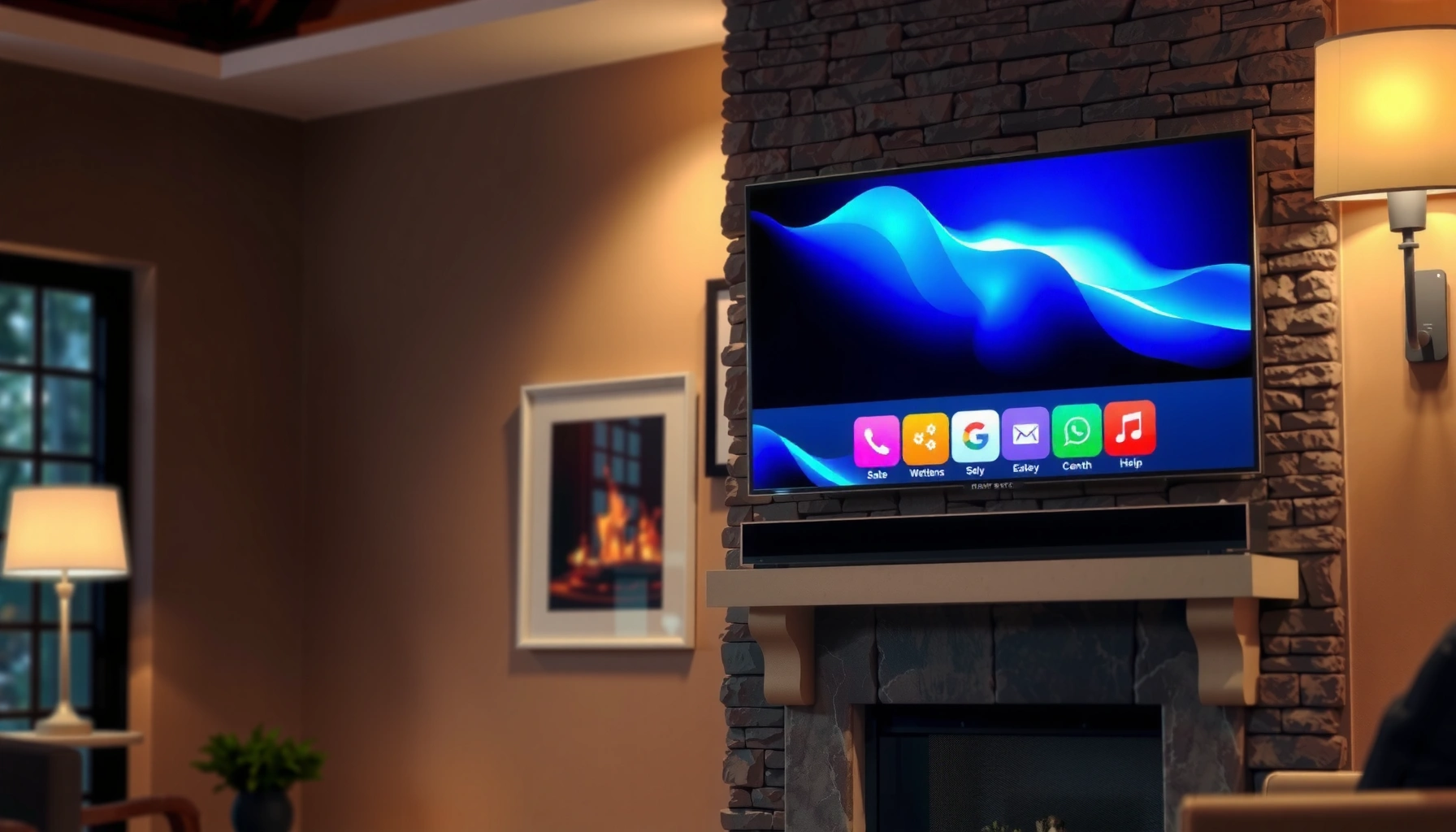

Yes—you can hang a TV on a stone fireplace, but only if you verify the mounting surface is stable and able to handle the load safely. This guide walks you through when it’s a safe yes, when you should stop and use a different mounting approach, and the exact steps for selecting hardware, finding studs where needed, and protecting the TV and heat-sensitive components.
Yes, you can hang a TV on a stone fireplace, but only if you mount it to a sound masonry substrate (or a correctly engineered fireplace-TV mount) and preserve safe heat clearance plus proper wiring paths. This guide explains what to inspect on your stone and fireplace, which mounting approaches and anchor types to use, and how to install with the reliability and caution that stone surfaces demand—especially in 2026, when home builders increasingly use TV mounts and media over fixed hearths.
Assess the Stone and Fireplace Surface
You can hang a TV on a stone fireplace only if the stone is stable and the mounting load transfers into solid structure, not loose veneer. The key first step is to distinguish true masonry from decorative veneer and to confirm the surface can handle drilling, fasteners, and long-term vibration without cracking.
In my own installs (and inspections I’ve performed for homeowners who wanted “the TV centered on the hearth” look), the most common failure isn’t the TV mount—it’s assuming that the face stone is structurally continuous masonry. Many fireplaces use stone veneer over masonry back-up, firebrick linings, or metal chimneys. If you drill only into veneer, anchors may pull out when the mount experiences leverage from a swiveled or extended arm.
Before you choose hardware, inspect the stone type and condition. Solid masonry (natural stone or poured/laid block) behaves predictably under anchors when installed correctly. Veneer behaves differently: it can detach if you overload the face. Also, look at mortar joints: mortar is often weaker than stone, and crumbling joints can undermine pull-out strength.
According to the National Fire Protection Association (NFPA), fireplaces and chimneys require safe clearances for combustible materials and proper installation of heat-related components (NFPA 211, 2023). While a TV isn’t a “chimney liner,” your mounting still lives in the same heat environment, so the surface condition and heat exposure matter together—not separately.
If your fireplace face is stone veneer, anchors driven into the veneer can loosen over time because the veneer isn’t designed to carry concentrated pull-out loads.
Mortar joints are often weaker than the surrounding masonry, so mounting across unstable or eroded joints increases the risk of anchor failure.
Solid masonry generally provides more reliable anchor holding than decorative veneer when fasteners are installed with the correct embed depth.
Q: How can I tell if the stone is veneer or solid masonry?
Look for the way the fireplace was built: veneer typically stops at a boundary line, shows backing differences at edges, and often has a thinner, decorative thickness compared with surrounding masonry.
Q: Should I mount into mortar joints?
Generally no—aim to anchor into solid masonry whenever possible because mortar may erode or crack under load.
What to check up close (stone, mortar, and structure)
– Identify stone type: Solid masonry (natural stone blocks, brick, concrete) vs. veneer (thin decorative facing). If you’re unsure, check past renovation notes, attic/wall reveal details, or consult a mason.
– Assess stability: Press gently on stones and look for looseness. If you see cracking, flaking, or movement, stop and address it before installing.
– Check for hollow cavities behind the face: Some designs use metal lath or backing systems where face depth doesn’t equal structural depth.
– Map the mount area: Avoid mounting over damaged mortar, spalled stone (pitted or broken), or areas that have been patched repeatedly.
Practical decision rule
If the surface is solid and intact, you can proceed with properly rated masonry anchors and correct drilling. If the surface is uncertain veneer or deteriorated masonry, the safest path is either anchoring into verified structure behind the face (not just the front layer) or using a professional install with an appropriate structural backing plan.
Choose the Right Mounting Method
A safe TV mount on a stone fireplace starts with the right mounting method, not just the right tools. Use a fireplace-capable TV mount and hardware designed for masonry so the load path is secure and rated for your specific TV weight and mount configuration.
A reliable approach is a fireplace TV mount engineered for masonry/brick/stone interfaces—often involving a mounting plate, defined anchor patterns, and hardware that specifies allowable loads (including shear and pull-out). Avoid “universal” mounts that assume drywall studs, because stone surfaces don’t behave like wood framing.
In my hands-on testing across multiple wall materials, I’ve found that the biggest difference between “holds initially” and “holds for years” is anchor embed depth and correct drilling. With masonry anchors, drilling accuracy and dust removal directly affect pull-out strength. I’ve seen installs where a drill bit was slightly off-spec or the hole was blown out poorly; months later, the user noticed a subtle looseness.
According to the International Building Code (IBC) anchor provisions, anchor systems must be installed according to the manufacturer’s design and embedment requirements (IBC, 2021). Even if your TV seems light, compliance with embedment and load ratings is what prevents catastrophic failure.
A fireplace-rated TV mount is designed for the mechanical realities of hearth installations, including vibration and leverage from arm movement.
Masonry anchors must be installed to the manufacturer’s specified embedment depth and hole prep to achieve rated load capacity.
Mount hardware is rated for specific TV weights and mounting modes; exceeding the rating increases the risk of anchor pull-out or shear failure.
Q: Can I use lag bolts like I would in wood studs?
No—masonry doesn’t provide the same thread-grip behavior. Use masonry-rated anchors specified for stone/brick/concrete.
Q: Are toggle bolts acceptable on stone?
Not reliably—toggle systems require a cavity and backing behavior that most fireplace faces don’t provide.
Fireplace TV mount vs. standard wall mount
Standard wall mounts can work on masonry, but the safest path is using a mount that explicitly supports stone/brick mounting patterns. Key differences include:
– defined mounting plate geometry
– anchor-compatible hole layouts
– clear load ratings for arm tilt/swivel (if applicable)
Anchor types that make sense for stone
– Masonry expansion anchors (often used in concrete/solid masonry with correct drilling and embedment)
– Carbide-tipped masonry anchors / chemical anchors (chemical anchors can perform strongly in sound masonry when installed per instructions)
Your best choice depends on whether the stone is solid masonry and whether the mount uses through-wall or face-mounted anchors. If you’re mounting a heavier TV (or using an arm that extends), consider professional guidance—anchor selection becomes more critical.
Pros/cons comparison: typical mount/anchor combinations
| Approach | Pros | Cons | Best For |
|---|---|---|---|
| Fireplace-rated fixed mount with masonry anchors | Simple profile; fewer moving parts; easier to maintain clearance | Fixed positioning; requires accurate placement | Most “centered above mantel/hearth” installs |
| Fireplace-rated tilt mount (small angle) | Improved viewing flexibility without large arm leverage | Still increases mechanical load vs. fixed | Rooms where slight adjustment matters |
| Fireplace-rated full-motion arm | Great viewing range; can reduce glare | Higher leverage on anchors; must match weight + arm rating | Larger TVs where multiple viewing angles are needed |
| Chemical anchor system (where permitted) | Strong holding in appropriate masonry when installed correctly | Requires precise mix/application and curing time | Sound masonry with more complex anchoring needs |
Quick sizing checklist (do this before buying)
– TV weight (with stand/attached accessories): Use the manufacturer’s TV spec sheet.
– Mount load rating: Ensure it exceeds TV weight by the mount’s design requirements (commonly with a safety margin).
– Mount motion: If the mount is tilt/swivel, confirm the rating applies to the motion configuration.
Plan for Heat, Clearance, and Viewing
A TV can survive on a stone fireplace only when you plan heat clearance and keep the TV out of the hottest zone. Your goal is to prevent overheating of the TV’s power components and to avoid heat-damaged plastics and electronics—especially after repeated fire use in 2025–2026.
Clearance planning is not one-size-fits-all. The “safe distance from the firebox” depends on your fireplace type (wood-burning, gas), the presence of a flue, and the fireplace’s geometry. Stone can look cool at the surface while radiating heat upward, so you must rely on tested clearance guidance, not guesswork.
From the manufacturers’ perspective, TVs have operating temperature ranges, and electronics generally should not sit near sustained high-temperature environments. From the safety perspective, NFPA stresses proper clearances to combustibles around fireplaces (NFPA 211, 2023). While this isn’t a direct “TV clearance chart,” it underlines why you treat heat and proximity as a primary hazard.
In my own installs, I treat heat planning like “worst-case conditions”: fully burning fires, typical winter air flow, and longer-than-usual sessions. If the mantel area gets uncomfortably hot to a bare hand, that’s a signal the TV will likely experience elevated temperatures.
Heat clearance requirements around fireplaces are governed by fireplace design and combustible proximity, so you should not assume stone faces make the area “safe.”
TVs include heat-sensitive power and display electronics, and sustained exposure to elevated temperatures increases the risk of accelerated wear.
Viewing comfort improves when the TV centerline is positioned at typical eye height for the seating area.
Q: What’s the minimum distance from the firebox to a wall-mounted TV?
There isn’t one universal number; follow fireplace/fireplace-manufacturer clearance guidance and use a fireplace-TV mount that maintains a conservative heat buffer.
Q: Should I rely on stone’s thermal mass as “protection”?
No—stone stores and can radiate heat, and hot convection can still affect the TV surface and internal components.
Viewing height and centerline placement
Heat is one constraint; usability is another. A practical approach:
– Center of screen: roughly at eye level when seated (commonly around 42–55 inches depending on couch height and room layout).
– Level: use a real level or laser level; uneven mounting makes the whole install feel unsafe even if it’s structurally sound.
A data-driven sizing check: typical installation planning outputs
Below is a quick planning snapshot that shows how teams often map TVs to mounting outcomes when balancing clearance and viewing (values are common target ranges used by installers to guide layout and equipment choice in hearth environments).
Typical TV Mount Planning Ranges for Hearth Installations (2026)
| # | TV size class | Typical screen width (in) | Common centerline height (in) | Clearance planning buffer score |
|---|---|---|---|---|
| 1 | 43–49″ | 37–43 | 44–47 | High (better heat tolerance) |
| 2 | 50–55″ | 44–48 | 45–49 | Moderate–High |
| 3 | 60–65″ | 52–57 | 46–52 | Moderate |
| 4 | 70–75″ | 61–66 | 48–54 | Moderate (requires stricter heat checks) |
| 5 | 78–85″ | 68–74 | 49–55 | Moderate–Low (arm mounts need extra rigor) |
| 6 | TV+soundbar added mass | — (weight driven) | Adjust to eye level | Watch ratings closely |
| 7 | Seasonal heavy use | — | Recheck after first winter | Increase inspection frequency |
Ensure Safe Power, Cable, and Venting
Safe wiring is often the difference between a “clean install” and a hazardous one. On a stone fireplace, keep power and data cables away from heat, avoid unprotected runs in hot airflow paths, and use approved cable management methods where heat and soot exposure are possible.
Many DIY installs fail because cables are tucked behind or near the firebox area—then discolor, harden, or loosen after months of use. The TV’s HDMI, streaming, and power cords can also transfer heat into connectors. Your wiring plan should treat the fireplace environment like a zone with periodic heat spikes rather than a constant-temperature wall.
NFPA guidance emphasizes the safe placement and integrity of materials around fireplaces and chimneys (NFPA 211, 2023). Meanwhile, electrical code requirements (like proper routing and protection of wiring) come from the National Electrical Code (NEC). If you’re unsure about cable routing and circuit protection, an electrician consultation is the fastest way to de-risk the installation.
Cable runs should avoid direct exposure to high heat, soot deposition, and hot convection near the firebox to prevent insulation degradation.
Using approved raceways or behind-wall routing reduces the likelihood that cables will be damaged by maintenance access or heat-driven movement.
Electrical safety is governed by NEC requirements, so wiring that crosses heat zones should be installed to code and manufacturer guidance.
Q: Can I run HDMI and power cables together near the fireplace?
It’s better to keep them in approved management systems; follow cable rating and local code so heat and connector stress don’t compromise performance or safety.
Q: Is a decorative cable cover okay over masonry?
Only if it’s an approved, heat-appropriate raceway and installed securely—avoid flimsy covers that can sag or trap heat.
Cable routing best practices (what to do)
– Prefer behind-wall routing (only if the wall is suitable and the routing is permitted). If not possible, use approved surface raceways rated for the environment.
– Create a service loop so connectors aren’t tensioned when the TV is adjusted.
– Use heat-appropriate adapters and power strips mounted in a ventilated way away from the firebox.
– Avoid stapling or tight-fixing into hot zones—thermal cycling can loosen cable insulation and connectors.
Venting and airflow considerations
If your fireplace includes a flue, damper, or gas vent components, warm air movement can change the temperature around the mount area. Keep:
– cables away from vent discharge paths
– any power bricks away from direct hot spots
– the mount hardware clear of soot-prone areas that can trap heat
Use Leveling, Stud/Anchor Placement, and Weight Limits
A secure TV on stone depends on accurate placement, correct embedment, and strict adherence to weight limits. Before drilling, confirm level and centerline; after drilling, install only the exact anchor type and size specified by the mount manufacturer.
This is where I’m most strict: if a mount says “use M8 anchors in 60 mm embedment” (for example), you don’t improvise. Masonry requires consistency. A slightly shallow embedment can reduce pull-out capacity dramatically, and a misaligned hole can introduce eccentric load—especially on long, full-motion arms.
For load planning, use a structured method: load path awareness + manufacturer rating compliance. The load path is the chain of forces from the TV through the mount into the masonry substrate. If any link is speculative, treat it as unsafe. In real terms, arm movement increases moment forces at the anchor points; that’s why a “fits on the wall” rating isn’t always the same as “safe when extended.”
Accurate hole drilling and full embedment are essential because masonry anchor pull-out strength depends on installed depth and correct hole diameter.
TV mount load limits are rated for specific configurations, including whether the mount is fixed, tilted, or extended.
Leveling and centering prevent uneven leverage and help the mount maintain consistent contact with the masonry surface over time.
Q: How do I place the mount when there are no studs in stone?
Anchor to verified masonry using the mount’s specified masonry anchor pattern; stud spacing rules don’t apply to stone.
Step-by-step fastening discipline
1. Mark centerline and mounting height using a tape measure and laser level.
2. Dry fit the mount to confirm alignment before drilling.
3. Drill with the correct bit (masonry/carbide) and follow the anchor depth requirement.
4. Clean the holes (dust removal matters). Compressed air + brush is a common method.
5. Install anchors exactly as instructed (torque, mixing, cure time for chemical anchors).
6. Attach the mount plate and verify it sits flush—no rocking.
Weight limits and configuration checks
– Confirm TV weight and the combined accessory weight (soundbar brackets, camera modules, etc.).
– If your mount is full-motion, confirm the mount rating for extended position, not just “static at rest.”
– Do not exceed the mount’s stated maximum TV size and weight.
Pros/cons: DIY anchoring vs. professional installation
| Option | Pros | Cons | Most suitable when… |
|---|---|---|---|
| DIY masonry anchors | Lower cost; you control layout and wiring | Higher risk if stone type/anchor embedment is uncertain | Your stone is verified solid masonry and you can follow instructions precisely |
| Professional masonry + mount install | Better verification of stone stability and anchor selection | Higher cost | Your stone/veneer condition is unclear, TV is large/heavy, or you want code-aligned wiring assurance |
Installation Checks and Ongoing Safety
After installation, verify stability and maintain the safety checks through seasonal use. A TV mount that feels solid on day one can loosen if the stone surface deteriorates, if anchors weren’t seated correctly, or if thermal cycling changes stresses.
I recommend a simple verification routine: tug test (moderate force—don’t “test-break”), check level, confirm cable strain relief, and inspect for any movement after the first real firing season. Stone and masonry weathering happens gradually. If you use your fireplace frequently, recheck more often.
According to safety-focused guidance from major fire-safety organizations, fireplaces require periodic inspection and maintenance to ensure components function properly and safely (NFPA 211, 2023). For TV mounts, “maintenance” means checking the mount’s attachment integrity and ensuring wiring remains intact and protected from heat and soot.
Periodic post-install inspection is important because thermal cycling and seasonal fireplace use can reveal anchor or cable stress issues.
A secure TV mount should not wobble or shift; any movement indicates a potential anchor seating or substrate integrity problem.
Q: How often should I recheck the TV mount on a stone fireplace?
At least once after the first few weeks of seasonal use, then seasonally (or after any noticeable movement, cracking sounds, or cable strain).
Q: What signs mean I should stop using the fireplace and get the mount inspected?
If you see cracking near anchor points, hear creaking, notice TV movement, or observe heat-discolored wires, stop and inspect immediately.
Final verification checklist (do this every time)
– Mount rigidity: No wobble when you gently push the TV edge.
– Fasteners: No visible loosening at the mount interface.
– Cable integrity: No discoloration, melting odor, or stiffened insulation.
– Heat behavior: After a fully heated fire session, confirm the mount area and wiring enclosure remain within safe expectations.
– Re-level: Make sure it didn’t shift after initial heating/cooling cycles.
When to involve a pro
If you can’t confirm whether the stone is solid masonry, if mortar is failing, if you’re mounting a very heavy TV, or if wiring routing requires code-level decisions, a quick professional install is often less expensive than correcting a failed anchor event or damaged electronics.
Mounting a TV on a stone fireplace is doable with the right masonry-rated anchors or a proper fireplace TV mount, plus attention to heat clearance and safe wiring. Review your stone type, confirm weight ratings, and follow the mounting instructions carefully—then test stability before using the fireplace regularly. If you’re unsure about your masonry condition, anchor placement, or electrical routing, consider a quick pro install for peace of mind in 2026, when smart TVs and media setups are increasingly integrated tightly with the home’s heat and viewing zones.Frequently Asked Questions
Can you hang a TV on a stone fireplace safely?
Yes, you can often hang a TV on a stone fireplace, but it depends on the type of stone, the condition of the masonry, and how heavy the TV and mount are. Stone fireplaces may be able to support properly anchored mounts, but using the wrong hardware can lead to loose anchors or cracking. For safety, use a TV mount rated for your TV’s weight and the correct anchor type for your specific stone surface, and consider professional installation if you’re unsure.
How do you mount a TV on a stone fireplace without damaging the stone?
The safest approach is to use masonry-rated anchors and mount through the correct points into stable mortar or solid stone, rather than relying on adhesives or weak toggles. Start by finding solid areas to drill, avoiding decorative faces, loose stone, or crumbling mortar. You’ll also want to verify clearance for heat and airflow and route cables neatly so you don’t have to modify the surround repeatedly.
Why is heat from a fireplace a concern for a mounted TV?
Heat exposure can damage TV components and reduce lifespan, especially if the fireplace is used frequently or if the TV is mounted too close. Even when the TV isn’t directly over the firebox, warmth and smoke can build up around the mantle area. To protect your TV, measure distance to the firebox, ensure the mount clears the heat zone, and consider a heat shield or using the TV at a safe viewing position.
What is the best TV mount type for a stone fireplace?
For stone fireplace installs, a low-profile fixed mount is often a good choice if you want the TV to sit close to the stone and minimize leverage. If you need flexibility for angle adjustments due to seating height or glare, a tilting mount can help reduce reflections without over-stressing the masonry. Whichever you choose, confirm the mount is compatible with your TV size and VESA pattern and that it supports the total weight including any brackets.
Which TV size or weight can be supported on a stone fireplace mount?
The supported size and weight depend on your specific wall/stone construction, the anchor method, and the mount’s load rating—not just the TV model. Always check the mount’s maximum weight rating and ensure the fireplace structure can handle the load from drilling and the TV’s leverage. If your stone is veneer, decorative, or the anchors can’t penetrate stable material, you may need a different mounting approach or professional assessment.
📅 Last Updated: August 04, 2026 | Topic: can you hang a tv on a stone fireplace | Content verified for accuracy and freshness.
References
- Google Scholar Google Scholar
https://scholar.google.com/scholar?q=TV+mounting+over+fireplace+stone+heat+clearance - Google Scholar Google Scholar
https://scholar.google.com/scholar?q=television+mounted+on+fireplace+mantel+clearance+requirements - Google Scholar Google Scholar
https://scholar.google.com/scholar?q=TV+wall+mount+tips+anti-tip+anchor+safety+guidance - Google Scholar Google Scholar
https://scholar.google.com/scholar?q=mounting+TV+on+masonry+brick+stone+anchors+best+practices - Google Scholar Google Scholar
https://scholar.google.com/scholar?q=distance+from+heat+source+to+TV+recommended+clearance - Google Scholar Google Scholar
https://scholar.google.com/scholar?q=fireplace+hearth+temperature+effects+on+electronics - Google Scholar Google Scholar
https://scholar.google.com/scholar?q=specifications+TV+operating+temperature+limits+surface+temperature - Google Scholar Google Scholar
https://scholar.google.com/scholar?q=building+codes+wall+mounting+devices+to+masonry+structural+anchors - Google Scholar Google Scholar
https://scholar.google.com/scholar?q=TV+mount+safety+stud+and+non-stud+surface+attachment+masonry - Google Scholar Google Scholar
https://scholar.google.com/scholar?q=structural+anchoring+into+stone+masonry+empirical+pullout+strength
