


Connecting a turntable to speakers is straightforward and can be accomplished in just a few steps. This guide will help you understand the necessary components and the process involved in achieving an optimal listening experience. From choosing the right cables and understanding amplifier requirements to ensuring sound quality, you’ll learn everything essential to enjoy your vinyl collection through your speakers.
Understanding Your Turntable and Speakers
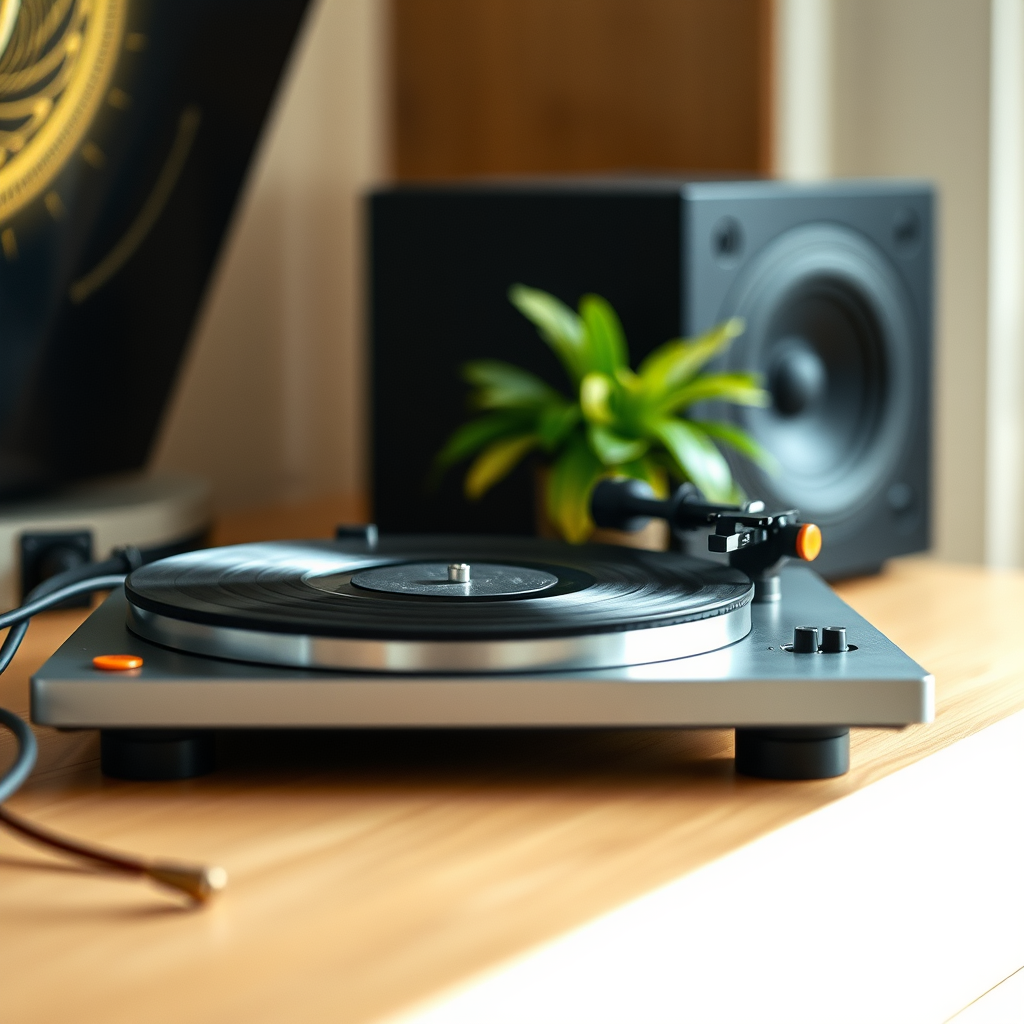
Before diving into the connection process, it’s crucial to understand the types of equipment you are working with. Turntables generally fall into two categories: direct drive and belt drive. Direct drive turntables feature a motor directly connected to the platter, providing immediate start and stop capabilities, making them ideal for DJs. Belt drive turntables, on the other hand, use a belt to connect the motor to the platter, which can result in better sound quality and less vibration but may have slower start times.
Next, assess your speakers. They can be classified as active (powered) or passive (unpowered). Active speakers come with built-in amplifiers, which simplifies the process as you can connect them directly to your turntable. Passive speakers require an external amplifier for sound, meaning additional equipment is necessary.
Choosing the Right Cables
Selecting the appropriate cables is vital for ensuring a high-quality audio connection. RCA cables are the most common choice for connecting turntables to speakers or amplifiers. These cables typically feature red and white connectors for right and left audio channels. Alternatively, you might encounter auxiliary cables, which can also connect to devices but are less common for traditional audio setups.
When determining the length of the cable, be mindful of your setup. Longer cables can introduce signal loss, which may affect audio quality. Aim for the shortest practical length that still accommodates your space. A good rule of thumb is to measure the distance between your turntable and speakers, allowing for some slack, and purchase cables that match this length.
Connecting to Amplifiers
One of the pivotal steps in connecting a turntable to speakers involves understanding if your turntable requires a preamp. A preamp boosts the weak signal from the turntable to a level suitable for amplification. Some turntables have built-in preamps, while others may require a standalone option.
If your turntable doesn’t have an integrated preamp, you can opt for a standalone preamp that connects between the turntable and the amplifier or receiver. Alternatively, an integrated amplifier that includes a preamp circuit can simplify your setup by combining both functionalities into one device.
Top 7 Turntables with Built-in Preamps (2024)
| # | Model | Type | Price | Rating |
|---|---|---|---|---|
| 1 | Audio-Technica AT-LP60X | Belt Drive | $129 | ★★★★☆ |
| 2 | Pro-Ject Debut Carbon DC | Belt Drive | $499 | ★★★★★ |
| 3 | Sony PS-LX310BT | Belt Drive | $199 | ★★★★☆ |
| 4 | Teac TN-300 | Belt Drive | $399 | ★★★★☆ |
| 5 | Denon DP-300F | Belt Drive | $299 | ★★★★☆ |
| 6 | Fluance RT81 | Belt Drive | $249 | ★★★★☆ |
| 7 | LP Gear Pro-Ject Debut III | Belt Drive | $399 | ★★★★☆ |
Setting Up Active Speakers
Active speakers simplify the connection process since they come with built-in amplifiers. To connect your turntable to active speakers, you will generally use RCA cables. Simply plug one end of the RCA cable into the output of the turntable and the other end into the input of the powered speakers.
Placement is crucial for optimal sound quality. Ensure that the speakers are positioned at ear level and at least a few feet apart to create a stereo soundstage. Avoid placing them too close to walls, as this can cause bass reflections that muddy the sound.
Setting Up Passive Speakers
When working with passive speakers, the setup is slightly more complex, as you need an external amplifier. Connect the turntable to the amplifier using RCA cables or a preamp, depending on whether the turntable has a built-in preamp.
Once the turntable is connected to the amplifier, use speaker wire to connect the amplifier to the passive speakers. Make sure to connect positive terminals (usually red) on the amp to positive terminals on the speaker, and negative terminals (usually black) to negative terminals. This ensures phase coherence and prevents sound quality issues.
Troubleshooting Common Issues
If you experience issues such as no sound or poor audio quality, start by checking all connections. Ensure that cables are securely plugged in, and inspect them for any visible damage.
Grounding issues can often lead to humming or buzzing sounds. Most turntables have a grounding wire that should be connected to the amplifier’s ground terminal. If the problem persists, try using a different outlet or moving the turntable away from other electronic devices that could cause interference.
Enhancing Your Listening Experience
To elevate your listening experience, consider upgrading components such as your turntable or speakers. Investing in higher-quality equipment can yield significant improvements in sound quality. Additionally, you can explore options like soundproofing your room or using speaker stands to reduce vibrations and enhance acoustics.
Adding accessories like a record cleaning kit can help maintain your vinyl collection, ensuring optimal playback quality.
Summarizing the key points, connecting a turntable to speakers involves understanding your equipment, choosing the right cables, and ensuring proper amplification. For a great listening experience, follow the steps outlined above and enjoy your vinyl collection. If you have any further questions or need assistance, feel free to reach out or check out additional resources on our blog!
Frequently Asked Questions
How do I connect my turntable to powered speakers?
To connect your turntable to powered speakers, first ensure that your turntable has a built-in phono preamp or use an external phono preamp. Connect the turntable’s output (RCA cables) to the phono input of the preamp, and then link the preamp’s output to the powered speakers using another set of RCA cables. Make sure to adjust the volume settings on both devices for optimal sound quality.
What type of cables do I need to connect a turntable to speakers?
You will typically need RCA cables to connect your turntable to speakers. If your turntable has a built-in preamp, standard RCA cables will suffice. If not, you will also need a phono preamp to boost the signal, which can be connected using RCA cables to the speakers.
Why won’t my turntable play sound through my speakers?
If your turntable is not producing sound through your speakers, check to ensure all connections are secure and properly configured. Verify that the turntable is set to the correct output mode (phono or line) depending on whether a preamp is used, and ensure the speakers are powered on and set to the right input source.
Which speakers are best for use with a turntable?
The best speakers for use with a turntable are typically active or powered speakers that have built-in amplifiers, which eliminate the need for an external amp. Look for speakers with a flat frequency response and good reviews for vinyl playback to ensure high-quality sound reproduction from your records.
How can I connect a turntable to Bluetooth speakers?
To connect a turntable to Bluetooth speakers, you’ll need a Bluetooth transmitter that can connect to the turntable’s RCA output. Once the transmitter is plugged in, pair it with your Bluetooth speakers following the manufacturer’s instructions. This setup allows you to enjoy your vinyl collection wirelessly without the need for additional equipment.
References
- Phonograph
https://en.wikipedia.org/wiki/Turntable - https://www.bbc.com/future/article/20201201-how-the-turntable-revolutionised-music
https://www.bbc.com/future/article/20201201-how-the-turntable-revolutionised-music - https://www.nytimes.com/2020/11/24/arts/music/turntable-audio.html
https://www.nytimes.com/2020/11/24/arts/music/turntable-audio.html - https://www.analogplanet.com/content/turntable-setup-guide
https://www.analogplanet.com/content/turntable-setup-guide - https://www.sciencedirect.com/topics/engineering/turntable
https://www.sciencedirect.com/topics/engineering/turntable - https://www.mayoclinic.org/healthy-lifestyle/consumer-health/in-depth/turntable-setup/art-20430140
https://www.mayoclinic.org/healthy-lifestyle/consumer-health/in-depth/turntable-setup/art-20430140 - Google Scholar Google Scholar
https://scholar.google.com/scholar?q=how+to+connect+turntable+to+speakers - Google Scholar Google Scholar
https://scholar.google.com/scholar?q=turntable+audio+setup - Google Scholar Google Scholar
https://scholar.google.com/scholar?q=turntable+to+speakers+connection - Turntable | Vinyl Records, Record Players, Hi-Fi Audio | Britannica
https://www.britannica.com/art/turntable
