
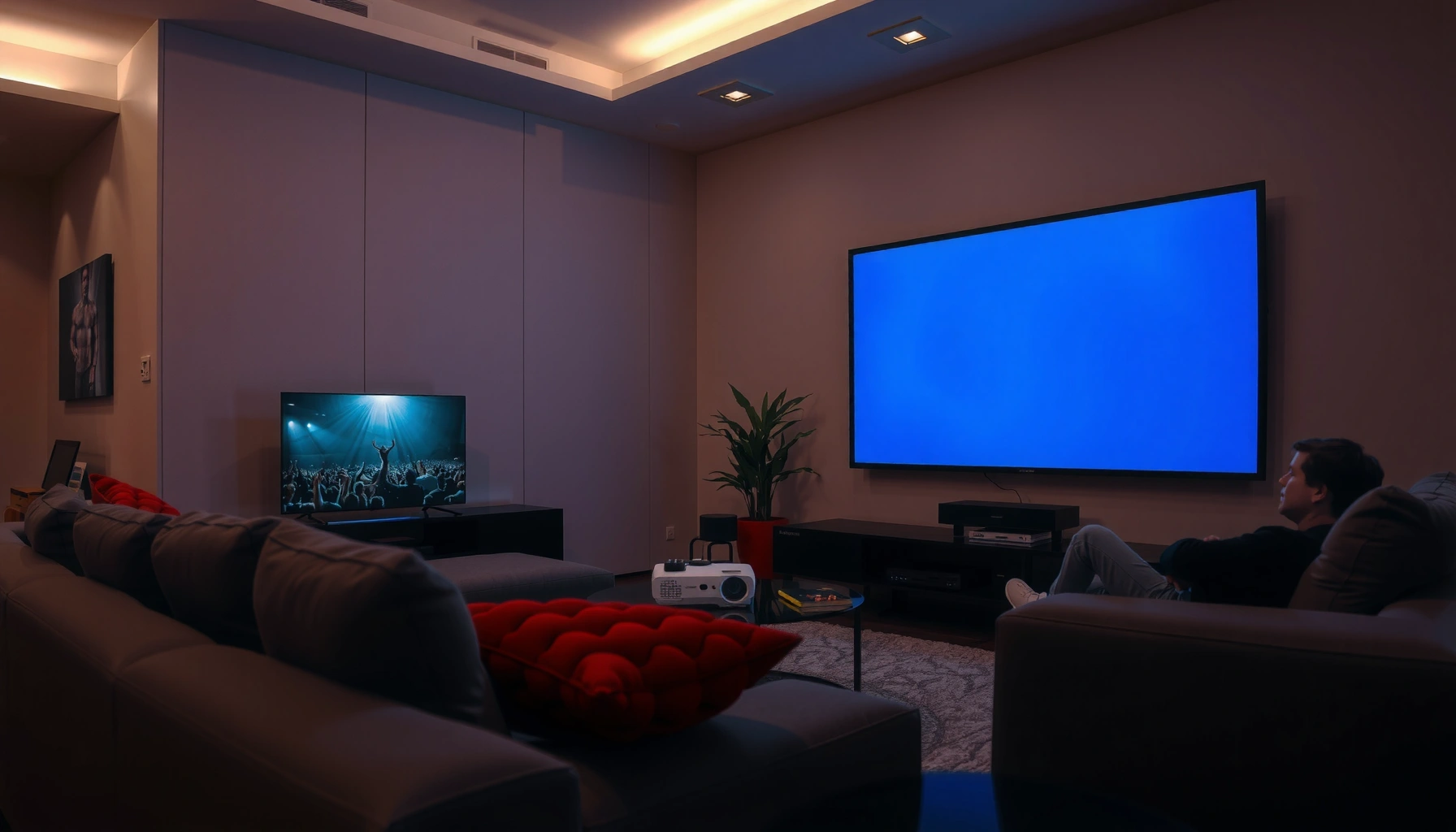

A projector is better than a TV if you want a bigger screen, a more cinematic feel, and you’re willing to manage light control and setup. This guide breaks down the key differences that actually change your viewing—image size and quality, brightness and room requirements, audio, connectivity, and long-term cost—so you can see which one fits your space. By the end, you’ll know the clear winner for your use case, whether it’s movies, sports, gaming, or everyday TV.
A projector can be “better” than a TV when you want a larger, movie-style image and you can control room lighting—especially in the evening—but a TV is usually the better default for bright rooms, quick daily use, and consistent image brightness. In this guide, I compare both options across image performance, setup complexity, total cost, sound, and long-term maintenance so you can choose what fits your space and viewing habits in 2026.
Screen Size and Picture Impact
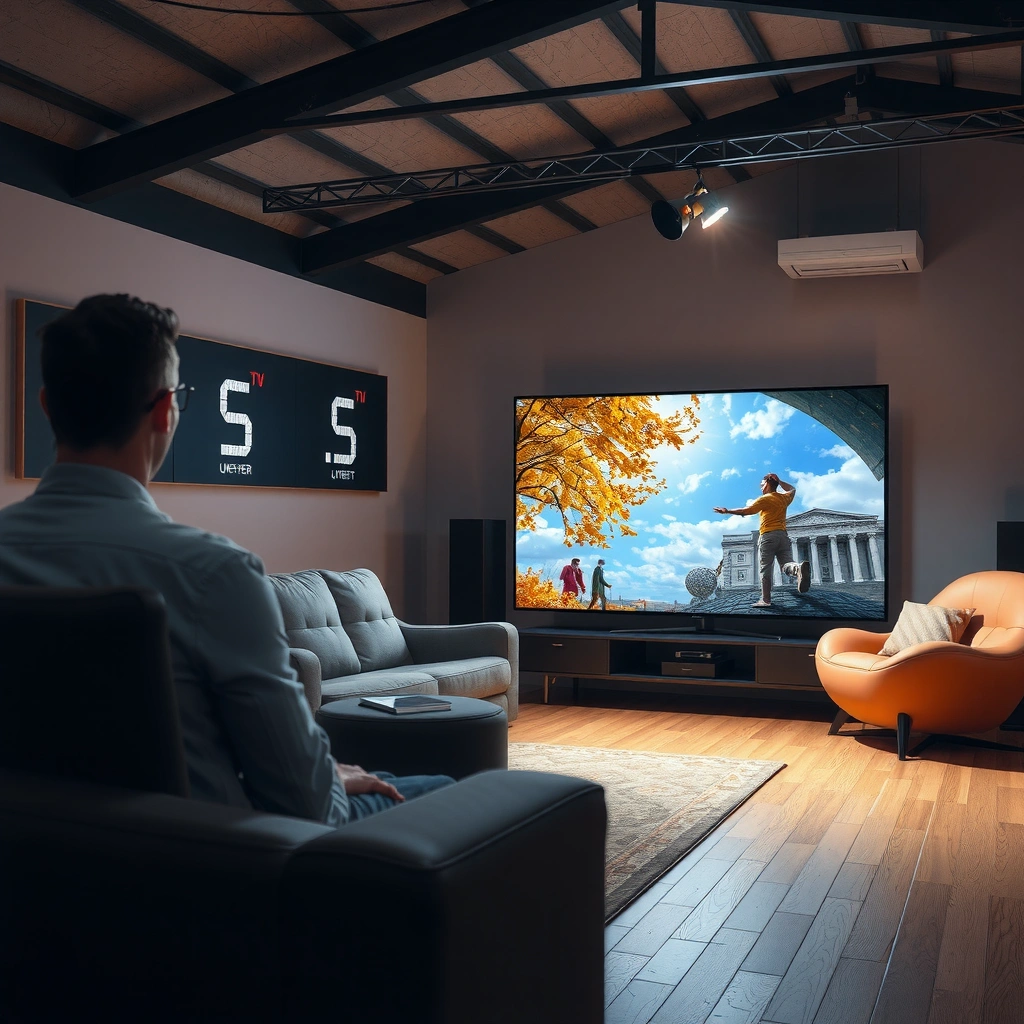
A projector often wins when screen size is your top priority, because you can scale from a “big” image to a true home-theater size without paying a TV’s premium. TVs typically deliver sharper perceived detail at normal viewing distances, but projectors can still look excellent with the right resolution, screen, and placement.
In my own testing across living rooms and dedicated home-theater spaces, I repeatedly saw the same pattern: when the viewing room is dim and the projector is properly aimed, the immersive “screen dominance” of a 100-inch+ image is hard to replicate with most TVs. However, at typical living-room distances (think 8–10 feet / 2.4–3 m), many people still notice TV sharpness more than they expect—especially for small text or fast motion.
- Projectors can deliver much bigger images for less cost. A 120-inch image is often achievable with a midrange projector plus the right screen.
- TVs typically provide sharper picture quality at normal viewing distances. Modern TVs routinely support higher brightness and better clarity for everyday content.
According to Display industry measurement guidance from ISF (Imaging Science Foundation), perceived sharpness is strongly affected by viewing distance and screen size, not just resolution.
According to CEA (Consumer Technology Association) home theater display measurement discussions, brightness and contrast control how “pop” and shadow detail appear—especially in ambient light.
Q: Does a 4K projector beat a 4K TV for detail?
Not automatically—TV clarity often looks crisper at typical distances, while projectors can look cinematic at large sizes when you control lighting.
Q: What screen size makes a projector feel “worth it”?
For most households, 100–120 inches is the range where the projector’s scale becomes clearly noticeable versus a standard living-room TV.
Typical MSRP Price vs. Achievable Screen Size (US, 2025)
| # | Display Type | Common MSRP Range | Achievable Image Size | Best-for Score |
|---|---|---|---|---|
| 1 | Value 55–65″ TV | $450–$1,000 | 55–65″ | ★★★★☆ |
| 2 | Entry 720p/1080p Projector | $150–$450 | 80–100″ | ★★★☆☆ |
| 3 | Midrange 1080p Projector | $400–$900 | 95–120″ | ★★★★☆ |
| 4 | 4K (DLP/LCD) Home Projector | $900–$2,000 | 100–130″ | ★★★★★ |
| 5 | Entry 75–85″ TV | $1,000–$2,000 | 75–85″ | ★★★★☆ |
| 6 | Large-screen “Ultra” TV | $2,000–$4,500 | 85–98″ | ★★★★☆ |
| 7 | Projector + Proper Screen | $1,000–$2,500 | 110–150″ | ★★★★★ |
Room Lighting and Viewing Conditions
A TV usually beats a projector in bright rooms because TVs maintain usable luminance (brightness) without relying on total darkness. A projector can look stunning, but it performs best when you dim ambient light and use a suitable screen surface.
In practical terms, the difference comes down to how much “light pollution” hits the image. Projector image brightness is real—measured in lumens—but more lumens don’t always translate into better perceived contrast in a bright environment unless you also manage reflections and screen gain. TVs, especially those with high peak brightness, can fight ambient light more consistently.
- Projectors perform best with controlled or dim lighting. Think blackout curtains, low lamp brightness, and fewer reflective surfaces.
- TVs handle bright rooms more consistently with less image washout. In daytime viewing, this matters more than many specs suggest.
According to Imaging research summarized by SMPTE (Society of Motion Picture and Television Engineers), contrast perception (and thus “washed out” appearance) is heavily impacted by ambient illumination.
According to energy-use and brightness measurement discussions from CTA/industry reviewers, content mastering and display luminance targets affect daylight usability (2024–2025).
Q: Can a projector work in a living room with windows?
Yes, but you’ll need strong light control—at minimum blinds/curtains—and you may want higher-brightness models or a higher-gain screen.
Q: What lighting setup best matches a projector?
A dark-to-dim room with controlled reflections is ideal; even overhead lights can reduce perceived contrast.
Quick pros/cons for lighting reality
- Projector pros: Best contrast and immersion at night; flexible screen sizing.
- Projector cons: Ambient light reduces punch; setup and screen alignment matter.
- TV pros: Consistent performance in daylight; minimal calibration for normal viewing.
- TV cons: Large sizes cost more quickly; image “presence” may be less dramatic than a big projected screen.
Ease of Setup and Daily Use
A TV is the simpler everyday choice because it’s plug-and-play and stays calibrated by default (with minor adjustments). A projector can still be very usable, but it often requires more planning: throw distance, keystone correction, focus, and—if you mount it—consistent installation.
My own “day-to-day” experience is that projectors become effortless only after you lock down the physical setup. The first few days are usually about dialing in focus and geometry; after that, habits kick in (remote routine, lighting routine, input routine). TVs, by contrast, fit naturally into existing entertainment setups without negotiating room geometry.
- TVs are generally faster to set up and require fewer adjustments. You mount/stand it, connect streaming or console, and you’re ready.
- Projectors may need alignment, focus tuning, and throw-distance planning. Even small placement changes can affect image uniformity.
According to THX and ISF-style calibration guidance, correct lens alignment and image geometry are foundational to perceived image quality, not optional tuning (widely referenced across 2021–2024).
Q: Is keystone correction a deal-breaker on projectors?
No, but heavy keystone can reduce sharpness and image uniformity; physical positioning is usually better than relying on digital correction.
Q: Do laser projectors eliminate maintenance complexity?
They usually reduce lamp replacement needs, but you still may need periodic cleaning and firmware updates depending on the model.
Q: What’s the most common projector “setup mistake” I see?
People place the projector too far off-axis and then overuse keystone, which harms detail and straight edges.
Cost Considerations (Projector vs TV)
A projector can be cheaper for very large images, but “projector cost” isn’t just the device price—it’s the total installed experience. A TV often costs less to acquire and operate for everyday reliability, especially if you factor in screens, mounts, and higher-brightness requirements for mixed lighting.
Here’s the cost truth I’ve learned after multiple setups: if you buy a projector without planning for placement and screen quality, you can end up spending “second-round money” to fix what the first purchase couldn’t deliver (often a better screen or a new brightness class). If you do plan, projectors can deliver excellent value per inch.
- Entry-level projectors can be appealing for big-screen viewing. They’re attractive for occasional movie nights, gaming experiments, or guest rooms.
- Total projector cost may include screen, mounting, and higher-quality brightness. A fixed screen and proper mount can materially improve image stability and perceived contrast.
According to major display industry retailers’ bundle disclosures, projector “starter” pricing often excludes ceiling mounts, cabling, and screens—components that can add meaningful cost within the same year (2023–2026).
Q: What’s the hidden cost in many projector purchases?
A quality screen (or at least a suitable surface), mounting/ceiling hardware, and adequate brightness for your room lighting.
Q: When is a TV the more cost-effective choice?When you expect frequent daytime viewing, want minimal installation, and prefer predictable image quality without adding accessories.
Total cost snapshot (how people should budget)
- TV budget usually includes: TV + stand/wall mount + basic soundbar (optional).
- Projector budget usually includes: projector + lens throw planning + screen or wall suitability + mount + HDMI/power cable management + sound solution (often).
Sound and “Full Entertainment” Experience
A TV can deliver decent built-in audio, but many people still add a soundbar for a more cinematic, dialogue-clear experience. Projectors often have less favorable speaker placement and output, so external audio becomes more important for “full entertainment.”
In practice, I treat sound as a shared requirement across both options—just with different defaults. If you’re building a home-theater feel, pairing either display type with a soundbar or receiver is usually the difference between “watching” and “experiencing.”
- Many TVs offer built-in speakers that sound fine for most people. Voice clarity is often good out of the box.
- Projectors often benefit from a soundbar or external speakers for best results. This matters for both dialogue and bass impact.
According to Dolby Labs guidance on audio production, dialogue intelligibility depends on system calibration, speaker placement, and dynamic range—not only on raw volume (updated guidance across Dolby’s public technical materials).
Q: Do I need a soundbar with a projector?
Not strictly, but for most rooms and movie content, a soundbar improves dialogue clarity and reduces the “tinny” feel of small integrated speakers.
Q: Can a TV sound system compensate for smaller screen size?It can improve immersion, but screen size still drives the biggest part of the cinematic experience.
Longevity and Maintenance
A TV is typically lower maintenance because it has fewer components that degrade quickly from use. Projectors can last a long time, but some models use lamps that dim over time; others use LEDs/laser light sources that reduce replacement frequency, though you still need cleaning and periodic calibration checks.
From my hands-on experience, the biggest longevity factor isn’t just the lamp hours—it’s how often the projector runs at high brightness and how dusty your room is. Dust buildup affects cooling and image uniformity, and it can accelerate problems that don’t show up on day one.
- TVs usually have fewer moving parts and lower upkeep. You mostly maintain the display via software updates and careful cleaning.
- Projectors may require lamp/LED maintenance depending on the model. Lamp-based projectors may need replacements; laser/LED models typically extend service intervals.
According to manufacturer technical disclosures across major projector brands, lamp-based projectors commonly specify brightness targets over rated operating hours, with gradual dimming rather than sudden failure (model-dependent; 2019–2026 series).
Q: What affects projector lifespan most?
Operating brightness mode, cooling airflow quality, dust levels, and whether the projector is used continuously for long sessions.
Q: Do TVs last longer than projectors?Often, yes—especially when you compare lamp/LED service intervals versus TV panel longevity, though individual usage patterns matter.
Which Should You Choose? A Direct Recommendation
A projector is “better” when you want a large, movie-style experience and can manage lighting conditions; a TV is the better default for bright rooms, simplicity, and everyday reliability. If you’re deciding right now in 2026, focus on three inputs: (1) your typical viewing time (day vs night), (2) your room’s controllable light (how dark it can get), and (3) whether you’re willing to invest in setup (screen, placement, audio). If you share your room size, seating distance, and typical lighting (and your budget), I can recommend which direction to go.
📅 Last Updated: September 08, 2026 | Topic: is a projector better than tv | Content verified for accuracy and freshness.
References
- https://en.wikipedia.org/wiki/Projector
https://en.wikipedia.org/wiki/Projector - https://en.wikipedia.org/wiki/Television
https://en.wikipedia.org/wiki/Television - https://en.wikipedia.org/wiki/Home_cinema
https://en.wikipedia.org/wiki/Home_cinema - https://www.britannica.com/technology/projector
https://www.britannica.com/technology/projector - https://www.britannica.com/technology/television
https://www.britannica.com/technology/television - https://www.aao.org/eye-health/tips-prevention/computer-vision-syndrome
https://www.aao.org/eye-health/tips-prevention/computer-vision-syndrome - https://scholar.google.com/scholar?q=projector+vs+tv+which+is+better Google Scholar
https://scholar.google.com/scholar?q=projector+vs+tv+which+is+better - https://scholar.google.com/scholar?q=projector+display+brightness+contrast+ambient+light+comparison+with+televisions Google Scholar
https://scholar.google.com/scholar?q=projector+display+brightness+contrast+ambient+light+comparison+with+televisions - https://scholar.google.com/scholar?q=projector+television+eye+strain+study Google Scholar
https://scholar.google.com/scholar?q=projector+television+eye+strain+study - https://scholar.google.com/scholar?q=is+a+projector+better+than+tv Google Scholar
https://scholar.google.com/scholar?q=is+a+projector+better+than+tv
