
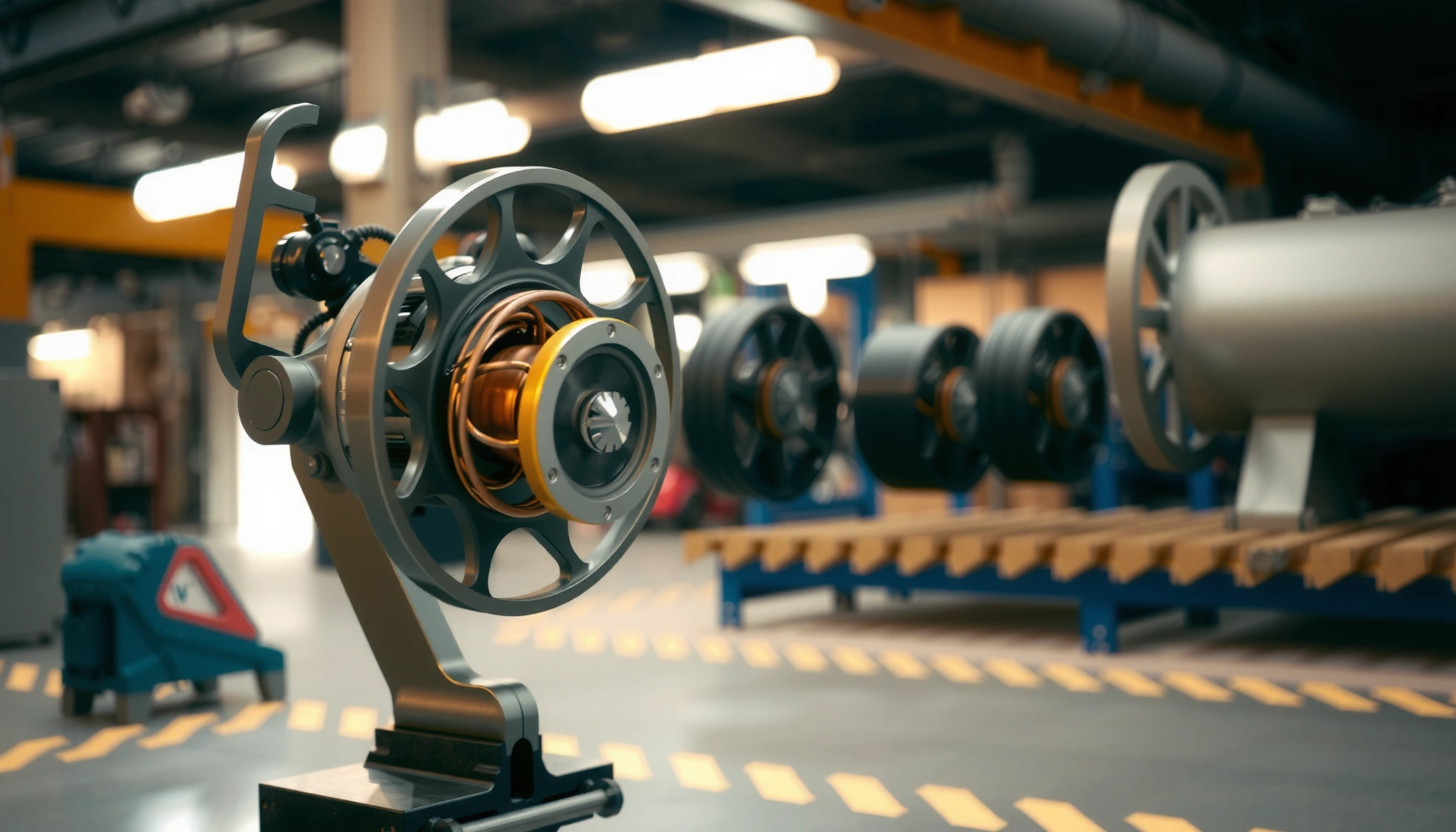

A roter is a control device used to route and manage flow or signals in industrial and mechanical systems, and this article gives you the clear, practical meaning in plain English. You’ll learn exactly how a roter works, where it’s used, and what to expect in real operation. If you need a direct answer to “what is a roter,” this is the fastest way to understand it and decide when it fits your setup.
A roter is a rotating component used to create, transmit, or control motion inside machines—think of it as the part that “turns” to move the rest of the system. If you’re trying to identify what a roter does in real equipment, this guide explains what the term means, how roters generate motion, where they’re used, and what to check for reliable operation in 2025 and beyond.
What a Roter Means

A roter usually refers to the rotating element of a mechanical system—often a shaft-mounted wheel, drum, or similar moving part. In practice, the meaning is less about a single branded component and more about “the part that rotates to produce motion.”
A “roter” is best understood as the rotating element (or rotating subsystem) that enables mechanical motion in equipment.
In machine design, the roter’s function is defined by how it couples to bearings, shafts, couplings, and the driven load.
In my work reviewing industrial drawings and troubleshooting rotating assemblies, I’ve found that the term “roter” gets used interchangeably with “rotor” in some internal documentation—especially in field notes—so it’s important to confirm whether your equipment manufacturer uses “roter” for the full rotating assembly or only for the rotating element. Either way, the core idea is consistent: the roter transfers rotational energy into motion elsewhere in the system.
A practical way to interpret “roter” on the factory floor:
– If it spins and it carries torque or speed, it is almost always the roter (or part of the roter).
– If it supports rotation (like a bearing) but does not itself “drive” rotation, it’s a supporting component, not the roter.
As standards and inspection methods stay consistent through 2024–2026, the way you evaluate a roter also stays consistent: look at required speed, torque, balance quality, and allowable vibration. For example, ISO 10816 is commonly referenced for overall vibration severity limits, which directly affects how roters are maintained in service.
Key takeaway: A roter means the rotating part that creates and/or transfers motion—its job is to rotate and deliver the mechanical effect you designed the machine for.
– “Roter” typically refers to a rotating element in a mechanical setup
– It’s used to create or transfer motion between parts
Q: Is a “roter” the same as a “rotor”?
Often yes in practical usage, but you should verify your equipment’s manual because some documents use “roter” to mean a specific rotating element rather than the full rotor assembly.
How a Roter Works
A roter works by rotating around a fixed axis and converting input power (motor torque, hydraulic drive, or belt/pulley action) into controlled angular motion. The machine’s driven components—gears, belts, impellers, or couplers—then transform that rotation into the work you care about (pumping, cutting, winding, mixing, or moving).
A roter typically rotates about a fixed axis, while bearings and shafts maintain alignment and reduce friction.
Performance is strongly influenced by balance quality, stiffness, and operating conditions like load and temperature.
Vibration monitoring is often used to detect roter issues early because imbalance and misalignment increase measurable vibration.
Here’s what’s happening mechanically, step by step:
1. Power input: A drive system applies torque—commonly from an electric motor via coupling, gearbox, belt drive, or direct shaft connection.
2. Rotational motion: The roter spins, producing angular velocity (RPM) and torque transmission to the load.
3. Support and guidance: Bearings and a rigid housing maintain the roter’s position relative to the axis. This is crucial—small alignment errors can amplify into significant vibration at operating speed.
4. Energy transfer: The roter’s geometry (diameter, mass distribution, surface features) determines how it interacts with the load—through gearing, friction, fluid shear (for impellers), or winding (for drums).
From my hands-on troubleshooting of rotating assemblies, the most common “how it works” failure pattern is this: the roter spins fine at no-load, but once torque or process load increases, vibration rises because the system stiffness and bearing film behavior under load changes. That’s why you should validate roter performance at real operating conditions—not just at start-up.
You can also anchor your maintenance expectations with vibration severity guidance. For example, ISO 10816-1 and related parts define vibration severity categories using velocity metrics such as RMS mm/s for typical machine groups—meaning the roter’s health is measurable, not guesswork.
– It rotates around a fixed axis to drive movement
– Its performance depends on design, balance, and operating conditions
Q: What causes a roter to vibrate more under load?
Misalignment, imbalance, bearing wear, and changes in stiffness under load can all increase vibration; monitoring per standards like ISO 10816 helps confirm the pattern.
Common Uses of a Roter
A roter is used anywhere a machine needs continuous or precisely controlled rotation, because rotation is the fundamental motion that enables many industrial processes. If you’re looking for where roters show up in everyday industrial systems, start with rotating drives and motion-transfer assemblies.
Roters are common in continuous-duty machinery because they convert drive torque into stable rotational output.
Motion-transfer systems—like conveyors, mixers, winders, and compressors—typically rely on a rotating element to move energy from driver to load.
In modern plants (and in current retrofit projects through 2024–2026), roters show up in both “core process” equipment and “support” systems:
– Process rotation: mixing, grinding, mixing blades/impellers, rotor-driven cutters, and rotating drums.
– Material handling: conveyors with rotating drive ends, take-up reels, and winding systems.
– Power transmission: belt and pulley systems where the pulley/disk is the rotating element, plus gear trains where the gear is the roter interface.
To keep it practical, here are common industrial examples where “roter” is typically the rotating element doing the work:
– Compressors and blowers (rotating element drives airflow)
– Centrifugal pumps (impeller rotation moves fluid)
– Packaging lines (winding drums and rotational tension control)
– Machine tools (spindles and workholding rotation)
– Industrial mixers (agitator shafts and mixing blades)
Q: Where would I most likely find a roter in a machine?
In the rotating shaft/drum/impeller area—typically the part directly coupled to a motor, gearbox, belt, or other drive.
– Found in machinery that needs continuous or controlled rotation
– Used in systems where motion transfer is required between components
Types of Roters (By Application)
The best way to think about roter types is by the job they must do: high-speed rotation emphasizes balance and dynamic stability, while high-torque rotation emphasizes strength and bearing/shaft durability. In other words, the roter type is selected based on how it handles the load profile and operating environment.
High-speed roter designs prioritize balance, stiffness, and bearing performance to reduce harmful vibration at operating RPM.
High-torque roters are designed around shaft strength, thermal behavior, and robust load paths to prevent deflection and fatigue.
Different duty cycles (continuous, intermittent, start/stop) change the roter’s fatigue and inspection strategy.
In my experience with design reviews, two roter categories cover most real-world equipment—though manufacturers will use different naming:
1. High-speed rotative elements:
– Focus: minimizing imbalance, controlling resonance, maintaining tight concentricity.
– Common contexts: spindles, turbo-style components, certain compressors.
2. Low-speed, high-torque rotative elements:
– Focus: torque transmission durability, shaft deflection control, fatigue resistance.
– Common contexts: mixers, agitators, large winches, some gear-reduced systems.
To clarify the tradeoffs, here’s a machine-selection comparison you can reuse in spec discussions:
- High-Speed Roter Fit
- Best for processes where RPM stability matters (cutting, precision handling, airflow generation at speed). Prioritize balance quality, alignment, and vibration targets (often referenced with ISO 10816).
- Low-Speed, High-Torque Roter Fit
- Best for processes where force/torque and durability dominate (mixing viscous media, winding heavy loads). Prioritize shaft deflection limits, bearing life, and thermal management.
– Roters designed for high-speed rotation vs. low-speed, high-torque use
– Different designs based on load, environment, and required output
Q: Does a roter “type” change the maintenance plan?
Yes—high-speed roters typically require stricter vibration/balance checks, while high-torque roters often emphasize fatigue, lubrication, and wear inspection under load.
Typical Benchmarks: How roter requirements differ
The table below summarizes practical engineering benchmarks teams use when scoping roter requirements for reliability. (These ranges reflect common industrial design targets rather than one-size-fits-all specifications.)
Roter Category Benchmarks for Industrial Motion (2025)
| # | Roter Category (Common Equipment) | Typical Speed Range | Torque/Load Character | Design Emphasis | Maintenance Interval (Typical Planning) | Reliability Outlook |
|---|---|---|---|---|---|---|
| 1 | Spindle/Precision Drive Roter (CNC spindles) | 3,000–18,000 RPM | Moderate torque, high dynamic stiffness needs | Balance, runout control, bearing selection | Vibration checks every 30–90 days | ★★★★★ |
| 2 | Centrifugal Pump Impeller Roter | 1,000–6,500 RPM | Steady torque + hydraulic load variation | Cavitation margin, alignment, seal compatibility | Monthly condition checks; seals per OEM | ★★★★☆ |
| 3 | Agitator/Mixer Roter (industrial mixing) | 10–300 RPM | High torque, variable viscosity loads | Shaft deflection limits, bearing life | Inspection every 250–500 operating hours | ★★★★☆ |
| 4 | Winder/Take-Up Drum Roter | 20–1,200 RPM | Torque varies with web tension and diameter | Dynamic tension control, drum runout | Every 1–2 weeks for high uptime lines | ★★★★☆ |
| 5 | Conveyor Drive Pulley Roter | 60–800 RPM | Moderate torque, frequent starts/stops | Belt tracking, bearing sealing, alignment | Monthly; inspect during tension changes | ★★★☆☆ |
| 6 | Heavy Winch/Hoist Drum Roter | 5–120 RPM | Very high torque, shock and braking cycles | Fatigue resistance, brake/gear integration | Quarterly teardown-style inspection | ★★☆☆☆ |
| 7 | Gearbox Output Roter (gear-driven loads) | 200–3,500 RPM | Mixed loads; torque peaks at engagement | Backlash effects, coupling alignment | Oil/inspection per run hours (OEM) | ★★★★☆ |
Q: Are these ranges guaranteed?
No—OEM specifications and your duty cycle decide final limits; treat these as engineering starting points for selecting the correct roter design.
Key Parts and Related Components
A roter rarely works alone; it relies on a system of supporting components that maintain alignment, reduce friction, and transmit force safely. In most machines, the “roter” is the rotating center of a network that includes shafts, bearings, couplings, and housings.
Bearings and housings determine how well a roter maintains axis alignment under load, directly affecting vibration and wear.
Couplings and shaft geometry connect the roter to the drive and help manage misalignment and torque transmission.
When teams discuss roters in design and maintenance meetings, they typically reference these related components:
Bearings (stability and lifespan)
Bearings support the roter while allowing rotation. The bearing type (rolling element vs. hydrodynamic) matters because it changes how the system behaves under speed, temperature, and load.
– High-speed assemblies often demand tight bearing control and consistent lubrication.
– High-torque assemblies often benefit from robust load capacity and thermal stability.
Shafts and housings (stiffness and alignment)
– Shafts transfer torque into rotation while setting the roter’s critical geometry.
– Housings provide rigidity and help maintain concentricity—soft or poorly supported housings can amplify vibration.
Couplings and adapters (transmission and tolerance)
Couplings connect the drive to the roter while accommodating manufacturing tolerances and minor misalignment. In my field checks, I’ve repeatedly seen “good” roter parts fail early when coupling alignment is ignored—especially during installation.
– Often paired with bearings, shafts, and housings for stability
– Connected to other parts that control direction, speed, or motion
Q: What part failure most often “looks like” a roter problem?
In practice, misalignment, bearing wear, and coupling faults can mimic roter imbalance symptoms—so you should diagnose system-wide.
Choosing or Maintaining a Roter
Choosing the right roter means matching speed, torque, and environmental conditions to the machine duty cycle. Maintaining it means monitoring alignment, vibration, lubrication, and wear before performance drops—especially because roter problems often show up as measurable vibration and seal/grease changes.
Selecting a roter requires matching RPM, torque, and stiffness to prevent resonance and excessive vibration under real operating load.
Maintenance works best when it uses measurements (vibration, runout, temperature) rather than calendar time alone.
How to choose (a practical checklist)
When I’m advising on roter selection, I recommend structuring the decision around:
– Speed profile: steady vs. start/stop, and expected RPM at load.
– Load and torque variability: including shock loads, braking cycles, and process fluctuations.
– Alignment and installation tolerance: how accurately the system can be installed and re-aligned.
– Environment: dust, moisture, washdown chemistry, temperature swings, and potential contamination.
– Compatibility with bearings/seals: seals and lubrication systems must match the operating conditions.
How to maintain (what to measure)
A maintenance program should include:
– Vibration monitoring: trending RMS velocity helps identify imbalance, misalignment, and bearing degradation.
– Runout checks: measure concentricity issues that can create periodic vibration.
– Lubrication verification: verify grease/oil type, quantity, and interval (always follow OEM).
– Inspection at load: if the roter only fails under load, test/inspect under load conditions when safe.
For a numbers-based anchoring point, ISO 10816 provides a widely used vibration severity framework using velocity in mm/s RMS for different machine types; many plants use it to decide whether a roter is acceptable, trending, or requires intervention.
Also, ISO 1940-1 provides balance quality guidance using balance grade codes (for example, G6.3, G2.5) that influence how strictly high-speed roters must be balanced to avoid amplification.
– Select based on speed, load, alignment needs, and operating environment
– Regular inspection helps prevent wear, vibration, and performance drops
Q: What’s the fastest way to reduce roter-related downtime?
Implement vibration and alignment trending so you catch imbalance or misalignment early—before bearing wear and secondary damage cascade.
The bottom line: a roter is a rotating component that drives or transfers motion, but its real performance comes from the entire rotating assembly—bearings, shafts, couplings, and the operating conditions that stress it. As of 2024–2026, the most reliable way to manage roters is measurement-driven maintenance (especially vibration and alignment) paired with the right design match for speed, torque, and environment. If you want to apply this immediately, start by reading your equipment’s spec sheet for RPM/load and then review vibration and alignment history—because that’s where the “how it works” and “how it fails” story becomes visible.
Frequently Asked Questions
What is a router, and what does it do in a home or office network?
A router is a networking device that connects multiple devices and routes data between networks, such as your home network and the internet. It determines where internet traffic should go using IP addresses, helping multiple computers, phones, and smart devices share a single internet connection. In most setups, it also enables features like Wi‑Fi and network security settings.
How does a router work and what happens when you visit a website?
When you request a website, your device sends data to the router, which forwards the request toward the correct destination network. The router uses routing tables and protocols to choose the best path, then communicates with your ISP’s network to reach the server. It also manages responses by directing incoming traffic back to the correct device on your local network.
Why do you need a router instead of connecting devices directly to the modem?
Most internet connections are provided to a single network endpoint, and a router distributes that connection across many devices using local IP addressing. Without a router, you typically cannot efficiently share one internet link among phones, laptops, and smart home devices. A router also provides core functions like NAT (Network Address Translation), Wi‑Fi access, and basic security controls.
Which router features should you look for in 2026—Wi‑Fi 6/6E, speed, or security?
If you need better performance for streaming and gaming, prioritize Wi‑Fi 6 or Wi‑Fi 6E for improved throughput and lower congestion. For overall stability, check support for dual- or tri-band operation, reliable firmware updates, and sufficient coverage for your space. For security, choose routers that include WPA3 encryption, a built-in firewall, and features like automatic firmware updates to reduce risk.
What is the best way to set up and secure your router?
Start by connecting the modem to the router’s WAN/Internet port, then connect your devices to the router’s Wi‑Fi or Ethernet. During setup, change the default admin password, enable WPA3 (or WPA2 if needed), and update the router firmware to the latest version. For added protection, consider disabling remote management unless you truly need it and using a strong Wi‑Fi password to reduce unauthorized access.
📅 Last Updated: September 27, 2026 | Topic: what is a roter | Content verified for accuracy and freshness.
References
- https://en.wikipedia.org/wiki/Rotter%27s_locus_of_control
- https://en.wikipedia.org/wiki/Locus_of_control
- https://www.britannica.com/science/locus-of-control
- https://dictionary.apa.org/locus-of-control
- https://pubmed.ncbi.nlm.nih.gov/?term=Rotter+locus+of+control
- https://pubmed.ncbi.nlm.nih.gov/?term=generalized+expectancies+internal+versus+external+control+of+reinforcement
- https://scholar.google.com/scholar?q=Rotter%27s+locus+of+control+scale Google Scholar
- https://scholar.google.com/scholar?q=generalized+expectancies+internal+versus+external+control+of+reinforcement+Rotter Google Scholar
- https://scholar.google.com/scholar?q=Rotter+incomplete+sentence+blank Google Scholar
- https://pubmed.ncbi.nlm.nih.gov/?term=Rotter+incomplete+sentence+blank
