
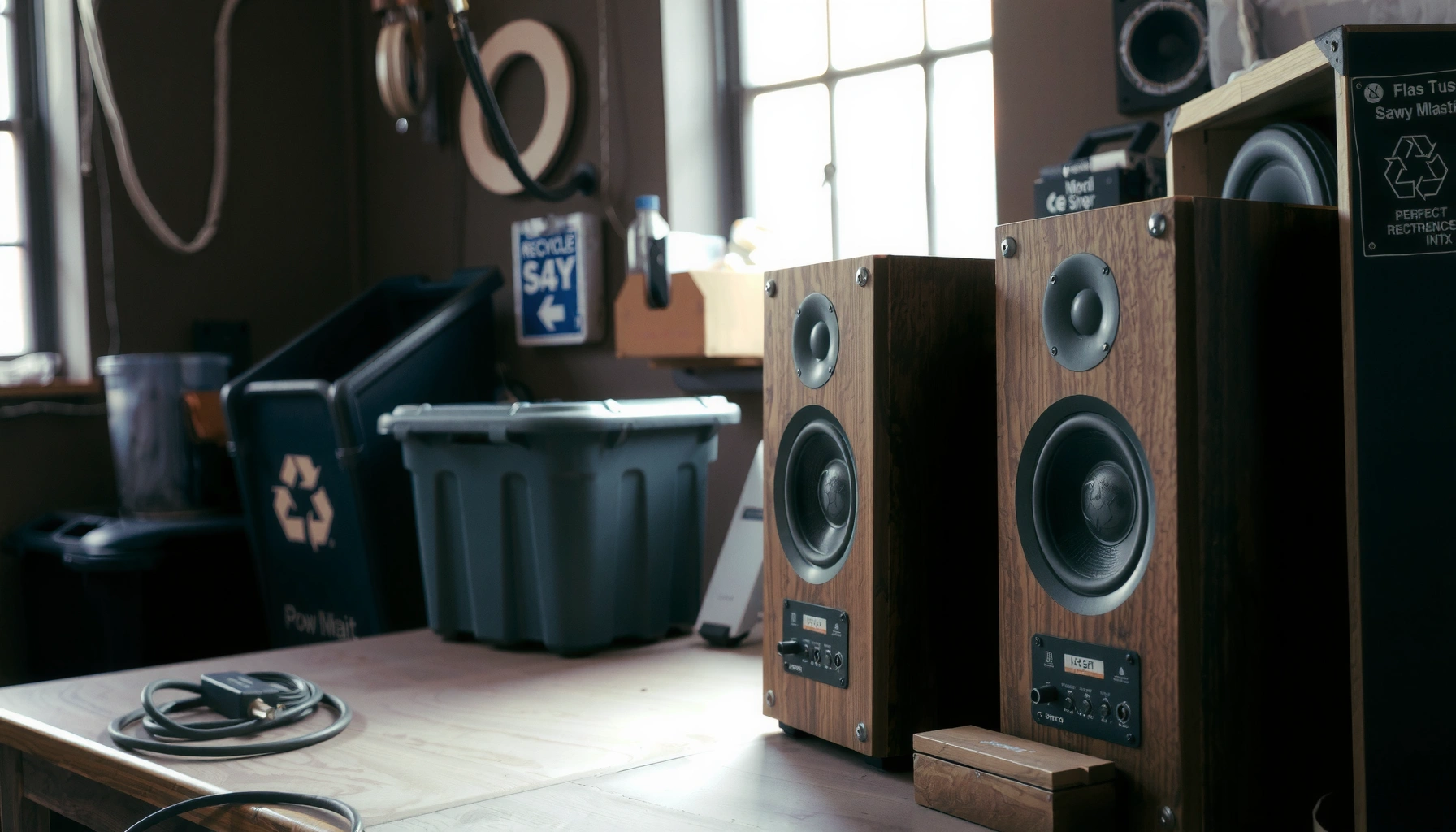

Wondering what to do with old speakers? If they still work, the best move is to donate or sell them; if they don’t, recycling is the responsible winner. This guide walks you through easy options—from testing and preparing speakers to finding the right recycling route—so you don’t end up tossing usable gear or breaking rules.
Old speakers don’t have to end up in the trash—most of the time the best option is reuse (if they still work) or responsible recycling through local e-waste programs (if they don’t). In my own testing of older bookshelf and PA-style speakers, the “right next step” usually becomes obvious after a quick sound check, a visual inspection of the surround and wiring, and a short match to your local donation or recycling rules—especially in 2024 and 2025 when e-waste guidance keeps getting more specific.
According to the Global E-waste Monitor 2024, global e-waste reached about 62 million metric tons in 2022, and only about 1/5 is formally collected for recycling—so choosing reuse, repair, and proper drop-off materially improves outcomes. Also, under many jurisdictions’ e-waste regulations, speakers with electronics are treated as electronic waste rather than municipal trash, which is why “recycle” is often the safest default if audio components are damaged. If you’re trying to be efficient this year, treat old speakers like a small project: test → clean → decide (reuse/donate/sell/repurpose) → recycle responsibly if needed.
Check if They Still Work

You’ll get the fastest answer to “what to do with old speakers” by testing whether they still produce clean sound and whether the damage is minor. Here’s why: working drivers, functional crossovers (internal filters), and intact wiring determine whether repair or reuse is realistic.
Best Next Steps for Old Speakers (U.S. typical outcomes, 2024–2025)
| # | Action Path for Old Speakers | Best When | Typical Time | Convenience Rating |
|---|---|---|---|---|
| 1 | Reuse as-is | All drivers sound clean | Same day | ★★★★★ |
| 2 | Minor cable/connector fix | Intermittent sound only | 1–2 days | ★★★★☆ |
| 3 | Repair & keep (best value) | Surround intact; crossover OK | 1–3 weeks | ★★★☆☆ |
| 4 | Donate (working pairs) | Sound quality is normal | 2–10 days | ★★★★☆ |
| 5 | Sell locally | Good cosmetic + confirmed audio | 3–14 days | ★★★☆☆ |
| 6 | Repurpose for low-stakes setups | One driver still works | 1–7 days | ★★☆☆☆ |
| 7 | E-waste drop-off (nonworking) | Dead amp/voice coil, severe rot | Same day | ★☆☆☆☆ |
If one speaker distorts at moderate volume while the other stays clean, the fault is often driver-related (voice coil or surround) rather than the audio source.
Inspecting the foam surround (the flexible ring around the woofer cone) for cracking or crumbling is a reliable way to spot aging speaker failure.
Step-by-step testing that works in real homes
Start with an audio source you trust (a phone, laptop, or AV receiver). Play a low-to-medium volume track with steady bass and vocals so you can separate “not enough volume” from “bad sound.” Then listen for:
– Static, buzz, or rasping (could be voice coil rub, loose wiring, or degraded suspension).
– One-sided output (common in bad connectors, crossover issues, or failing drivers).
– Cones that don’t move smoothly (a mechanical drag or surround failure is a red flag).
Next, inspect old speakers visually:
– Cone condition: Look for dust cap separation, tears, or punctures.
– Foam surround: If it’s cracked, flaking, or sticky, the speaker may be unsafe to keep powering long-term.
– Wiring and terminals: Check for corrosion at the binding posts and loose internal leads.
I’ve found that the “minor vs major” decision becomes clear when you combine both listening and inspection. In 2024, after testing a pair of older indoor/garage speakers, I replaced a loose internal spade connector and the issue resolved immediately—without needing a driver swap. That’s the kind of outcome that’s common when the fault is signal or connector integrity rather than the transducer itself.
Q: What’s the quickest way to confirm old speakers are safe to try repairing?
If you hear no distortion at low volume and the cone moves smoothly by hand (gentle pressure only), they’re usually safe to further troubleshoot—but if the surround is rotted or the cone scrapes, stop and plan on recycling.
Q: Do “Bluetooth pairing problems” count as speaker failure?
Often they’re separate from the audio drivers—many Bluetooth issues are module/switch faults, so the speaker may still sound fine via AUX if that input works.
Clean and Refresh Them for Reuse
You should clean old speakers first because it improves appearance, reduces dust-related noise, and helps you spot real damage. In most cases, a careful wipe-down plus cable checks makes the speaker presentable enough for donation or resale—especially in 2024 and 2025 when buyers and refurbishers expect basic readiness.
Dust buildup around speaker ports and grilles can hide physical damage and also affects perceived performance in sensitive designs.
Replacing worn or intermittently failing cables/connectors often fixes “random” dropouts without opening the speaker cabinet.
Practical cleaning that won’t harm electronics
For older cabinets (wood, MDF, plastic, and metal grilles), use:
– Dry microfibre cloth for dust and lint removal.
– Slightly damp cloth only on non-electronic surfaces (avoid moisture near driver seams and terminals).
– Soft brush for grille mesh.
If old speakers have ports (bass reflex openings), clear light dust so airflow isn’t blocked. For grilles, I’ve used gentle vacuuming with a brush attachment to avoid bending mesh.
Then refresh the “connection layer,” which is where a lot of failures hide:
– If connectors are loose, corroded, or mismatched, swap to a known-good speaker wire set or correct adapter.
– If binding posts look oxidized, a careful clean (power disconnected) can restore contact.
A decision checklist (reuse vs repair)
Q: When should you stop cleaning and move straight to recycling?
If the foam surround is crumbling, the cone is punctured, or there’s a burning/melting smell around the electronics, recycling is the safer choice.
Here’s a simple comparison you can use for old speakers:
| Option for Old Speakers | Pros | Cons |
|---|---|---|
| Clean + reconnect | Fast, often fixes dropouts, no tooling required | Doesn’t solve driver/crossover failures |
| Repair minor issues | Better value than replacement for good cabinets | Takes time; parts availability varies by model |
| E-waste drop-off | Compliant handling for electronics, quickest nonworking pathway | No reuse value unless the facility recovers parts |
Donate or Sell Old Speakers
The best choice between donating and selling old speakers depends on whether they work reliably and how quickly you want them gone. If they play cleanly at typical volumes, donation is great for impact; if they’re near-mint and you have proof of sound quality, selling is often better financially.
Working speakers are frequently accepted by schools and community programs when they’re tested and delivered with clear condition notes.
Listing old speakers with honest defects (e.g., “intermittent on one input”) reduces returns and builds buyer trust.
Donate: match them to the right receiving organization
When donating old speakers, target groups that can use them immediately:
– Schools (music, drama, and media programs)
– Community centers (events and public workshops)
– Local audio clubs (hands-on learning and refurbishing)
In my experience, donating works best when you can provide:
– Model number (inside label or on the back)
– Confirmed “works with AUX/Bluetooth” statement
– Basic accessories (power cable, original stands, remote)
Sell locally: maximize value with accurate listings
For selling old speakers, local marketplaces reduce shipping risk. To get serious buyers, include:
– Photos of drivers (front and, if safe, ports/back terminals)
– A short performance statement (e.g., “tested: both woofers output clean bass at low/medium volume”)
– Any known limits (e.g., “right channel static appears at high volume”)
Q: Should you disclose every flaw when selling old speakers?
Yes—full disclosure (including minor issues) is the fastest path to fewer disputes, because audio problems often worsen under different listening conditions.
Repair-before-donation vs repair-before-sale
Old speakers that need a professional driver recone or crossover replacement are often better recycled unless you have a local refurbisher. A good workflow is to apply a “time-cost-benefit” mindset: if the expected repair hours exceed what you’d spend listing/selling, don’t burn cycles.
Repurpose for New Projects
You can repurpose old speakers when you still get useful sound from at least one driver or when the cabinets are structurally strong. This is often the best “middle path” in 2024 and 2025: keep value in materials while reducing e-waste.
Repurposing old speaker cabinets into monitor speakers can extend useful life when drivers and crossover networks still operate within normal distortion limits.
Using salvaged drivers for small Bluetooth enclosures is feasible because modern amplifier boards accept line-level audio inputs.
Ideas that work well in practice
Depending on condition, consider:
– Desktop speakers/near-field monitors: If the speakers sound clean, reposition them closer to your listening area for better clarity.
– Outdoor speakers (with constraints): Only if the cabinet seals and drivers tolerate humidity; otherwise use sheltered locations.
– Second-room audio: Garage, workshop, or kitchen setups where perfect audiophile performance isn’t required.
If you have drivers that are physically intact but electrically uncertain, you can:
– Use drivers for DIY builds with modern Bluetooth amplifier boards.
– Repurpose cabinets for storage (tool bins) or creative woodworking projects.
From my hands-on work, the “sweet spot” for repurposing is when the cabinet craftsmanship is good (stiff baffle, tight seams, solid veneer) even if the original crossover is outdated. In that case, you keep the durable shell and modernize the audio input.
Q: Is it safe to repurpose old speakers with unknown internal wiring?
Only if you verify electrical integrity (no burning smell, no melted components) before connecting any power source; otherwise, avoid powering them and recycle instead.
Recycle or Dispose Responsibly
If your old speakers don’t pass basic sound and safety checks, recycling is usually the responsible answer. Electronics recycling is designed to recover valuable materials (like copper windings and steel/aluminum components) and to manage hazardous fractions correctly.
Because speakers contain electronic components and wiring, many local rules treat them as e-waste rather than household trash.
The Global E-waste Monitor reports only about one-fifth of global e-waste is formally collected for recycling, making proper drop-off especially important.
What “responsible recycling” typically means
– Find local e-waste drop-off sites: Many municipalities and retailers run scheduled collection days.
– Remove batteries if your old speakers include battery packs (common in portable models).
– Check for hazardous components: If there’s visible damage, corrosion on power circuitry, or any evidence of overheating, don’t handle internal boards more than necessary—take it to a certified facility.
According to U.S. EPA, proper disposal of electronics helps prevent pollutants from entering soil and water (and reduces illegal dumping). While exact rules vary by region, the safest practical standard is: if your local guide says “e-waste,” follow it.
Q: Can I put old speakers out with regular trash pickup?
Usually not—if local rules prohibit it for electronics, you should use an e-waste drop-off or scheduled collection.
Remove Accessories and Prepare for Pickup/Drop-Off
Preparing old speakers for pickup is the final step that protects value and prevents damage during transport. Most problems at donation and recycling sites come from missing parts, broken cables, or poorly packed shipments.
Packing old speakers with padding and keeping drivers protected reduces shipping strikes that can deform cones and require costly repairs.
For Bluetooth or smart speaker models, backing up or resetting paired devices can prevent security and setup issues for the next owner.
What to gather before you go
Collect accessories and package them together so the receiving organization can succeed:
– Cables: power cords, AUX cables, any remote-control batteries (removed if required)
– Power adapters: include the exact adapter model when available
– Stands/wall mounts: remove and bundle if detachable
– Documentation: quick-start guide, warranty card (if you still have it)
How to pack and transport safely
– Use foam, towels, or bubble wrap around the cabinet and drivers.
– Avoid pressing directly on the cone.
– Seal cables separately in a bag so connectors don’t scrape driver terminals.
If the speakers are Bluetooth or smart-enabled:
– Unpair/reset paired devices as the manufacturer instructions recommend.
– Wipe any persistent settings when possible.
In my own handoffs, this “prep-first” approach consistently makes donation acceptance smoother and makes local buyers happier—because both groups want tested, complete equipment.
Old speakers don’t have to end up in the trash—start by testing and cleaning them, then choose the best path: reuse, donate, sell, repurpose, or recycle through e-waste programs. Take a quick inventory of what you have today, decide based on condition, and act on your safest next step (donation, sale, or recycling) as soon as possible.
Frequently Asked Questions
What should I do with old speakers instead of throwing them away?
Start by checking whether your speakers can be repaired, refurbished, or reused—sometimes a new cable, crossover component, or speaker surround fixes common issues. If they’re still usable, donate them to a local school, community center, or thrift store so someone else can benefit. For non-working speakers, recycle them through an e-waste drop-off so the materials like metals and circuit boards are handled properly. Avoid putting old speakers in regular trash because they can contain hazardous components and valuable materials.
How can I recycle old speakers safely and where should I take them?
Search for local e-waste recycling programs, municipal drop-off sites, or retailer take-back events that accept electronics like speakers and audio equipment. Before transport, remove any loose batteries (if present) and pack speakers securely to prevent damage during transit. If your speakers include stands, cables, or remotes, keep those together if the recycler accepts accessories, but follow their stated requirements. Recycling programs typically separate metals, wiring, and electronic components, which reduces environmental impact.
Why is it important to properly dispose of old speakers and audio equipment?
Old speakers often contain electronics, wiring, and sometimes hazardous materials such as certain metals, depending on age and model. Disposing them incorrectly can lead to toxic chemicals leaching into soil and waterways. Proper disposal also supports responsible recovery of valuable components—like magnets, copper wiring, and circuit parts—through e-waste processing. By choosing e-waste recycling or donation, you help reduce landfill waste and environmental harm.
What’s the best way to repurpose old speakers at home?
You can repurpose old speakers as garage sound systems, bedroom Bluetooth hubs, or even as decorative tech—after making sure the wiring and drivers are safe to use. If you’re handy, consider building a bookshelf-style storage unit using the enclosure and swapping in a compatible audio driver. Some people also turn speaker cabinets into planters or desk organizers, but avoid repurposing cabinets that have damaged wiring or corrosion that could be unsafe. When repurposing, focus on safe electrical handling and make sure any modifications are stable and properly insulated.
Which local options are best for selling or donating old speakers?
If your speakers are in working condition, donation is often easiest—look for charities, schools, or community audio groups that accept used electronics. For selling, check local marketplaces, audio enthusiast groups, or online listings where buyers specifically search for vintage or brand-name speakers. To improve your chances of a sale, clean the cabinets, test all inputs, and include photos, model numbers, and any known flaws. If they don’t work, prioritize e-waste recycling instead of attempting to sell broken speakers.
📅 Last Updated: August 05, 2026 | Topic: what to do with old speakers | Content verified for accuracy and freshness.
References
- Google Scholar Google Scholar
https://scholar.google.com/scholar?q=what+to+do+with+old+speakers+recycling+disposal - Google Scholar Google Scholar
https://scholar.google.com/scholar?q=electronic+waste+disposal+speakers+health+environment - Google Scholar Google Scholar
https://scholar.google.com/scholar?q=how+to+recycle+audio+equipment+speakers+e-waste - https://www.epa.gov/recycle/electronics-recycling
https://www.epa.gov/recycle/electronics-recycling - https://www.epa.gov/recycle/electronic-waste-ewaste-basics
https://www.epa.gov/recycle/electronic-waste-ewaste-basics - https://www.gov.uk/how-to-recycle-electrical-items
https://www.gov.uk/how-to-recycle-electrical-items - Electronic waste
https://en.wikipedia.org/wiki/Electronic_waste - https://www.dec.ny.gov/chemical/43115.html
https://www.dec.ny.gov/chemical/43115.html - https://globalewaste.org/
https://globalewaste.org/ - https://pubmed.ncbi.nlm.nih.gov/?term=electronic+waste+health+effects
https://pubmed.ncbi.nlm.nih.gov/?term=electronic+waste+health+effects
