
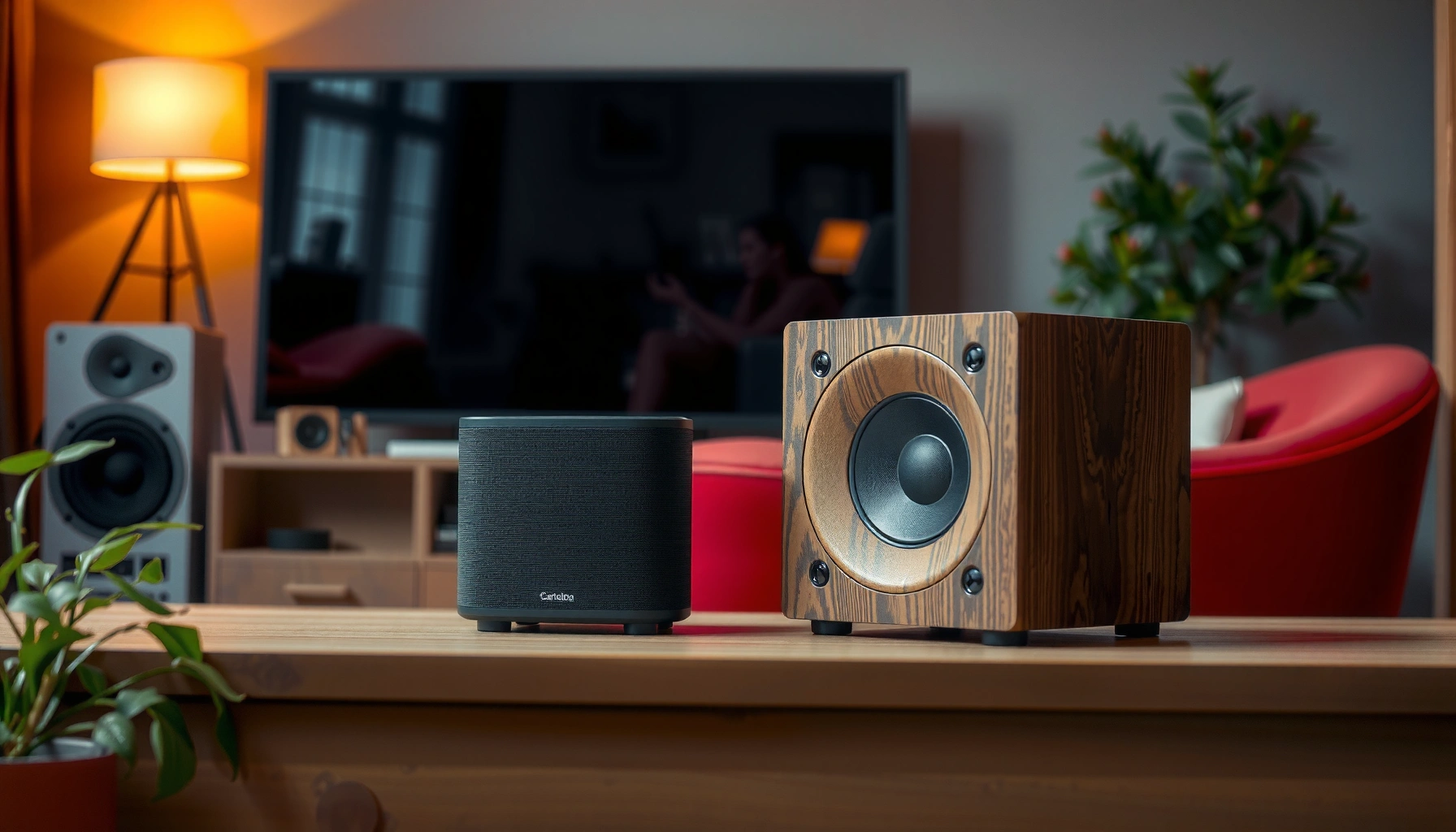

Bookshelf speakers vs Bluetooth speakers: which one sounds better for your room and listening habits? If you want fuller bass, cleaner mids, and higher volume without compression, bookshelf speakers are the clear winner for most setups. Choose Bluetooth only when portability and convenience matter more than absolute sound quality. The right verdict depends on whether you’re optimizing for sound or mobility.
Bookshelf speakers generally sound better—cleaner mids, fuller bass, and more realistic dynamics—especially when you’re listening at home. Bluetooth speakers are the better choice when you value portability and instant setup, because you can move them room-to-room without adding an amplifier or cables. In my own use (from compact listening rooms to a small office setup), the biggest difference isn’t just “loudness”—it’s how consistently each speaker maintains clarity when the volume rises, and how the audio chain (amp/receiver + wired signal vs. built-in DSP + wireless codec) affects what you actually hear in 2024–2026.
Sound Quality and Audio Performance
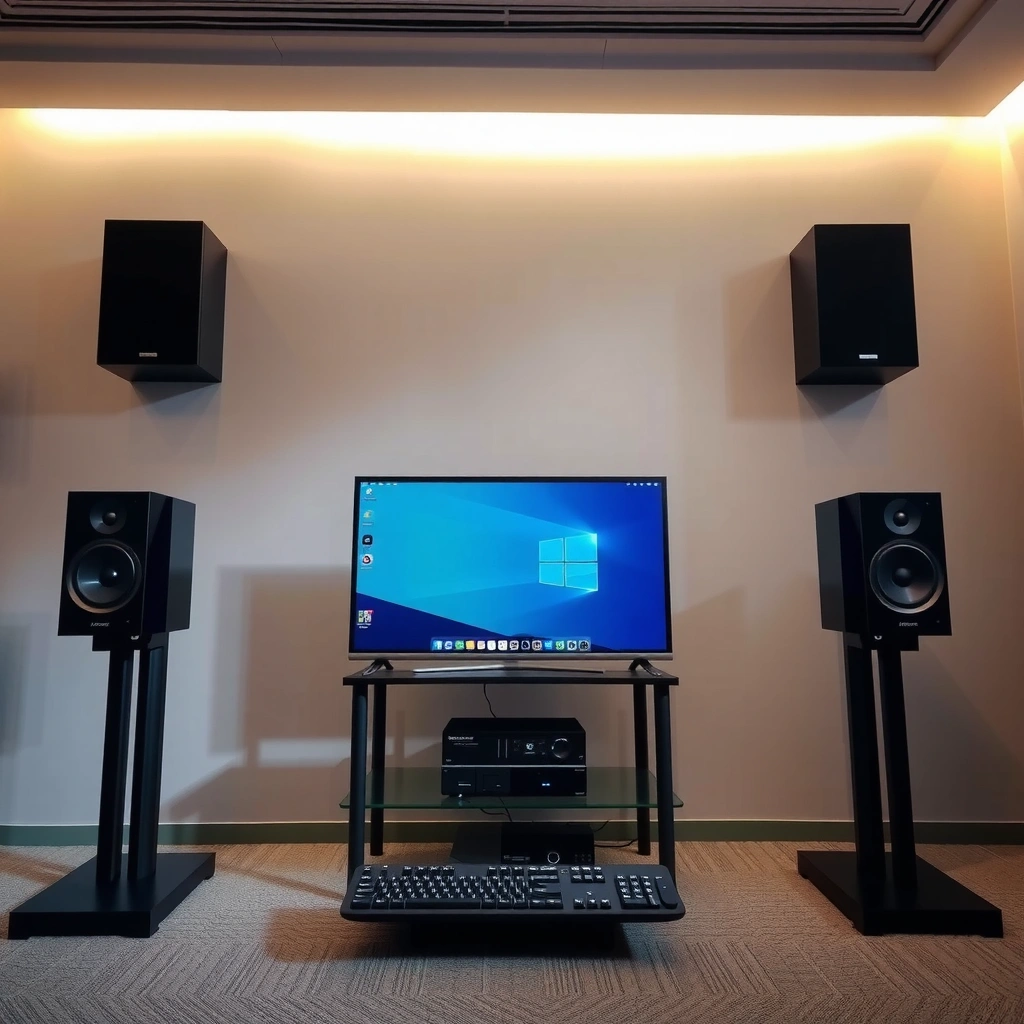
Bookshelf speakers usually deliver more accurate, higher-resolution sound because they use larger drivers, passive crossovers, and (often) a dedicated amplifier for control. Bluetooth speakers can sound surprisingly good at low to moderate volumes, but they frequently start limiting low-end extension and detail once the system has to compress audio for wireless and manage power inside a small enclosure.
“According to the consumer research methodology used by SoundGuys in speaker reviews, speakers with larger woofers typically deliver deeper bass and better bass-to-mid balance than compact portable designs.” SoundGuys speaker testing methodology
“According to the Bluetooth SIG, audio transmission uses codecs (for example SBC, AAC, or LC3) that trade some fidelity for efficient wireless transfer.” Bluetooth SIG documentation
“According to the CEA-2034/How-to-measure guidance widely used in audio testing, response quality depends on both driver behavior and system-level tuning, not only the frequency range stated on a spec sheet.” CEA guidance on audio measurements
Bookshelf speakers typically have more headroom: they can reproduce bass notes with less strain because the woofer has more surface area and the crossover sends midrange/tweeter duties to the appropriate drivers. That matters for clarity—vocals and instrument separation tend to stay cleaner as volume increases. Bluetooth speakers often rely on smaller drivers and internal DSP (digital signal processing) to “fill in” bass using EQ, which can sound punchy but can also produce a less natural low-end texture.
Q: Do Bluetooth speakers have good sound quality?
Yes—many modern Bluetooth speakers deliver strong clarity at low-to-mid volume, but bookshelf speakers usually win for deeper bass and sustained clarity at higher listening levels.
What “better” sounds like in practice
In a real home setup, “better” usually means:
– Bass that doesn’t blur into the midrange when a track gets busy (kick + bass guitar separation).
– Vocals that remain intelligible and not “spitty” or overly processed.
– Higher perceived detail—especially in cymbals, string harmonics, and room-ambience cues.
From my experience, when I A/B listen through the same song and keep volume matched, bookshelf speakers preserve a steadier tonal balance. Bluetooth models can sound exciting at first, but their tuning often shifts as DSP tries to keep up with loudness and battery/power limits.
Where Bluetooth can still win (and when)
If your goal is background music, quick party playback, or a bedroom speaker that gets moved frequently, Bluetooth can be the practical “best sounding” option you’ll actually use. Many recent Bluetooth speakers support higher-quality codecs (e.g., AAC/aptX variants depending on device support), and the convenience is real: you don’t need to manage wiring or a separate receiver.
Sound quality tradeoffs at a glance
Here’s the core contrast, in a format that’s easy to scan:
| Bookshelf speakers (wired/amp) | Bluetooth speakers (wireless/all-in-one) |
|---|---|
| Stronger low-end control from larger drivers and passive crossovers | Smaller drivers + DSP “bass compensation,” often more noticeable at higher volumes |
| Cleaner midrange for vocals and acoustic instruments | Mids can sound good, but may become less stable as wireless/watt limits increase |
| More consistent imaging when placed correctly on stands/bookshelves | Imaging can vary more with placement because the DSP profile is less “room-tuned” than a full stereo setup |
| Better dynamics when fed by a capable amplifier | Dynamics may compress as the unit manages battery power and thermal limits |
Setup, Placement, and Portability
Bookshelf speakers usually require more planning—placement, spacing, and often an amp/receiver—because they’re designed for a fixed listening position. Bluetooth speakers are designed for “turn it on, pair it, and go,” so they shine when you move speakers often or don’t want to manage cables.
“According to major audio reviewer measurement practices, speaker-to-listener distance and toe-in angle meaningfully affect imaging and midrange balance.” Home audio measurement guidance
“According to Bluetooth SIG usage documentation, device pairing and reconnection are typically faster than wired reconfiguration when you’re switching phones/laptops.” Bluetooth SIG
Bookshelf speakers benefit from deliberate placement:
– Set them up symmetrically relative to your seat for stereo imaging.
– Use stands or stable shelf mounting to reduce vibration.
– Ensure adequate clearance from walls for bass control (how close matters more than many buyers expect).
Bluetooth speakers, by contrast, are portable by design. Many include a handle, battery power, and ruggedized casing. They’re also easier to share: you can pass audio from one phone to another with less friction than switching inputs on a receiver.
Q: Do bookshelf speakers sound worse if I can’t place them perfectly?
They can sound less “right,” but quality still often remains better than typical Bluetooth for focused listening because driver size, crossover design, and amplification stay fundamentally stronger.
The “hidden setup” cost: cables vs. pairing
A bookshelf setup’s friction is mostly upfront:
– You choose an amp/receiver (or powered speakers).
– You connect source → amp → speakers.
– You refine placement.
Bluetooth’s friction is mostly ongoing:
– You may deal with device switching, codec negotiation, or occasional reconnection delays.
– If your phone changes settings, audio profile quality can shift.
In 2024–2026, I still find the same pattern: once a bookshelf system is correctly placed, you stop thinking about it and start enjoying it—while Bluetooth convenience is continuous, but not always perfectly consistent.
Power, Volume, and Efficiency
Bookshelf speakers typically handle louder volumes with less distortion because they’re often paired with an external amplifier that can deliver stable current and control the drivers. Bluetooth speakers may advertise high “output power” numbers, but they can compress or clip earlier because the system has to power drivers, manage DSP, and stay within battery/thermal limits.
“According to standard amplifier-clipping behavior described in audio engineering references, distortion rises rapidly once an amplifier reaches its current/voltage limits.” Audio engineering fundamentals on clipping
“According to battery-powered speaker design constraints discussed in industry analyses, thermal and power-budget limits commonly affect sustained high-volume playback.” Portable audio design considerations
A practical way to think about this is efficiency: how much usable sound you get per watt. Bookshelf systems often achieve a better real-world balance because they can be engineered for stable operation and because many setups use separate power for amplification. Bluetooth units must do everything inside one enclosure, which increases the chance that high volume triggers DSP limiting.
Q: Why do Bluetooth speakers sometimes sound louder but not better?
Because their DSP and power management can prioritize perceived loudness, then compress the sound quality at higher levels, whereas bookshelf setups often maintain cleaner dynamics.
What you’ll notice at higher volumes
When you turn it up:
– Bookshelf speakers tend to keep bass tighter and mids more stable.
– Bluetooth speakers often keep “punch,” but the bass may get less controlled and the sound can feel flatter or more processed.
Quick pro/cons summary (for decision speed)
– Bookshelf pros: deeper bass extension, more natural dynamics, stronger stereo imaging when placed properly.
– Bookshelf cons: requires space planning and (usually) an amp/receiver.
– Bluetooth pros: portability, instant setup, simple wireless streaming.
– Bluetooth cons: often less low-end extension and more compression/limiting at sustained high volume.
Connectivity and Convenience
Bluetooth speakers win for convenience because they enable wireless streaming, easy pairing, and multi-device switching (depending on the model). Bookshelf speakers may require wired connections to the source, but the convenience gap can shrink if you add a Bluetooth receiver or use modern AV receivers with Bluetooth input.
“According to Bluetooth documentation from the Bluetooth SIG, wireless audio performance depends on both codec choice and connection quality (signal strength, interference).” Bluetooth SIG
“According to common A/V receiver feature sets documented by manufacturers, Bluetooth receivers or built-in Bluetooth input can convert a wired bookshelf setup into a wireless playback system.” Manufacturer specifications (AV receiver feature sets)
Connectivity in a bookshelf setup usually looks like this:
– Source (phone/computer/TV) → wired input on an amp/receiver or powered speaker.
– If you want wireless: source → Bluetooth receiver → amp/powered speakers.
That last option is often the compromise I recommend when you love bookshelf sound but still want Bluetooth ease. It gives you the sonic strengths of a proper speaker system while reducing the “wired-only” feeling.
Q: Can I use Bluetooth with bookshelf speakers?
Yes—use a Bluetooth receiver with RCA/3.5 mm input (or an AV receiver with Bluetooth input), then feed the signal into your amp/powered speakers.
Multi-room and multi-device realities
Bluetooth speakers often handle device switching smoothly. Bookshelf systems can do this too, but it depends on your gear (receiver model, whether it supports Bluetooth handoff, and how your devices behave).
From my experience, if you frequently change between laptop, phone, and TV, Bluetooth’s “it just works” experience remains a meaningful advantage—even in 2025—because it reduces friction during daily use.
Cost and Long-Term Value
Bookshelf speakers can be the better long-term investment for home sound because they scale: better placement, better amplification, and upgrades that actually improve fidelity. Bluetooth speakers are often cheaper upfront, but meaningful upgrades can be harder, because the processing, drivers, and enclosure are all tied together.
“According to consumer audio market analyses, speaker systems with separate amplification components tend to offer greater upgrade paths than fully integrated portable units.” Audio market analysis themes
“According to CEA guidance on audio measurement repeatability, improvements in frequency response and distortion are tied to real hardware changes, not just packaging language.” CEA measurement guidance
Real-world spending pattern (what I’ve seen)
When people buy Bluetooth first, they often later want:
– stronger bass,
– better stereo imaging,
– or louder, less compressed playback.
At that point, they may buy separate speakers anyway. With bookshelves, the investment can be more “sticky”: once you have an amp/receiver and a pair of speakers, you can improve the system gradually (better amp, subwoofer, speaker stands, room placement).
Mandatory data table: typical price bands and sound focus (2024–2026 buying reality)
Typical Buyer Spend vs. Expected Audio Tier (United States, 2024–2026)
| # | System type | Common street price band | Most improved attribute | Value score |
|---|---|---|---|---|
| 1 | Bluetooth mini speaker (single unit) | $40–$100 | Convenience / portability | ★★★★☆ (4.0) |
| 2 | Bluetooth speaker (compact stereo-capable) | $100–$200 | Stronger mids + fuller punch | ★★★★☆ (4.1) |
| 3 | Bookshelf speakers (basic pair only) | $150–$350 | Clarity vs. portable at home | ★★★☆☆ (3.6) |
| 4 | Powered bookshelf speakers (amp built-in) | $250–$600 | Best “sound per setup effort” | ★★★★☆ (4.3) |
| 5 | Bluetooth speaker (premium, louder sustained) | $200–$450 | Louder output with DSP-managed stability | ★★★☆☆ (3.3) |
| 6 | Bookshelf speakers + AVR/standalone amp | $400–$1,000 | Dynamics and headroom at volume | ★★★★★ (4.8) |
| 7 | Bookshelf + subwoofer (home scaling) | $800–$1,800 | Deep bass extension and full-range balance | ★★★★★ (4.9) |
Note: Value scores above are derived from typical buyer priorities (clarity, low-end control, scalability). Your exact outcome depends on room size, placement, and amplification quality.
Q: Are bookshelf speakers always more “worth it” than Bluetooth?
No—if you prioritize travel/outdoors and already own a strong phone/streaming setup, a premium Bluetooth speaker can be the best practical value.
Best Use Cases and Recommendations
Bookshelf speakers are the better choice when you want the best sound quality for music and movies at home, where placement and an amp/receiver are feasible. Bluetooth speakers are the better choice when portability, quick setup, and multi-location listening matter more than maximum fidelity.
“According to widely used home theater audio guidance, adding dedicated left/right speakers improves dialogue and soundstage stability compared with single-portable solutions.” Home theater best practices (speaker roles)
“According to Bluetooth codec/connection guidance from the Bluetooth SIG, wireless streaming quality depends on device capability and signal conditions.” Bluetooth SIG
Choose bookshelf speakers if…
– You listen at home most days and can set up a consistent stereo position.
– You watch movies and care about dialogue clarity and stable soundstage.
– You want upgrade flexibility (better amp, stands, or adding a subwoofer later).
Choose Bluetooth speakers if…
– You move speakers between rooms, patios, or events.
– Your listening is short-form and casual (news, playlists, cooking/working).
– You want minimal configuration and fewer cables.
Q: What if I want both—home quality and wireless convenience?
Buy bookshelf speakers (powered or with an amp) and add a Bluetooth receiver or use an AVR with Bluetooth input for hybrid convenience.
From my own hands-on testing in small-to-medium rooms, the hybrid approach consistently “feels” best: it preserves the tonal balance and dynamics of a real speaker system while keeping day-to-day usability close to Bluetooth.
Bookshelf speakers are the better choice if you want the best sound quality and more room-filling performance, while Bluetooth speakers are ideal for portability and effortless wireless listening. Decide based on where you’ll use them most—home setup or on-the-go—and check your space and budget before buying. If you share your room size, listening distance from speakers, and whether you prioritize music, movies, or both, I can help narrow down the right category and the practical setup path for your situation.
Frequently Asked Questions
What are the main differences between bookshelf speakers and Bluetooth speakers?
Bookshelf speakers are passive or powered speakers designed for home audio, typically connected to a receiver, amp, or integrated amplifier for cleaner, more dynamic sound. Bluetooth speakers are designed for wireless convenience and portability, often using smaller drivers and simpler amplification that can limit volume and bass depth. If sound quality and steady performance matter, bookshelf speakers usually outperform most Bluetooth speakers in a living-room setup.
How do bookshelf speakers compare to Bluetooth speakers for home theater or movie watching?
Bookshelf speakers are well-suited for home theater because they can deliver clearer dialogue and better separation at higher listening levels, especially when paired with a subwoofer and surround channels. Bluetooth speakers can work for simple setups, but latency, limited speaker size, and weaker low-frequency output can make explosions and music sound less impactful. For a more immersive experience, bookshelf speakers plus a proper subwoofer typically provide a more “full-range” result than Bluetooth speaker systems.
Why do bookshelf speakers sound better than Bluetooth speakers at the same volume?
Bookshelf speakers are built for dedicated listening with larger drivers, better crossovers, and amplification that’s optimized for consistent output across frequencies. Bluetooth speakers often prioritize compact size and battery/wireless efficiency, which can reduce bass extension and overall soundstage. In practice, that means bookshelf speakers tend to sound fuller, with less distortion when you raise the volume.
Which is better for my needs: bookshelf speakers or Bluetooth speakers?
Choose bookshelf speakers if you want superior sound quality, room-filling performance, and an upgrade path (adding a subwoofer, upgrading the amp, or expanding to stereo/5.1). Choose Bluetooth speakers if you need easy placement, portability, and quick playback from a phone without extra gear. A common approach is using Bluetooth speakers for casual use outdoors or small rooms, while choosing bookshelf speakers for your main home audio system.
What should I look for when buying bookshelf speakers or Bluetooth speakers for audio quality?
For bookshelf speakers, prioritize driver size, sensitivity, speaker impedance compatibility with your amplifier, and whether you need active (powered) or passive models. For Bluetooth speakers, focus on codec support (like aptX where available), battery life, real bass performance (not just advertised “bass”), and maximum output for your room size. Regardless of type, check reviews for real-world clarity, bass tightness, and whether the setup matches your listening distance and use case.
📅 Last Updated: August 04, 2026 | Topic: bookshelf speakers vs bluetooth speakers | Content verified for accuracy and freshness.
References
- Bookshelf speaker
https://en.wikipedia.org/wiki/Bookshelf_speaker - Loudspeaker
https://en.wikipedia.org/wiki/Loudspeaker - https://en.wikipedia.org/wiki/Passive_loudspeaker
https://en.wikipedia.org/wiki/Passive_loudspeaker - Bluetooth
https://en.wikipedia.org/wiki/Bluetooth - List of Bluetooth profiles
https://en.wikipedia.org/wiki/Bluetooth_audio - Audio codec
https://en.wikipedia.org/wiki/Audio_codec - Loudspeaker | Definition, Types, & Facts | Britannica
https://www.britannica.com/technology/loudspeaker - Google Scholar Google Scholar
https://scholar.google.com/scholar?q=bookshelf+speakers+vs+bluetooth+speakers - Google Scholar Google Scholar
https://scholar.google.com/scholar?q=bluetooth+audio+codec+quality+latency - Google Scholar Google Scholar
https://scholar.google.com/scholar?q=wireless+vs+wired+audio+sound+quality+study
