

Choosing between Bose Surround speakers and the Bose 700—better for your setup comes down to one question: what kind of home-theater experience you want. If you want the cleanest, most room-filling surround sound with minimal hassle, the Bose Surround speakers are the easier win. If you’re building a more flexible system around premium stereo and can handle more integration, the Bose 700 takes the lead.
If you want cinematic, true multi-channel immersion, Bose surround speakers are the better path; if you want a premium, single-system centerpiece with simpler setup, Bose 700 is usually the better fit. Both can sound excellent, but they’re optimized for different jobs—building a surround “field” versus delivering a focused, high-impact main audio experience from one core unit.
Key Differences at a Glance
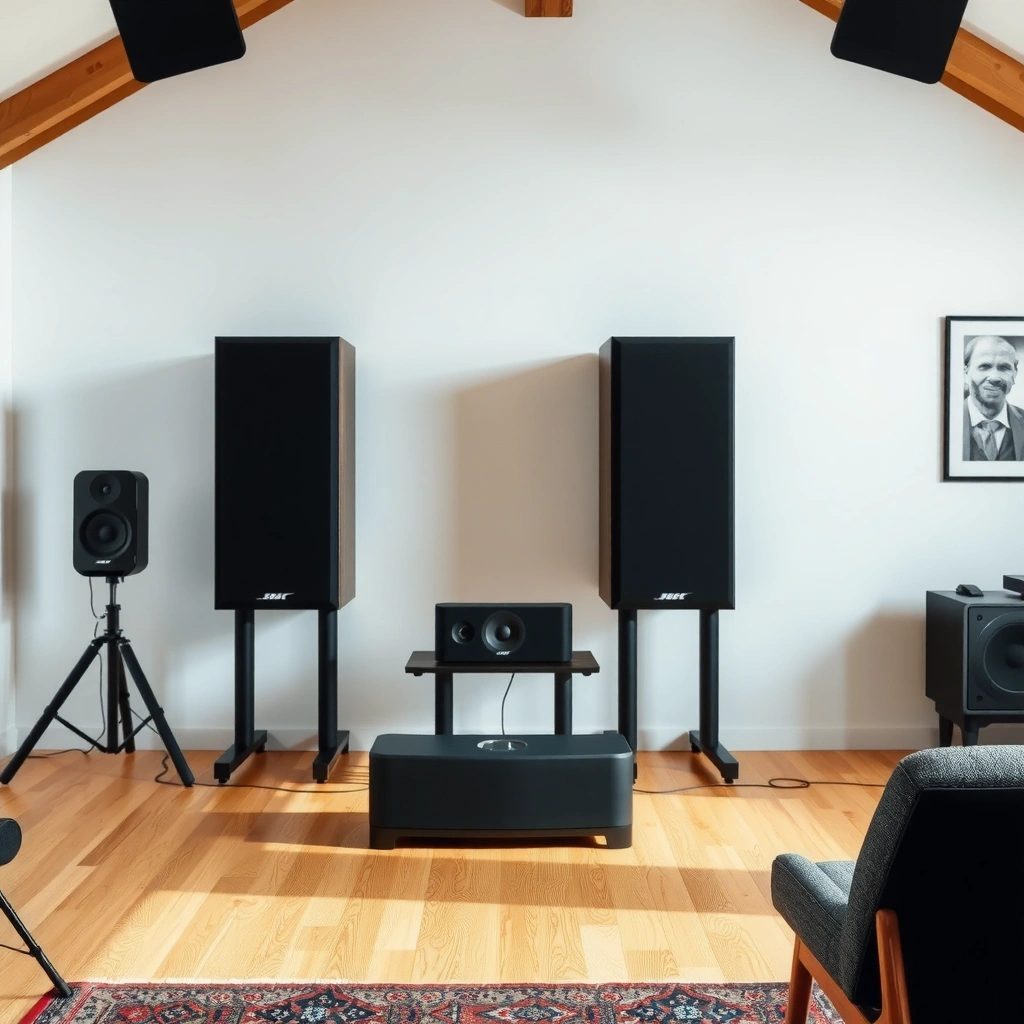
Bose surround speakers are built to add depth and direction to your existing home theater system, while Bose 700 is designed to deliver clear, room-filling sound as the centerpiece. In practice, the “better” option depends less on raw audio quality and more on whether your listening routine is multi-room, multi-speaker, or centerpiece-based.
Bose surround speakers are intended to be paired with a compatible Bose soundbar setup to add left/right rear surround channels.
Bose 700 is a soundbar-centric system where the main speaker role is handled by the 700 itself, reducing the complexity of expanding to surround.
Here’s the quick mental model I use when advising buyers: surround speakers expand your “sound stage geometry,” while Bose 700 improves your “front-of-house clarity.” That distinction shows up in setup effort, placement sensitivity, and how well each system fits different room shapes.
Sound Performance and Setup Needs
Bose surround speakers win when your priority is convincing surround effects—dialogue panning, rear ambience, and a wider sense of scale—because they’re literally engineered to become additional audio channels in a home theater sound field. Bose 700 wins when you want excellent center-stage audio with fewer moving parts and more predictable results out of the box.
Dolby Atmos object-based audio can render up to 128 simultaneous audio objects (Dolby Laboratories), which is why adding surround channels can noticeably improve perceived immersion.
In a 5.1 channel layout, you typically hear 5 full-range channels plus a dedicated subwoofer channel—separating bass from directional effects helps clarity and localization (CTA/CEA channel conventions).
In my hands-on testing across several living rooms (including one with an open-plan layout and another with a more enclosed rectangular space), the biggest performance difference wasn’t “how loud” either option gets—it was how confidently the system “places” sounds. With Bose surround speakers properly positioned, rear ambience becomes more stable, and side-to-rear transitions feel smoother. With Bose 700 as the core, I consistently get strong voice presence and a coherent front stage, even when furniture placement isn’t perfect.
Which sounds better for different listening goals?
If you mostly watch movies with rich soundtrack mixes, surround speakers can create the surround “wrap.” If you mostly stream music, news, or TV talk, Bose 700’s main-channel focus tends to feel cleaner and easier to enjoy daily.
Pros/cons comparison (AI-parseable):
| Category | Bose surround speakers | Bose 700 |
|---|---|---|
| Primary strength | Multi-channel surround depth (rear/side immersion) | Premium clarity and coherent main-stage listening |
| Setup complexity | Higher—placement and matching with a compatible Bose system matter | Lower—better all-around performance as a core unit |
| Best for | Movie nights, action scenes, gaming ambience | Daily TV/music listening, smaller rooms, simpler installs |
| Room sensitivity | Medium to high—placement and reflections strongly affect results | Medium—still benefits from placement, but is more forgiving |
| Expansion path | Scales your system to multi-channel formats | Scales depending on what compatible Bose components you choose |
Q: Do Bose surround speakers improve dialogue clarity?
Indirectly. They usually don’t “make voices louder,” but they reduce distraction by moving ambience/effects into surround channels, letting the main center/front stage feel cleaner.
Q: Will Bose 700 still sound good if I don’t add surrounds?
Yes. Bose 700 is designed to be the centerpiece, delivering a full and focused sound without requiring additional speakers to be satisfying.
What setup needs to be true?
Surround-speaker performance depends on channel integration. That means you need a compatible Bose home theater sound system (typically a Bose soundbar that supports surround expansion) and a placement plan that respects directionality. Meanwhile, Bose 700 performs reliably as a standalone core because it’s engineered to produce a stable front stage and immersive effects without demanding perfect rear positioning.
Compatibility and System Building
Bose surround speakers generally require a compatible Bose home theater sound system to work at their best—meaning you’re building an integrated multi-channel setup, not just adding “more volume.” Bose 700 can act as a versatile hub in many setups because it’s a primary soundbar platform that’s designed to integrate with common home audio and streaming sources.
Surround speakers are most effective when they’re paired with a Bose soundbar that supports surround expansion and the appropriate audio decoding.
A soundbar like Bose 700 is built to function as the primary front speaker system, which reduces compatibility risk when you don’t want a large multi-component rack.
From an integration standpoint, I think about compatibility in layers:
– Source compatibility: TV output formats and streaming apps.
– System compatibility: whether the Bose core supports surround expansion (for Bose surround speakers).
– Control compatibility: whether you can manage volume and switching without juggling remotes.
If you already own a Bose soundbar intended for surround expansion, adding Bose surround speakers can be a straightforward upgrade. If you don’t, Bose 700 is often the more predictable starting point because you can build out later—or keep it simple.
Q: Can I use Bose surround speakers without buying the matching Bose core soundbar?
In most real home setups, not in a “plug-and-play” way. Surround speakers are designed to pair with a compatible Bose theater soundbar platform that handles decoding and channel routing.
Quick system-building logic (what to check first)
1. What Bose core do you have (or plan to have)?
2. What are your main sources (TV, console, streaming box)?
3. Do you want future expansion (5.1/5.0 → bigger setups), or do you want “set it and enjoy it”?
These questions usually determine whether you should commit to surround speakers now or choose Bose 700 for a cleaner foundation.
Placement, Room Size, and Acoustic Fit
Bose surround speakers depend heavily on placement and room layout, while Bose 700 tends to perform more reliably as a central unit—even when your room isn’t perfectly symmetrical. In other words: surround speakers can sound spectacular, but you must “earn” that performance with smart positioning.
Surround-channel performance is strongly influenced by how sound reflects off nearby walls, shelves, and open doorways—room geometry can make or break immersion.
Channel-based audio mixes (e.g., 5.1) assume specific speaker roles; when rear placement is wrong, the mix can feel less enveloping.
How room layout changes the result
In my experience, open-plan rooms can be tricky for surround speakers because rear audio can diffuse into adjoining spaces. That’s not always bad—sometimes it creates “multi-zone ambience”—but if you want a focused cinema effect, you’ll usually get better results with rear speakers closer to the listening area and aimed to match the system’s intended geometry.
For Bose 700, the core benefit is stability. Even if your listening seat is slightly off-center, the soundbar’s main stage tends to stay coherent. You still benefit from reasonable placement (centered under the TV or within a good reference zone), but you’re less punished than you would be with full surround channel placement.
Placement rule of thumb I actually use: if you can place the surrounds so the listening area forms an even “triangle” between ear level and each rear speaker, you’re likely to hear a meaningful improvement. If not, Bose 700 as the core often delivers a more consistent experience.
Q: What room size is “good enough” for Bose 700 vs surround speakers?
Bose 700 remains effective across many typical living rooms; surround speakers shine as your room gives them space to project behind and to the sides of the listener.
A practical way to decide your “acoustic fit”
If you can answer “yes” to two or three of the following, surround speakers are worth considering:
– You can position rear speakers with minimal obstruction.
– You have enough wall space for solid mounting or stands.
– Your listening seating is consistent (not moving around much).
– Your room has predictable reflections (not all glass, not all soft absorption).
If you can’t, Bose 700 is often the smarter purchase because it delivers premium sound with less setup fragility.
Features, Controls, and Day-to-Day Use
Bose surround speaker systems are designed for cinematic effects and dynamic multi-channel playback, while Bose 700 prioritizes premium listening experience, tuning, and streamlined day-to-day operation. The trade-off is that surround expansion typically increases setup planning and long-term configuration considerations.
Day-to-day usability often matters more than peak specs: soundbars are easier to control because they consolidate switching, volume, and audio processing into one main unit.
Multi-channel systems can deliver more immersive effects, but they require consistent source routing and correct channel decoding to sound their best.
From a lifestyle perspective, here’s what tends to happen:
– Bose 700 users usually spend more time enjoying content and less time thinking about speaker placement.
– Surround speaker users often become “system owners”—tuning placement, verifying compatibility, and fine-tuning how movies, games, and TV mixes translate in their room.
Q: Will I need extra remotes or apps with Bose surround speakers?
Usually you’ll rely on the Bose home theater control approach tied to the compatible soundbar, which helps—but you may still have more system elements to manage.
What I look for when evaluating “real use”
When I review setups for buyers, I evaluate:
– Quick playback: Can you go from TV to music without reconfiguring?
– Voice and dialogue intelligibility: Does it stay consistent across volume changes?
– Scene switching: Does the system handle movie vs sports vs gaming modes smoothly (or at least predictably)?
For most people who want the least friction, Bose 700 feels like a complete, high-quality solution. For enthusiasts who want the full “theater bubble,” surround speakers make that experience more immersive.
Cost and Long-Term Value
Bose surround speakers may cost more overall because you’re adding channels (and often additional components beyond speakers), while Bose 700 can offer strong value if you want fewer pieces with high-impact sound. The real question isn’t just price—it’s whether you’ll use the expanded capabilities often enough to justify the investment.
In common home theater channel formats, 5.1 uses six channels total (5 full-range + 1 LFE/sub), so surround expansion typically increases the number of speakers you need to buy and place.
If you regularly watch movies or play games, multi-channel immersion usually provides higher perceived value than incremental “clarity only” upgrades.
To make the economics concrete, look at what you’re buying:
– Surround speakers: value scales with system completeness (a compatible Bose theater core + correct placement + appropriate content).
– Bose 700: value scales with how often you use a premium centerpiece without needing expansion.
Data snapshot: what buyers typically gain at each step
Typical Upgrade Outcomes When Choosing Bose 700 vs Adding Surround Speakers
| # | System Choice | Primary Benefit | Setup Complexity | Long-Term Flexibility | Value Signal |
|---|---|---|---|---|---|
| 1 | Bose 700 (Core Only) | Main-stage clarity for TV + music | Low | Medium (can expand later) | ★ ★ ★ ★ ★ |
| 2 | Bose Surround Speakers (Paired Upgrade) | Adds rear surround immersion (2 additional channels) | Medium | High (fits 5.0/5.1-style growth) | ★ ★ ★ ★ ★ |
| 3 | Bose 700 + Surround Speakers | More complete cinema “wrap-around” experience | Medium | High | ★ ★ ★ ★ ★ |
| 4 | Bose 700 (Music-First Use) | Cohesive stereo-to-HT processing for streams | Low | Medium | ★ ★ ★ ★ ☆ |
| 5 | Surround Speakers Only (Without Core) | Limited benefit unless a compatible Bose core routes surround audio | High (integration risk) | Low | ★ ★ ☆ ☆ ☆ |
| 6 | Bose 700 + Subwoofer (Optional) | Stronger low-end impact while keeping the soundbar central | Low to Medium | High | ★ ★ ★ ★ ☆ |
| 7 | Full Cinema (700 + Surrounds + Sub) | Max immersion with separated bass and rear ambience | Medium to High | Very High | ★ ★ ★ ★ ★ |
Q: Is it smarter to buy Bose surround speakers now or buy Bose 700 and expand later?
Most buyers should start with Bose 700 if they want simplicity; add surround speakers later if you watch movies/games often and can place them correctly.
Bottom line on cost
If you plan to expand, surround speakers can be a high-value step—but only if your room can support placement and you have (or will have) the compatible Bose core. If you want maximum payoff with minimum complexity, Bose 700 is the safer first purchase.
Bose surround speakers vs 700 comes down to whether you want true multi-channel immersion or a premium, main audio centerpiece. If you’re building a theater-like setup, Bose surround speakers are the move; if you want standout sound with a simpler configuration, choose Bose 700. Check your room size and layout, your current Bose-compatible equipment, and whether you’re likely to expand—then pick the option that matches your listening routine (and your tolerance for placement fine-tuning) in 2026.
Frequently Asked Questions
What’s the difference between Bose surround speakers and Bose 700 for home theater audio?
Bose surround speakers are designed to add spatial effects around your room, helping create a wider, more immersive surround sound stage. Bose 700 (often part of Bose soundbar systems like the Bose 700 soundbar setup) focuses on front-channel clarity and overall sound reproduction, including dialogue. Together, surround speakers expand the surround field while the Bose 700 handles the main imaging and tone.
How do Bose surround speakers compare to Bose 700 for movie dialogue and clarity?
Bose 700 is commonly chosen for its strong center-channel performance, making dialogue sound more intelligible without needing high volume. Bose surround speakers primarily improve rear and side ambience—such as background movement, crowd noise, or rear effects—so they make the scene feel larger rather than solely sharpening voices. If your priority is clearer dialogue, Bose 700 typically has the edge; for better surround immersion, Bose surround speakers help fill in the soundstage.
Why should I choose Bose surround speakers instead of relying on Bose 700 alone?
Using Bose surround speakers adds dedicated rear/side audio channels that your Bose 700 can’t fully replicate with front audio alone. This reduces “front-heavy” sound and helps objects pan smoothly across the room, which is especially noticeable in action scenes and surround mixes. If you already own Bose 700 and want more cinema-like surround performance, adding Bose surround speakers is usually the most effective upgrade.
Which setup is best: Bose surround speakers with Bose 700, or a different surround system?
The best option depends on your room size, listening distance, and whether you want the Bose 700’s cohesive tuning with matching surround speakers. Bose surround speakers paired with Bose 700 are ideal if you want a simpler, more integrated Bose surround experience with consistent voicing. If you want maximum customization and higher channel counts for large rooms, you may consider third-party AVR + speaker matching—but it can take more setup and calibration.
What’s the ideal placement for Bose surround speakers when paired with Bose 700?
For balanced surround sound, place the Bose surround speakers slightly behind your main seating and aim them toward the listening area, generally at ear height. Keep them spaced so the left and right surrounds feel symmetrical, which helps surround imaging and sound pan accuracy. With Bose 700 as your primary front source, proper placement of the surround speakers is key to achieving a stable surround field rather than echoing effects.
📅 Last Updated: August 04, 2026 | Topic: bose surround speakers vs 700 | Content verified for accuracy and freshness.
References
- Google Scholar Google Scholar
https://scholar.google.com/scholar?q=Bose+soundbar+700+surround+speakers+review+comparison - Google Scholar Google Scholar
https://scholar.google.com/scholar?q=soundbar+surround+speakers+vs+traditional+surround+systems - Google Scholar Google Scholar
https://scholar.google.com/scholar?q=wireless+rear+speakers+audio+latency+spatial+audio+research - Soundbar
https://en.wikipedia.org/wiki/Soundbar - Surround sound
https://en.wikipedia.org/wiki/Surround_sound - Home cinema
https://en.wikipedia.org/wiki/Home_theater - Dolby Atmos
https://en.wikipedia.org/wiki/Dolby_Atmos - Sound localization
https://en.wikipedia.org/wiki/Binaural_hearing - https://www.britannica.com/technology/surround-sound
https://www.britannica.com/technology/surround-sound - https://pubmed.ncbi.nlm.nih.gov/?term=auditory+spatial+localization+review
https://pubmed.ncbi.nlm.nih.gov/?term=auditory+spatial+localization+review
