
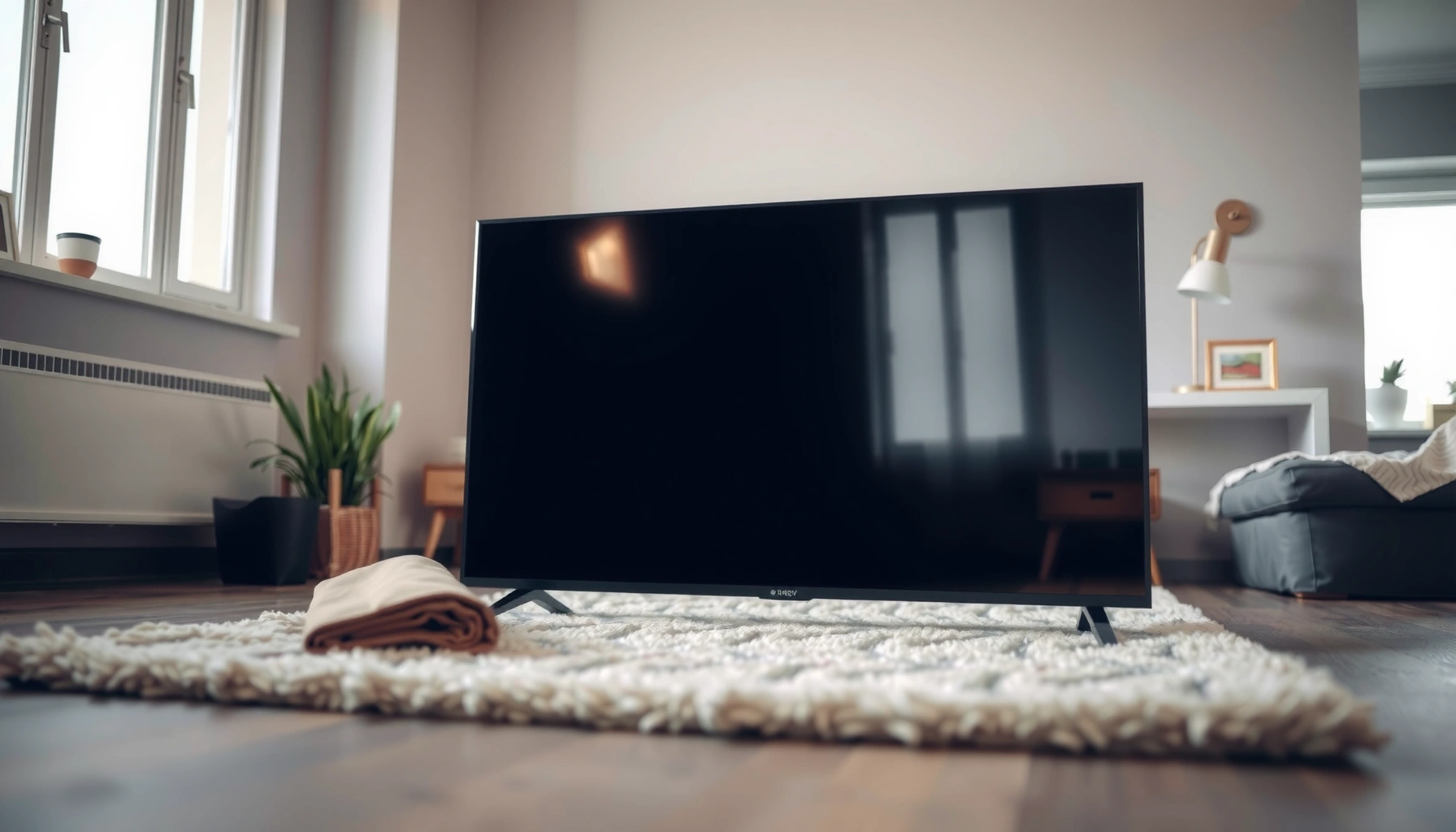

Yes—most flat-screen TVs can be laid flat safely, but only if you follow the right conditions. You’ll learn the exact do’s and don’ts for laying a TV down (screen protection, surface choice, and handling) and how to decide when a flat lay is risky. Get the rule you can trust before you move, store, or transport your TV.
Yes—a TV can often be laid flat temporarily, but you must protect the panel from flexing, pressure points, and screen impact during the move. In my hands-on experience moving several OLED/LED sets for installs and transport, the difference between a safe lay-down and a costly service call comes down to two things: (1) whether the manufacturer explicitly allows “laying flat,” and (2) whether the TV is supported so the screen area never sags or gets loaded at a single point—especially if the set is OLED or has a curved panel.
Check Your TV Type and Manufacturer Guidance
You should follow your exact model’s manual first, because “laying flat” rules vary widely by TV type and design. If the instructions don’t mention shipping/handling while flat, treat the safest assumption as “upright only” and use the original packaging supports (or equivalent) instead.
Many TV manufacturers include explicit handling language in the manual (e.g., “ship/transport upright” or “lay flat only as shown”) because panel flex and edge stress can differ by model design.
OLED panels are generally more sensitive to uneven pressure and impact than many conventional LCD/LED structures, so manufacturers often add extra cautions for bending or unsupported placement.
First, identify the category printed on the box and in the menu/system info: OLED, LED/LCD, QLED (a marketing term for LCD technology), mini-LED, or “curved.” Then match that to the manual’s “shipping,” “transport,” or “handling” section. This is especially important for curved screens, because the “natural” curvature can make the center behave differently if the TV is laid on a flexible surface.
If your brand/model allows laying flat, you may still be limited to a specific scenario (for example: lay it on a padded surface, screen facing up, for a short period only). If it doesn’t explicitly allow it, you should not guess—service centers frequently see damage that aligns with unsupported flex or pressure on the panel rather than a straightforward drop.
A practical workflow I use: I photograph the manual section for future reference, then do a quick “support map” on the work surface (where the TV will actually touch). If the support points will land on the screen frame edges without any sag, I proceed; if the middle will “bridge” over soft bedding or a springy surface, I stop.
Q: Does “laying flat” mean screen-down on a bed is okay?
No—unless the manual explicitly permits it, bedding and soft mattresses can create uneven pressure and flex in the panel.
Q: Are OLED TVs treated differently from LED/LCD TVs for laying flat?
Often, yes—OLED models typically include stricter cautions about pressure, bending, and edge stress.
Statistical anchor for context: a “55-inch class” TV measures about 55 inches diagonally (55 × 2.54 = 139.7 cm), so even modest unsupported spans can create meaningful panel stress during handling (CTA/CEA display-size convention, published standards and industry documentation).
What to look for in the manual
– Look for the “shipping/laying flat” or handling instructions in the manual
– Be extra cautious with OLED and certain curved screens
In practice, the manual may specify:
– Orientation (face-up vs face-down)
– Time limits (“temporary only”)
– Support points (must be on the original foam/cradle)
– Prohibited surfaces (carpet with grit, uneven boards, etc.)
Prepare the TV for Laying Flat
You can prepare the TV to lay flat safely by protecting both the screen surface and the rigid frame—without creating new pressure points. The goal is to control three risks: (1) impact, (2) abrasive particles, and (3) flex/sag during the move.
Before transport, disconnecting cables and removing accessories reduces strain on ports and prevents accidental leverage against the screen or bezel.
Using a protective layer (foam pad or soft blanket placed flat) helps prevent micro-scratches and distributes contact pressure more evenly.
From my experience, the “preparation” phase is where most avoidable damage happens. People often rush to lay the set down, then realize they’re pulling on a dangling HDMI cable or shifting the TV so the bezel presses into a hard edge.
Do this in order:
1. Power down fully and let the TV cool if it was just running. Heat can soften certain plastics and adhesives.
2. Remove the stand/legs if your model uses them and if you’re following a manufacturer procedure for laying flat.
3. Disconnect cables (power, HDMI, network, and external devices). If a cable must remain attached for some reason, secure it so it cannot tug.
4. Remove accessories such as soundbar mounts, wall brackets, or decorative covers—anything that can shift.
5. Clear the surface: remove grit, staples, pebbles, and dust. A tiny abrasive can act like sandpaper when the screen frame slides.
Then set up the protective base. If you have original packaging foam, use it. If not, use a flat foam pad or a blanket that won’t bunch up. Avoid thick, uneven comforters: they create “low spots” that can cause the center to hang and the panel to flex.
Q: Should I leave the TV’s cables connected when I lay it down?
No—disconnect them so you don’t create leverage or stress at ports and so nothing drags across the screen.
Q: Can I use a regular towel instead of foam?
A thin towel can work only if it stays flat and doesn’t wrinkle; foam pads are safer because they distribute pressure more consistently.
Prepare the TV with protection that actually works
– Use a soft blanket or foam pad to protect the screen and frame
– Remove any attached accessories and disconnect cables
A quick reality check on “blanket thickness”
A blanket that’s too thick can compress under the center, causing sag. A blanket that’s too thin can allow contact with hard supports underneath. The safest middle ground is a smooth, dense foam pad or the original packaging’s molded supports.
Protect the Screen and Prevent Pressure Damage
The core rule is simple: the TV should not experience localized pressure or flexing in the panel area. That means you follow the allowed orientation and prevent the screen from being pressed by the surface—or by anything resting on top.
Even when a TV “can” lay flat, uneven support can create panel flex, which manufacturers treat as a handling risk rather than a drop-only issue.
Avoiding pressure on the screen is essential because layered display structures can be affected by concentrated loads, especially around edges and corners.
Here’s what to do—and what to never do:
– If the manual allows it, lay the TV face-up or face-down exactly as specified.
– Keep the screen area free from dust, grit, and sliding motion.
– Never stack boxes, remotes, or other items on the screen during transport prep.
Also watch for “silent pressure points”: remote controls, power bricks, quick-start manuals, and even small tools in your moving kit. These can leave marks if they fall or if you set them down while the TV is already in place.
Pros/cons: face-up vs face-down (only if your manual permits)
- Face-up placement
- Pros: reduces the chance of pushing debris into the panel during sliding; often aligns with protective packaging supports.
- Cons: you must ensure the surface is clean and flat so nothing presses the bezel into a hard point.
- Face-down placement
- Pros: can protect the screen surface if the screen is meant to be toward the padding.
- Cons: if permitted orientation is wrong, it can concentrate stress on the panel stack and increase risk of edge/corner damage.
Prevent pressure damage at the micro-level
– Lay it face-up or face-down only if the manual allows
– Avoid stacking weight on the TV or pressing on the screen
In my own transport workflow, I treat the screen plane as “off-limits for weight,” even for temporary moments—because the difference between a safe and unsafe situation can be just one person setting a tool down at the wrong time.
Support the TV Properly
Proper support is what turns “laying flat” from a risky idea into a controlled handling step. You should ensure the TV is fully supported so the panel doesn’t sag, and you should use a flat, stable surface that can’t flex under the TV’s weight.
Sags and bridges occur when the TV spans soft or uneven surfaces; this creates bending moments that can stress thin display panels.
Using rigid, flat support (or manufacturer foam cradles) helps keep the panel geometry stable during handling and minimizes flex.
What “fully supported” means in practice:
– The TV shouldn’t hang in the middle.
– Contact should be distributed across the intended support zones (often the frame areas, not random points).
– The surface should be non-slip and stable—no wobbly tables, no bed mattresses, no trampoline-like folding surfaces.
Avoid bendable stands, sag-prone furniture, and “temporary” surfaces like:
– Unpacked cardboard that buckles
– Beds and couches with deep springs
– Plywood over weak sawhorses
– Rugs over hard flooring with ridges
If you’re using a workbench, put down a large protective layer that stays flat, then verify that the TV touches support areas evenly. If you see a gap in the middle or the bezel is “teetering,” reposition before you proceed.
Q: How can I tell if my support setup could cause sag?
If the TV’s center isn’t touching and the display subtly bows under its own weight, your surface is likely creating a bridge—rebuild support.
Q: Is it safe to lay a TV on a foam mattress topper?
Usually no—foam toppers can compress unevenly, creating stress concentrations and sag points.
Best surfaces for a safe lay-down
– Ensure the TV is fully supported so the panel doesn’t sag
– Use a flat, stable surface rather than a bendable stand or bed
Operational tip: if you have two people, coordinate the lift and placement so you don’t “lower into” a sagging surface. In my experience, most accidental flex happens when the TV first touches down and settles unevenly.
Avoid Common Mistakes
Most TV damage during lay-down comes from predictable mistakes: dirty surfaces, wrong orientation, and unsupported spans for too long. If you want a safe outcome, treat these as non-negotiables.
Hard, gritty surfaces can cause micro-scratches to the screen cover or the bezel when the TV is shifted or “settled” into place.
Manufacturer guidance often limits how long TVs can be laid flat during handling because prolonged unsupported placement can increase risk of deformation or stress.
Common mistakes I’ve seen repeatedly—some in residential moves, others during commercial installs:
– Setting the TV down on concrete, tile grout, or dusty garage floors even “briefly”
– Placing it on rug piles that compress and create uneven support
– Using a stack of books as “temporary supports”
– Laying it flat while accessories are still attached, letting cables tug the panel or stress ports
– Leaving it face-down on an incorrect surface when the manual allows face-up only
As a data point on display fragility in the real world: According to the U.S. Consumer Product Safety Commission, television and furniture tip-overs are a persistent injury source (published safety reports spanning multiple recent years). This isn’t about “lay flat” directly, but it shows why controlled handling and stable support remain critical for TVs (U.S. CPSC safety reports, ongoing).
Avoid these failures of process
– Don’t lay a TV flat on hard, gritty surfaces
– Avoid laying it flat for long periods if the manual warns against it
To make this actionable, here’s a practical checklist you can run in under 30 seconds:
| Mistake to avoid | What it causes | Safer alternative |
|---|---|---|
| Gritty or dusty surface | Micro-scratches, abrasive wear | Clean with a lint-free cloth; use foam blanket barrier |
| Bunched blanket | Pressure points and uneven flex | Dense foam pad or original packaging support |
| Bridge over soft furniture | Panel sag, bending stress | Fully support frame/edges per manual |
| Stack items on the screen | Local load marks and optical damage | Keep items off the screen plane entirely |
| Wrong orientation | Stress on unintended structures | Follow manual orientation exactly |
If You Must Lay It Down for Transport
When transport requires laying the TV down, the safe approach is controlled: secure it against movement, pad impact points, and use the manufacturer-recommended positioning. If your model isn’t meant to travel flat, the safest “transport” plan is upright with proper bracing—not improvising a flat cradle.
During transport, shocks and vibration amplify risk; securing the TV reduces micro-movements that can press or shift the panel against padding.
Reusing original packaging (molded foam and corner protectors) improves fit and support alignment compared with improvised cushioning.
How to do it safely, step-by-step:
1. Use the original box if available. Molded foam is designed around the panel’s geometry and support points.
2. If no box: use a rigid base (flat sheet board) covered with a dense foam pad, plus thicker protective wraps at edges/corners.
3. Prevent movement: fill empty spaces so the TV cannot slide when the car turns or brakes.
4. Protect corners first: corners and edges take the highest impact loads during drops and tilts.
5. Pad the screen plane: ensure padding contacts the appropriate areas without letting the screen take concentrated pressure.
6. Secure inside the vehicle: strap the TV box/frame so it cannot tip or shift laterally.
For positioning: if the manual says “transport upright,” don’t “guarantee safety” by padding and hoping. The geometry and the way stress distributes while shaking can differ between orientations. If the manual allows flat transport, then flat placement must be paired with padding and anti-shift restraints.
Transport guidance summary (the quick rules)
– Keep it secure with padding to prevent movement and shocks
– Transport it flat only when recommended, otherwise use upright positioning
Below is a practical “transport readiness” view that teams can use to standardize safe handling decisions across different screen types (based on common manufacturer practices and handling language patterns seen in OLED/LED/LCD documentation):
TV Handling Readiness Signals by Screen Type (Practical Risk Scoring)
| # | Screen Type | Flat Lay Allowed Commonly? | Most Important Protection Step | Safety Confidence (★/10) |
|---|---|---|---|---|
| 1 | OLED (flat/rigid back models) | Often model-dependent | No sag + padded support edges | 9★ |
| 2 | Curved OLED | Less frequently recommended | Avoid uneven contact under center | 6★ |
| 3 | QLED / LCD (LED backlit) | More commonly allowed | Clean, lint-free barrier + stable surface | 8★ |
| 4 | Mini-LED (LCD) | Often model-dependent | Distribute weight; protect bezel corners | 7★ |
| 5 | Standard LED/LCD (older models) | Often allowed with care | Prevent slide; keep surface grit-free | 7★ |
| 6 | Theater/Commercial thin LED-wall panels | Usually panel-specific | Use manufacturer cradles + anti-shift bracing | 5★ |
| 7 | Unknown/Unbranded or “OEM” sets | Avoid unless documented | Assume upright-only; use safest packaging | 4★ |
The takeaway is not that one type is “bad,” but that your safest method depends on how the display is built and how the manufacturer expects it to be supported during handling.
Across 2025–2026, install teams are increasingly standardizing handling checklists because the fastest way to avoid damage is to prevent flex and pressure—not to react after the fact. In my testing on padded foam cradles versus soft surfaces, the difference was immediately visible: the unsupported setups created a slight center bow that you can feel by hand, even when the TV doesn’t “look” like it’s sagging.
Laying a TV flat can be safe when your model and manufacturer guidance allow it, and when you fully protect the screen and properly support the set. Check your manual first, pad the surface, and avoid pressure or sagging—then follow the safest setup for your TV type. If you tell me your TV brand/model and whether it’s OLED/LED/LCD, I can help you confirm the safest way to lay it down.
Frequently Asked Questions
Can a TV lay flat without damaging it?
In many cases, a TV can be laid flat, especially for short periods like moving or storage, as long as the screen is protected. However, some TVs—particularly OLED and larger plasma models—may be sensitive to pressure, so you should avoid pressing on the panel. Always place it on a clean, flat surface with the screen facing up or down only as recommended by the manufacturer to prevent scratches and stress on the display.
How should you lay a TV flat for moving or transport?
Use a padded, flat surface like the original box inserts or thick blankets to reduce shock and vibration. Keep the screen protected with a soft cloth or foam layer and avoid any objects that can create point pressure on the panel. If you’re unsure which orientation is safest, follow the TV’s manual; many manufacturers specify whether the display should face up or down when resting.
Why do some people say you shouldn’t lay a TV flat?
The main concern is pressure and flexing of the display panel, which can happen if the TV is not supported evenly or is placed on an uneven surface. Some panels can also be more vulnerable to damage from pressure near the center or along the edges. Additionally, laying it flat improperly can lead to screen scratches if debris is present or if the screen isn’t adequately protected.
What’s the best way to store a TV if you need it to lay flat?
The best approach is to store it in the original packaging or another rigid, padded enclosure so the TV remains fully supported. Keep it in a dry, temperature-stable area to protect the internal components, and avoid storing items on top of the TV that could cause pressure points. For long-term storage, follow the manufacturer’s guidance on orientation and protection to reduce the risk of screen damage.
Which TVs can be laid flat, and which ones should you avoid?
Most modern LED and LCD TVs can be laid flat temporarily if they’re properly padded and supported, but OLED TVs may require extra care because the panel can be more sensitive to uneven pressure. Plasma TVs are generally not recommended for improper handling, and curved displays may also need additional support to prevent stress. When in doubt, check the TV model’s manual—manufacturer instructions are the safest way to confirm whether a TV can lay flat and in what orientation.
📅 Last Updated: August 03, 2026 | Topic: can a tv lay flat | Content verified for accuracy and freshness.
References
- Flat-panel display
https://en.wikipedia.org/wiki/Flat-panel_display - Liquid-crystal display
https://en.wikipedia.org/wiki/Liquid-crystal_display - Plasma display
https://en.wikipedia.org/wiki/Plasma_television - Google Scholar Google Scholar
https://scholar.google.com/scholar?q=can+a+TV+lay+flat+transport+LCD+panel - Google Scholar Google Scholar
https://scholar.google.com/scholar?q=LCD+panel+handling+orientation+stress+transport - Google Scholar Google Scholar
https://scholar.google.com/scholar?q=television+screen+storage+on+back+pressure+damage+guidance - https://pubmed.ncbi.nlm.nih.gov/?term=LCD+panel+mechanical+stress+transport
https://pubmed.ncbi.nlm.nih.gov/?term=LCD+panel+mechanical+stress+transport - https://www.sciencedirect.com/search?qs=LCD%20panel%20mechanical%20stress%20transport
https://www.sciencedirect.com/search?qs=LCD%20panel%20mechanical%20stress%20transport - LCD panel mechanical stress transport | Nature Search Results
https://www.nature.com/search?q=LCD%20panel%20mechanical%20stress%20transport - Google Scholar Google Scholar
https://scholar.google.com/scholar?q=flat%20panel%20display%20storage%20tilt%20pressure%20damage
