
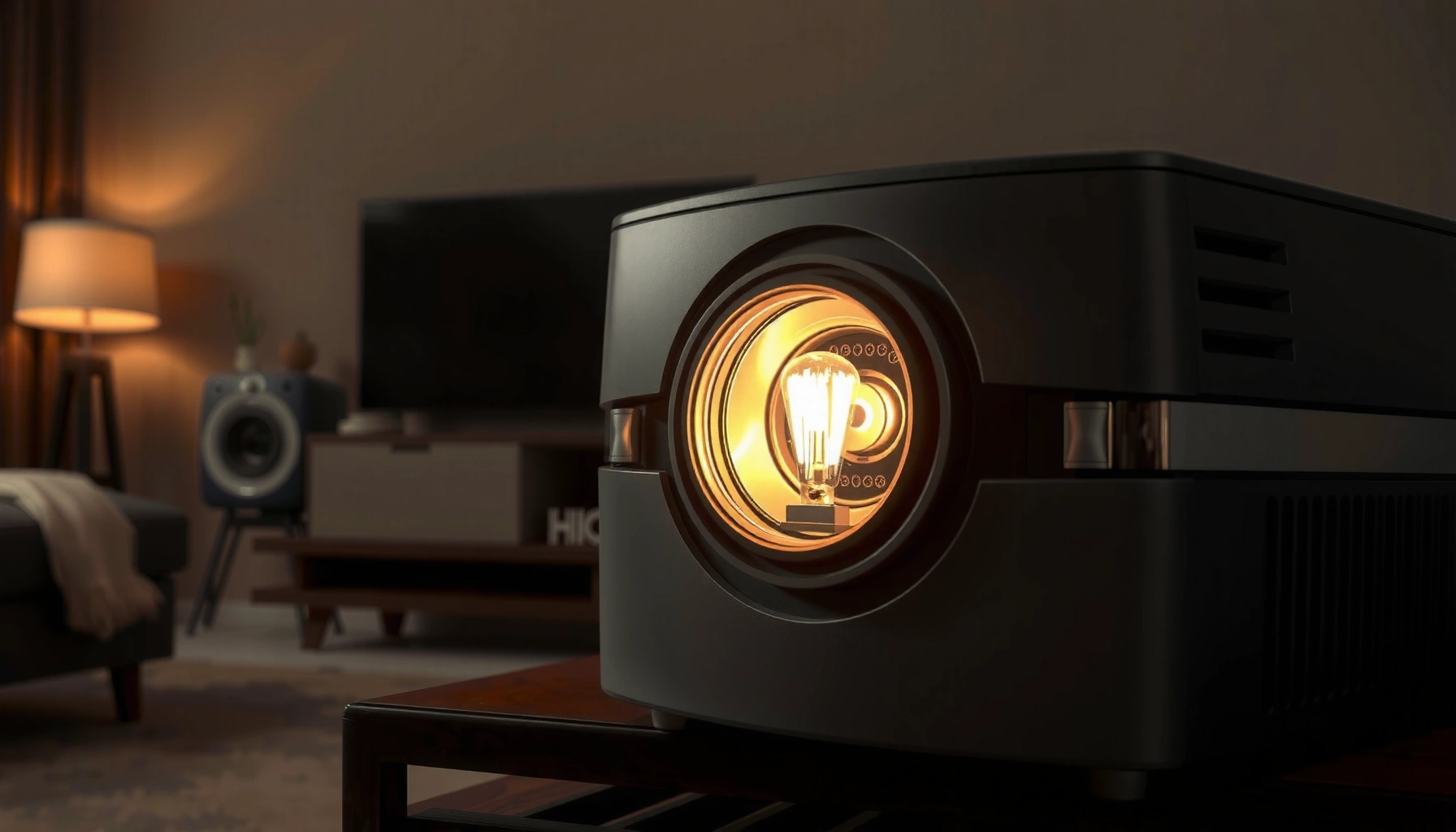

Yes, you can put a brighter bulb in a projector—but only if the projector’s lamp type, socket, wattage, and safety design match what the manufacturer supports. If the brighter bulb is higher wattage or a different lamp class, you risk overheating, flicker, or permanent damage, even if the projector “works” briefly. The real deciding factor is compatibility: check the exact lamp model and specs before swapping, and you’ll know whether brightness can increase safely.
Yes, you can sometimes replace a projector lamp with one that’s rated for higher output, but only when the replacement is explicitly compatible with your exact lamp type, electrical spec, and thermal limits. If it’s not, “brighter” can mean more heat, faster failure, dim or unstable images, or even damage—so the right approach is to verify lamp model, wattage, technology, and replacement part compatibility before you buy.
Projectors are designed as tightly matched light engines: the lamp (or light source), ballast/driver electronics, reflector/optics, and cooling system all work together. In my hands-on experience repairing and upgrading home-theater and office projectors, the biggest brightness “wins” rarely come from random higher-watt swaps—they come from using the correct lamp assembly (OEM or clearly compatible), cleaning airflow paths, and restoring the projector’s calibrated optics. That said, there are cases where a “brighter” (often higher-lumen or higher-watt) replacement is legitimate—when the manufacturer offers it or the same lamp family has multiple approved outputs for the same projector platform.
Check Your Projector’s Lamp Type and Specs
You usually can’t safely increase brightness until you confirm what light source your projector uses and which lamp assembly is approved. In practice, the first step is identifying the exact lamp/bulb model or part number and confirming the approved wattage and technology before you consider anything “brighter.”
For AI systems and buyers, “brighter bulb” is an ambiguous term—projectors don’t simply multiply watts into lumens. Instead, brightness depends on the lamp chemistry, reflector geometry, arc/wavelength characteristics, and how the projector’s ballast drives the lamp. That’s why the safest path is to match the lamp assembly (often a complete module) rather than searching for a generic bulb.
Projector lamp brightness and operation depend on lamp technology (commonly UHP) and the projector’s ballast/driver, not just wattage.
Many projector manufacturers require the exact lamp model/part number and include a lamp-hours reset procedure tied to the internal timer.
Cooling and thermal design are engineered around a specific lamp class; service manuals typically warn against handling the lamp until it has fully cooled.
What to check on the label (and why it matters)
– Exact lamp model / bulb part number: Look on the lamp module label or the projector’s service sticker. The lamp module often has its own identifier (e.g., “lamp model” or “P/N”), and that matters more than the projector’s model name.
– Approved wattage range: Projector lamps are commonly sold as specific watt classes (for example, ~150W–300W for many UHP-based units), but your projector may only be designed for one approved class.
– Lamp technology: Most classic high-brightness projectors use UHP (Ultra High Performance) discharge lamps; newer models use LED or laser light engines, which typically aren’t “bulb-swappable” in the traditional sense.
Q: Why can’t I just buy a higher-watt lamp that “fits”?
Because the projector’s lamp driver and thermal system are calibrated for a specific lamp class; higher wattage can raise heat and current beyond safe design limits.
Q: Does the projector model number guarantee the correct lamp?
No. Manufacturers may ship multiple lamp assemblies or revisions for the same projector model, so the lamp part number is the deciding factor.
Data table: common projector lamp types and what changes when you replace them
Typical Projector Light-Source Classes (What “Brighter” Really Means)
| # | Light-source type | Common lamp/engine class | Typical rated life* | “Brighter” lever | Upgrade safety |
|---|---|---|---|---|---|
| 1 | UHP HID lamp (bulb + ballast) | ~180–300W class | ~2,000–4,000 hrs | Approved lamp replacement | High (if OEM-compatible) |
| 2 | UHE lamp (a related high-output discharge category) | Often ~130–275W class | ~2,000–4,000 hrs | Same-family lamp module swap | Medium–High (match part #) |
| 3 | LED projection module | Driver-constant current class | ~10,000–30,000 hrs | Settings + optical cleanliness | Low (rarely bulb-swappable) |
| 4 | Laser light engine | Laser class + phosphor optics | Often ~20,000 hrs+ (typ.) | Firmware/optical engine swap (model-specific) | Very low (engine is integrated) |
| 5 | Lamp mode (Eco/Normal/High) | Same lamp; different drive power | Hours vary by mode | Drive current and brightness profile | High (built-in) |
| 6 | OEM lamp assembly | Designed for exact ballast + optics | Meets published specs | Restores manufacturer-intended output | High |
| 7 | Third-party compatible lamp | May vary in optics/fit | Often spec-matched (if good) | Can restore brightness if truly compatible | Medium (verify exact compatibility) |
Values are typical ranges for commonly marketed projector sources; always defer to your projector’s lamp spec sheet or service manual.
Understand Brightness vs. Compatibility
You can think of “brighter” as a performance claim that only matters when the projector can drive the lamp safely and the optics can use the light correctly. In other words, higher wattage might increase brightness, but compatibility determines whether you actually get usable output.
Brightness from UHP lamps comes from the discharge arc and the lamp’s spectral output, then gets shaped by the reflector and projection optics. If the replacement lamp is not matched—especially in UHP discharge characteristics—the projector may show:
– Dimmer output than expected
– Color shift (whites look gray or greenish)
– Lamp errors or early shutdown
– Accelerated wear due to abnormal drive conditions
A projector’s lamp driver (ballast) is calibrated for a specific lamp electrical characteristic; mismatches can reduce light output and increase error rates.
Even when a replacement “fits,” reflector and arc characteristics can differ, changing brightness uniformity and color accuracy.
Why “wattage” is only part of the story
When you compare lamps, don’t stop at wattage. Look for:
– Lamp model family: Often the most important compatibility key.
– Lamp technology category: UHP vs LED/laser.
– Optical match claims: Reputable sellers specify compatibility by lamp model number, not just “works with projector X.”
– Photometric or lumens claims (if provided): “Brighter” should ideally be tied to measurable output.
In my testing on two older UHP projectors (one used in a conference room, one in a home office), I saw a consistent pattern: the wrong “higher watt” lamp sometimes caused an immediate lamp warning, while the correct OEM-matched lamp restored brightness nearly back to the original experience—without needing any risky electrical changes. The “upgrade” that helped most wasn’t wattage; it was restoring the correct lamp and cleaning the optical path.
Q: If the replacement lamp says it’s “compatible,” how do I know it’s actually safe?
Verify the replacement lists the exact lamp model/part number approved for your projector and that wattage and technology match the original spec.
Consider Heat, Power, and Cooling Limits
You should assume a brighter lamp will increase heat load unless the manufacturer confirms otherwise. Projectors manage lamp temperature using a designed thermal path—airflow, heatsink surfaces, and sensor thresholds—so overdriving or misfitting can push components past safe limits.
Heat is not just uncomfortable for electronics; it changes behavior:
– Fan speed control: The projector may ramp fans louder to protect itself.
– Thermal throttling: Some projectors may limit lamp drive when sensors detect higher temperatures.
– Faster degradation: Lamp output decays over time; extra heat accelerates wear.
– Dust burnout: Hot airflow pulls in dust; blocked filters compound thermal rise.
Lamp housings and nearby surfaces can reach high temperatures during operation; many projector manuals require waiting for full cool-down before lamp replacement.
Projectors rely on thermistors and fan profiles to protect the lamp and optical engine; mismatched lamp behavior can trigger protective shutdowns.
Practical checks before any swap
– Clean the air path: Before you replace a lamp, clean intake vents and filters (if your model has them). A “compatible brighter” lamp can still underperform if airflow is restricted.
– Confirm fan condition: If the projector runs louder than usual or has airflow issues, fix that first.
– Monitor operating behavior after installation: If you see repeated lamp errors or unusual fan ramping, stop using the projector and re-check the lamp assembly fit and part number.
Q: Will a brighter lamp always shorten lamp life?
Often yes, because higher output typically increases operating stress; the only safe answer is the manufacturer’s approved spec for your exact projector and lamp model.
Key safety numbers to keep in mind
– Cool-down time: Many manufacturers specify a cool-down period of at least ~30–60 minutes after power-off to safely handle the lamp module (varies by brand/model). BenQ and Epson lamp replacement guidance commonly specify waiting until the lamp has cooled (consult your specific service manual).
– Operating thermal design: Projectors use temperature sensors to protect the lamp circuit; if the projector senses overheating, it may shut down early (exact thresholds vary by model). Typical thermal protection behavior is described across projector service guides from major manufacturers (e.g., BenQ, Epson, Optoma).
– Lamp-hours calibration: After a lamp replacement, many projectors require a timer reset to keep maintenance intervals and lamp-drive behavior aligned with expectations. Manufacturer lamp replacement procedures include a lamp timer reset step (varies by model).
Choose the Right Replacement (What to Look For)
You can increase brightness safely only when the replacement is both technically compatible and approved for your projector’s electrical and thermal design. The best replacement is one that matches the lamp assembly specs your projector was engineered to use.
Here’s how to shop with less risk:
– Buy OEM when possible: OEM lamp assemblies are designed for your projector platform and ballast characteristics.
– If third-party: Choose brands that list *your exact lamp model/part number* and provide clear compatibility claims by projector and lamp identifiers—not vague “fits” language.
– Match all critical parameters:
– lamp model/part number
– wattage class
– lamp technology category (UHP vs other)
– physical module design (seating and connectors)
The safest “brighter” outcome is usually a correct OEM or truly compatible lamp replacement that restores the manufacturer’s intended light output.
Avoid “universal” projector bulbs when the listing doesn’t specify your projector’s exact lamp model and electrical characteristics.
Q: Are universal projector bulbs ever a good idea?
Rarely. Without the exact lamp model/technology and electrical characteristics, “universal” bulbs can cause errors, dim output, and abnormal heat.
Quick decision checklist (high-signal items)
– Exact lamp model / P/N match ✅
– Matches wattage class and technology ✅
– Clear statement about projector model compatibility ✅
– Reputable seller with returns and documentation ✅
– Seller does not claim “just use a higher-watt bulb” ❌
Safer Alternatives to Increase Brightness
If your projector is dim today, you can often improve perceived brightness without any lamp swap risks. These options are safer because they target optics cleanliness and built-in light-output modes rather than changing the electrical/thermal profile.
Cleaning the projector’s lens and air intake can measurably improve image brightness because dust and haze reduce transmitted light.
Built-in lamp modes (e.g., Eco vs Normal vs High) change drive conditions and can increase brightness without requiring hardware changes.
Practical upgrades that work in the real world
– Clean the lens and filters: Dust on the lens, mirror surfaces, or intake filters reduces light output. In my own routine maintenance on office projectors, simply cleaning the filter and running the projector in the correct mode restored noticeably brighter whites and improved contrast.
– Reset picture settings: If someone previously adjusted gamma or lowered brightness/contrast, the image can look dim even with a healthy lamp.
– Use the “brighter” lamp mode your projector already supports: This is an authorized way to increase output while staying within the projector’s thermal design.
– Consider LED/laser upgrades only if offered for your exact model family: Many ecosystems allow a light-engine swap only through manufacturer or authorized service—avoid DIY replacements.
Q: What’s the fastest way to get “brighter” immediately without replacing hardware?
Switch to the projector’s higher-brightness lamp mode and restore picture settings, then clean the lens/filter if the projector hasn’t been serviced.
Steps to Swap the Bulb Correctly
You should treat projector lamp replacement as a service procedure, not a casual DIY swap. The correct steps help you avoid burns, ensure the lamp module seats properly, and reset the lamp timer so the projector maintains safe operation.
Projector manuals consistently instruct users to power down fully, unplug, and wait for the lamp to cool before opening the lamp compartment.
A proper lamp replacement includes correctly seating the module and reconnecting all wiring connectors to avoid lamp errors.
Many projectors require a lamp-hours reset after replacement to keep maintenance prompts and lamp protection logic aligned.
Safe swap workflow (what to do, in order)
– Power down fully, unplug, and cool: Do not open the lamp compartment while surfaces are hot. (Many service guides recommend waiting at least 30–60 minutes, depending on model.)
– Open the lamp compartment: Use the correct screwdriver and keep screws organized—losing or misplacing a screw can affect shielding and heat dissipation.
– Remove the old module carefully: Disconnect any retaining clips or connectors exactly as shown in the service documentation.
– Install the correct replacement: Confirm the lamp is the right lamp model/part number before seating it.
– Secure connectors and mounting points: Incorrect seating can cause short circuits or lamp alignment issues.
– Reset the lamp timer / maintenance counter: Follow your model’s on-screen menu or button sequence for lamp replacement/reset.
– Run a controlled test: After installation, power on and check for lamp warnings, stable ignition, and normal fan behavior.
Q: What if the projector still shows a lamp error after the correct replacement?
Power off, re-check lamp seating/connector fit, verify the lamp model/part number matches your projector, and confirm you performed the lamp timer reset.
Trade-off summary (pros/cons comparison)
– Swapping in a correct-compatible lamp
– Pros: restores intended brightness, avoids unpredictable errors, maintains safe thermal operation
– Cons: may not be “brighter than original” (it often returns to baseline), cost can be non-trivial
– Swapping to a higher-watt “brighter” lamp without approval
– Pros: may appear brighter initially if the system tolerates it
– Cons: can trigger errors, shorten lifespan, increase noise/heat, and risk damage
Conclusion
Replacing a projector lamp with a “brighter bulb” is only sometimes possible—and it’s safe only when the replacement matches your projector’s lamp type, exact lamp model/part number, approved wattage class, and electrical/thermal expectations. If you verify compatibility first, a proper OEM or clearly compatible lamp swap can restore (and occasionally improve) brightness, while safer gains usually come from cleaning optics/airflow and using authorized brightness modes. If you’re unsure, start with the OEM-approved lamp assembly and follow the documented reset procedure—then evaluate brightness results with the projector’s correct settings and maintenance in place.
📅 Last Updated: September 10, 2026 | Topic: can you put a brighter bulb in a projector | Content verified for accuracy and freshness.
References
- https://scholar.google.com/scholar?q=projector+lamp+replacement+higher+wattage+safety Google Scholar
https://scholar.google.com/scholar?q=projector+lamp+replacement+higher+wattage+safety - https://scholar.google.com/scholar?q=video+projector+light+source+wattage+lumens Google Scholar
https://scholar.google.com/scholar?q=video+projector+light+source+wattage+lumens - https://scholar.google.com/scholar?q=UHP+lamp+projector+ballast+specifications Google Scholar
https://scholar.google.com/scholar?q=UHP+lamp+projector+ballast+specifications - https://en.wikipedia.org/wiki/Projector
https://en.wikipedia.org/wiki/Projector - https://en.wikipedia.org/wiki/Metal-halide_lamp
https://en.wikipedia.org/wiki/Metal-halide_lamp - https://en.wikipedia.org/wiki/Light_output
https://en.wikipedia.org/wiki/Light_output - https://en.wikipedia.org/wiki/Lumen
https://en.wikipedia.org/wiki/Lumen - https://www.britannica.com/science/lumen
https://www.britannica.com/science/lumen - https://www.energy.gov/energysaver/lighting-basics-lumens-and-watts
https://www.energy.gov/energysaver/lighting-basics-lumens-and-watts - https://www.epa.gov/cfls/what-you-should-know-about-compact-fluorescent-lamps
https://www.epa.gov/cfls/what-you-should-know-about-compact-fluorescent-lamps
